
Grilled chili and lemon chicken Recipe Inspired by Jamie Oliver
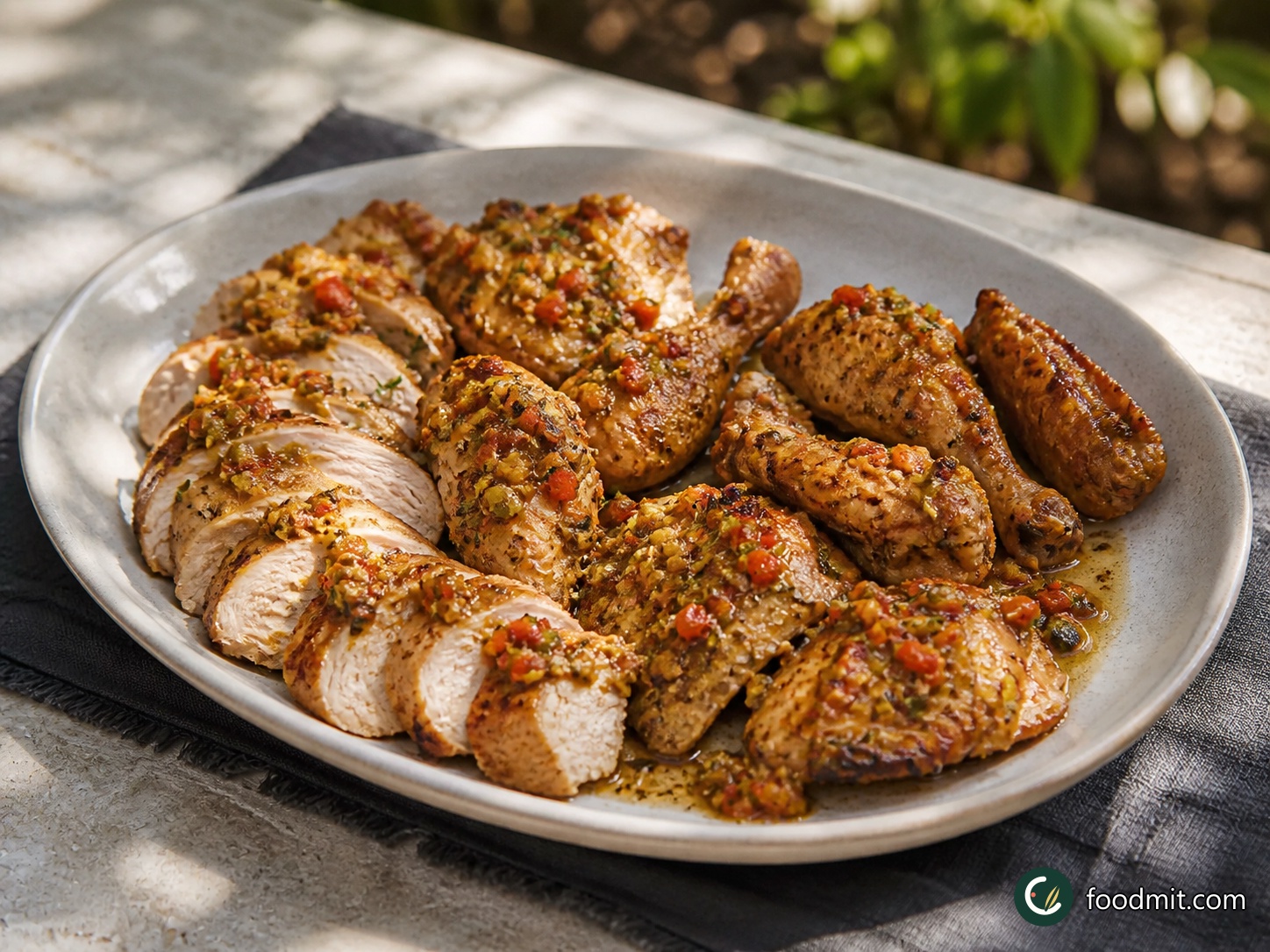
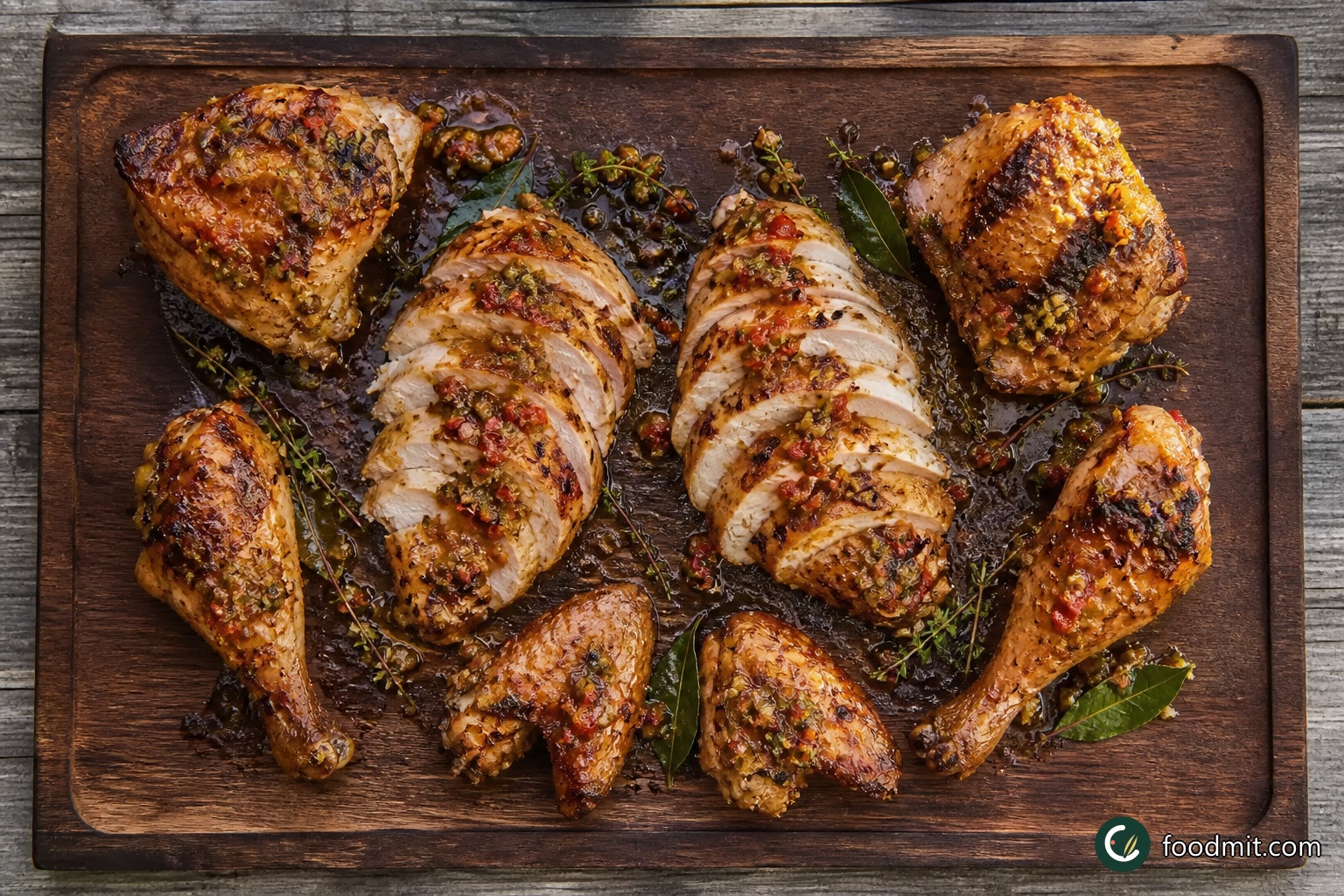
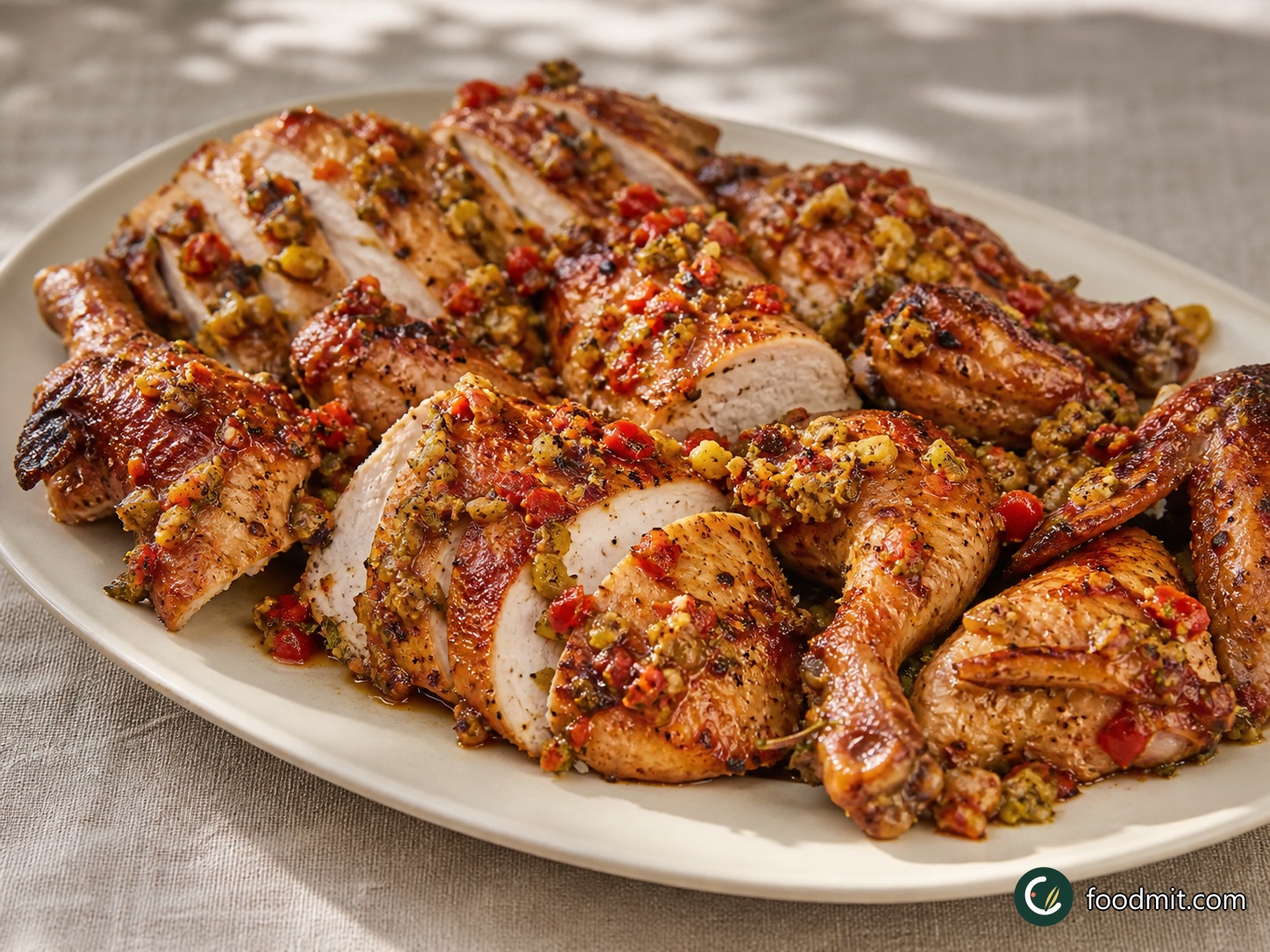
Grilled chili and lemon chicken was exactly the sort of Jamie Oliver recipe I wanted for a relaxed weekend cook: generous, colorful and built for the charcoal barbecue. I made it as a longtime fan, and the moment the chilies, pepper and whole garlic began to blister over the coals, the recipe felt as lively and hands-on as I had hoped. The finished chicken has bronzed skin, succulent meat and a rough, spoonable sauce rather than a smooth glaze. Fresh chilies bring warmth, the roasted pepper and garlic add sweetness, and bay and thyme give the sauce a savory, woodsy edge. Using the lemon peel and chopped flesh makes its brightness part of every bite instead of leaving it as a final squeeze. The smartest detail for me was dividing the sauce before it touched the raw bird. One half seasons the butterflied chicken as it cooks; the untouched half stays fresh for the carved meat. I also learned not to chase fierce heat: a clear channel between the coals lets the chicken roast steadily beneath the lid, while the scored legs cook through with the thicker joints. After an hour over indirect heat, I let the bird rest for the full 30 minutes and watched the internal temperature rise to 75°C. That patient pause kept the carving juices in the meat. Served from a big board with the reserved sauce caught in the cuts, it made an easy centerpiece for six, especially with grilled chips, sweet potato wedges or spicy corn alongside.
 Foodmit
recipe
Per 1/6 of the chicken with sauce
Nutrition for Grilled chili and lemon chicken
- Saturated fat
- 5 g
- Fiber
- 0.6 g
- Sugars
- 1.1 g
- Sodium
- 280 mg
Estimated values. Nutrition values are approximate. More precise calculations will be added in a future update.
How to make Grilled chili and lemon chicken
-
Step 1
Set up the charcoal barbecue
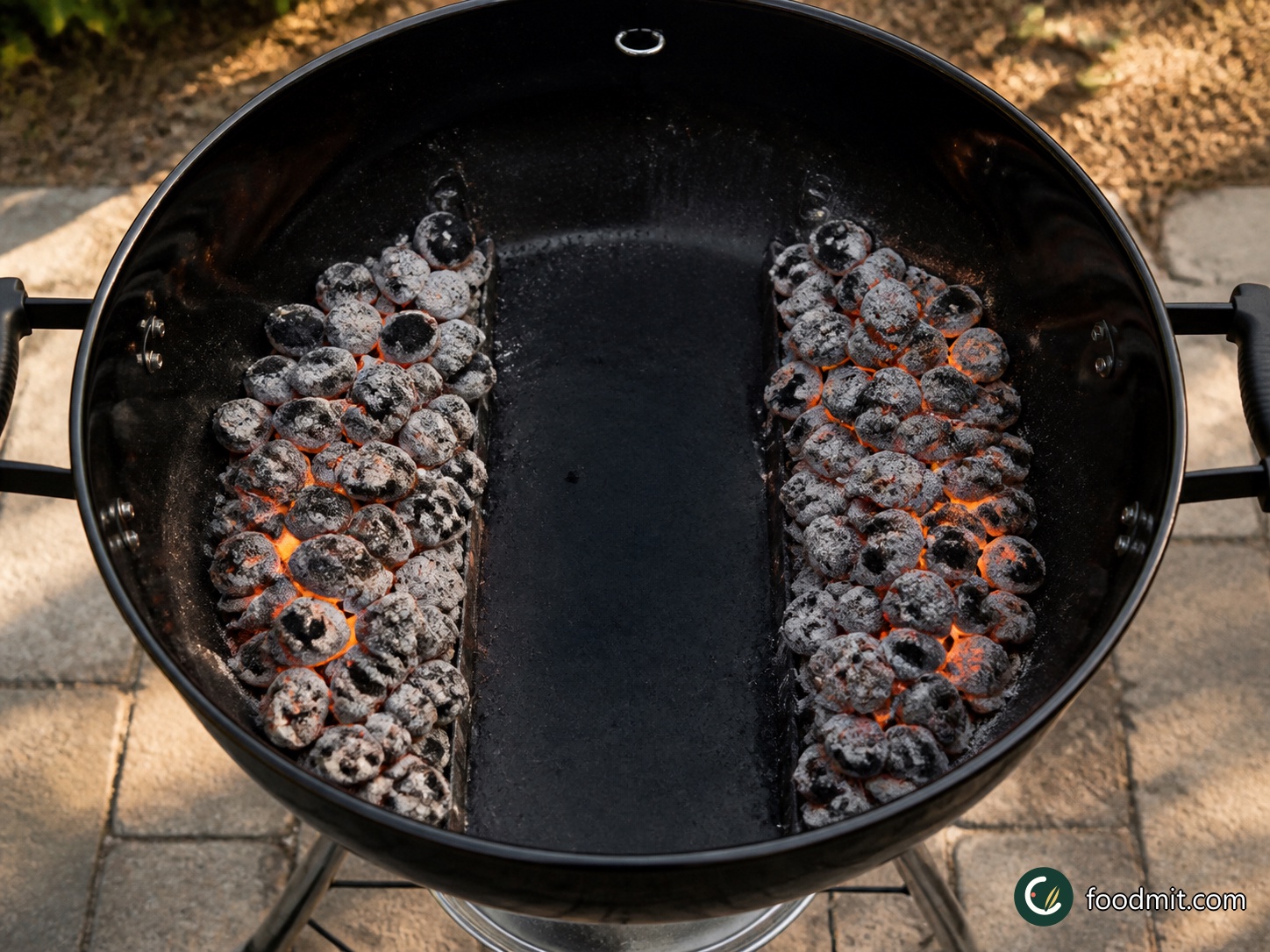
Light the charcoal and arrange it in two even banks at opposite sides of the barbecue, leaving a wide strip in the center with no coals beneath it. This middle channel is the indirect, cooler zone where the chicken will cook. Put the lid on with the vents open so the grill can heat evenly while you start the sauce.
-
Step 2
Char the fresh vegetables
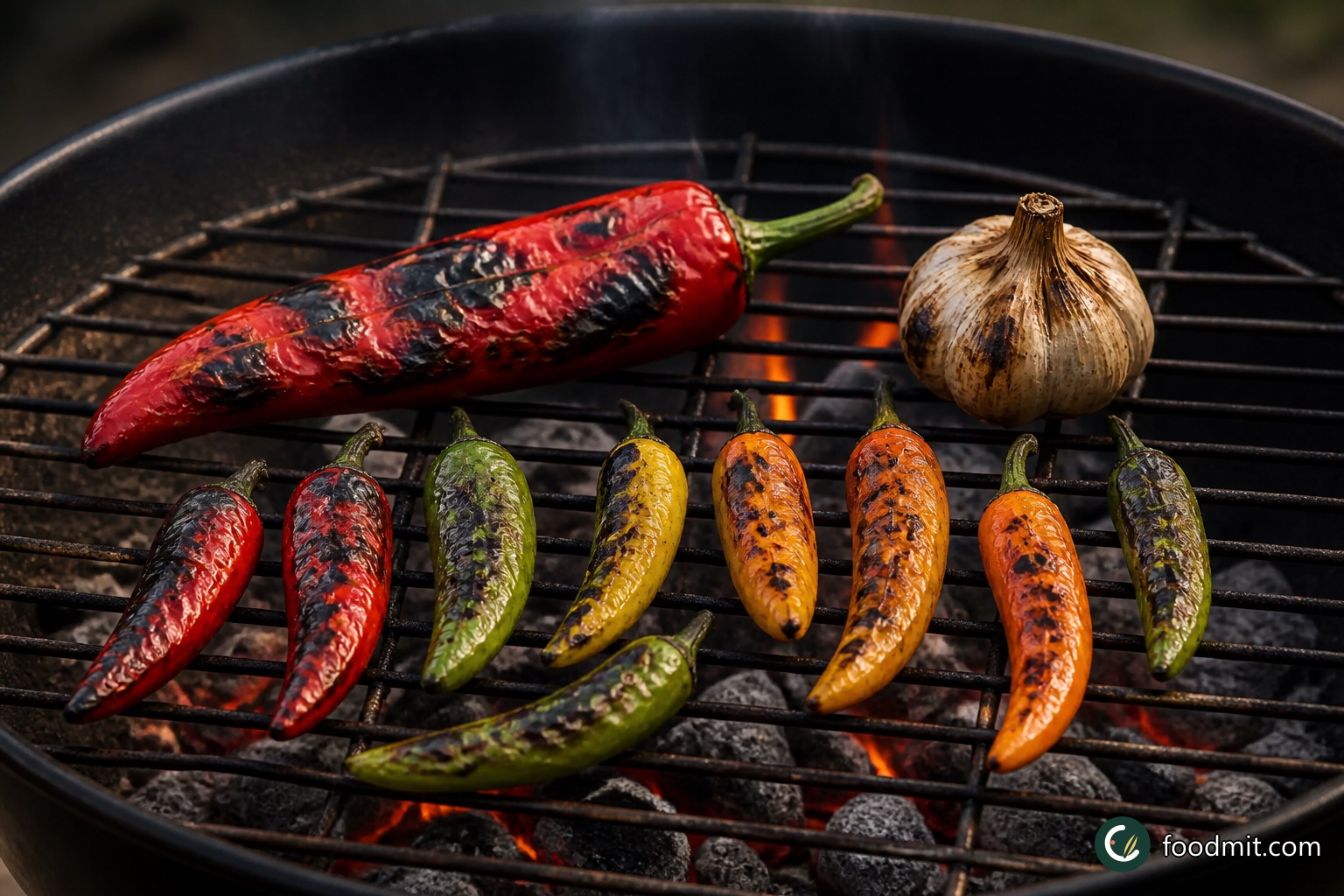
Prick each fresh chili and the long red pepper so steam can escape. Set them, along with the unpeeled garlic bulb, over the hot zone while the barbecue comes to temperature. Close the lid and keep the vents open, turning everything with tongs as needed, until the vegetables are well blistered and the garlic has softened. The dark patches are intentional, but the flesh should not be burned dry.
-
Step 3
Pound the herb and lemon base
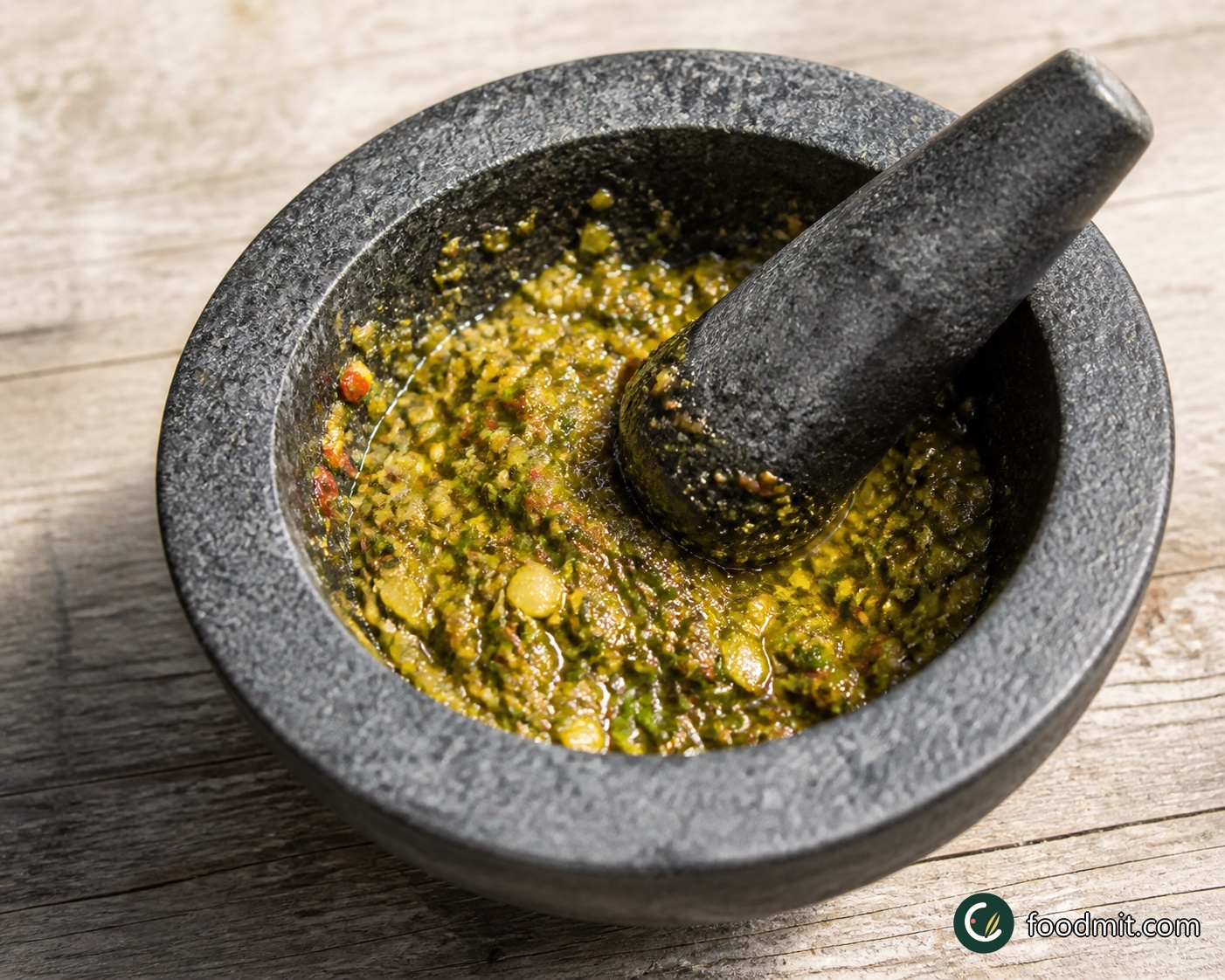
Hold the bay leaves with tongs and toast them directly on the grill for 30 seconds. Pull out the tough stalks, tear the leaves into a mortar, then add the dried chili flakes and a pinch of sea salt. Strip in all the thyme leaves and pound to a coarse paste. Peel thin strips of yellow zest from the lemon and pound those in too. Cut away and discard the thick white pith, finely chop the lemon flesh, and work it into the mortar with the red wine vinegar and extra-virgin olive oil. A small food processor can be used instead, but keep the mixture textured.
-
Step 4
Finish and divide the sauce
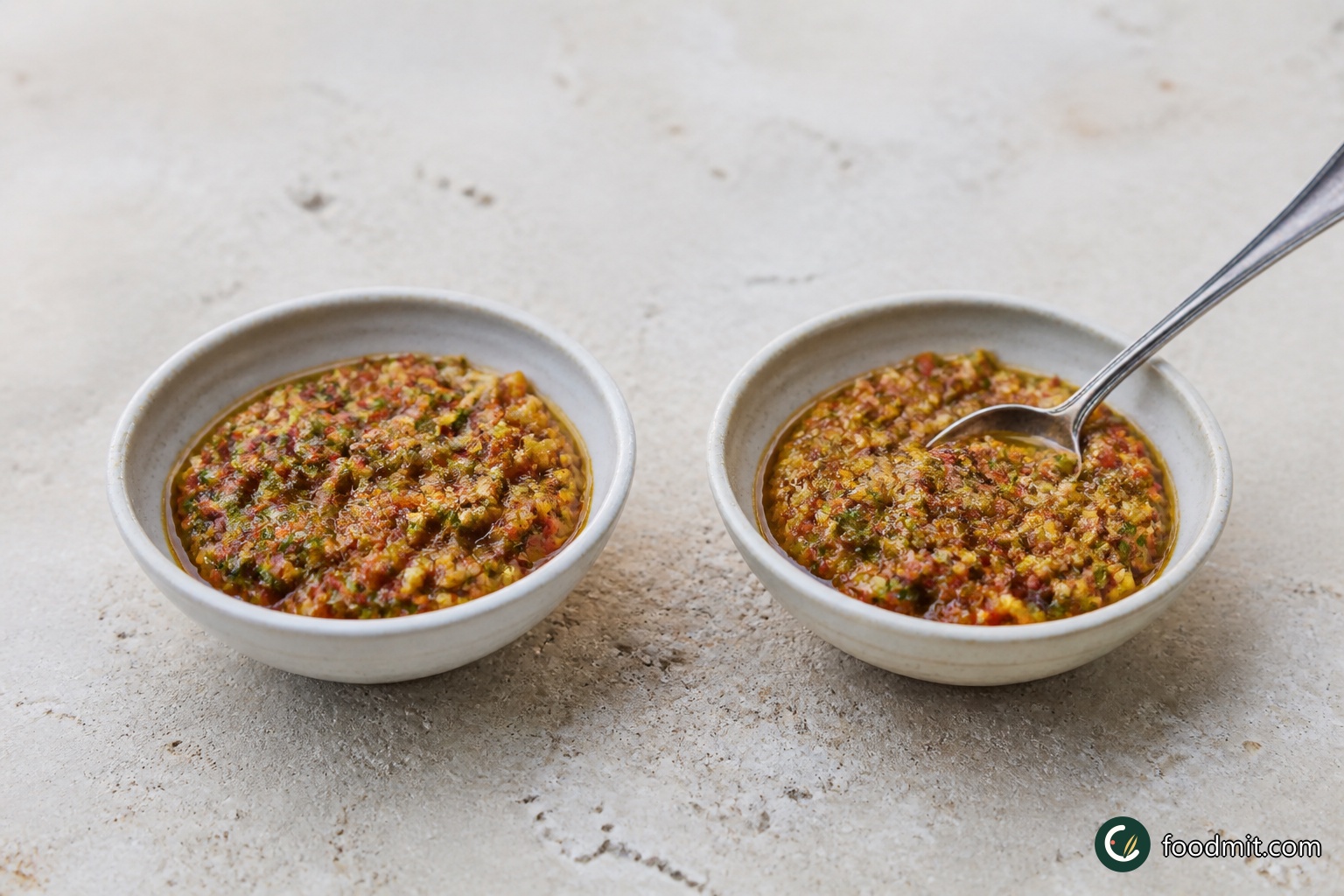
Knock or scrape off only the loosest blackened skin from the softened chilies and red pepper; leaving a few charred flecks gives the sauce character. Remove their stalks and seeds, squeeze the garlic cloves from their skins, and finely chop the lot. Stir it all through the lemon-herb mixture, taste and correct the salt. Transfer exactly half to a clean serving bowl now and set it aside. Keeping this portion away from the raw chicken is essential because it will be spooned on at the table.
-
Step 5
Butterfly and season the chicken
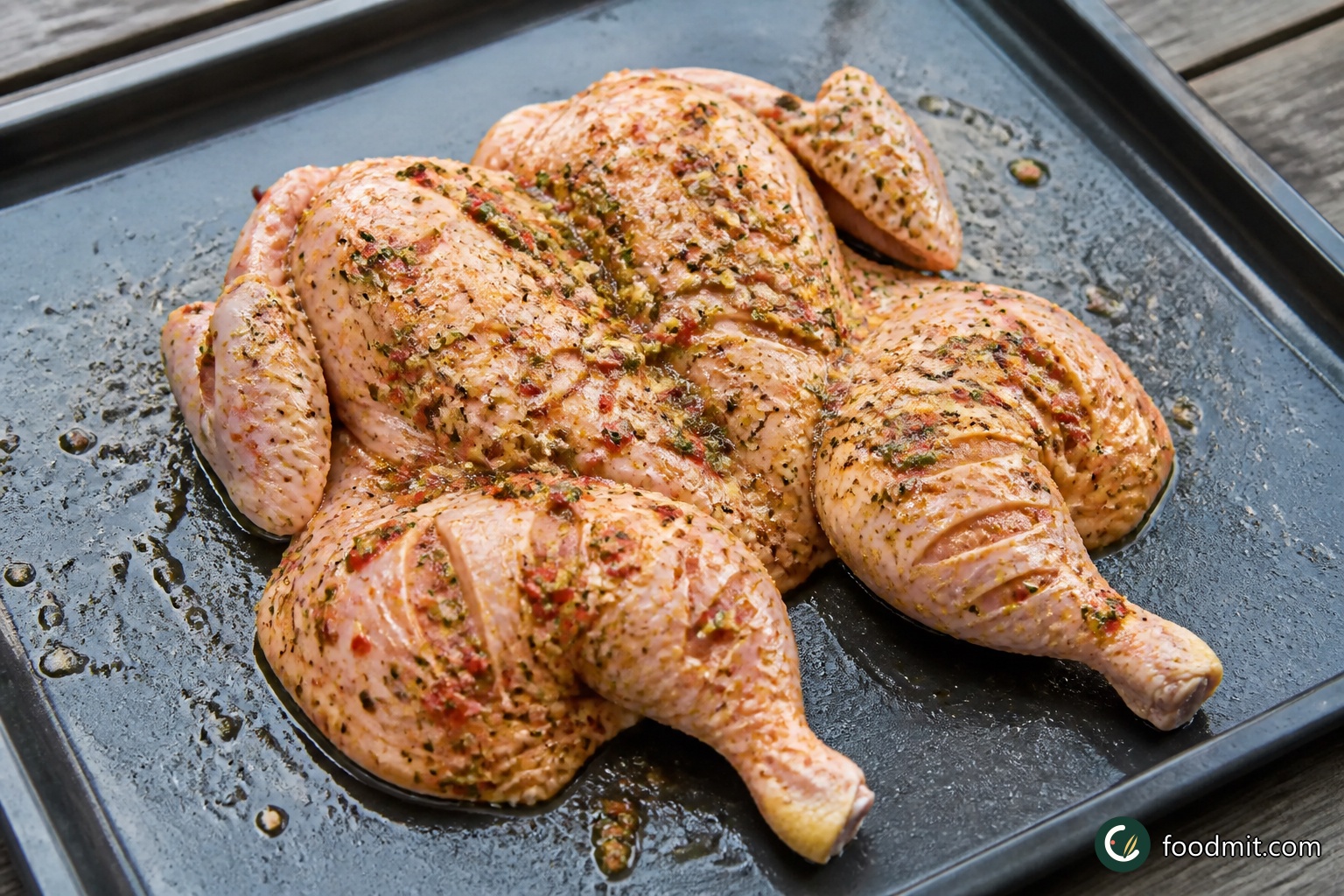
Set the chicken breast-side down on a stable board. With a large, sharp knife, carefully cut along the back so the bird can be opened out and pressed flat. Score the thick meat on both legs to help the heat reach the joints. Rub the half of the sauce left for cooking over both sides, pushing it into the leg scores and around the wings. Do not dip into the clean bowl reserved for serving.
-
Step 6
Cook gently over indirect heat
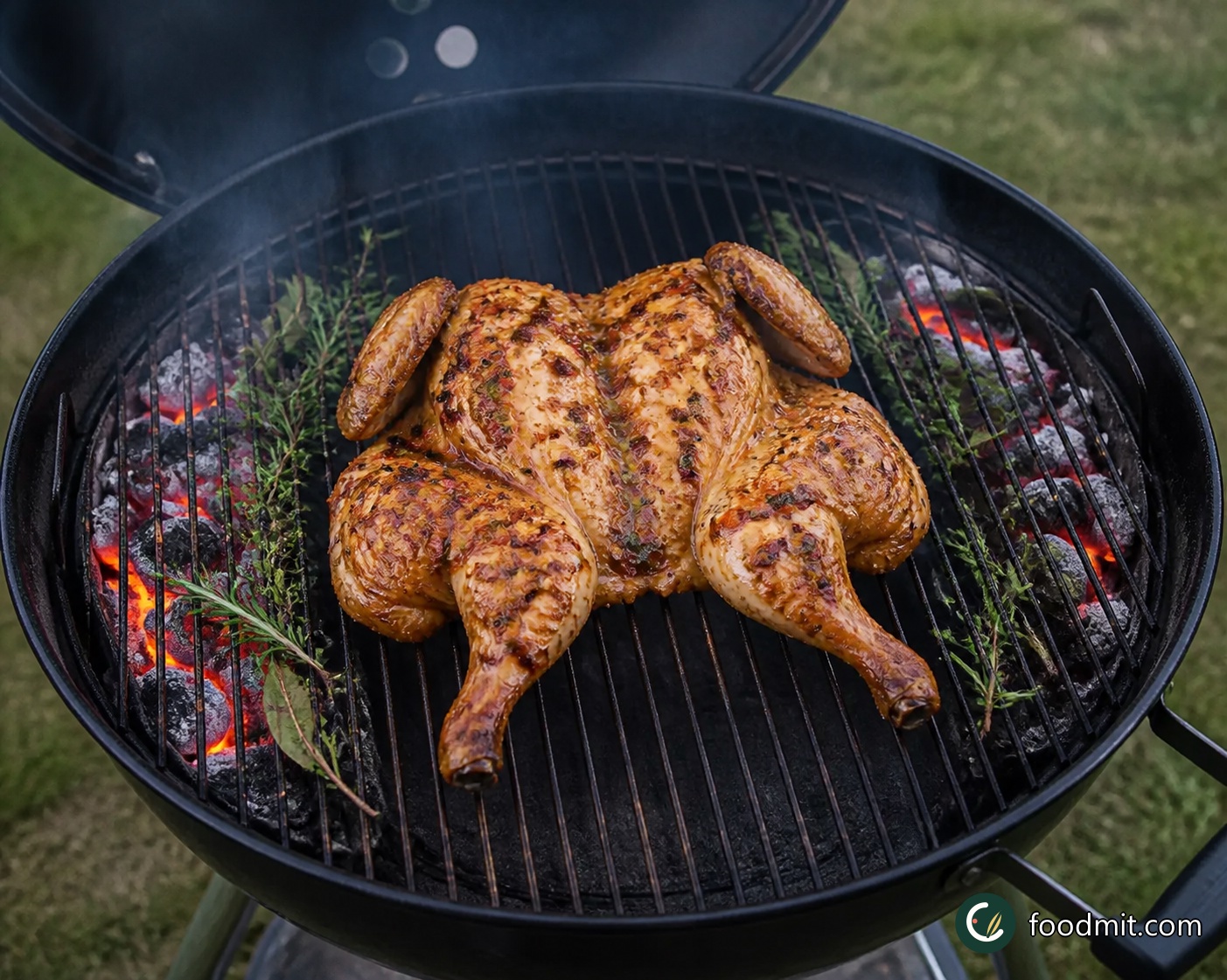
Place the flattened chicken breast-side up over the coal-free center channel. If using the optional woody bay, thyme and rosemary sprigs, tuck them around the outside as a fragrant buffer near the hotter edges. Close the lid, leave the vents open and cook for 1 hour without moving the bird onto the fierce coals. At the end, the juices should run clear and a thermometer in the deepest part of the meat, clear of bone, should read 65–70°C.
-
Step 7
Rest, check and carve
Lift the chicken onto a clean board and leave it untouched for 30 minutes. Carryover heat must bring the internal temperature to 75°C; check the thickest area again before carving. If it has not reached that point, return it to the covered indirect zone and continue cooking until it does. Once ready, carve the bird into serving pieces, spoon over the clean reserved sauce and let the board juices mingle with it. Serve with grilled chips, sweet potato wedges or Sriracha corn.
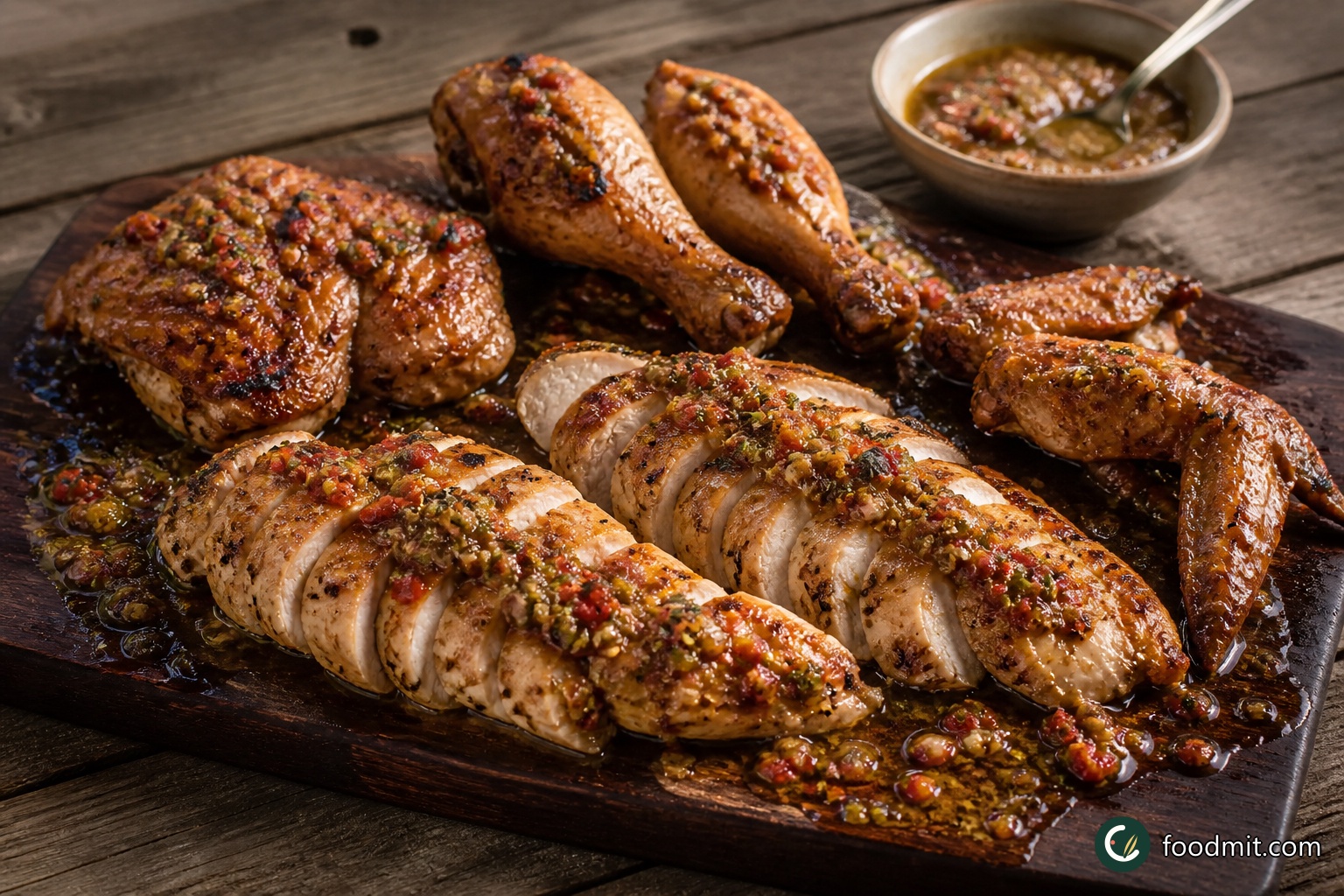
Reserve the serving half of the sauce before the other half goes near raw chicken, then use separate, clean utensils and keep that bowl away from the preparation area until carving time.
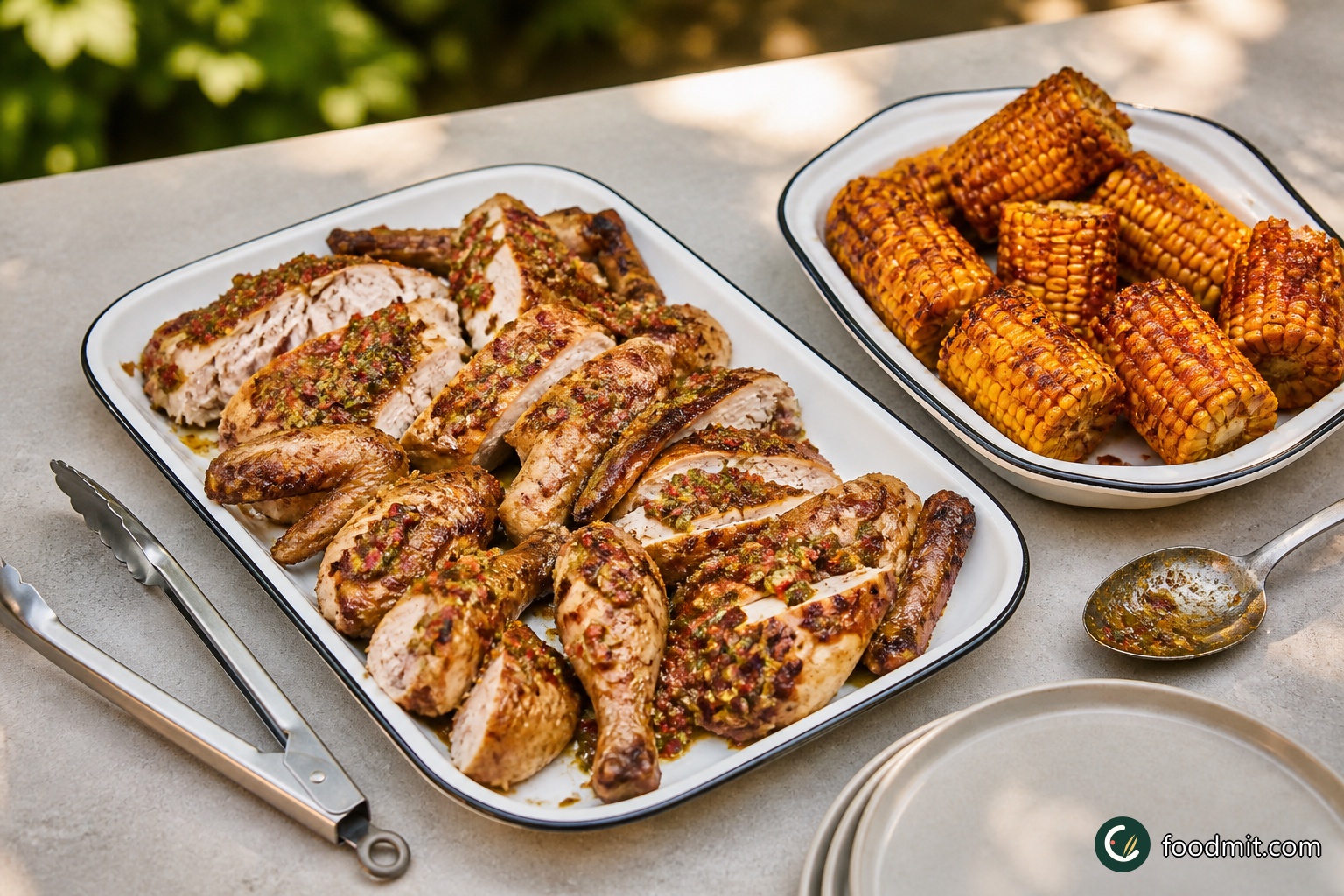
Grilled chili and lemon chicken, ready to serve
Serving ideas for Grilled chili and lemon chicken
Choose a presentation that fits the occasion, from relaxed sharing to individual plates.
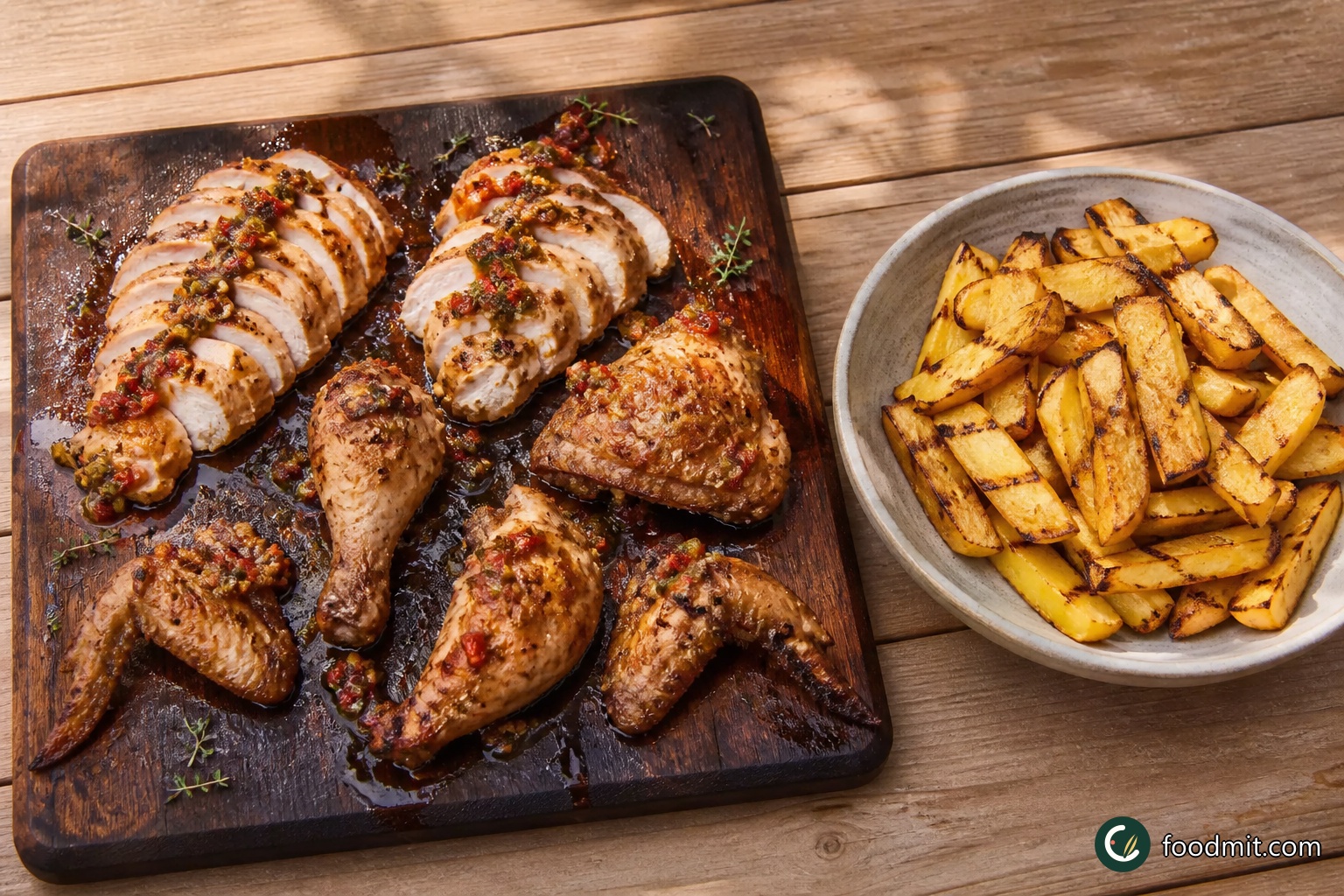
Carving board with grilled chips
For the most relaxed presentation, I would take the whole rested bird to the table on a large dark wooden carving board, carve it into recognizable breast, thigh, drumstick and wing pieces, then trail the reserved sauce across the meat. Let the golden board juices remain visible instead of transferring everything to a spotless platter; they are part of what keeps each helping succulent. Pile grilled chips in a separate wide bowl so they retain their crisp edges, and give everyone a small plate plus a spoon for collecting extra chili-lemon sauce. This setup suits a casual weekend lunch outdoors, where the colorful chilies and scattered cooked herb sprigs make the main course look abundant without formal garnishing.
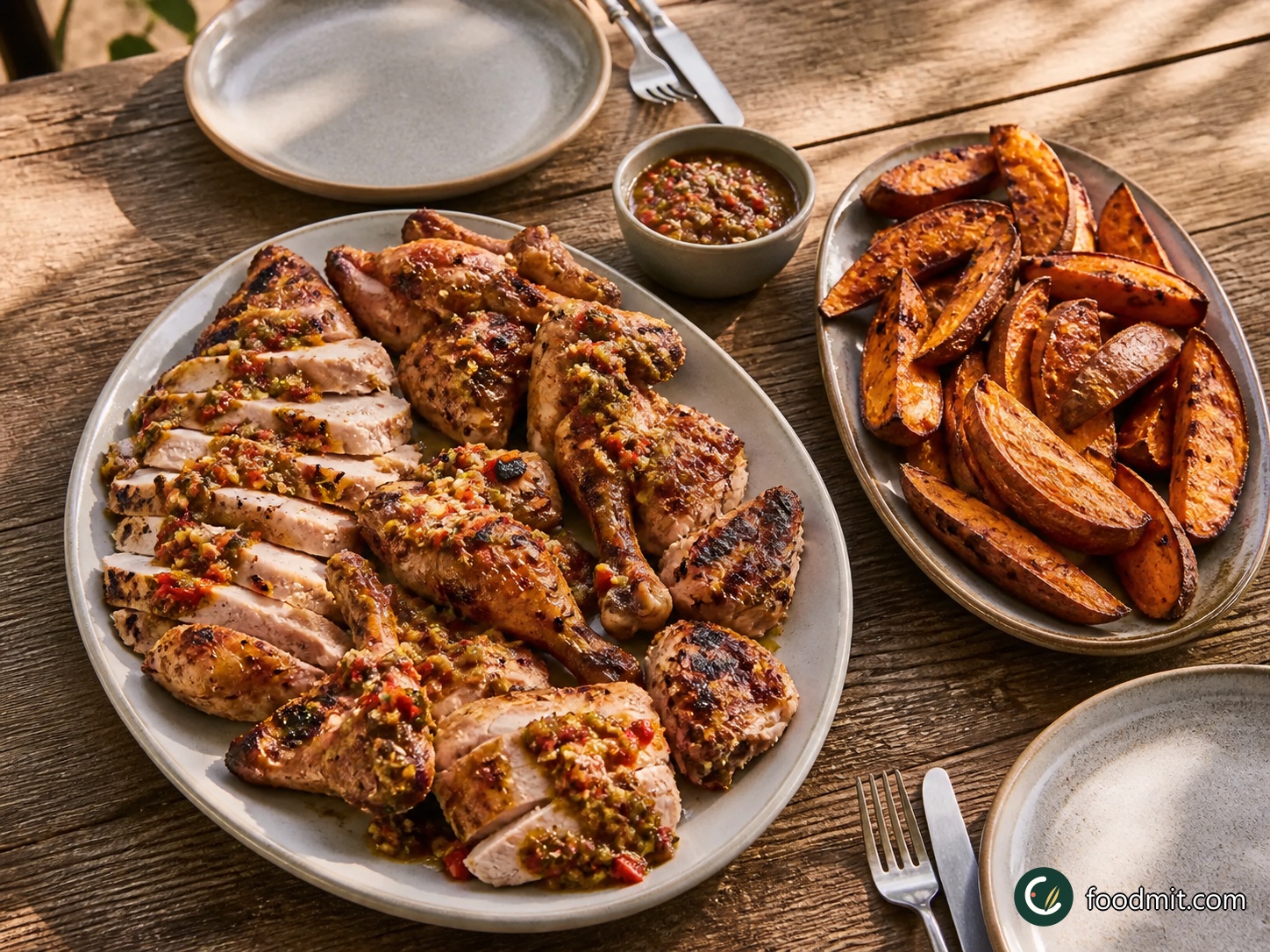
Family platter with sweet potato wedges
For a family dinner, arrange the carved pieces on a broad, shallow platter, placing the paler sliced breast beside the deeper-browned legs and wings so every guest can choose a favorite cut. Spoon the reserved sauce over in small patches rather than flooding the platter, and bring the rest to the table in its clean bowl. Serve hot sweet potato wedges alongside on a second platter; their soft sweetness is a gentle counterpoint to the fresh and dried chilies. Use sturdy dinner plates and set the platter in the middle of the table for easy sharing. Resting the bird fully before arranging it keeps the presentation juicy without leaving a pool of thin liquid around the pieces.
Backyard spread with Sriracha corn
When serving a larger barbecue spread, place the chicken pieces closely together on a low enamel tray and coat them with the final spoonfuls of sauce just before the tray goes out. Set Sriracha corn beside it on its own tray so guests can build plates without losing the chicken beneath the side dish. The corn reinforces the lively chili character while its kernels bring a contrasting juicy bite. This is the version I would choose for an informal party: use tongs for the large cuts, a serving spoon for the loose sauce and plenty of roomy plates. Keep the carved meat in clear view, with the browned skin facing up, so the charcoal color and red-green pepper pieces remain the focus.
Let’s cook Grilled chili and lemon chicken together
Check off your ingredients, follow each step, and start the timers when you are ready.
Get everything ready
Step-by-step with timers
Set up the charcoal barbecue
Light the charcoal and arrange it in two even banks at opposite sides of the barbecue, leaving a wide strip in the center with no coals beneath it. This middle channel is the indirect, cooler zone where the chicken will cook. Put the lid on with the vents open so the grill can heat evenly while you start the sauce.
Char the fresh vegetables
Prick each fresh chili and the long red pepper so steam can escape. Set them, along with the unpeeled garlic bulb, over the hot zone while the barbecue comes to temperature. Close the lid and keep the vents open, turning everything with tongs as needed, until the vegetables are well blistered and the garlic has softened. The dark patches are intentional, but the flesh should not be burned dry.
Pound the herb and lemon base
Hold the bay leaves with tongs and toast them directly on the grill for 30 seconds. Pull out the tough stalks, tear the leaves into a mortar, then add the dried chili flakes and a pinch of sea salt. Strip in all the thyme leaves and pound to a coarse paste. Peel thin strips of yellow zest from the lemon and pound those in too. Cut away and discard the thick white pith, finely chop the lemon flesh, and work it into the mortar with the red wine vinegar and extra-virgin olive oil. A small food processor can be used instead, but keep the mixture textured.
Finish and divide the sauce
Knock or scrape off only the loosest blackened skin from the softened chilies and red pepper; leaving a few charred flecks gives the sauce character. Remove their stalks and seeds, squeeze the garlic cloves from their skins, and finely chop the lot. Stir it all through the lemon-herb mixture, taste and correct the salt. Transfer exactly half to a clean serving bowl now and set it aside. Keeping this portion away from the raw chicken is essential because it will be spooned on at the table.
Butterfly and season the chicken
Set the chicken breast-side down on a stable board. With a large, sharp knife, carefully cut along the back so the bird can be opened out and pressed flat. Score the thick meat on both legs to help the heat reach the joints. Rub the half of the sauce left for cooking over both sides, pushing it into the leg scores and around the wings. Do not dip into the clean bowl reserved for serving.
Cook gently over indirect heat
Place the flattened chicken breast-side up over the coal-free center channel. If using the optional woody bay, thyme and rosemary sprigs, tuck them around the outside as a fragrant buffer near the hotter edges. Close the lid, leave the vents open and cook for 1 hour without moving the bird onto the fierce coals. At the end, the juices should run clear and a thermometer in the deepest part of the meat, clear of bone, should read 65–70°C.
Rest, check and carve
Lift the chicken onto a clean board and leave it untouched for 30 minutes. Carryover heat must bring the internal temperature to 75°C; check the thickest area again before carving. If it has not reached that point, return it to the covered indirect zone and continue cooking until it does. Once ready, carve the bird into serving pieces, spoon over the clean reserved sauce and let the board juices mingle with it. Serve with grilled chips, sweet potato wedges or Sriracha corn.
Grilled chili and lemon chicken Recipe Inspired by Jamie Oliver
The story behind Grilled chili and lemon chicken
Recipe notes by Sophie
The barbecue recipe that pulled me outside
I have admired Jamie Oliver for years because his recipes often make cooking feel physical and joyful, and this one delivered that feeling from the first few minutes. Instead of beginning with a bottled marinade, I stood at the barbecue turning a bright pile of chilies, one long pepper and an entire garlic bulb until their skins buckled and darkened. The aroma shifted from sharp and raw to sweet, smoky and mellow. It was a good reminder that the sauce is not a side task here; it is the character of the whole dish. The mortar work was just as satisfying. Toasted bay crumbled into the thyme and chili flakes, while the thin strips of lemon peel released their oils as I pounded. Chopping the peeled lemon flesh initially seemed unusual to me, but it made sense as soon as it met the vinegar and oil: the sauce became vivid and juicy without turning into a thin dressing. I kept it deliberately rough, with small pieces of pepper and garlic still visible, which later looked beautiful against the browned chicken. My biggest moment of care came when I split that sauce. I put the serving half in a clean bowl on the far side of my work area before handling the bird. That simple move meant there was no confusion between the fresh finishing spoonful and the portion that had touched raw poultry. It is the practical detail I would emphasize to anyone cooking this for the first time.
What I learned from the slow side of the grill
I used to associate charcoal cooking with constant turning over a blazing grate, but this recipe rewarded a calmer approach. Banking the coals on both sides and leaving the center empty turned the covered barbecue into a small outdoor oven. Once the butterflied bird was breast-side up in that channel, I could let steady surrounding heat do the work. Scoring the legs helped the dense joint area cook at the same pace, and the herb sprigs around the perimeter gave off a lovely scent without becoming a garnish I had to manage later. At the one-hour mark, the surface was burnished and marked with little bits of chili, yet the breast still felt plump rather than tightened and dry. I checked the deepest meat without touching bone and got a reading within the stated 65–70°C range. The next instruction demanded more restraint than skill: move it to a clean board and wait. During the 30-minute rest, the temperature continued to climb, reaching the required 75°C while the juices settled back through the meat. Carving was the point when the recipe came together for me. The clean reserved sauce slipped into every cut surface, bringing back the fresh lemon and vinegar notes that heat had softened in the cooking portion. With juices collecting on the board, each piece could be turned through the smoky, herby mixture before serving. I had followed the chef's method faithfully, but the pleasure of that first juicy slice felt completely my own.