
Sticky orange chicken Recipe Inspired by Jamie Oliver
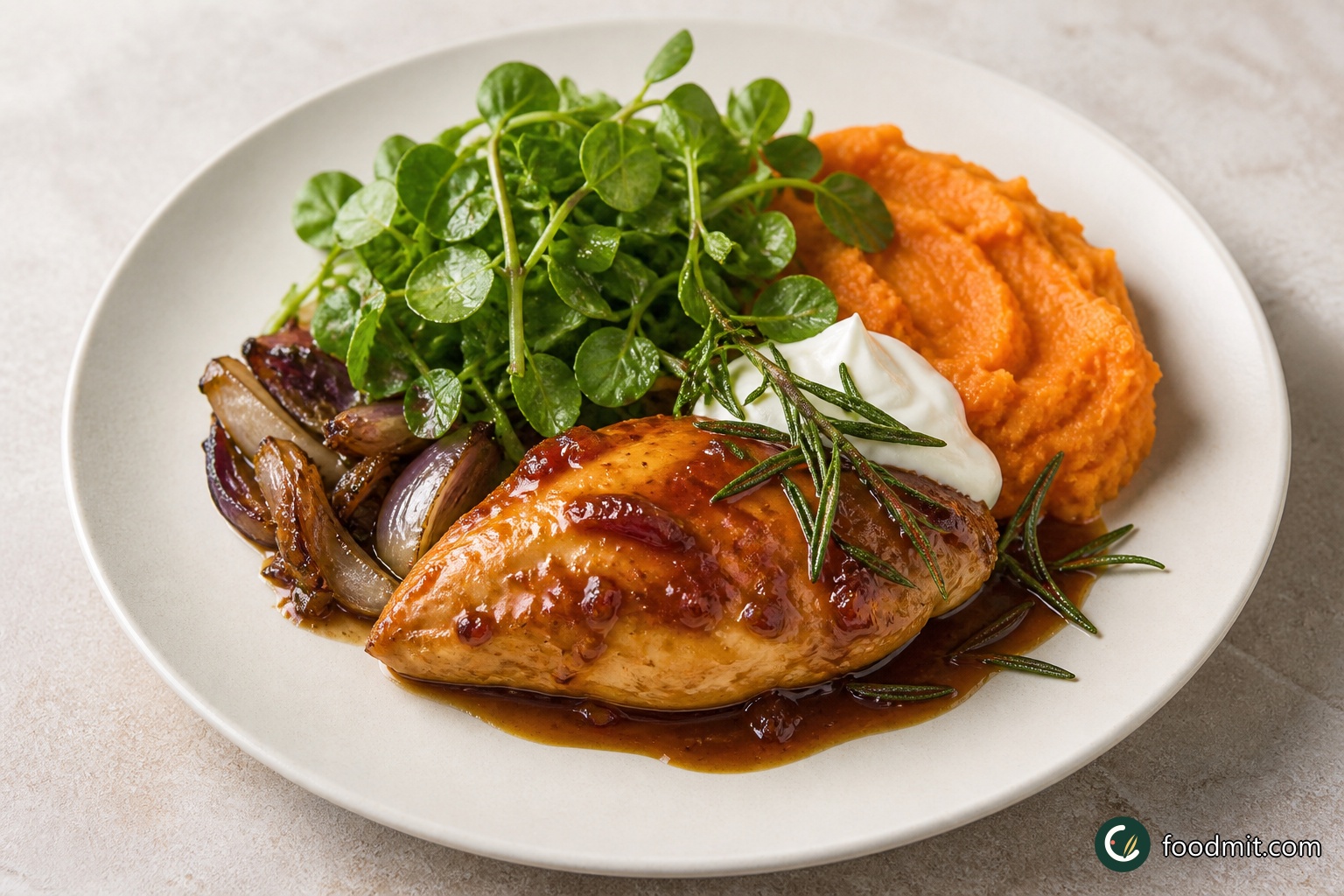
I had been eager to cook Jamie Oliver's Sticky orange chicken because I admire how he turns a few familiar ingredients into a complete dinner without making the evening feel like a project. After making this particular recipe myself, I understood the appeal: every element earns its place, from the sharp greens to the cool spoonful of yoghurt. Sweet potato becomes a soft, sunny mash beneath juicy chicken and tender onion petals. The glaze tastes bright rather than simply sugary, with fresh orange sharpening the marmalade, wholegrain mustard adding gentle bite, and brandy bringing warmth. Crisp rosemary and peppery watercress stop the plate from feeling heavy. Chicken breast can dry out quickly in a fast supper, but the covered start over onions and water keeps it moist before any frying begins. The most important change comes when the lid is removed: I let the water disappear completely, then add the oil so the onions colour, the rosemary crisps, and the citrus sauce can reduce to a shiny coating. I like serving this as soon as it is plated, while the herb leaves still crackle and the dressed watercress retains its spring. The mash catches the extra orange sauce, and a little Greek yoghurt softens each tangy, sticky mouthful. It feels generous enough for a relaxed dinner yet genuinely manageable on a busy day.
 Foodmit
recipe
Per 1/2 of the complete recipe
Nutrition for Sticky orange chicken
- Saturated fat
- 4 g
- Fiber
- 10 g
- Sugars
- 29 g
- Sodium
- 550 mg
Estimated values. Nutrition values are approximate. More precise calculations will be added in a future update.
How to make Sticky orange chicken
-
Step 1
Soften the sweet potatoes
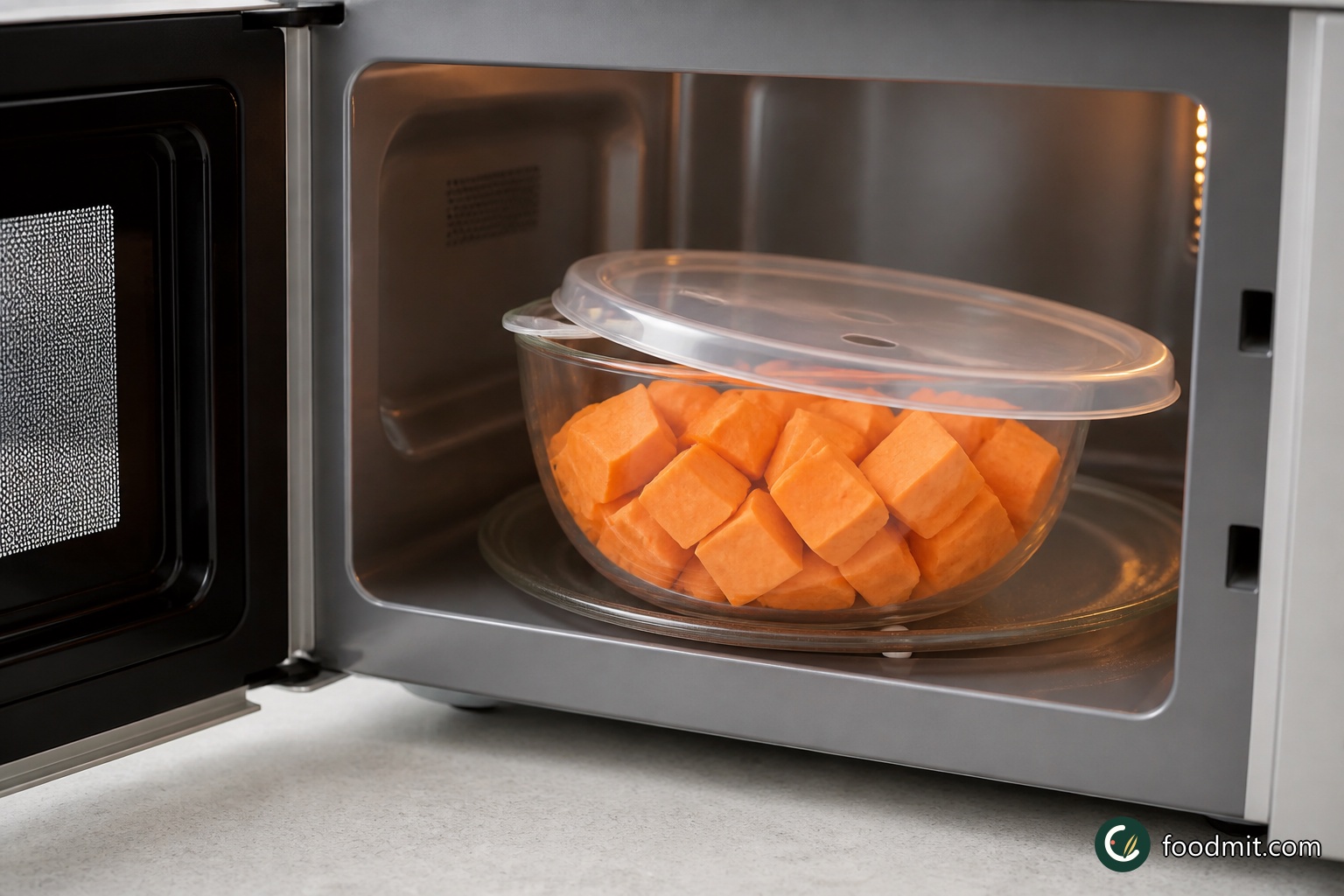
Peel the sweet potatoes and cut them into roughly 3 cm chunks. Put them in a microwave-safe bowl, cover loosely, and microwave at full power in an 800-watt microwave for 7 minutes. Check the thickest pieces with a fork; they should yield all the way through without a firm centre.
-
Step 2
Steam the chicken and onions
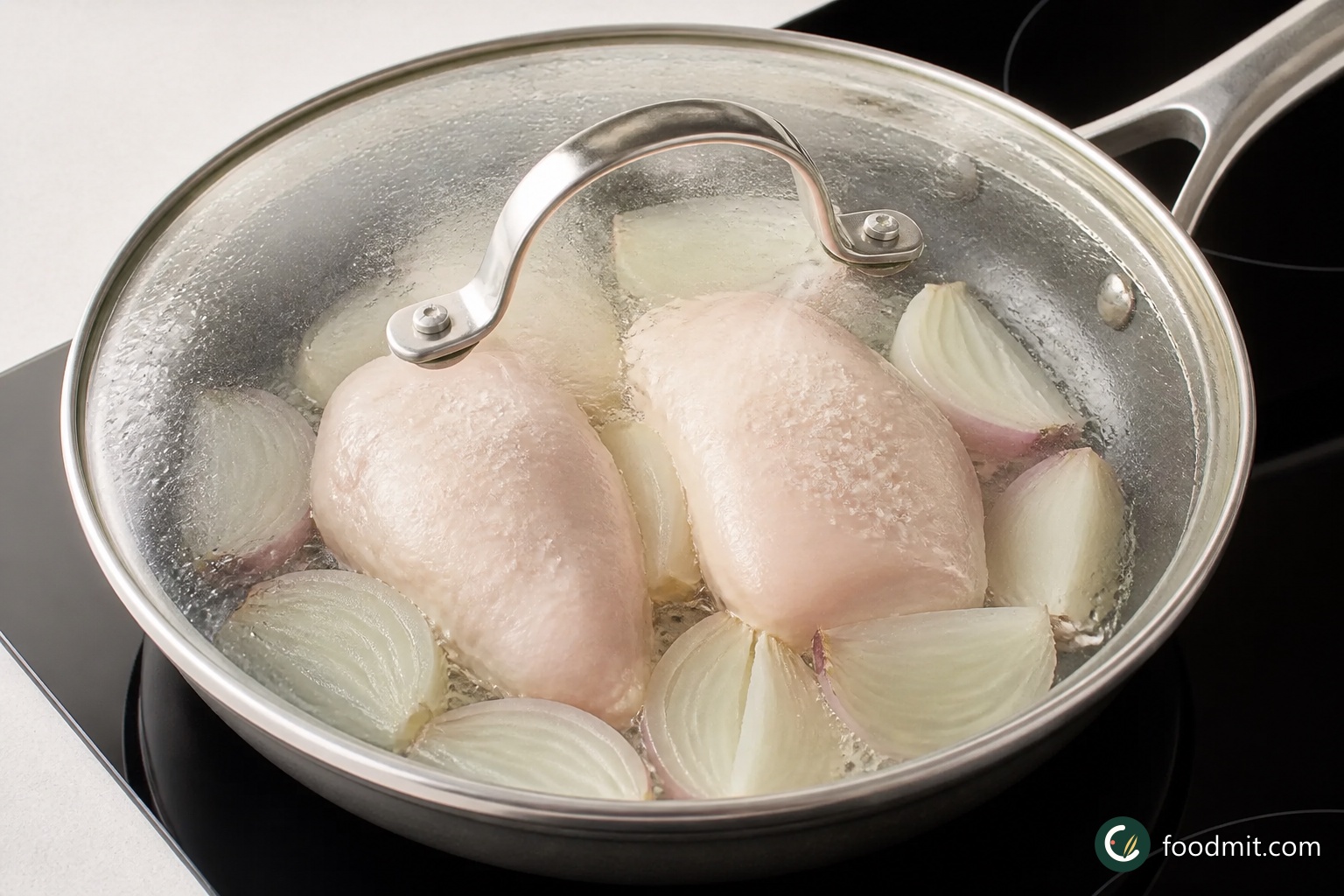
While the potatoes cook, place a large frying pan over medium-high heat. Peel the onion, cut it into eight wedges, and separate the layers into petals. Pour the 150 ml water into the pan with the onion. Lightly season the chicken with sea salt, set the breasts on top of the onions, cover, and cook for 6 minutes, shaking the pan from time to time so the onion moves around. The onion should soften and the chicken will begin turning opaque; it finishes cooking in the sauce.
-
Step 3
Prepare the dressed greens
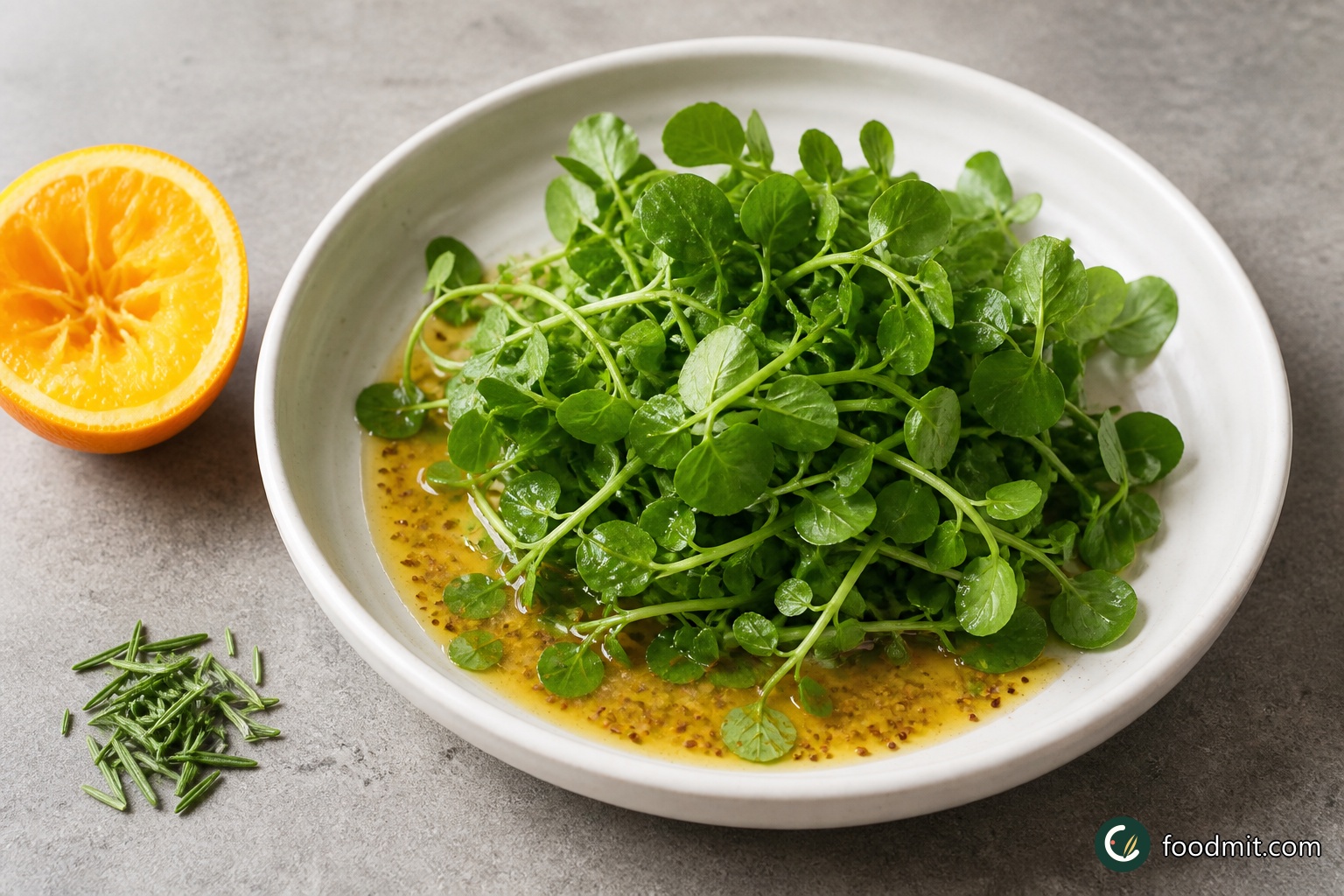
Strip the rosemary leaves from their stems and halve both oranges. Squeeze one orange half into a large, shallow serving bowl. Whisk in the wholegrain mustard, red wine vinegar, 1 teaspoon of the extra virgin olive oil, and a small pinch of sea salt. Set the watercress on top but do not toss it yet; waiting keeps the leaves lively while the hot food finishes.
-
Step 4
Fry and reduce the glaze
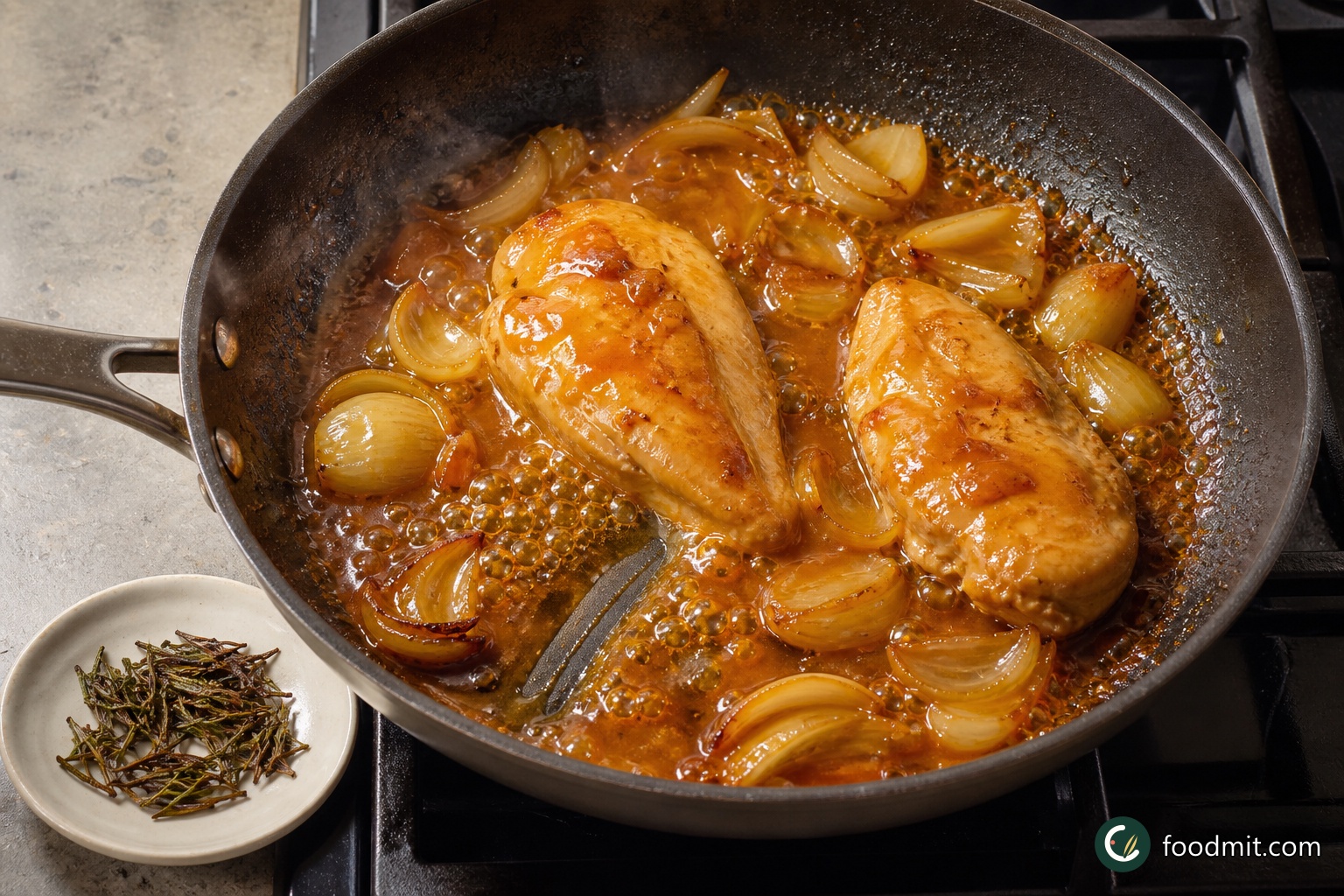
Remove the pan lid and let every visible trace of water boil away. Add the olive oil and allow the chicken and onions to start frying, then push them to one side. Fry the rosemary leaves in the clear side of the pan until crisp and remove them to a plate. Stir in the marmalade, add the brandy, and, only if you are comfortable doing so, carefully ignite it; otherwise let it bubble briskly. Squeeze in the juice from the remaining three orange halves and simmer over low heat for 5 minutes. Spoon the sauce over the chicken as it reduces. It is ready when the glaze looks glossy and clings to the meat, the onions are burnished, and the chicken is opaque through the thickest part and has reached 74°C.
-
Step 5
Mash, dress and plate
Mash the softened potatoes with the remaining 1 teaspoon extra virgin olive oil and season with sea salt. Toss the watercress through the orange-mustard dressing in its bowl. Divide the mash between two plates, add the glazed chicken and onion petals, and spoon over every bit of sauce. Scatter with the crisp rosemary and finish each plate with 1 tablespoon of Greek yoghurt. Serve immediately, while the glaze is shiny and the rosemary is still crisp.
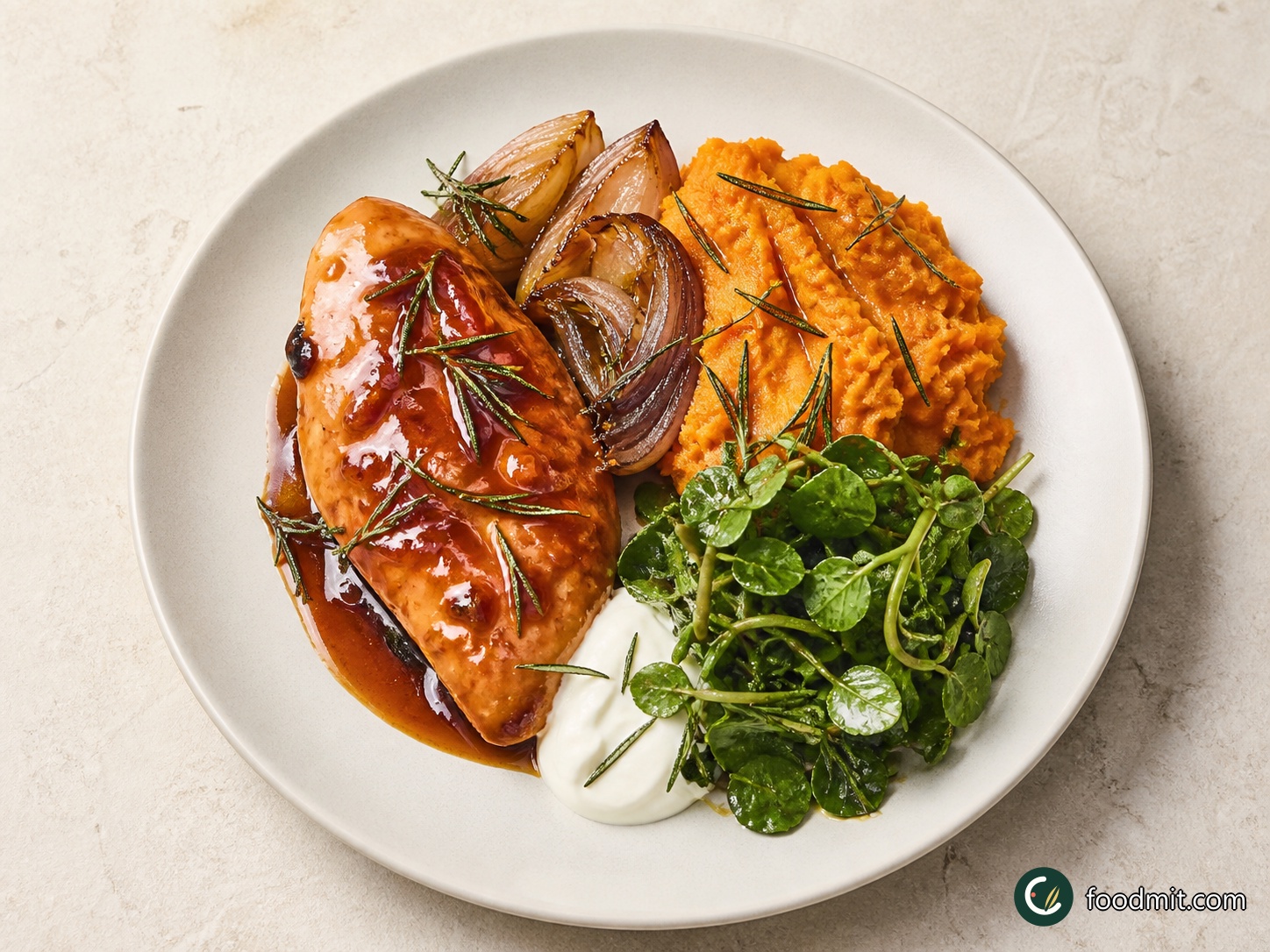
Wait until the measured water has completely evaporated before adding the olive oil; that dry-pan moment is what lets the onions brown and the orange glaze thicken instead of staying watery.
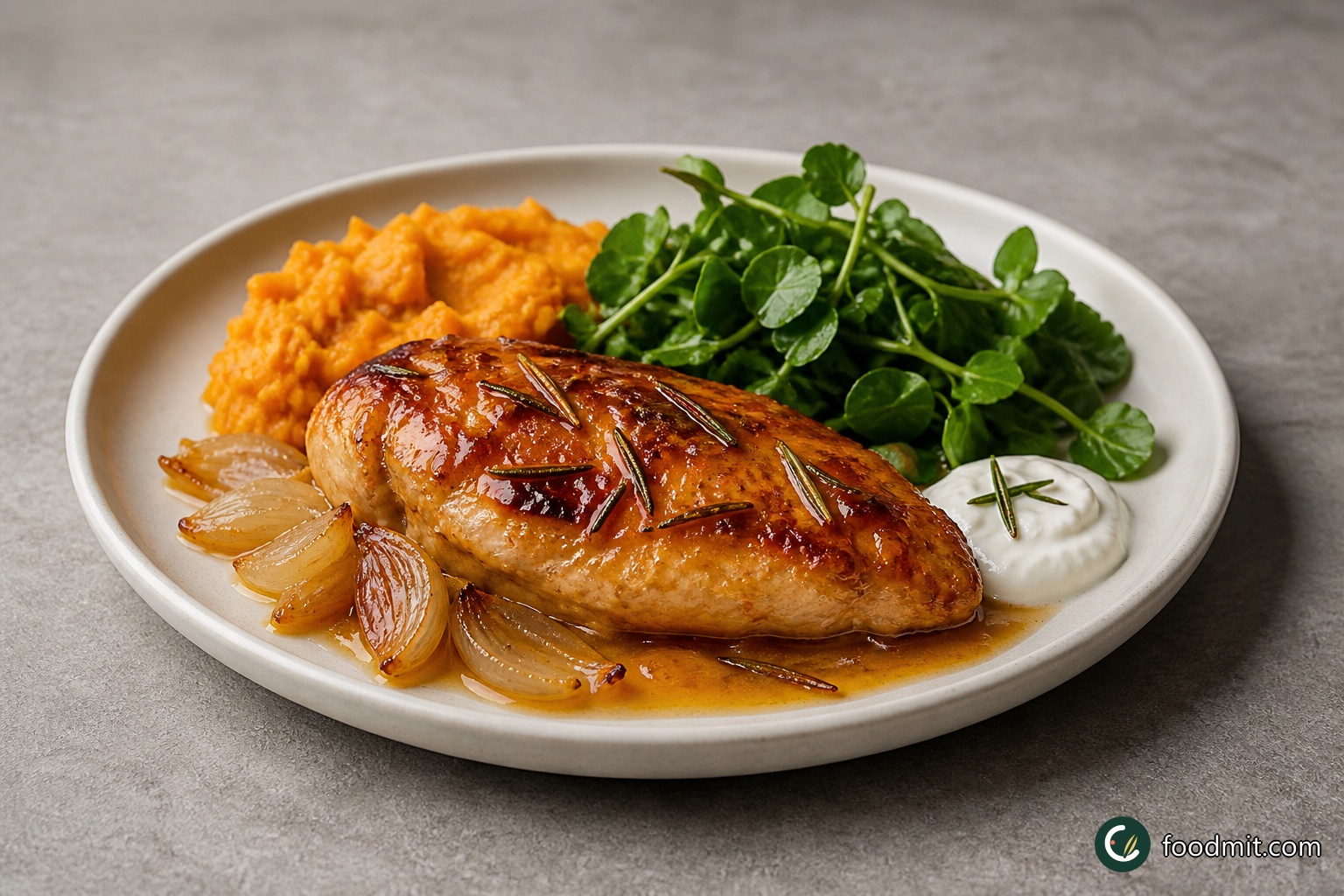
Sticky orange chicken, ready to serve
Serving ideas for Sticky orange chicken
Choose a presentation that fits the occasion, from relaxed sharing to individual plates.
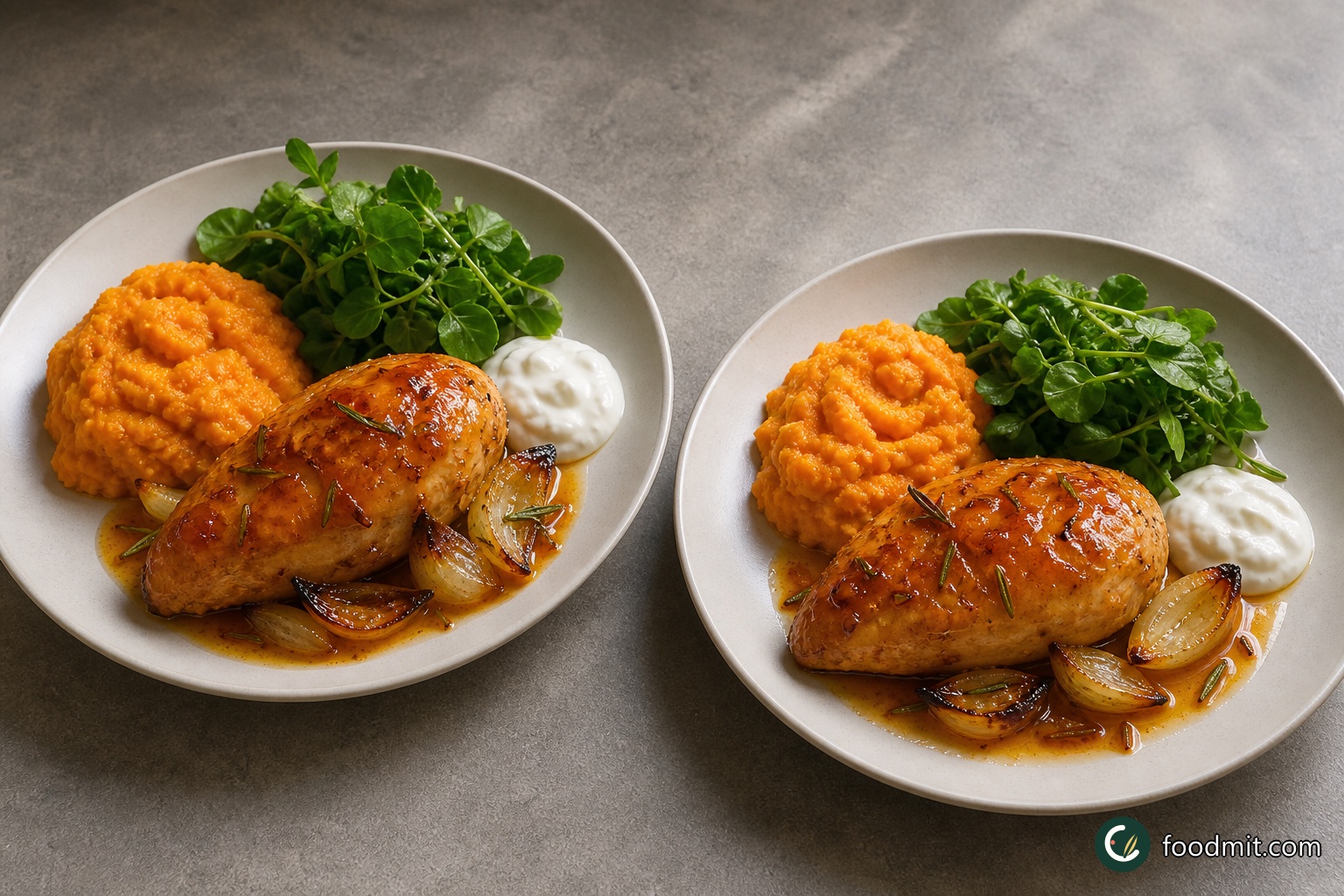
Classic Two-Plate Supper
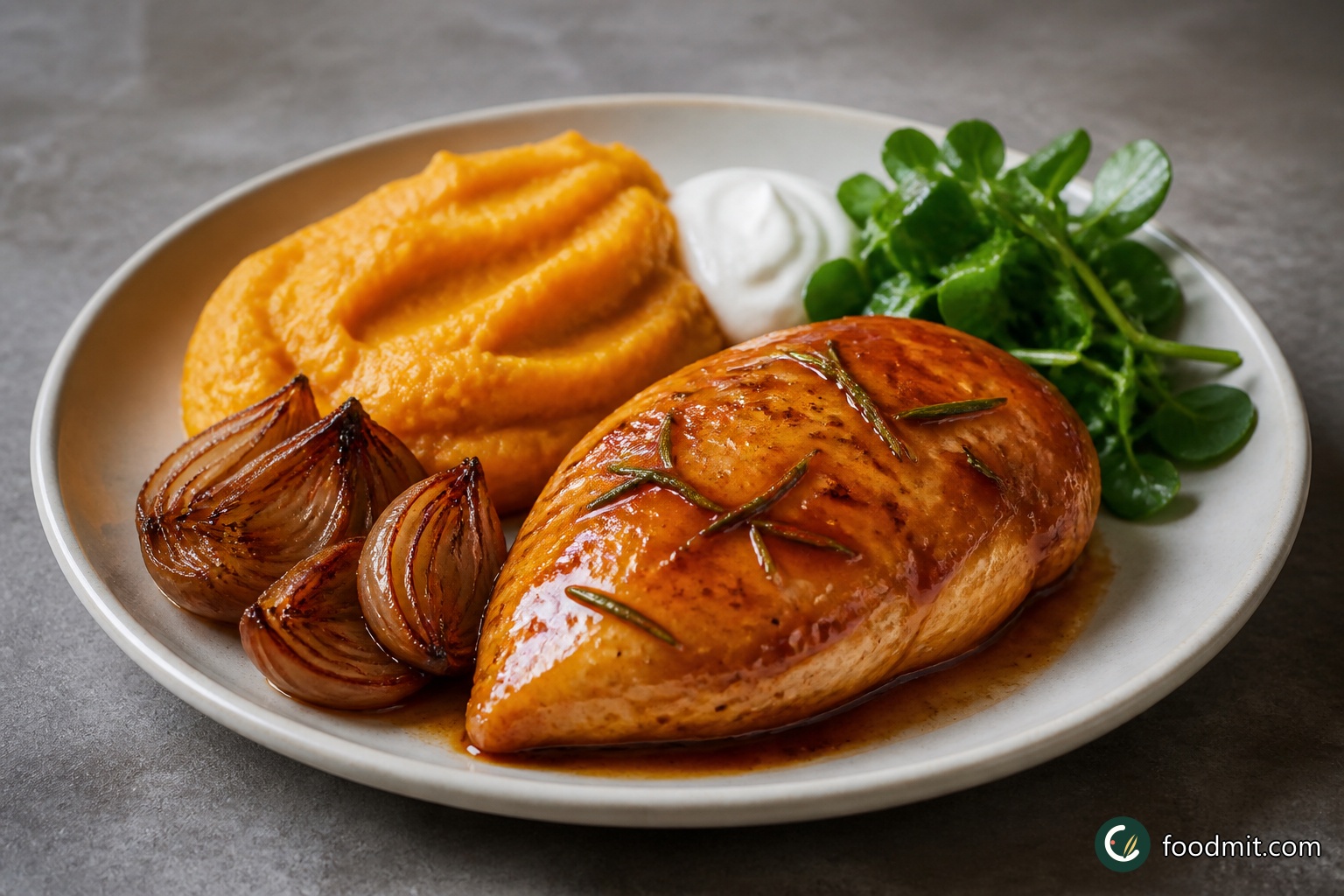
Warm two broad white dinner plates so the mash and sauce do not cool on contact. Spoon the mash just off centre, lay the glazed chicken beside it, and tuck the onion petals partly underneath so their browned edges remain visible. Keep the dressed watercress in a loose mound rather than compressing it, add the yoghurt in a cool dollop, and scatter the rosemary last. This is the presentation I would choose for an easy dinner for two, with the extra pan glaze divided evenly between the plates.
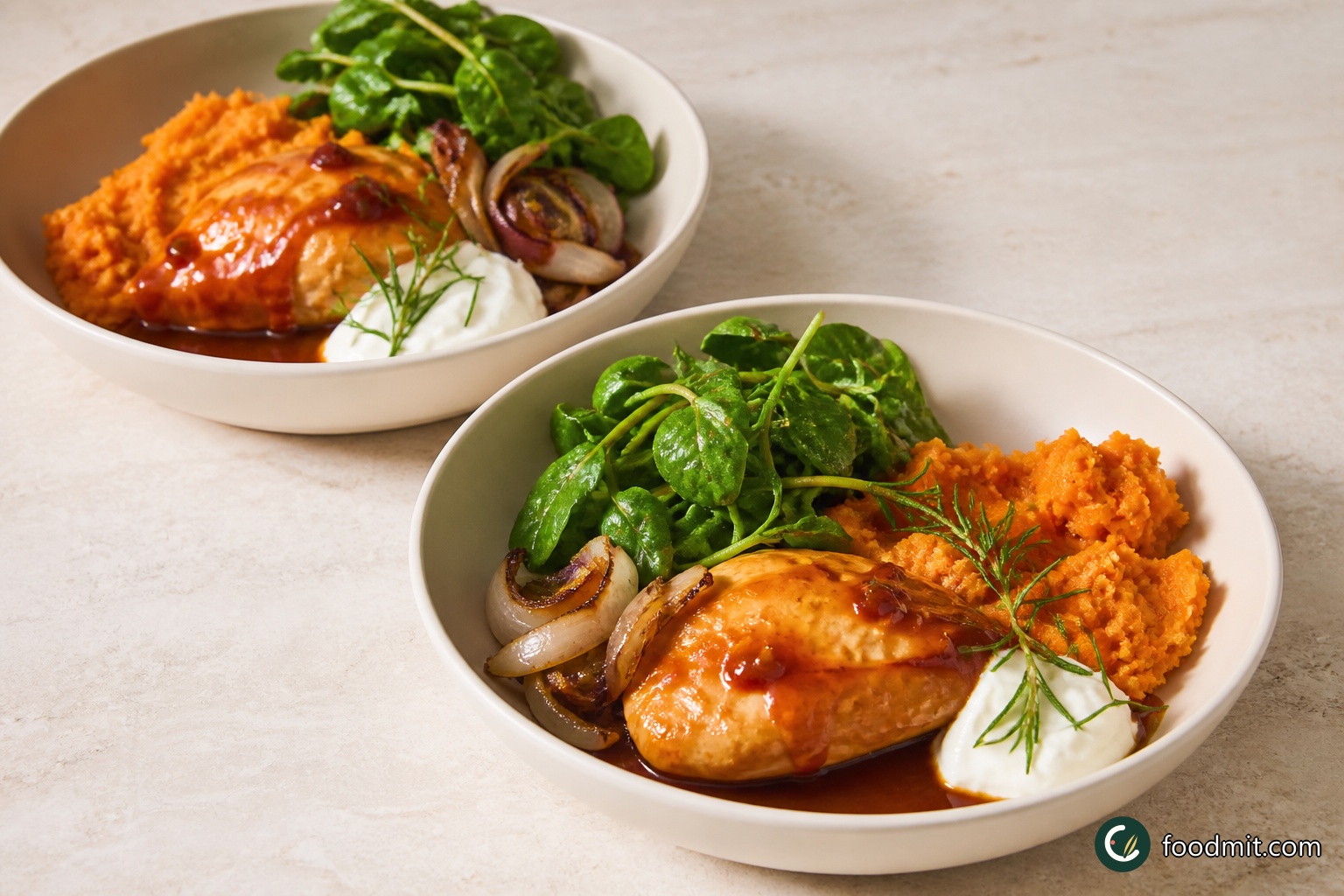
Wide-Bowl Lunch
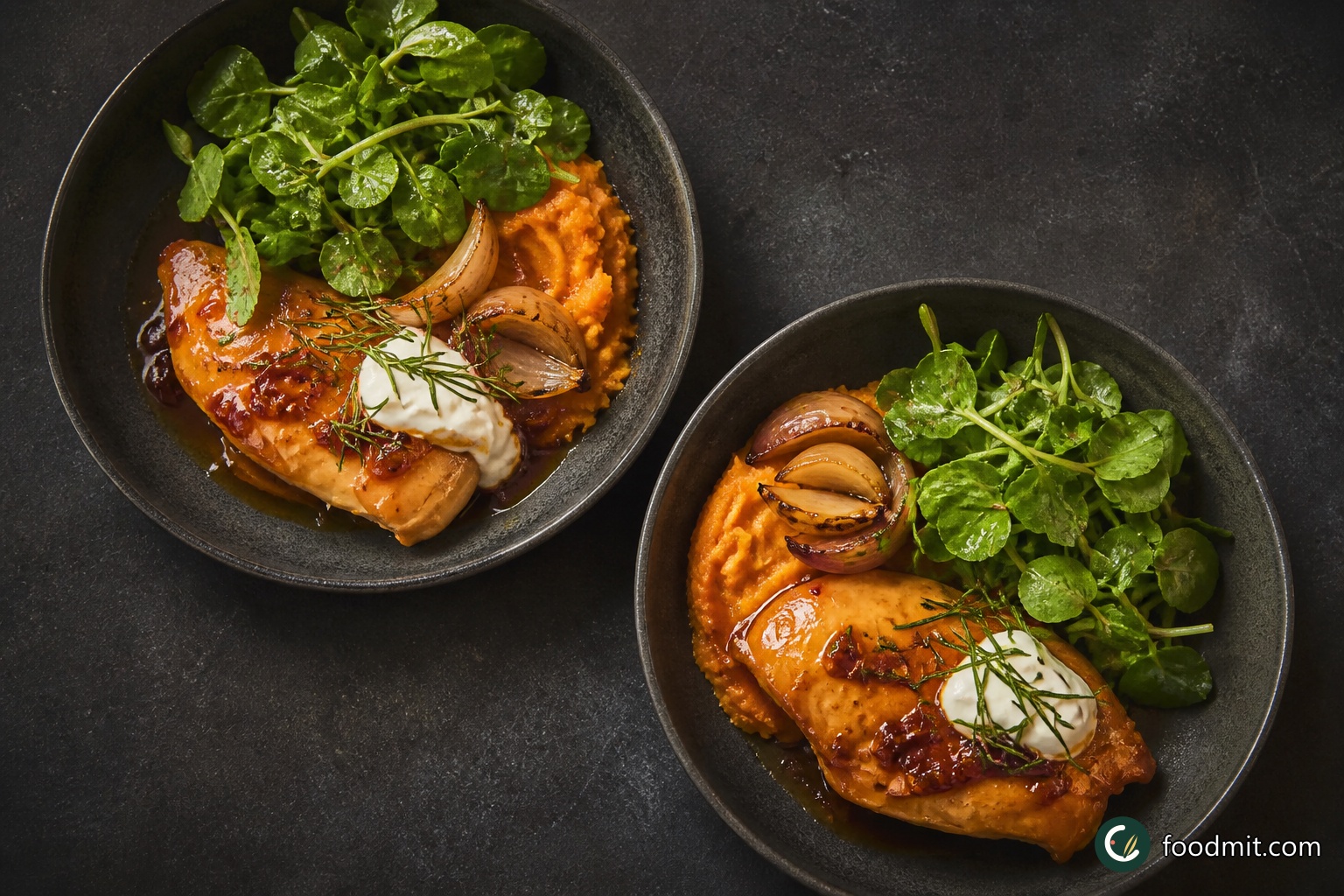
Use two wide, shallow bowls for a relaxed lunch presentation. Spread the mash across one side of each bowl and rest the chicken against it, leaving a low space where the orange glaze can collect without soaking every leaf. Spoon the onions and yoghurt close to the chicken, then place the freshly tossed watercress higher on the opposite side. Finish with the crisp rosemary where it will stay dry. The bowl makes it easy to gather sauce and mash in one forkful while preserving the contrast of the greens.
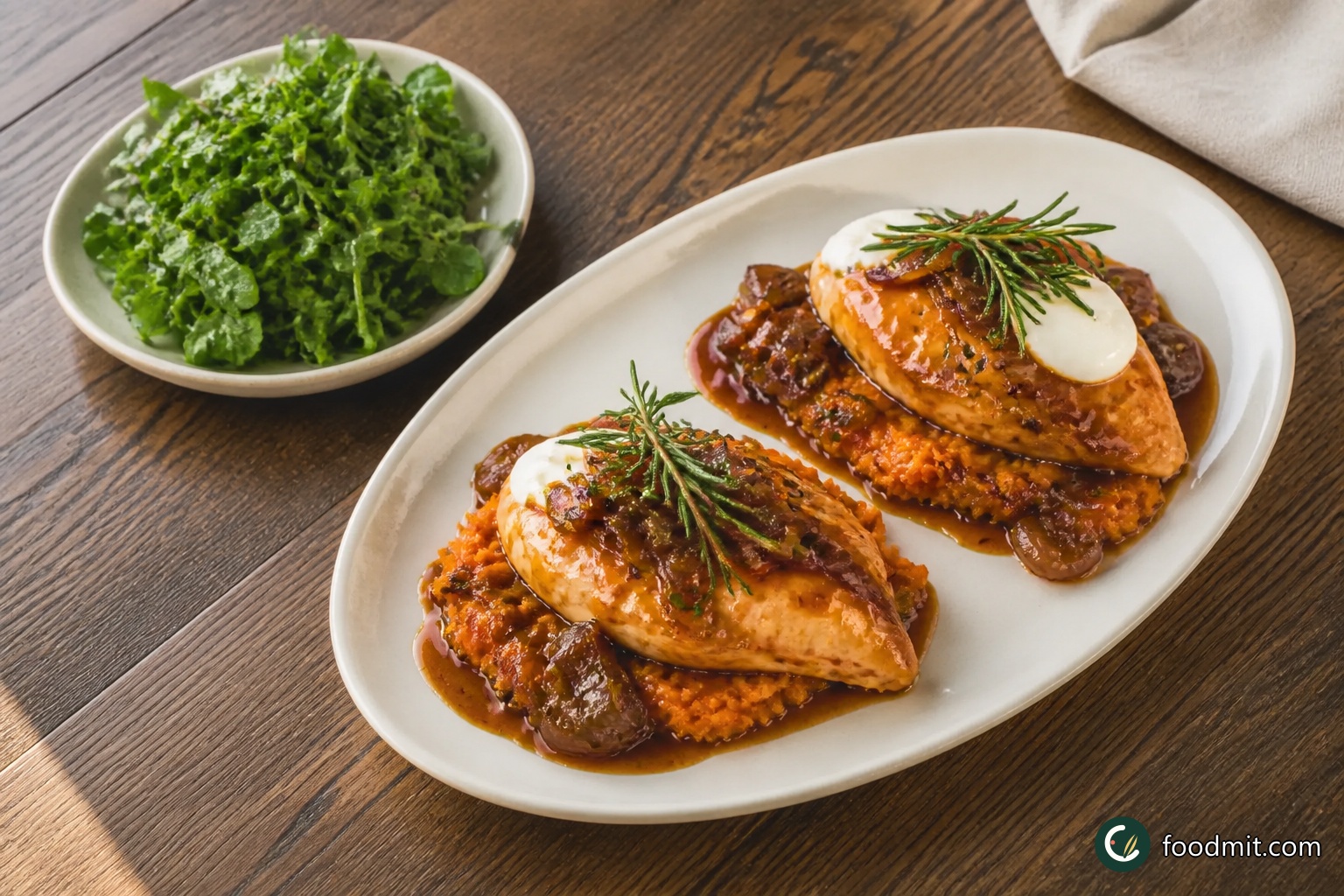
Casual Shared Platter
For a small weekend table, arrange the complete recipe on one warmed oval platter. Make two low beds of mash rather than one large pile, place a glazed piece of chicken on each, and distribute the onion petals and sauce around them so both servings remain clear. Add the yoghurt in separate spoonfuls and crown each portion with crisp rosemary. I would keep the watercress in its shallow dressing bowl alongside and toss it at the table, preserving its freshness while letting each person take a fair share.
Let’s cook Sticky orange chicken together
Check off your ingredients, follow each step, and start the timers when you are ready.
Get everything ready
Step-by-step with timers
Soften the sweet potatoes
Peel the sweet potatoes and cut them into roughly 3 cm chunks. Put them in a microwave-safe bowl, cover loosely, and microwave at full power in an 800-watt microwave for 7 minutes. Check the thickest pieces with a fork; they should yield all the way through without a firm centre.
Steam the chicken and onions
While the potatoes cook, place a large frying pan over medium-high heat. Peel the onion, cut it into eight wedges, and separate the layers into petals. Pour the 150 ml water into the pan with the onion. Lightly season the chicken with sea salt, set the breasts on top of the onions, cover, and cook for 6 minutes, shaking the pan from time to time so the onion moves around. The onion should soften and the chicken will begin turning opaque; it finishes cooking in the sauce.
Prepare the dressed greens
Strip the rosemary leaves from their stems and halve both oranges. Squeeze one orange half into a large, shallow serving bowl. Whisk in the wholegrain mustard, red wine vinegar, 1 teaspoon of the extra virgin olive oil, and a small pinch of sea salt. Set the watercress on top but do not toss it yet; waiting keeps the leaves lively while the hot food finishes.
Fry and reduce the glaze
Remove the pan lid and let every visible trace of water boil away. Add the olive oil and allow the chicken and onions to start frying, then push them to one side. Fry the rosemary leaves in the clear side of the pan until crisp and remove them to a plate. Stir in the marmalade, add the brandy, and, only if you are comfortable doing so, carefully ignite it; otherwise let it bubble briskly. Squeeze in the juice from the remaining three orange halves and simmer over low heat for 5 minutes. Spoon the sauce over the chicken as it reduces. It is ready when the glaze looks glossy and clings to the meat, the onions are burnished, and the chicken is opaque through the thickest part and has reached 74°C.
Mash, dress and plate
Mash the softened potatoes with the remaining 1 teaspoon extra virgin olive oil and season with sea salt. Toss the watercress through the orange-mustard dressing in its bowl. Divide the mash between two plates, add the glazed chicken and onion petals, and spoon over every bit of sauce. Scatter with the crisp rosemary and finish each plate with 1 tablespoon of Greek yoghurt. Serve immediately, while the glaze is shiny and the rosemary is still crisp.
Sticky orange #chicken #Recipe Inspired by Jamie Oliver
The story behind Sticky orange chicken
Recipe notes by Sophie
Why This One Pulled Me In
I have followed Jamie Oliver's cooking for years because he has a gift for making an ordinary supermarket basket feel more interesting without losing sight of dinner. This recipe caught me with its short ingredient list and the promise that the main, vegetable, greens, and sauce would all arrive together. Once I cooked it, I appreciated that the speed does not come from leaving parts out. Instead, the method gives each ingredient a focused job. The microwave handles the dense potatoes, the covered pan gently gets the meat underway, and the raw watercress waits for a last-minute toss. I set everything out before turning on the heat, including measuring the water, oils, marmalade, and brandy. That small bit of organisation mattered because the recipe moves briskly once the lid comes off. What I enjoyed most was watching modest ingredients become a plate with real contrast: orange mash, dark glazed onions, green leaves, white yoghurt, and little needles of fried rosemary. It looked far more considered than the effort suggested, which is exactly the sort of practical generosity I admire in his recipes.
The Moment the Pan Changes
Cooking this taught me that the recipe has two distinct pan stages, and respecting the handover between them made all the difference. During the covered six minutes, the water and onions create a moist environment, so I resisted lifting the lid repeatedly. I only gave the pan the occasional shake called for. When I uncovered it, there was still a shallow wash of liquid around the softened onion petals. I waited until that had boiled away before reaching for the oil. The sound changed from a soft simmer to a proper sizzle, and that was my cue that frying had begun. Making an open patch for the rosemary also proved smarter than scattering it everywhere; I could see the leaves deepen and lift them out as soon as they were crisp. I chose to flame the brandy, keeping well back and treating it as the optional flourish it is, not a test of the recipe. Letting it bubble without lighting would still follow the useful part of the method. Once the remaining juice went in, the pan looked loose again, but five quiet minutes transformed it. I spooned the reducing sauce over the meat and stopped when it coated rather than flooded the surface. That patience produced the sticky finish I had hoped for without scorching the marmalade.
How It Ate at My Table
At the table, the best mouthful was a little of everything rather than any component on its own. The mash absorbed the sharp-sweet sauce, the yoghurt cooled its intensity, and the mustardy watercress brought a clean, peppery snap after the richer bites. I had wondered whether the rosemary was merely decorative, but frying it made the leaves brittle and deeply aromatic; they gave the soft plate a needed crisp edge. The onions were another quiet success. Cutting them into petals let some edges colour while the thicker layers stayed tender enough to pick up with the chicken. I also understood why the greens are placed over the dressing instead of mixed immediately. Tossed only at the end, they arrived glossy but not collapsed. This is not a dish I would leave assembled while everyone drifts to the table. I warmed the plates, had the yoghurt ready, and served as soon as the sauce had reduced. That kept the temperature and textures in balance. For me, it landed in the sweet spot between a quick lunch and a proper dinner for two: colourful, satisfying, and just theatrical enough to make an ordinary day feel cared for.