
3 Cheese Macaroni Recipe Inspired by Martha Stewart
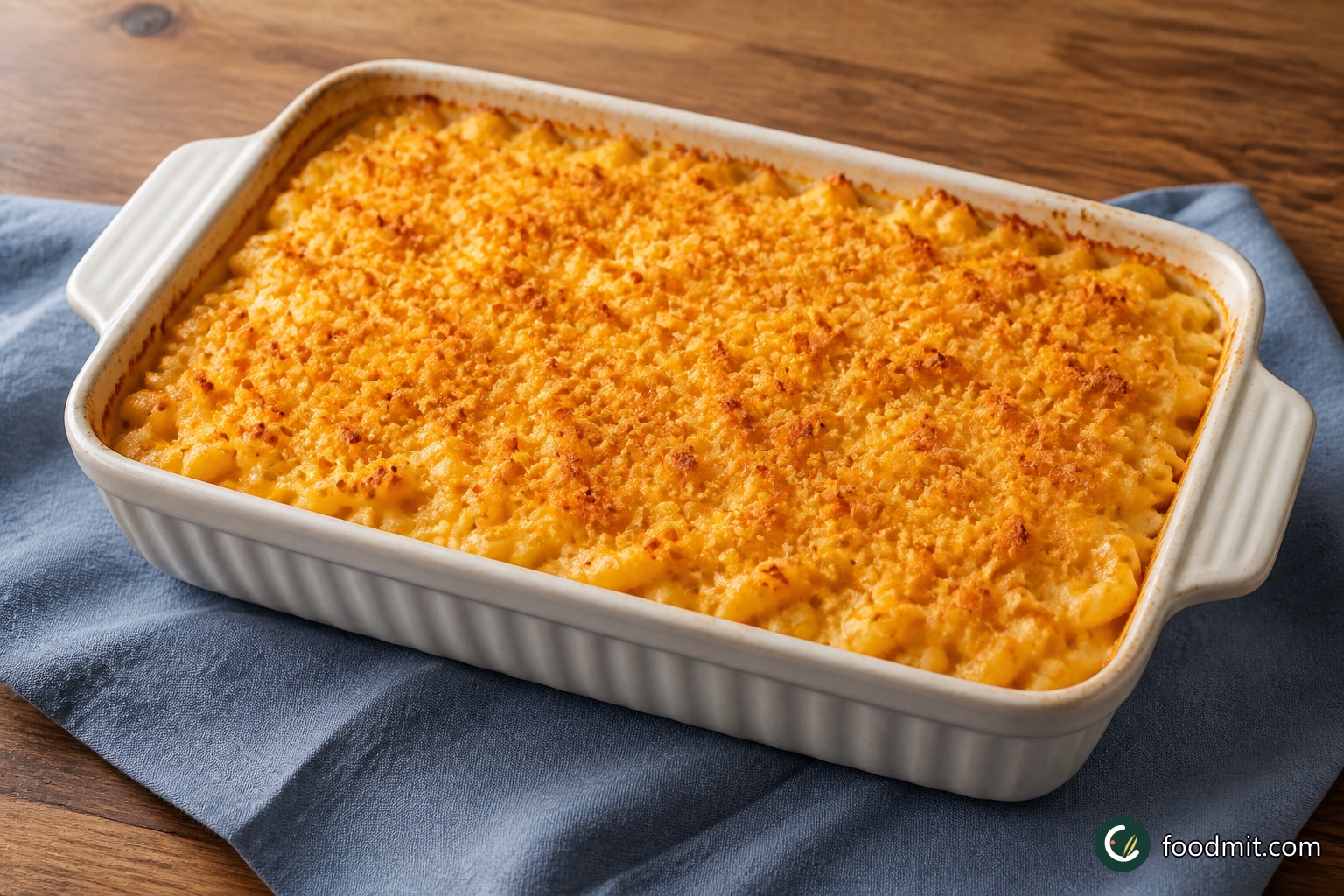
As a longtime admirer of Martha Stewart’s practical approach to classic comfort food, I was excited to cook her 3 Cheese Macaroni for my own table. It has the generosity I hoped for: a full pound of elbows, a proper milk-based sauce, and a crisp topping that makes the finished dish feel considered rather than merely heavy. The three cheeses each earn their place. Sharp cheddar gives the sauce its familiar tang and color, Gruyère adds a deeper savory note, and fontina melts into a particularly supple base. Paprika, cayenne, nutmeg, salt, and black pepper sit in the background, while the panko forms a buttery golden contrast to the creamy pasta beneath it. The most useful lesson for me was to treat the sauce as a sequence instead of rushing it. I warmed the milk, cooked the flour briefly in bubbling butter, and then whisked the milk in gradually until the béchamel visibly thickened and began to bubble. Taking the pan off the heat before stirring in most of the cheese kept the process controlled, and stopping the macaroni at al dente gave it room to finish in the oven. I liked the individual pie plates for their crisp edges and ready-made portions, though the 9-by-13-inch dish is the practical choice for a family table or buffet. After fifteen minutes in the oven and a five-minute rest, the top was melted and golden, the center was hot, and each serving held together without losing the soft, saucy character that drew me to the recipe.
 Foodmit
recipe
Per 1 individual pie plate or 1/10 of baking dish
Nutrition for 3 Cheese Macaroni
- Saturated fat
- 18 g
- Fiber
- 2 g
- Sugars
- 7 g
- Sodium
- 540 mg
Estimated values. Nutrition values are approximate. More precise calculations will be added in a future update.
How to make 3 Cheese Macaroni
-
Step 1
Prepare the Dishes and Panko
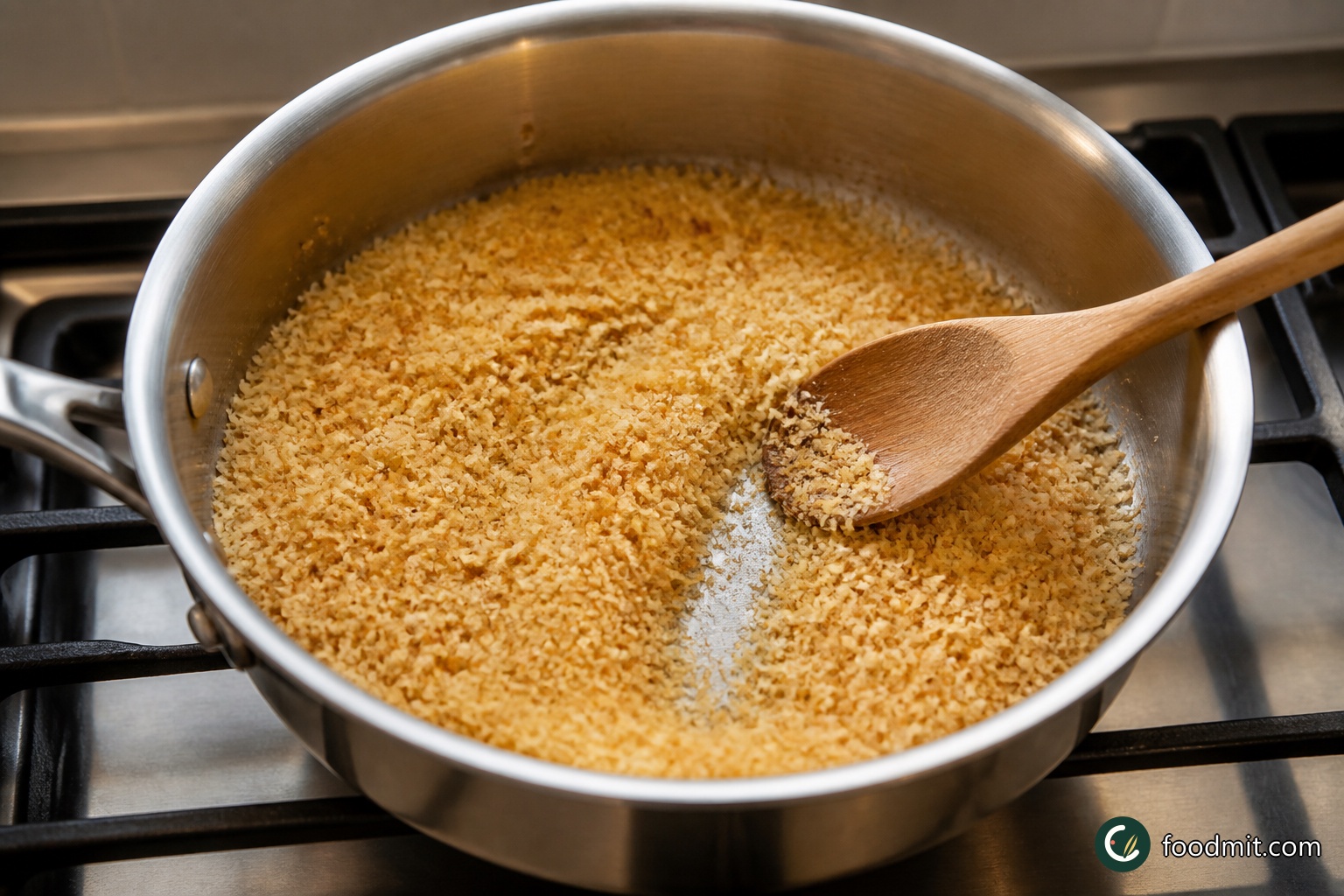
Heat the oven to 375°F. Butter ten 1-cup mini pie plates or one 9-by-13-inch baking dish. Melt 2 tablespoons of the butter in a small saucepan over medium heat, add the panko, and cook with occasional stirring for about 5 minutes. The crumbs should be evenly golden rather than dark at the edges; take them off the heat once they are crisp and colored.
-
Step 2
Warm the Milk and Cook the Roux
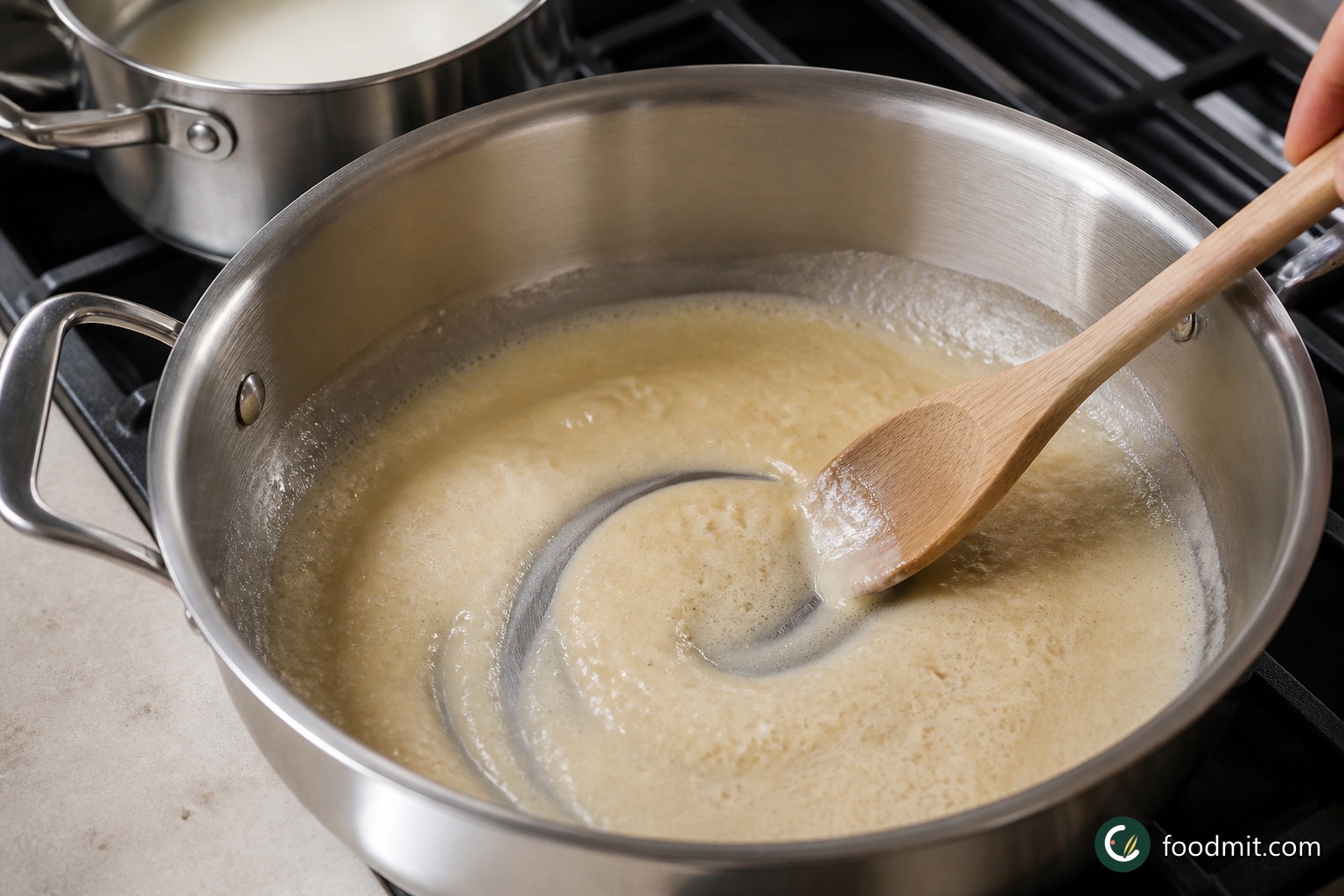
Warm the whole milk in a medium saucepan over medium heat; it needs to be hot but does not need to boil. At the same time, melt the remaining 6 tablespoons butter in a large, high-sided skillet over medium heat. When the butter is actively bubbling, stir in the flour and cook it for 1 minute, stirring continuously so the flour is moistened and loses its raw edge without taking on color.
-
Step 3
Thicken the White Sauce
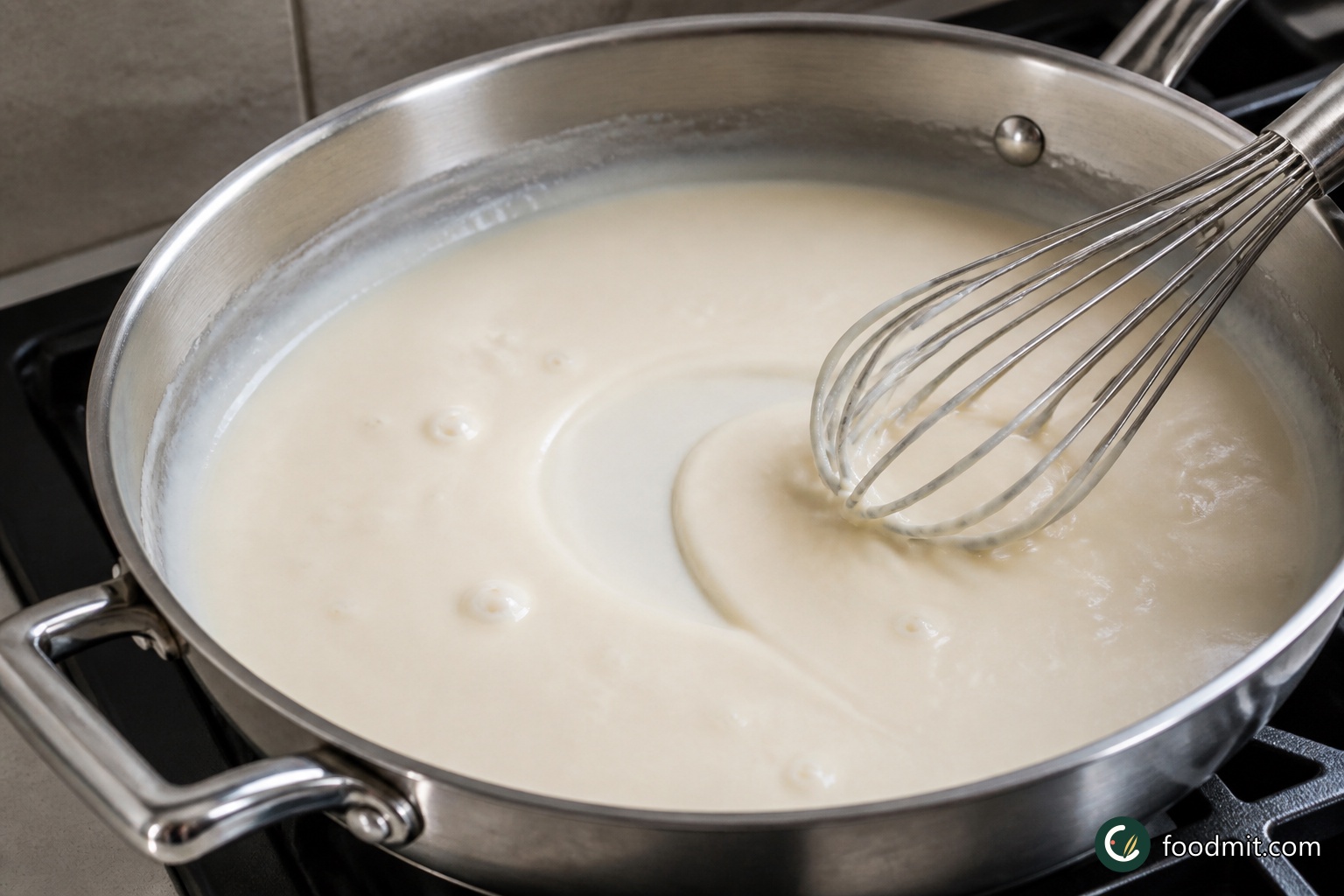
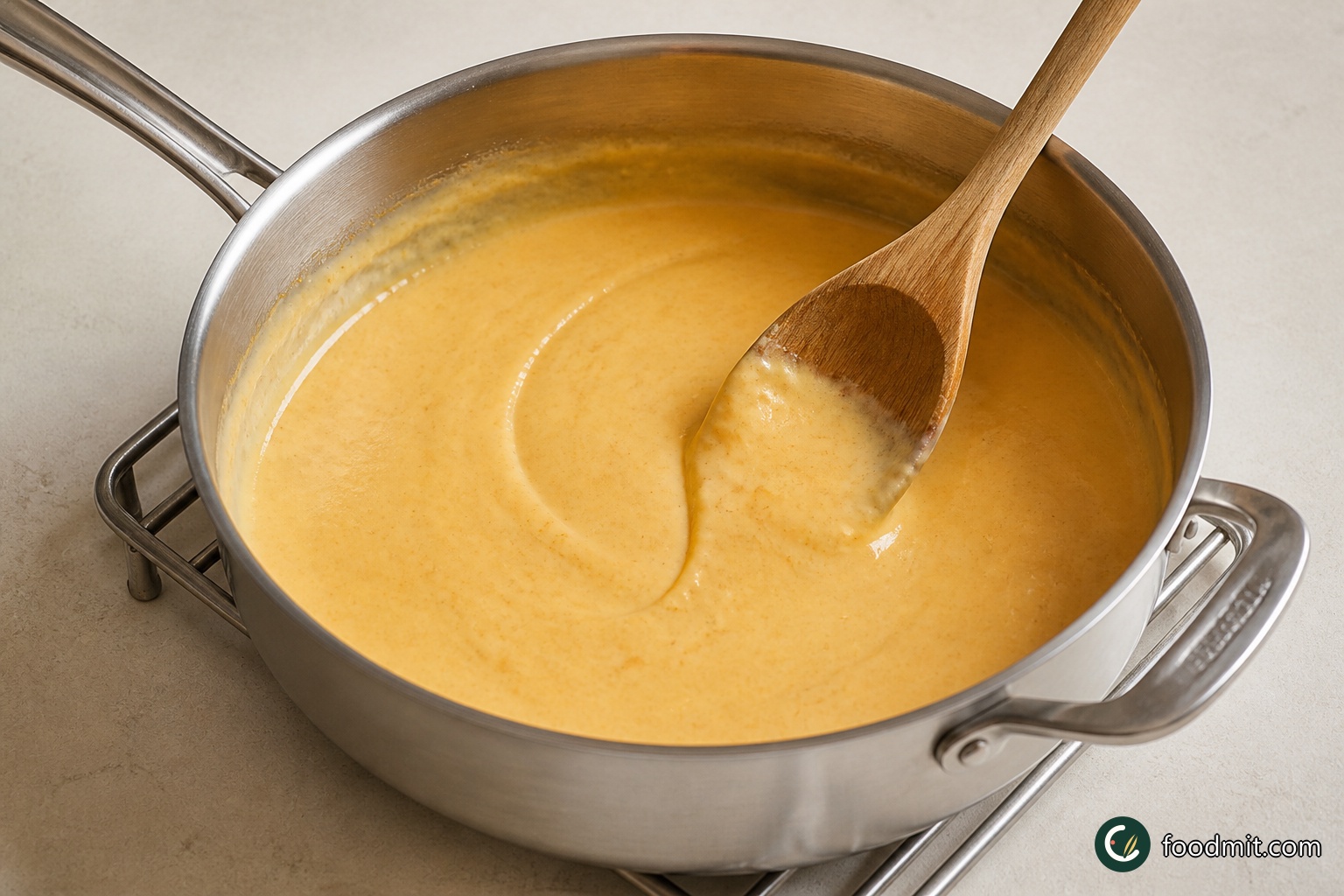
Pour the warm milk into the butter-and-flour mixture a little at a time while whisking constantly. Continue to whisk over medium heat for about 5 minutes. The sauce is ready for the cheese when bubbles break at the surface and the mixture has thickened enough to leave a brief trail behind the whisk; keep reaching into the corners of the skillet so no floury patches remain.
-
Step 4
Melt in the Cheese and Seasonings
Remove the skillet from the heat. Stir in 3 cups of the cheddar, 1 cup of the Gruyère, and 1 cup of the fontina, reserving the rest of all three cheeses for the top. Add 1/2 teaspoon coarse salt, 1/4 teaspoon black pepper, the nutmeg, paprika, and cayenne. Stir until the cheese has melted into the sauce and the seasonings are evenly dispersed.
-
Step 5
Cook the Macaroni
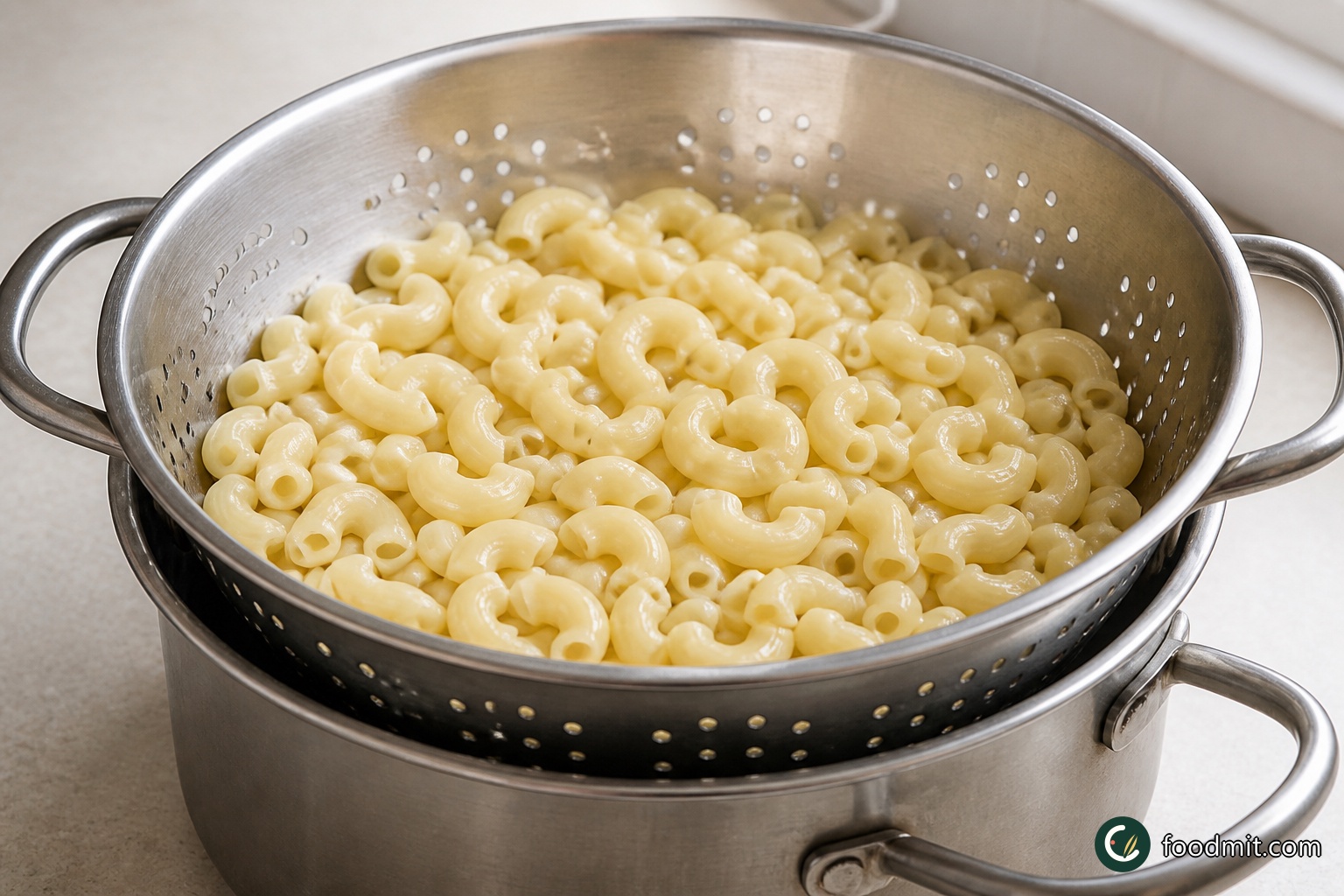
Bring a large pot of water to a full boil. Add the elbow macaroni and cook it only until al dente, following the pasta’s progress rather than letting it become completely soft. Drain thoroughly as soon as the elbows are tender but still have a slight firmness, since they will cook again after they are mixed with the sauce and placed in the oven.
-
Step 6
Assemble the Macaroni
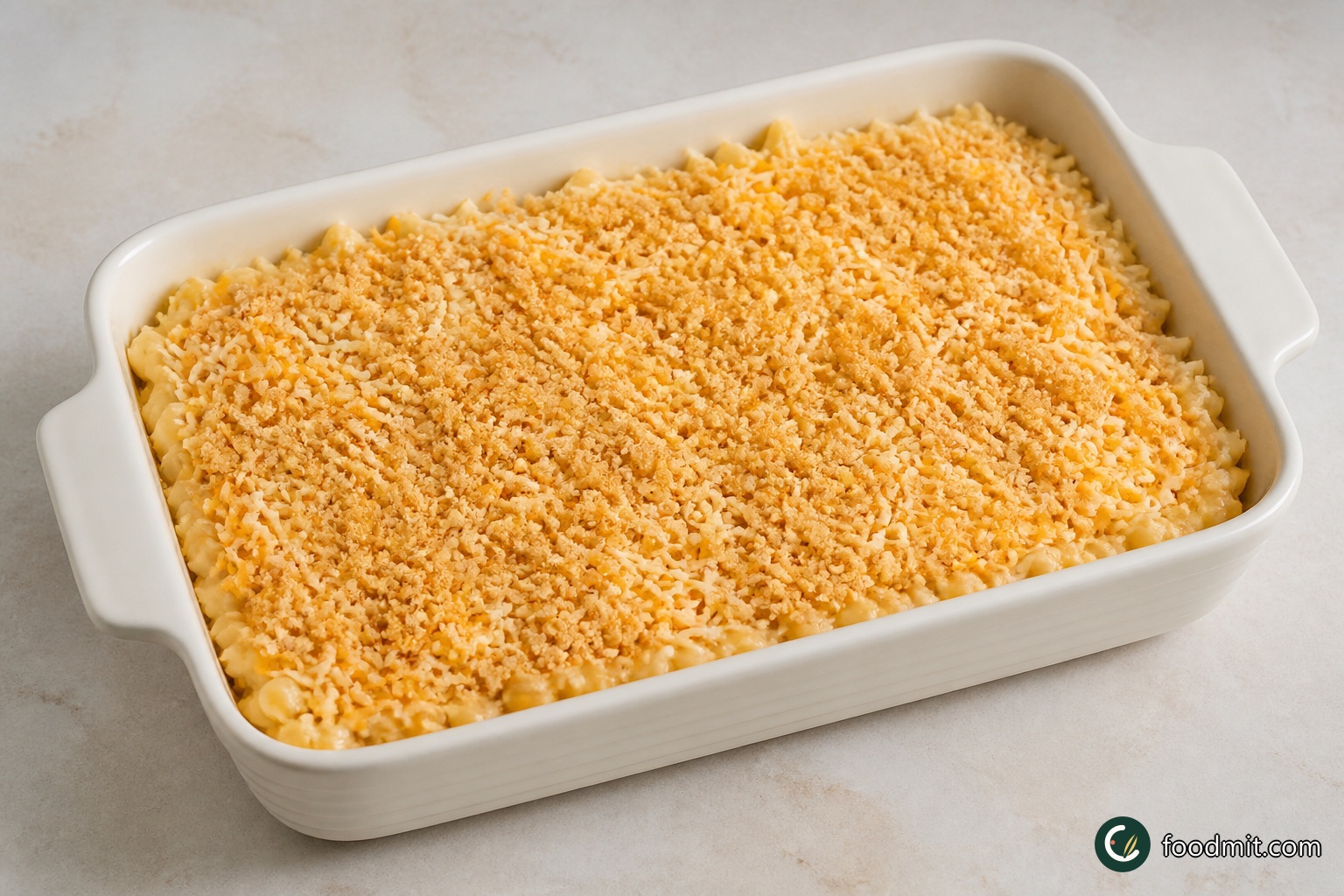
Transfer the drained macaroni directly to the cheese sauce and stir until every elbow is coated. Spoon the mixture evenly into the ten prepared pie plates, or spread all of it in the prepared 9-by-13-inch dish. Scatter the reserved 1 cup cheddar, 1/2 cup Gruyère, and 1/2 cup fontina over the surface, then finish with an even layer of the toasted panko.
-
Step 7
Bake Until Hot and Melted
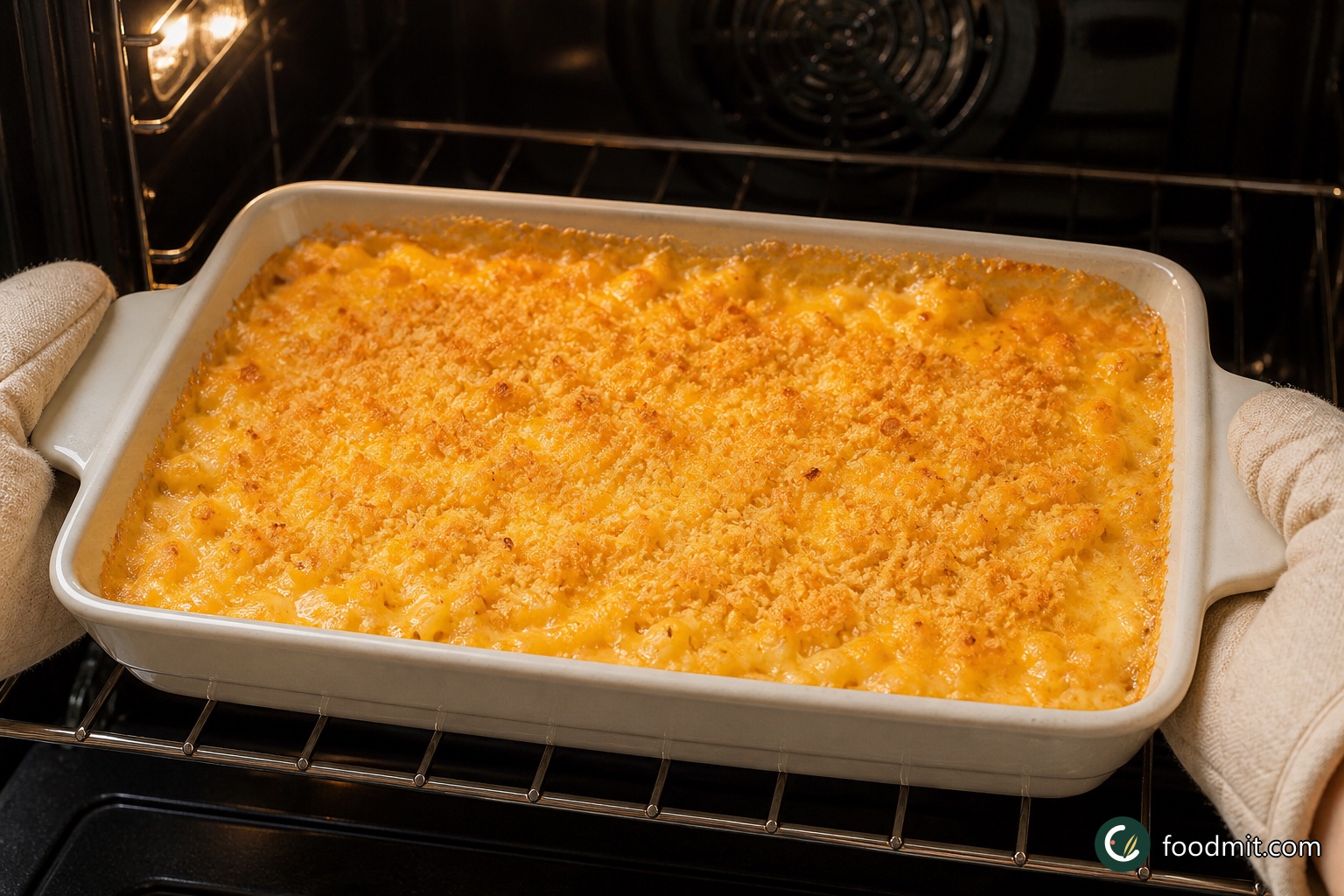
Bake the assembled macaroni for about 15 minutes. Look for the cheese on top to be fully melted and for the pasta in the center to be heated through; the crumbs should retain their golden color and crisp appearance. The goal is to warm and unite the components, not to leave the dish in long enough for the sauce to dry out.
-
Step 8
Rest Before Serving
Set the individual plates or baking dish on a wire rack and leave the macaroni undisturbed for 5 minutes. This short pause lets the very hot sauce settle around the elbows and makes the portions easier to serve while the top remains crisp. Bring it to the table after the rest, while the cheese is still soft and the center is warm.
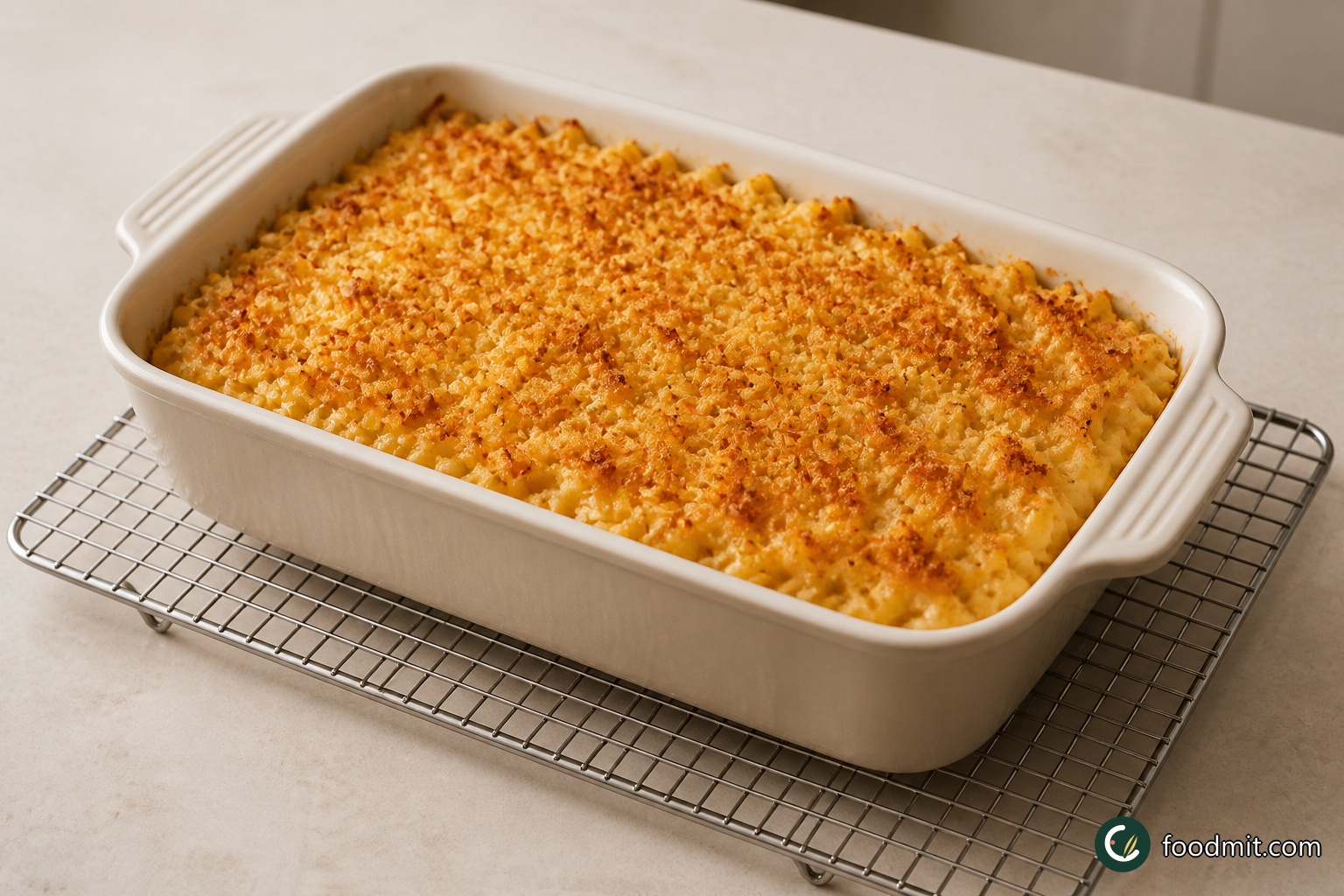
Measure and grate all three cheeses before starting the roux. The white sauce thickens quickly, and having each portion ready makes it easy to remove the pan from the heat and melt in the cheese without overcooking the base.
3 Cheese Macaroni, ready to serve
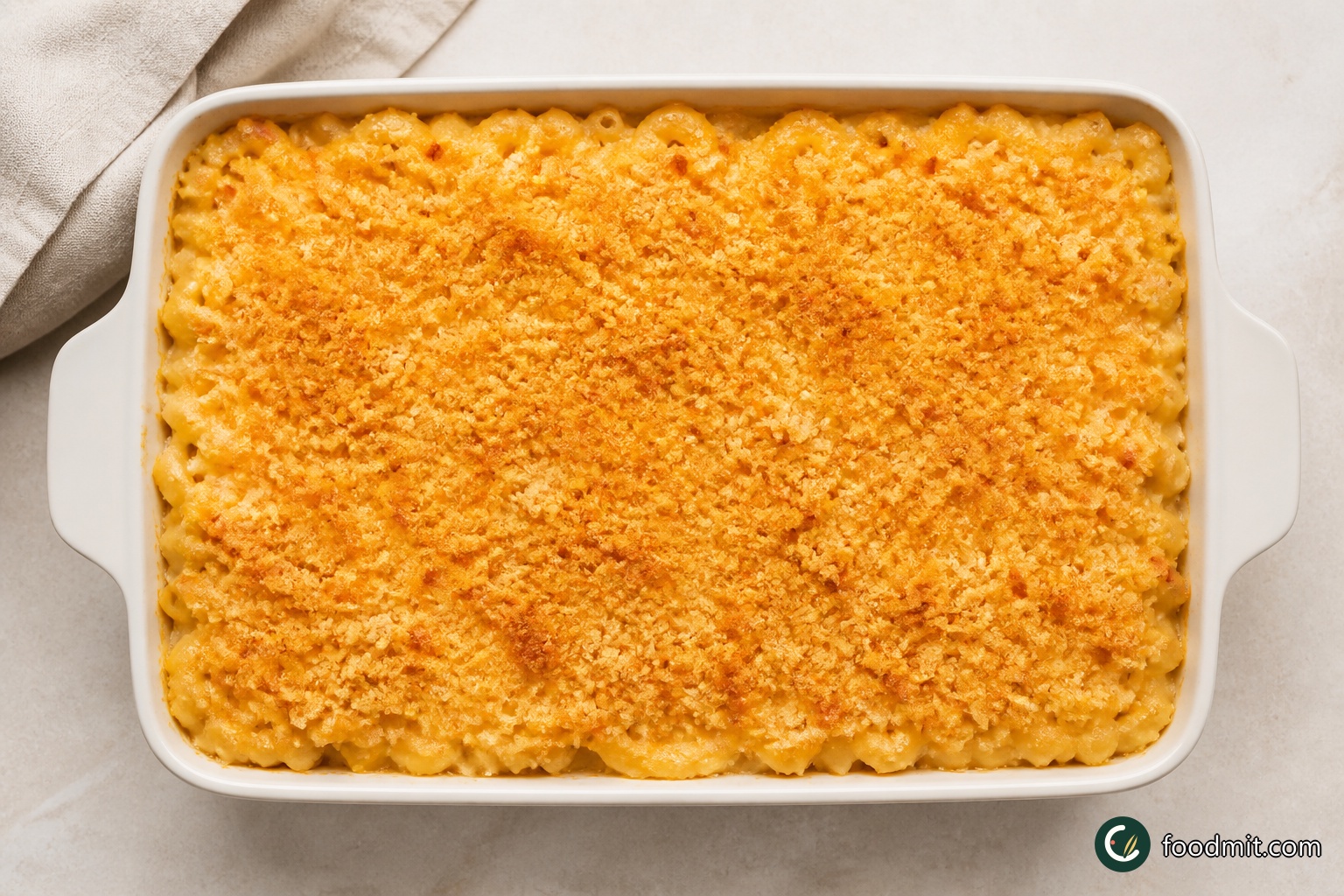
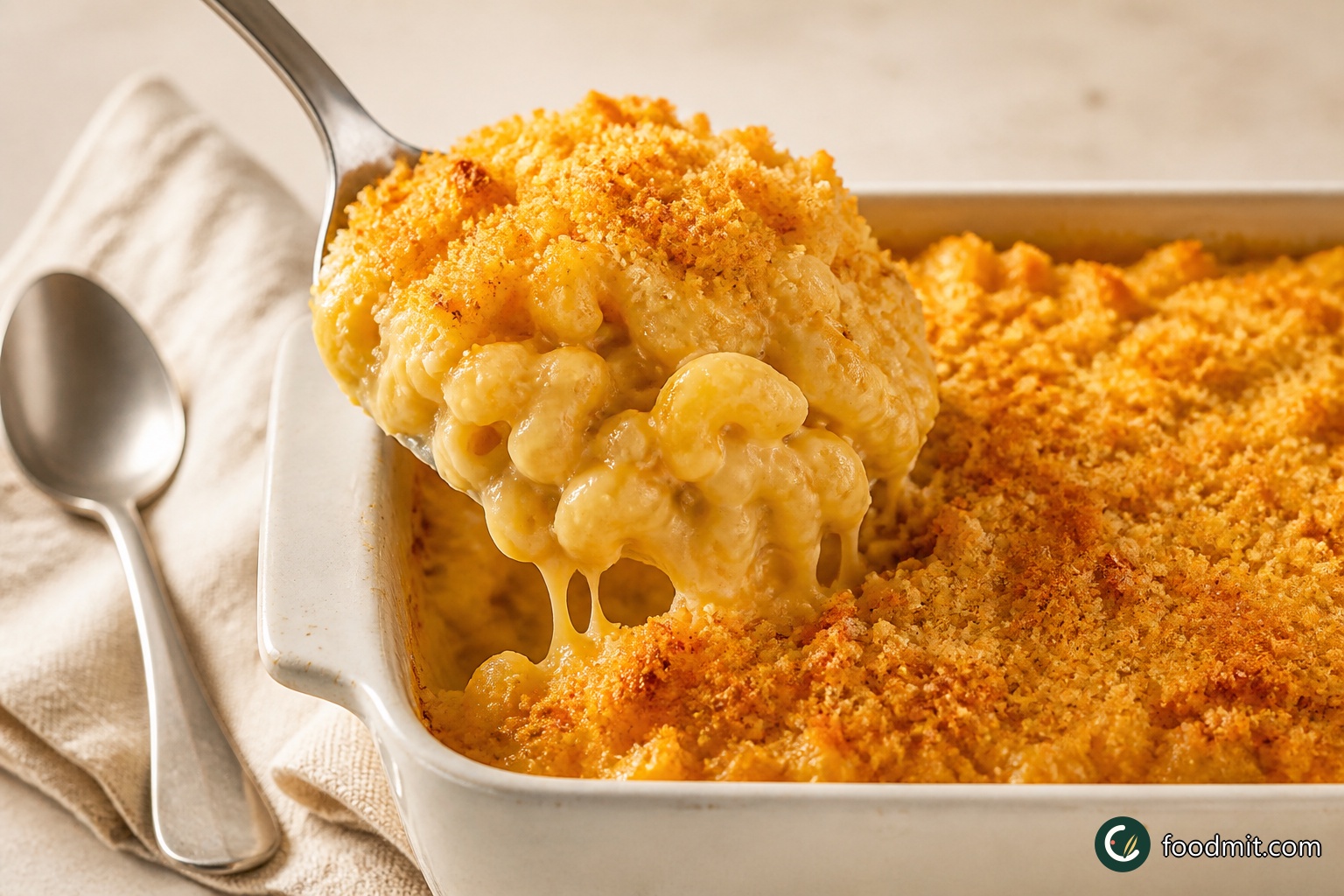
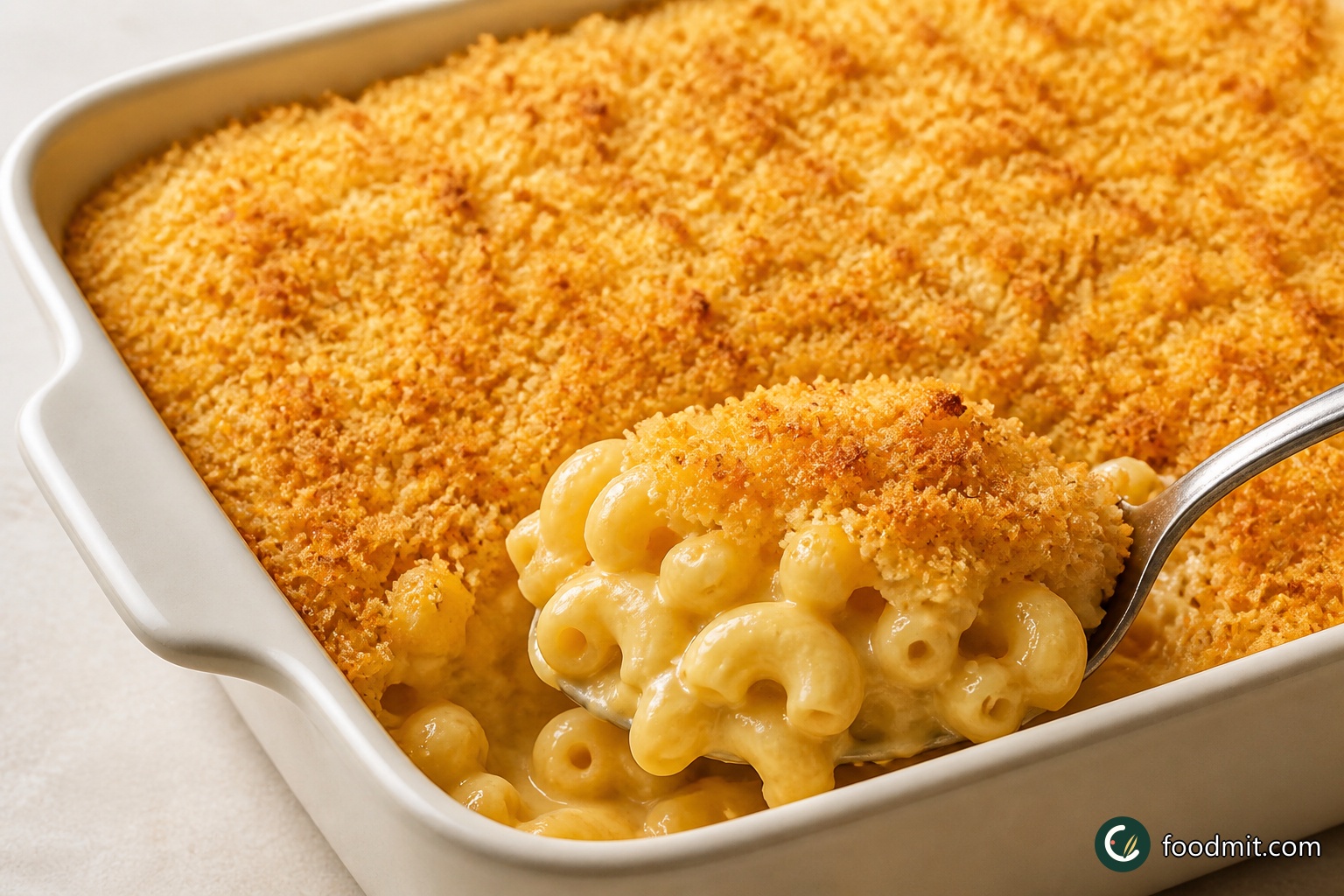
Serving ideas for 3 Cheese Macaroni
Choose a presentation that fits the occasion, from relaxed sharing to individual plates.
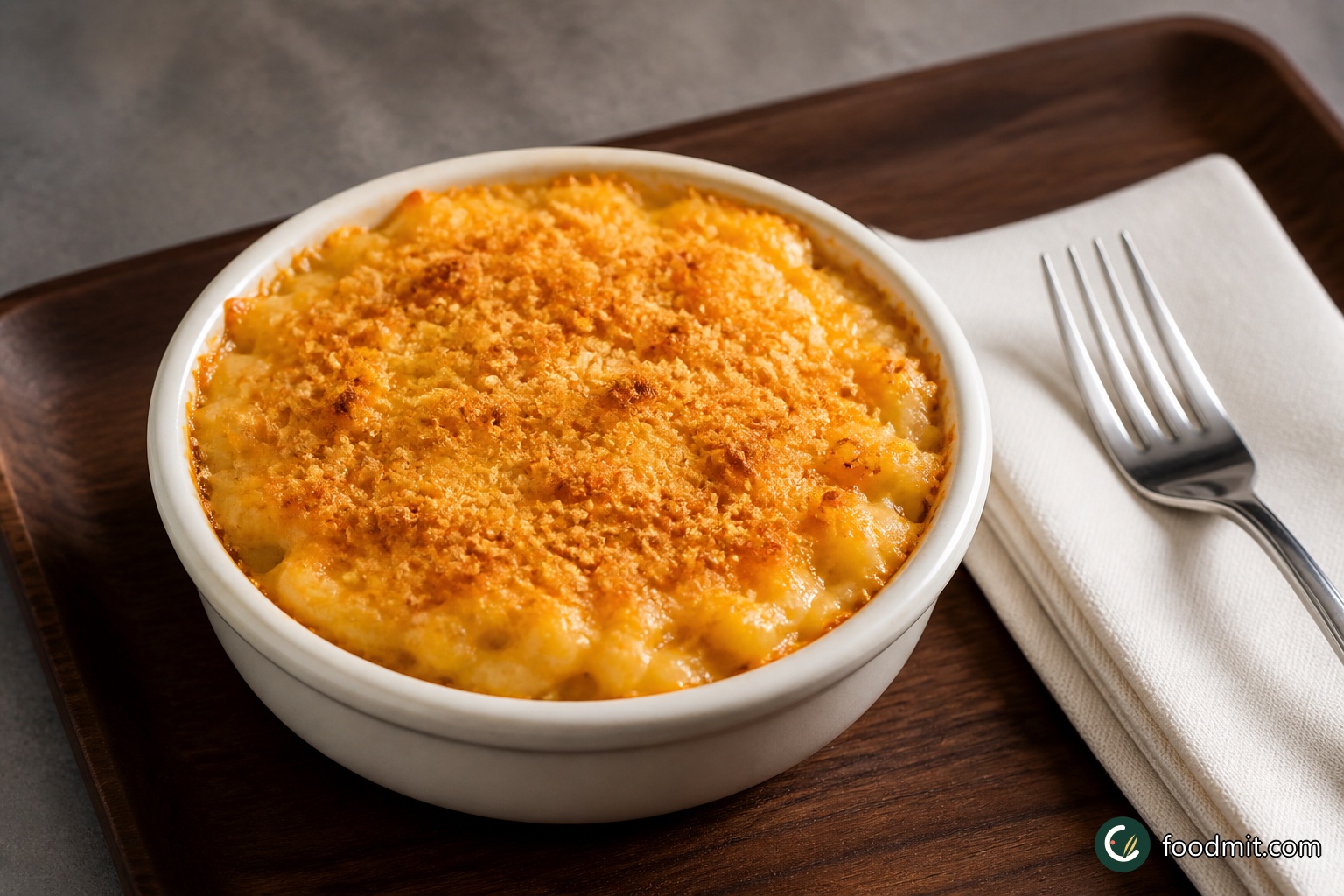
Individual Pie Plates
Use the ten 1-cup pie plates when you want every guest to receive an intact golden top and plenty of crisp edge. I would arrange the warm plates on a large tray, with a folded napkin beneath each one and small forks alongside, so handling them is straightforward. A sharp green salad and a simple pitcher of water make the rich macaroni feel complete without competing with its three-cheese sauce. This presentation is especially convenient for a casual party because no one has to wait while the baking dish is portioned.
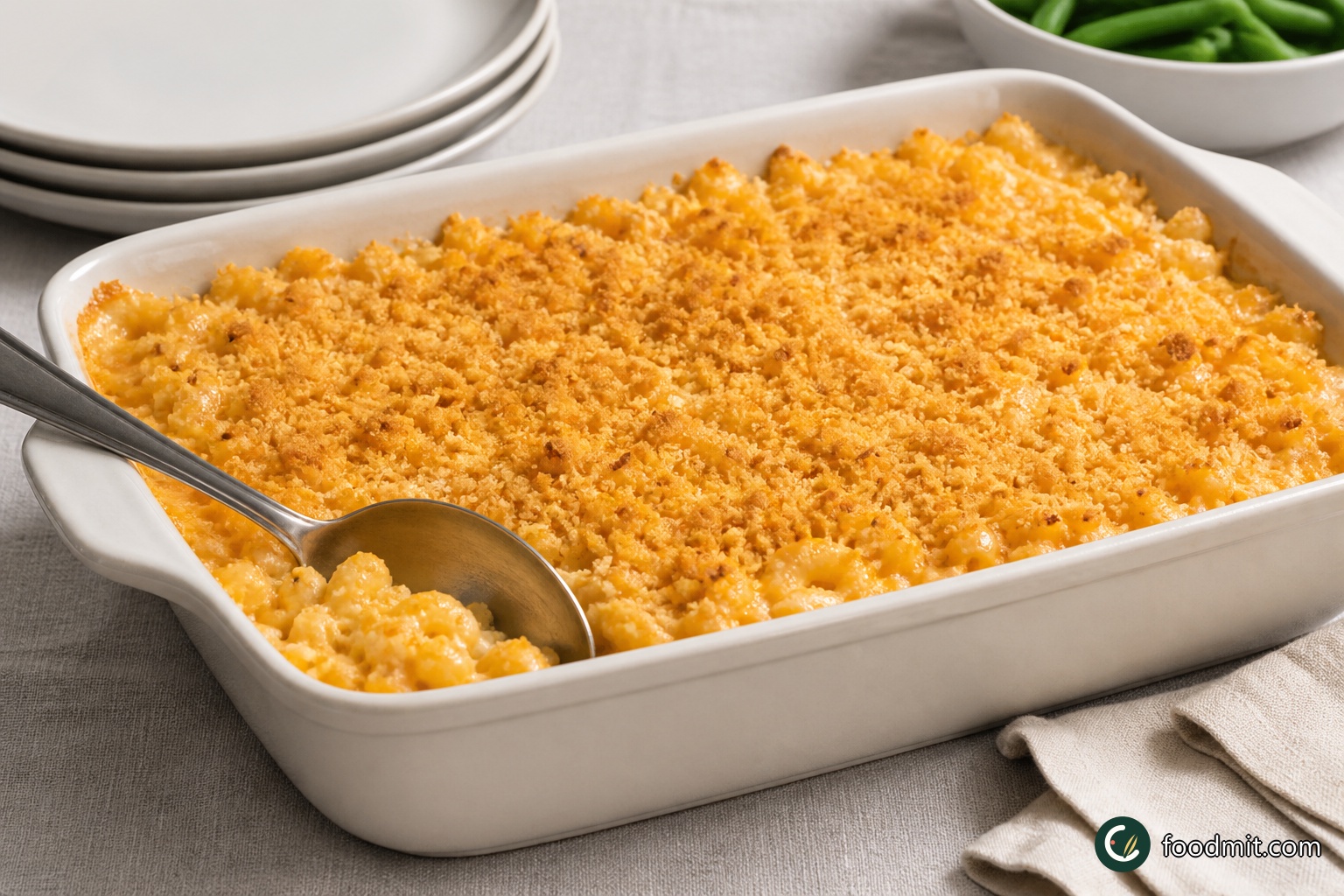
Family-Style Baking Dish
For dinner at home or a potluck, bake the macaroni in the 9-by-13-inch dish and place it at the center of the table on a sturdy trivet. Use a broad serving spoon that can reach through the panko crust and lift both the creamy center and the melted top in one motion. I like to keep the rest of the table restrained—plain plates, a bowl of green vegetables, and room for the baking dish—so the golden surface remains the visual focus. The five-minute rest is particularly helpful here because the first scoop comes out more neatly.
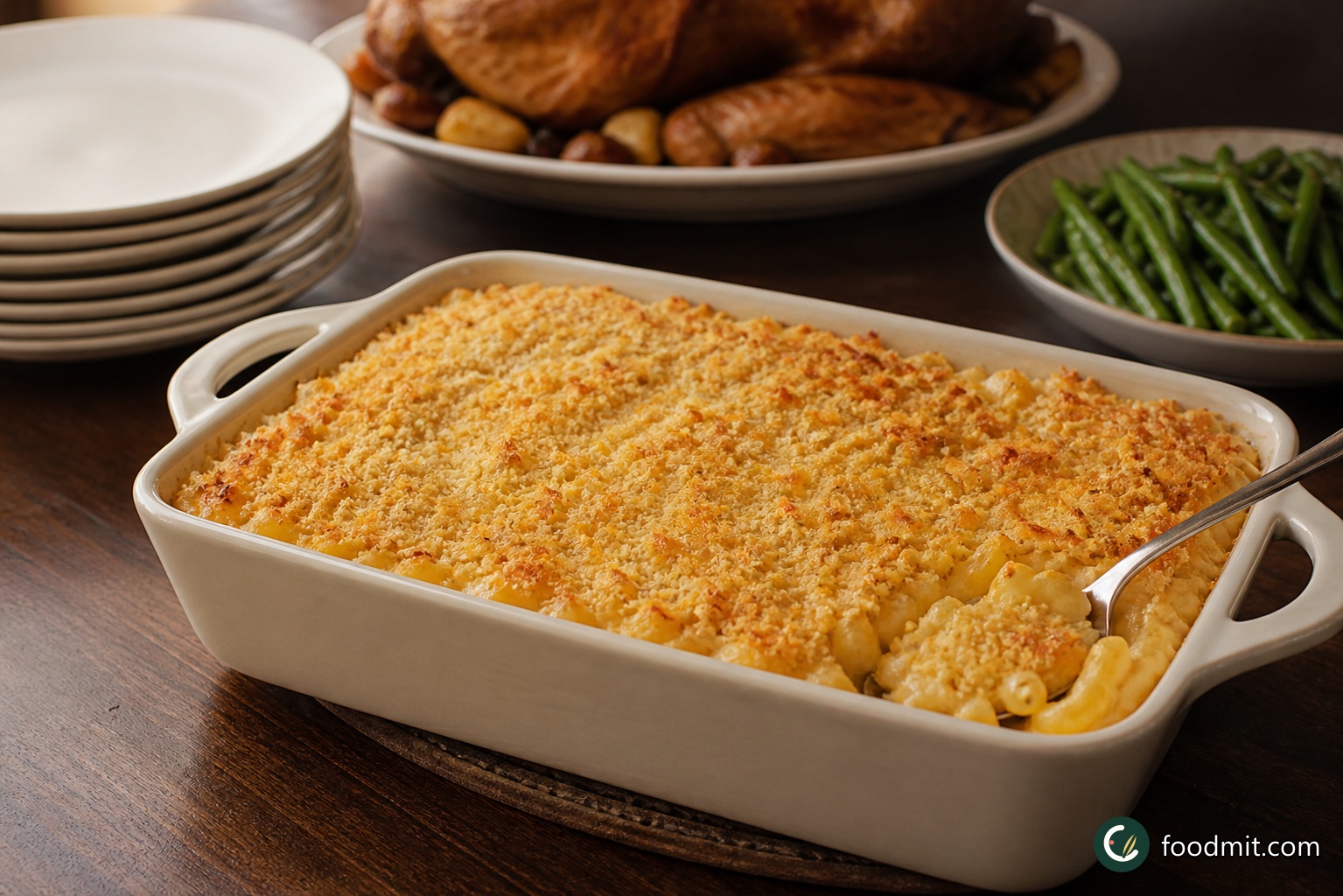
Thanksgiving Sideboard
On a Thanksgiving table, present the large baking dish as a warm side rather than making the individual portions. Its crisp breadcrumb surface looks at home among other baked dishes, and the mild heat from cayenne brings welcome contrast without turning it into a spicy variation. Set out a smaller serving spoon so guests can choose a side-size portion alongside the rest of the meal. Keeping the macaroni in its baking vessel also protects the soft interior and lets everyone break through the panko topping for themselves.
Let’s cook 3 Cheese Macaroni together
Check off your ingredients, follow each step, and start the timers when you are ready.
Get everything ready
Step-by-step with timers
Prepare the Dishes and Panko
Heat the oven to 375°F. Butter ten 1-cup mini pie plates or one 9-by-13-inch baking dish. Melt 2 tablespoons of the butter in a small saucepan over medium heat, add the panko, and cook with occasional stirring for about 5 minutes. The crumbs should be evenly golden rather than dark at the edges; take them off the heat once they are crisp and colored.
Warm the Milk and Cook the Roux
Warm the whole milk in a medium saucepan over medium heat; it needs to be hot but does not need to boil. At the same time, melt the remaining 6 tablespoons butter in a large, high-sided skillet over medium heat. When the butter is actively bubbling, stir in the flour and cook it for 1 minute, stirring continuously so the flour is moistened and loses its raw edge without taking on color.
Thicken the White Sauce
Pour the warm milk into the butter-and-flour mixture a little at a time while whisking constantly. Continue to whisk over medium heat for about 5 minutes. The sauce is ready for the cheese when bubbles break at the surface and the mixture has thickened enough to leave a brief trail behind the whisk; keep reaching into the corners of the skillet so no floury patches remain.
Melt in the Cheese and Seasonings
Remove the skillet from the heat. Stir in 3 cups of the cheddar, 1 cup of the Gruyère, and 1 cup of the fontina, reserving the rest of all three cheeses for the top. Add 1/2 teaspoon coarse salt, 1/4 teaspoon black pepper, the nutmeg, paprika, and cayenne. Stir until the cheese has melted into the sauce and the seasonings are evenly dispersed.
Cook the Macaroni
Bring a large pot of water to a full boil. Add the elbow macaroni and cook it only until al dente, following the pasta’s progress rather than letting it become completely soft. Drain thoroughly as soon as the elbows are tender but still have a slight firmness, since they will cook again after they are mixed with the sauce and placed in the oven.
Assemble the Macaroni
Transfer the drained macaroni directly to the cheese sauce and stir until every elbow is coated. Spoon the mixture evenly into the ten prepared pie plates, or spread all of it in the prepared 9-by-13-inch dish. Scatter the reserved 1 cup cheddar, 1/2 cup Gruyère, and 1/2 cup fontina over the surface, then finish with an even layer of the toasted panko.
Bake Until Hot and Melted
Bake the assembled macaroni for about 15 minutes. Look for the cheese on top to be fully melted and for the pasta in the center to be heated through; the crumbs should retain their golden color and crisp appearance. The goal is to warm and unite the components, not to leave the dish in long enough for the sauce to dry out.
Rest Before Serving
Set the individual plates or baking dish on a wire rack and leave the macaroni undisturbed for 5 minutes. This short pause lets the very hot sauce settle around the elbows and makes the portions easier to serve while the top remains crisp. Bring it to the table after the rest, while the cheese is still soft and the center is warm.
3 cheese macaroni recipe Inspired by Martha Stewart
The story behind 3 Cheese Macaroni
Recipe notes by Claire
Why I Wanted to Cook This One
I have always liked the way Martha Stewart approaches familiar food with a clear reason behind every detail, so this recipe caught my attention immediately. It does not rely on a novelty ingredient or an oversized garnish. Instead, it builds a classic baked macaroni carefully: a flour-thickened sauce, three cheeses with different strengths, and panko toasted before it ever reaches the oven. Cooking it myself made me appreciate how deliberate that structure is. Even the choice between ten small pie plates and one large baking dish feels useful, because the same recipe can move from an intimate family supper to a buffet without changing the food itself.
The Moment the Sauce Came Together
At the stove, the turning point was not adding the cheese; it was watching the warm milk and roux become a smooth, bubbling sauce first. I found that the gradual pour gave me time to whisk away each thicker patch before adding more liquid. After about five minutes, the sauce had enough body to cling briefly to the whisk, and that visual cue was more reassuring than guessing from the clock alone. Once the skillet was off the heat, the cheddar, Gruyère, and fontina melted into it without any frantic stirring. The nutmeg, paprika, cayenne, salt, and pepper did not announce themselves separately, but the sauce tasted more rounded than cheese and milk alone.
What I Noticed at the Table
The first spoonful explained why the two-stage topping matters. The cheese scattered over the macaroni melted into a soft cap, while the panko stayed crisp because it had already been browned in butter. Underneath, the elbows were tender but still distinct, which confirmed that stopping at al dente had been worth paying attention to. I served the small pie plates after their five-minute rest, and each one felt generous without needing extra decoration. What I admired most was the balance of textures: creamy sauce in the center, stretchy melted cheese near the surface, and fine golden crumbs that crackled lightly against both.