
Baked Macaroni and Cheese Recipe Inspired by Martha Stewart
I have long admired Martha Stewart's knack for making familiar comfort food feel composed, so I was eager to cook her recipe exactly as published. This baked mac and cheese is generous rather than restrained: a modest amount of elbow macaroni carries a full, deeply cheesy sauce, and four individual baking dishes make every serving feel special straight from the oven. White cheddar supplies the savory backbone, while cream cheese gives the sauce a gentle tang and a plush, cohesive texture. The centers stay creamy and visibly bubbling, but the surface has real contrast. Buttered crumbs mixed with a little cheddar bake into a golden crust with the appealing darker toasted spots I always hope to find around the rim. The most useful lesson for me was to treat the cheese sauce patiently. I let the cubed cream cheese disappear into the hot milk first, then stirred in the cheddar gradually over lower heat. Cooking the macaroni only to al dente also matters because it spends another twenty minutes in the oven. Waiting until halfway through the bake to add the crumbs keeps them crisp instead of letting them absorb the sauce. I like the four-ramekin format for lunch or dinner because there is no awkward scooping and everyone gets an equal share of crust. The dishes also look right at home on a family table or holiday sideboard. Served hot, when the edges are still bubbling and the topping is fragrant, this is the sort of rich, nostalgic recipe that explains why I remain such a fan of Martha's cooking.
 Foodmit
recipe
Per 1 individual 14-ounce baking dish
Nutrition for Baked Macaroni and Cheese
- Saturated fat
- 36 g
- Fiber
- 2 g
- Sugars
- 7 g
- Sodium
- 1170 mg
Estimated values. Nutrition values are approximate. More precise calculations will be added in a future update.
How to make Baked Macaroni and Cheese
-
Step 1
Prepare the dishes and crumb topping
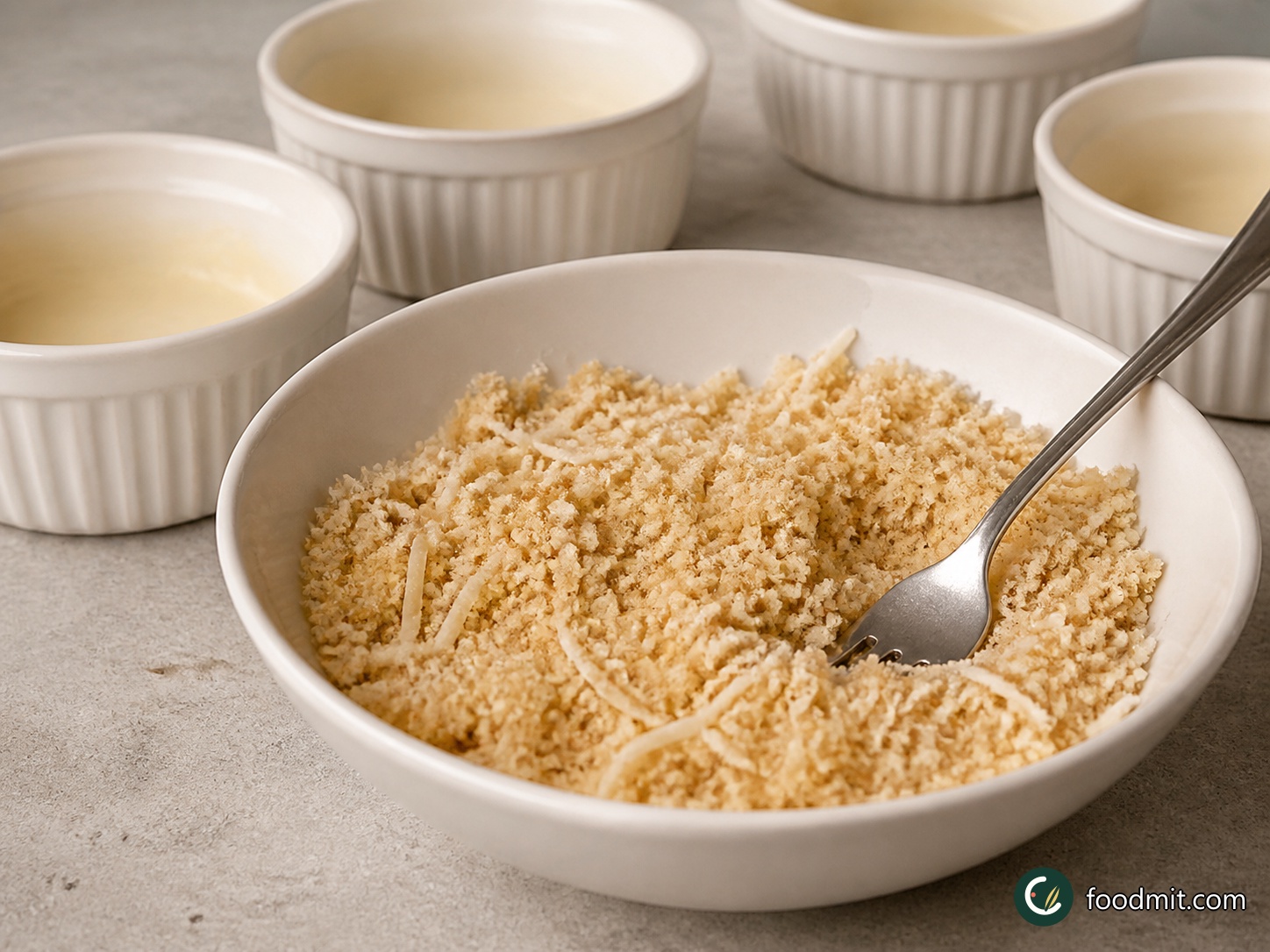
Heat the oven to 400°F. Butter four 14-ounce ovenproof dishes, coating the bottoms and sides so the macaroni will release cleanly at the table. In a small bowl, combine the melted tablespoon of butter with the breadcrumbs and ¼ cup of the grated cheddar. Toss until the crumbs are evenly moistened and the cheese is distributed, then keep the mixture nearby for the second half of baking.
-
Step 2
Cook the macaroni
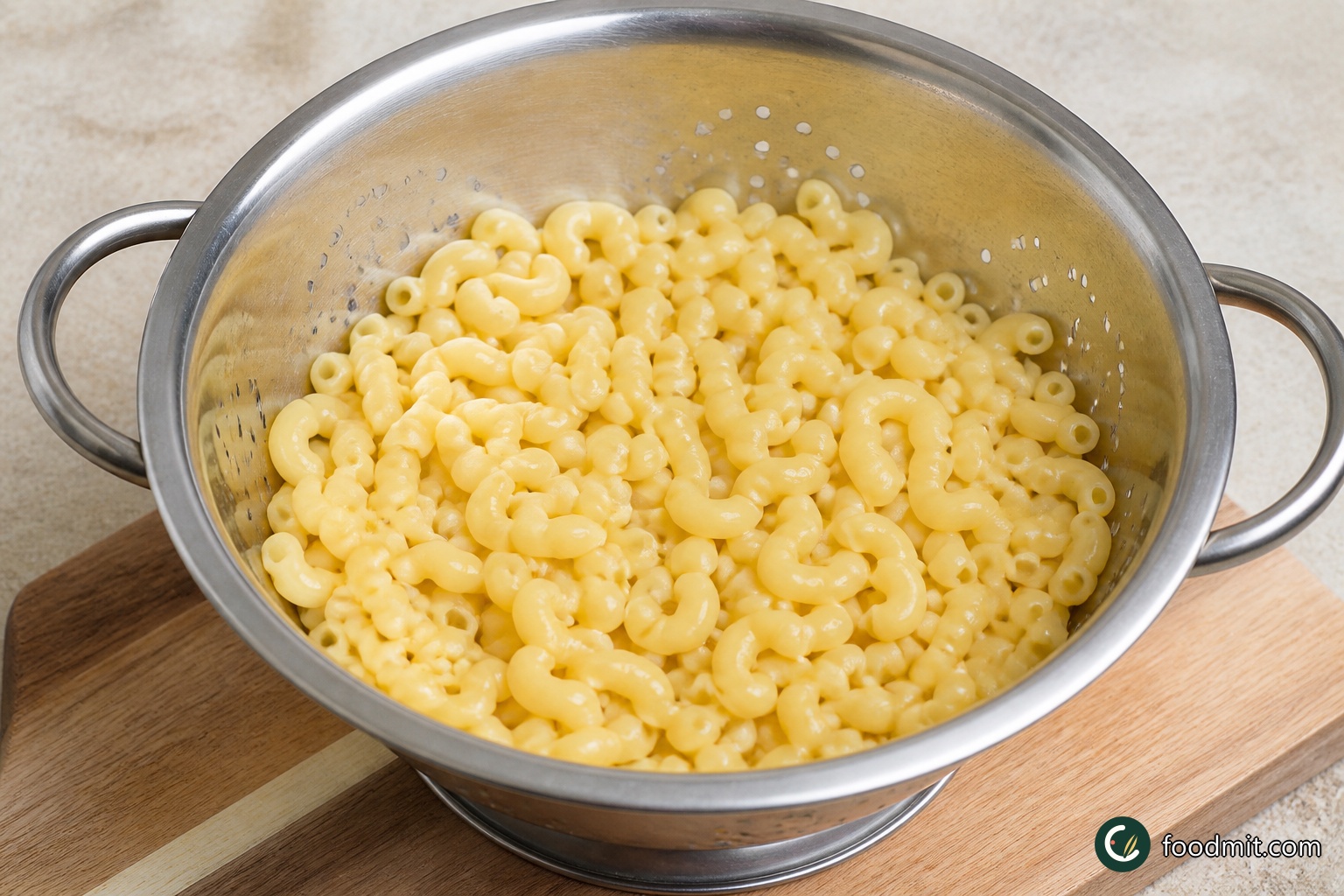
Bring a large pot of well-salted water to a boil. Add the elbow macaroni and cook it according to its package directions only until al dente. The curves should be tender enough to bite but still have a slight firmness at the center, since they will continue cooking in the oven. Drain the macaroni thoroughly and have it ready before finishing the cheese sauce.
-
Step 3
Melt the cream cheese
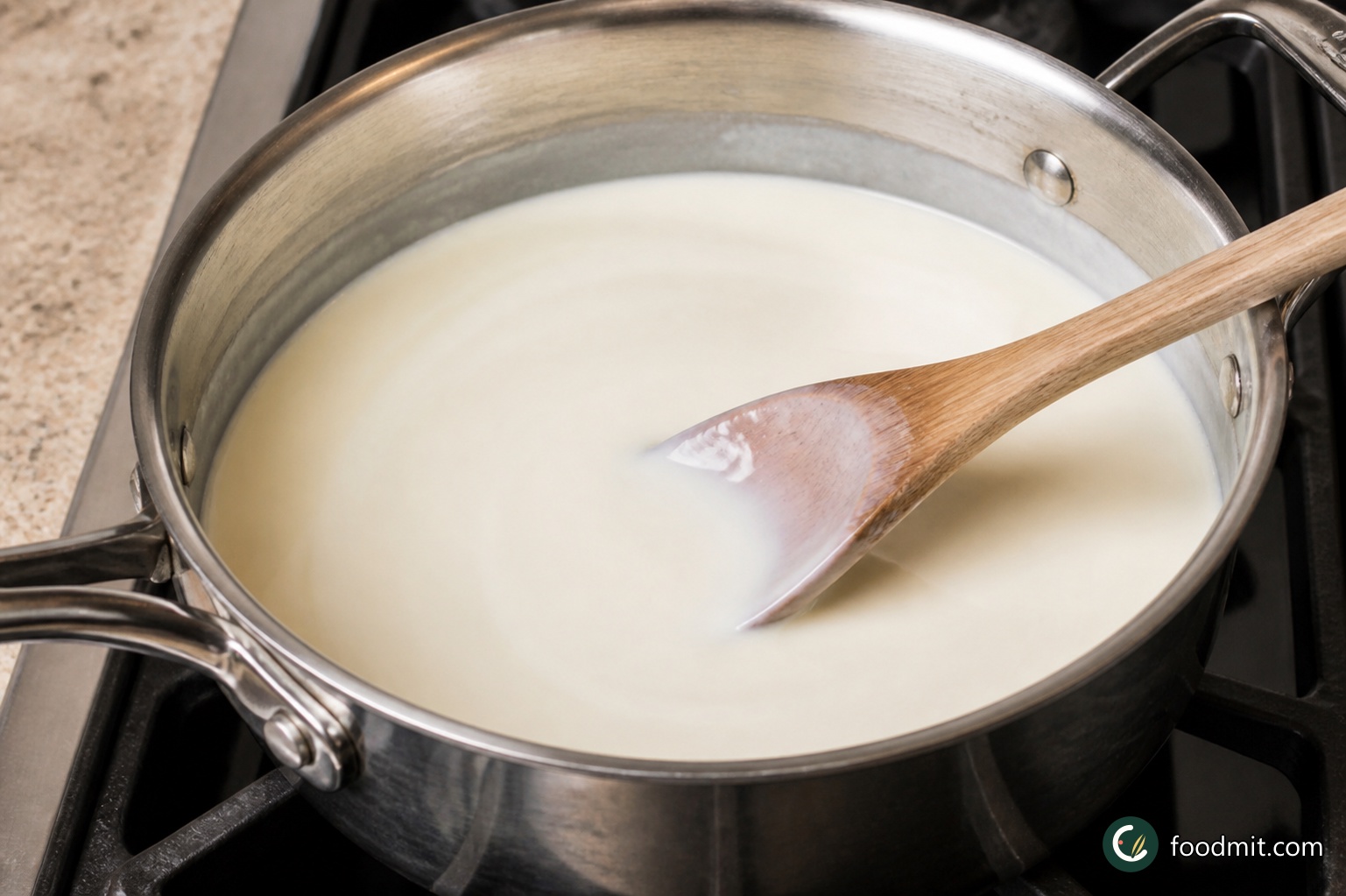
Pour the whole milk into a large saucepan and bring it just to a boil over medium heat. Immediately reduce the heat to medium-low and add the cubed cream cheese. Stir continuously for about 2 minutes, pressing any soft pieces against the pan as needed, until the cream cheese has melted into the milk and the base looks smooth rather than lumpy.
-
Step 4
Finish the cheddar sauce
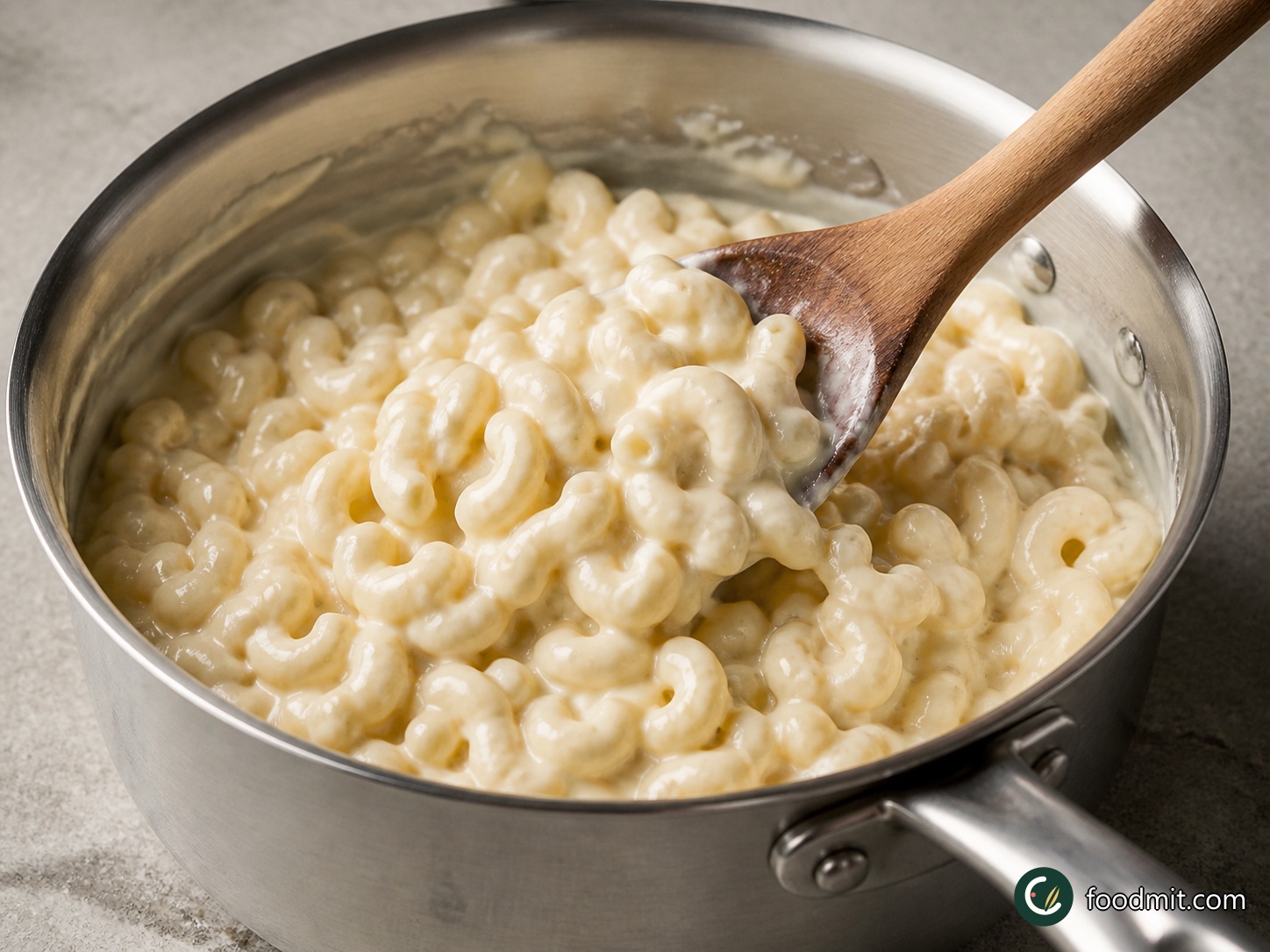
Add the remaining grated white cheddar a little at a time, stirring after each addition so it melts evenly into the cream-cheese base. Continue over medium-low heat for about 5 minutes, until the sauce is cohesive and no shreds of cheddar remain. Add the drained macaroni, ¼ teaspoon salt, and ⅛ teaspoon pepper, then turn and fold until every elbow is coated.
-
Step 5
Bake until bubbling
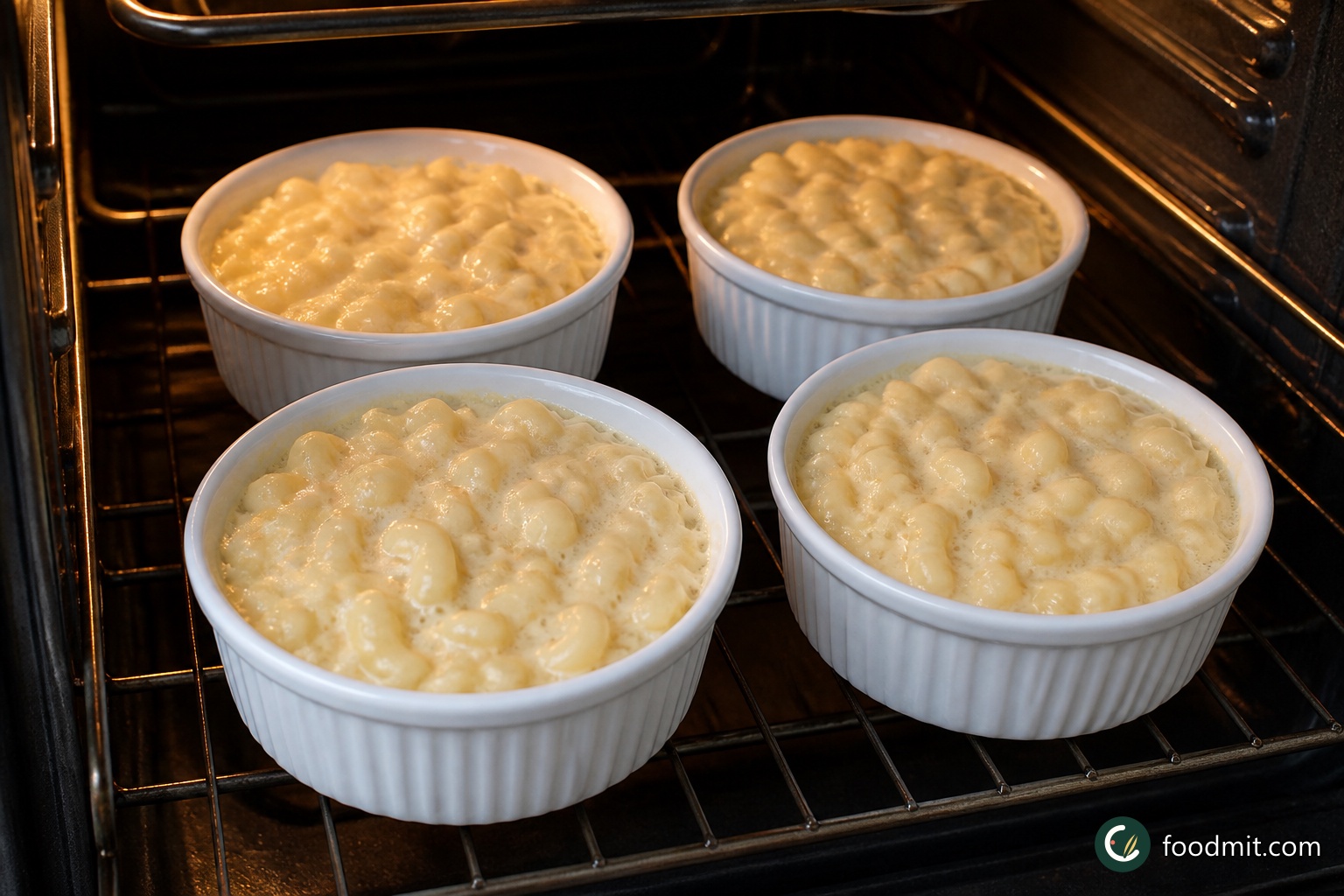
Divide the sauced macaroni evenly among the four prepared dishes and level the tops without packing them down. Set the dishes on a stable oven rack and bake for 10 minutes. At the end of this first bake, the cheese sauce should be actively bubbling, especially around the edges, while the uncovered surface is still pale and ready to receive the topping.
-
Step 6
Add the topping and brown
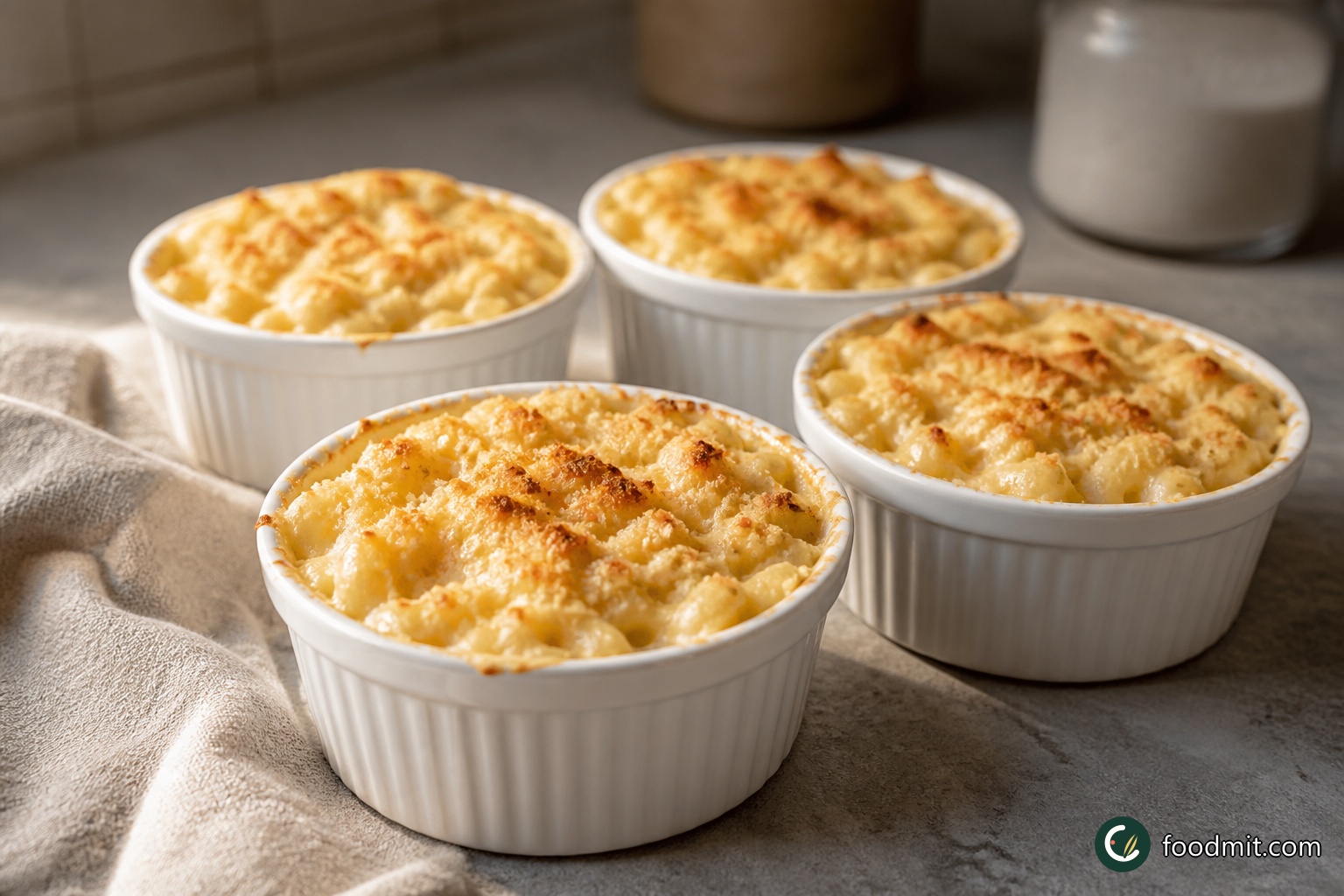
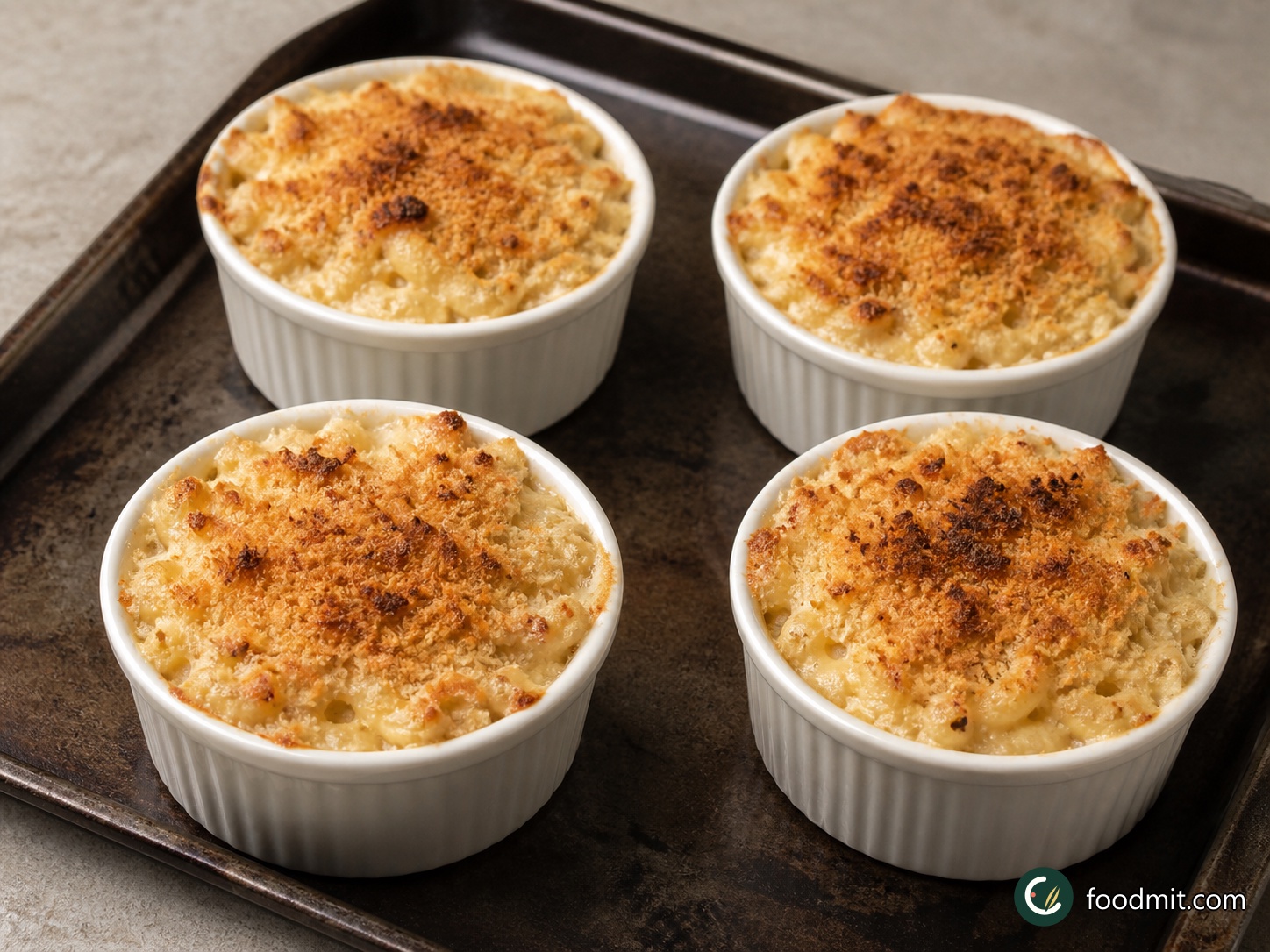
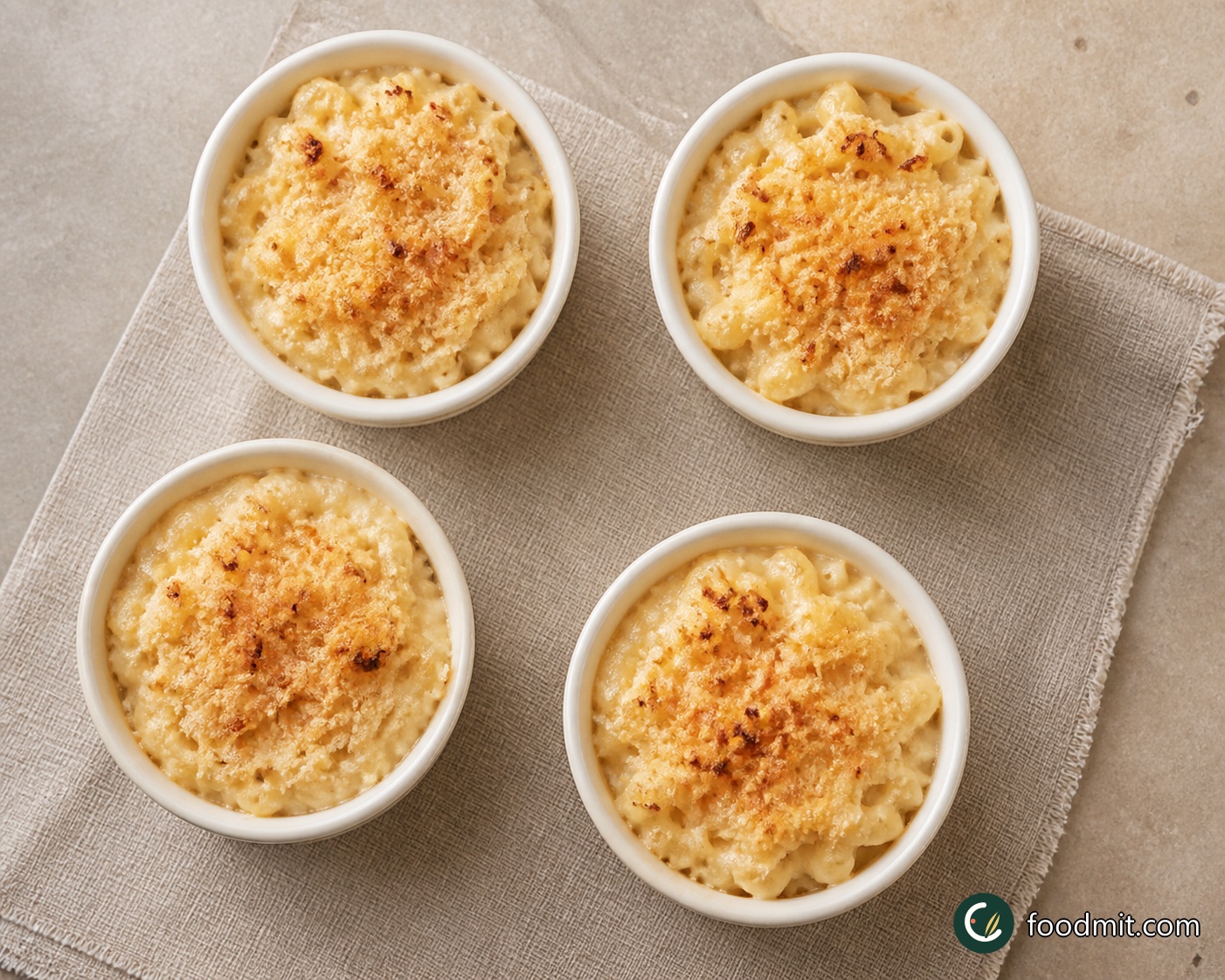
Carefully remove the hot dishes from the oven and scatter the reserved breadcrumb-cheddar mixture evenly over all four portions. Return them to the 400°F oven for another 10 minutes. They are ready when the sauce is bubbling through the crust and the crumbs are golden, with a few deeper brown toasted patches across the top and near the rims.
Add the cheddar in small handfuls and wait until each one melts before adding the next. If the sauce begins boiling hard, lower the heat; gentle melting helps the generous amount of cheese stay smooth.
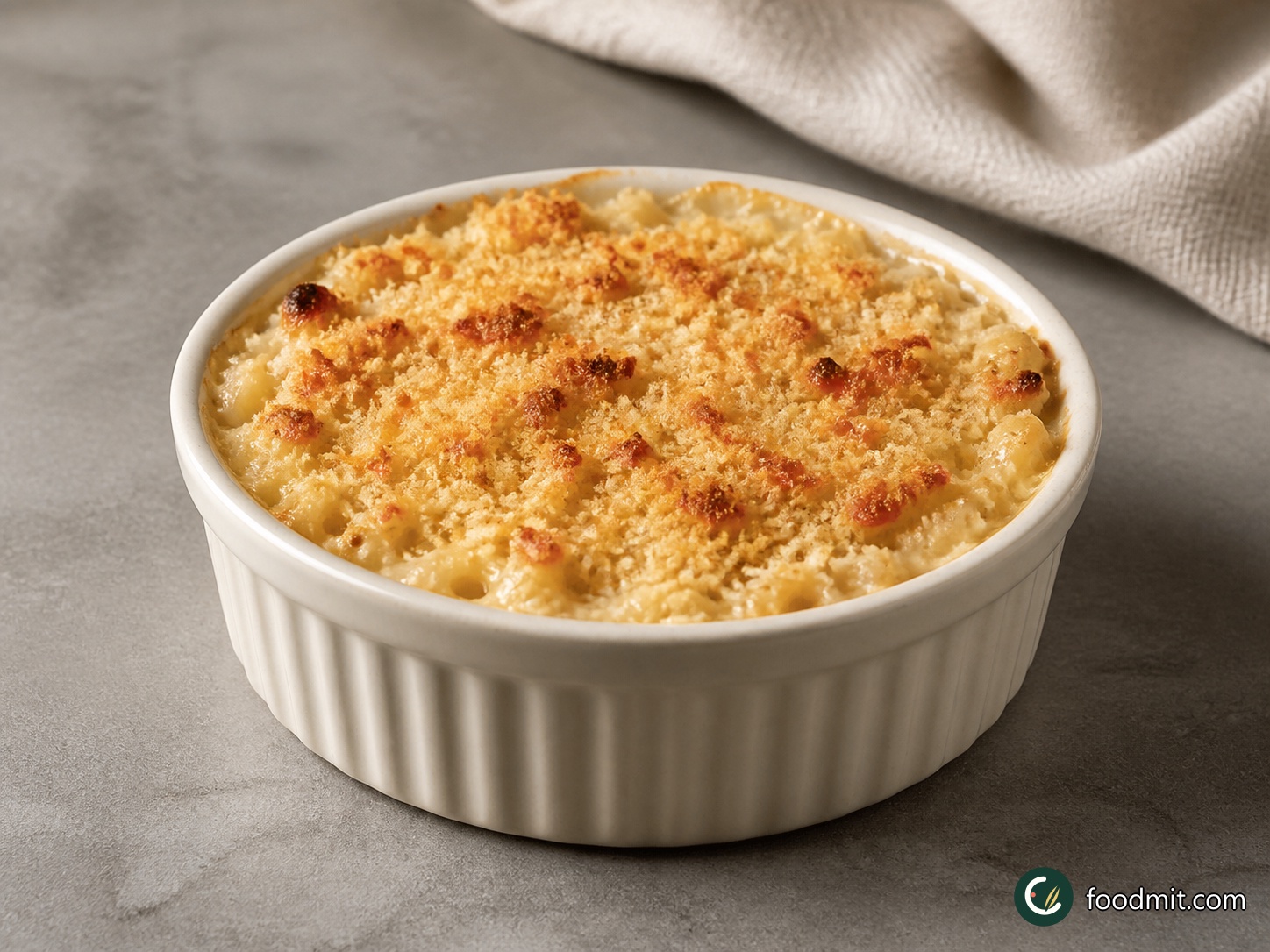
Baked Macaroni and Cheese, ready to serve
Serving ideas for Baked Macaroni and Cheese
Choose a presentation that fits the occasion, from relaxed sharing to individual plates.
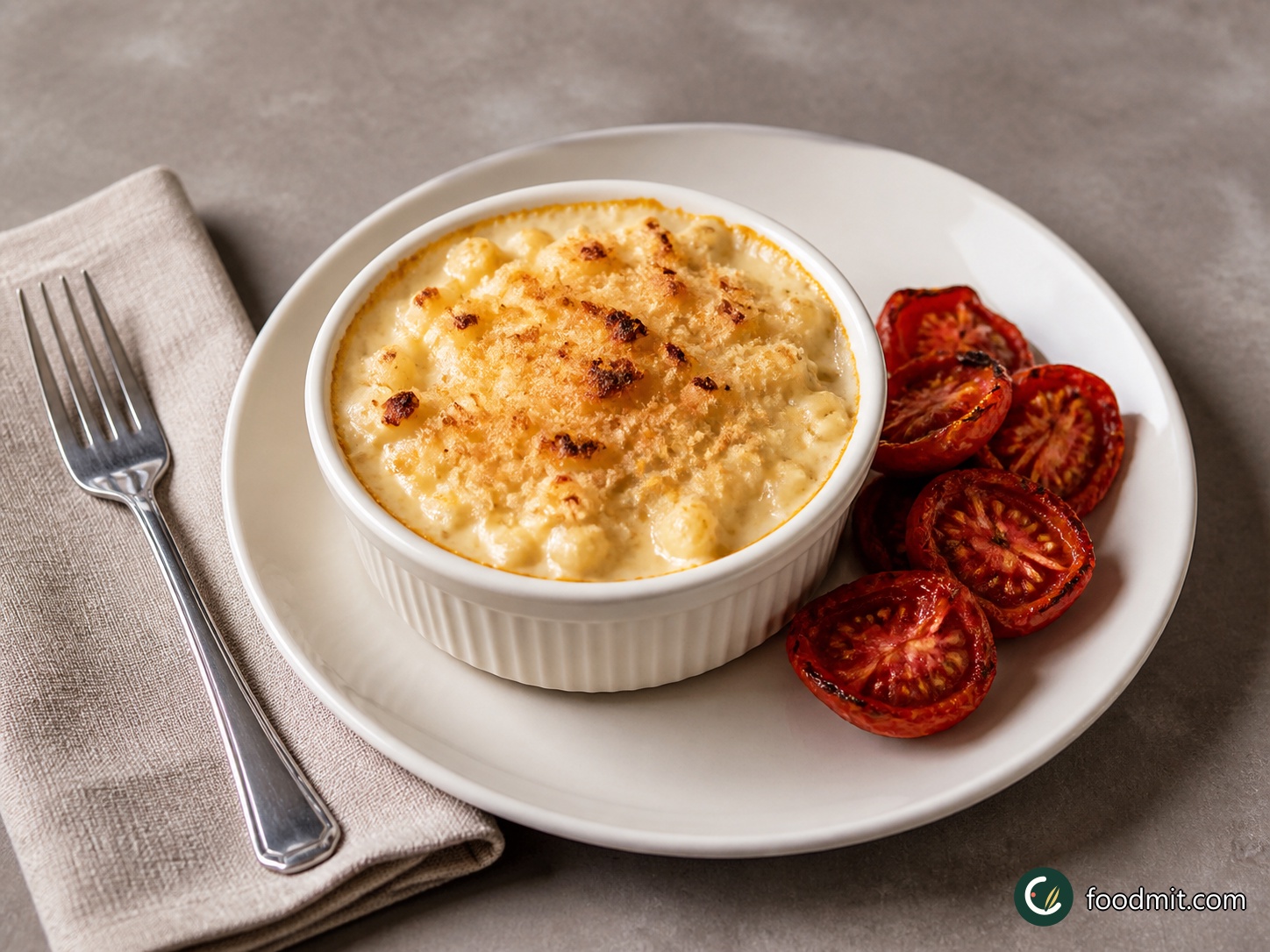
Individual Supper Setting
Set each hot ovenproof dish on a heat-safe dinner plate so guests can handle the ramekin without touching its sides, and tuck a folded napkin beside it with a sturdy spoon or fork. I like the visual contrast of the pale dish and bronzed crumb top, so I leave the surface uncovered. Roasted plum tomatoes make a fitting accompaniment for a simple dinner, bringing color and a bright counterpoint while allowing the rich macaroni to remain the focus.
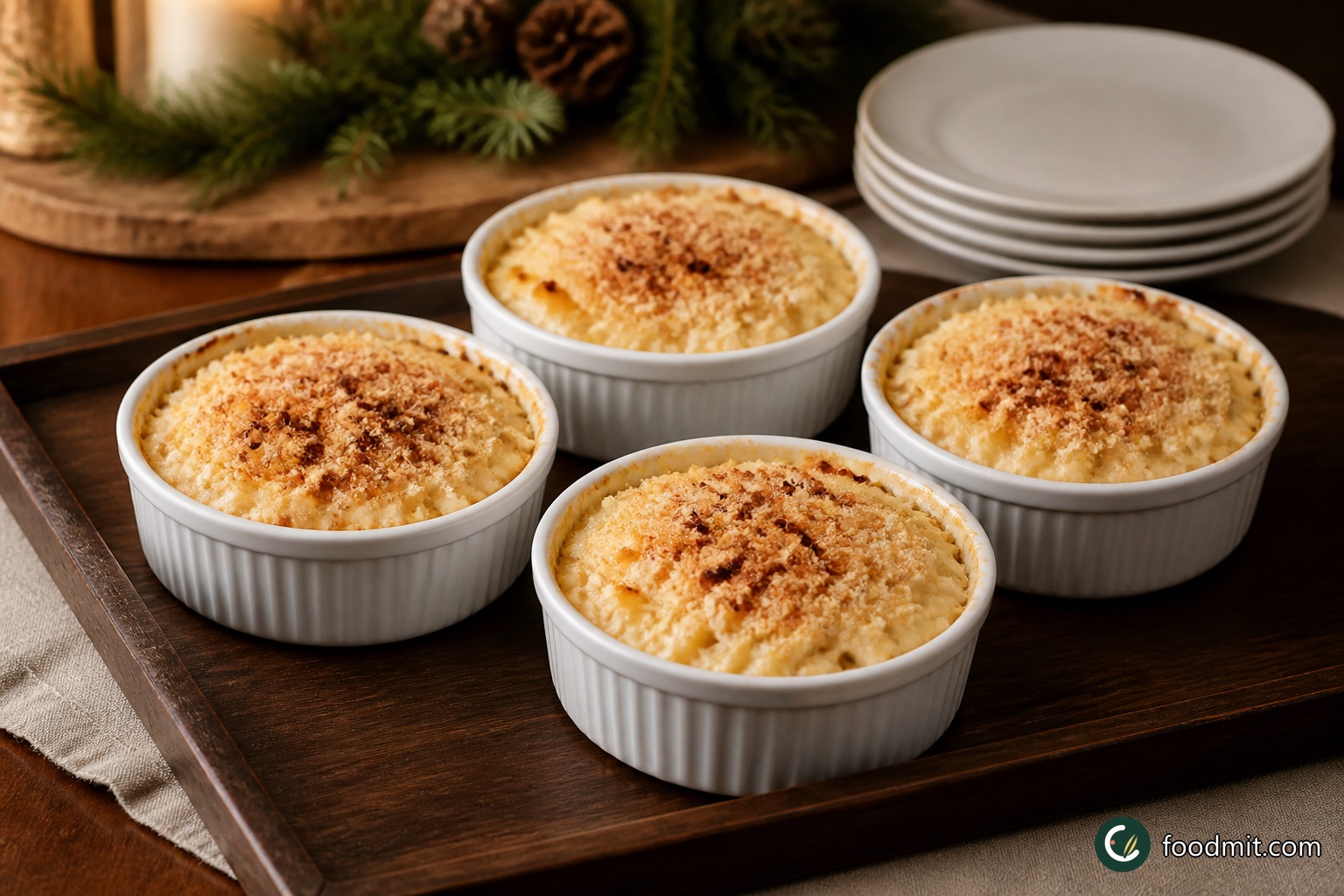
Holiday Sideboard
Arrange the four baked dishes together on a sturdy tray or wooden board, leaving enough room between them for safe lifting, and place a folded cloth beneath the board to protect the table. The individual format works especially well as a substantial side for Thanksgiving or Christmas because the portions are already defined and every guest receives a share of the crisp crust. Keep the browned tops visible and provide small plates nearby for easy service.
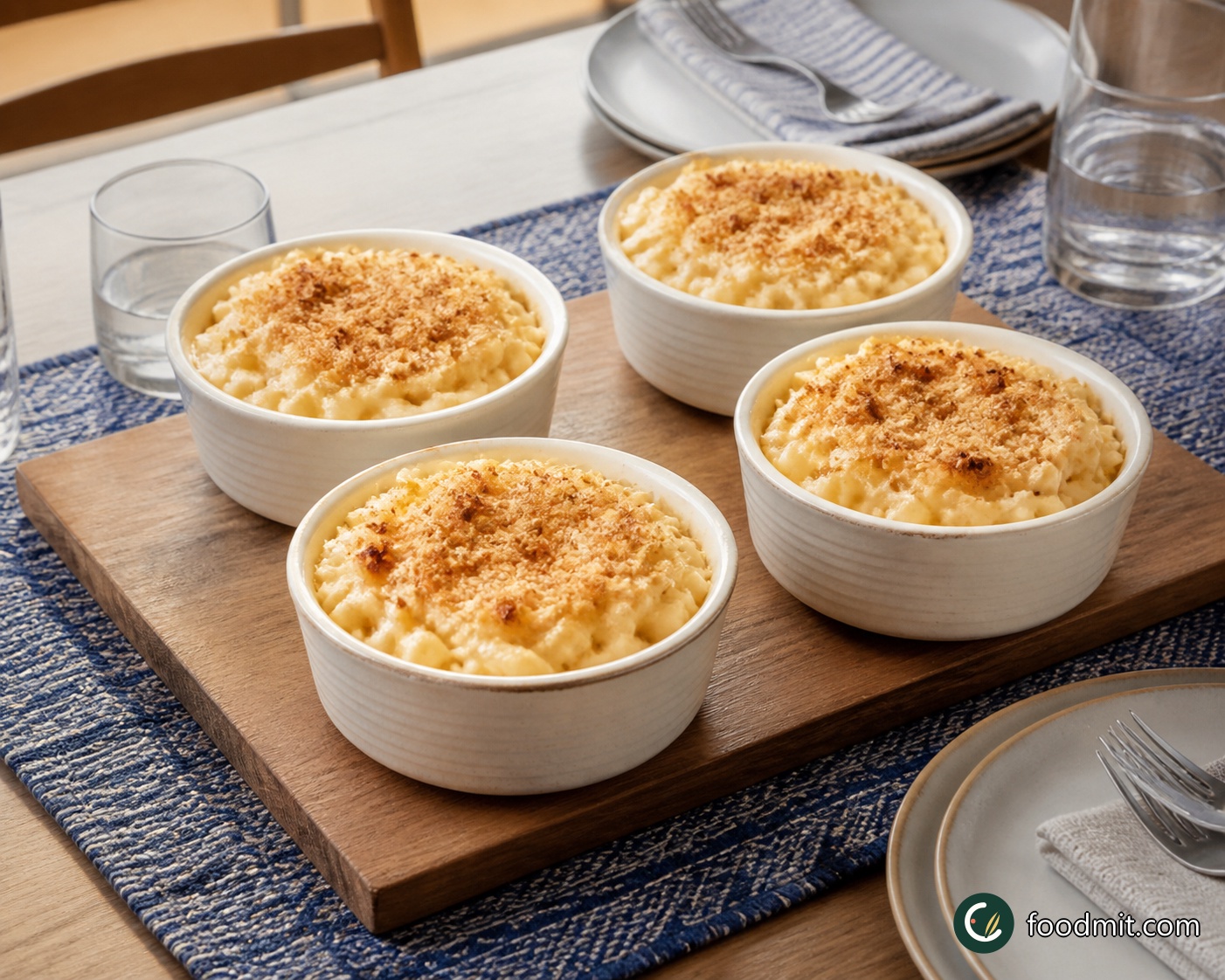
Casual Family Table
For a relaxed presentation, bring the ramekins to the table on a simple wooden board and use a blue patterned cloth or placemats to echo the warm gold of the topping. Place the dishes where everyone can see the bubbling edges before they begin eating, but remind diners that the ceramic is hot. This setup suits a weekend lunch or family dinner: it feels welcoming, avoids the mess of portioning a large casserole, and gives each person both creamy center and toasted crust.
Let’s cook Baked Macaroni and Cheese together
Check off your ingredients, follow each step, and start the timers when you are ready.
Get everything ready
Step-by-step with timers
Prepare the dishes and crumb topping
Heat the oven to 400°F. Butter four 14-ounce ovenproof dishes, coating the bottoms and sides so the macaroni will release cleanly at the table. In a small bowl, combine the melted tablespoon of butter with the breadcrumbs and ¼ cup of the grated cheddar. Toss until the crumbs are evenly moistened and the cheese is distributed, then keep the mixture nearby for the second half of baking.
Cook the macaroni
Bring a large pot of well-salted water to a boil. Add the elbow macaroni and cook it according to its package directions only until al dente. The curves should be tender enough to bite but still have a slight firmness at the center, since they will continue cooking in the oven. Drain the macaroni thoroughly and have it ready before finishing the cheese sauce.
Melt the cream cheese
Pour the whole milk into a large saucepan and bring it just to a boil over medium heat. Immediately reduce the heat to medium-low and add the cubed cream cheese. Stir continuously for about 2 minutes, pressing any soft pieces against the pan as needed, until the cream cheese has melted into the milk and the base looks smooth rather than lumpy.
Finish the cheddar sauce
Add the remaining grated white cheddar a little at a time, stirring after each addition so it melts evenly into the cream-cheese base. Continue over medium-low heat for about 5 minutes, until the sauce is cohesive and no shreds of cheddar remain. Add the drained macaroni, ¼ teaspoon salt, and ⅛ teaspoon pepper, then turn and fold until every elbow is coated.
Bake until bubbling
Divide the sauced macaroni evenly among the four prepared dishes and level the tops without packing them down. Set the dishes on a stable oven rack and bake for 10 minutes. At the end of this first bake, the cheese sauce should be actively bubbling, especially around the edges, while the uncovered surface is still pale and ready to receive the topping.
Add the topping and brown
Carefully remove the hot dishes from the oven and scatter the reserved breadcrumb-cheddar mixture evenly over all four portions. Return them to the 400°F oven for another 10 minutes. They are ready when the sauce is bubbling through the crust and the crumbs are golden, with a few deeper brown toasted patches across the top and near the rims.
Baked Macaroni and Cheese Recipe Inspired by Martha Stewart
The story behind Baked Macaroni and Cheese
Recipe notes by Claire
Why I Wanted to Cook This One
Martha Stewart recipes have always appealed to me when they take something familiar and give it a clear, deliberate structure. That was exactly the attraction here. Instead of one large casserole, her published recipe directs the macaroni into four substantial ovenproof dishes, so each person gets creamy pasta, crisp topping, and those browned edges. I followed the printed proportions, including the full pound of white cheddar for eight ounces of pasta. It looked like an astonishing amount while I grated it, but I understood the choice once the sauce came together: the pasta is not merely dressed with cheese but held in a thick, abundant coating. I also enjoyed that the ingredient list stays focused. There is no spice blend or elaborate garnish competing with the cheddar, milk, and cream cheese. Cooking it myself reminded me that a short recipe can still reward close attention, especially when its richness depends on texture rather than on a long list of flavors.
The Sauce Rewarded Patience
The saucepan stage was where I felt most connected to the logic of the recipe. Bringing the milk up to a boil gives the process momentum, but lowering the heat before the cheeses go in is what made the mixture manageable for me. The small cream-cheese cubes softened quickly and, after steady stirring, blended into a velvety base. I resisted adding the grated cheddar all at once. Working it in gradually took the stated five minutes and let me see each addition melt before the next one entered the pan. By the time I folded in the drained elbows, the sauce clung to every curve instead of pooling thinly at the bottom. The al dente cue proved important too. My pasta still had a little resilience when it left the pot, so it remained distinct after both rounds in the oven. That combination of low heat, gradual cheese, and firm pasta is the practical knowledge I will carry into the next time I cook Martha's recipe.
Two Bakes, Two Textures
I initially wondered why the topping waited while the filled dishes baked on their own, but the answer was obvious at the table. During the first ten minutes, the sauce became thoroughly hot and bubbled around the elbows without the breadcrumbs sitting there long enough to turn heavy. I added the buttered crumb and cheddar mixture only after that bubbling stage, then watched it color during the final ten minutes. The finished tops had a dry, crisp rustle under the spoon, followed immediately by soft macaroni and rich sauce. I especially liked the irregular toasted spots rather than a perfectly uniform tan surface; they made each ramekin look home-cooked and inviting. Seeing all four dishes together, with their pale sides framing those burnished tops, was a satisfying moment. It felt polished enough for company, yet the actual work was still straightforward enough for an ordinary family meal.