
French Onion Mac and Cheese Recipe Inspired by Martha Stewart
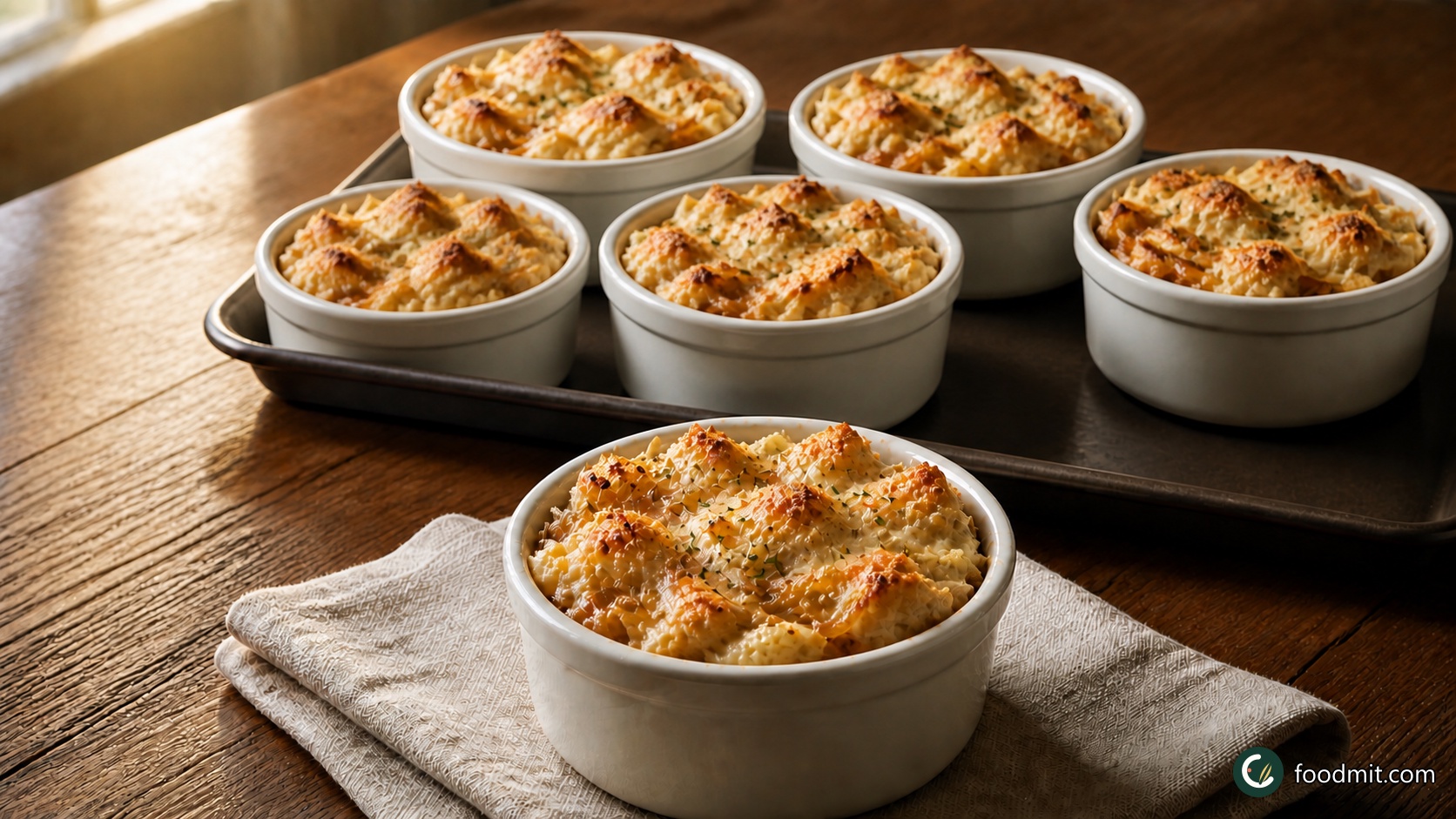
I have long admired Sarah Carey's knack for making familiar food feel thoughtful, so I was eager to cook her French Onion Mac and Cheese for myself. The recipe asks for a little patience at the stove, but it rewards that attention with six individual dishes that feel far more special than an ordinary pan of baked pasta. The shells settle into a rich sauce made with whole milk and equal amounts of Gruyère, fontina, and Emmentaler. Sweet, deeply golden onions bring the savory character, while Dijon, thyme, white wine, and optional beef bouillon add layers behind the cheese. Torn bread on top gives each spoonful a welcome crisp edge against the creamy pasta underneath. The detail that mattered most when I cooked it was stopping the pasta well before al dente. The shells go into the oven twice, so that firm center is insurance against a soft, swollen result. I also let the onions reach an even golden brown before adding the wine; color, not merely elapsed time, is the cue that their sweetness has developed. I like the individual ramekins because every serving gets bubbling edges, toasted bread, and a generous share of onions. Set them on the table while still hot, with a simple sharply dressed green salad alongside, and the richness feels balanced without distracting from the pasta.
 Foodmit
recipe
Per 1/6 of recipe
Nutrition for French Onion Mac and Cheese
- Saturated fat
- 24 g
- Fiber
- 5 g
- Sugars
- 13 g
- Sodium
- 820 mg
Estimated values. Nutrition values are approximate. More precise calculations will be added in a future update.
How to make French Onion Mac and Cheese
-
Step 1
Start the onions
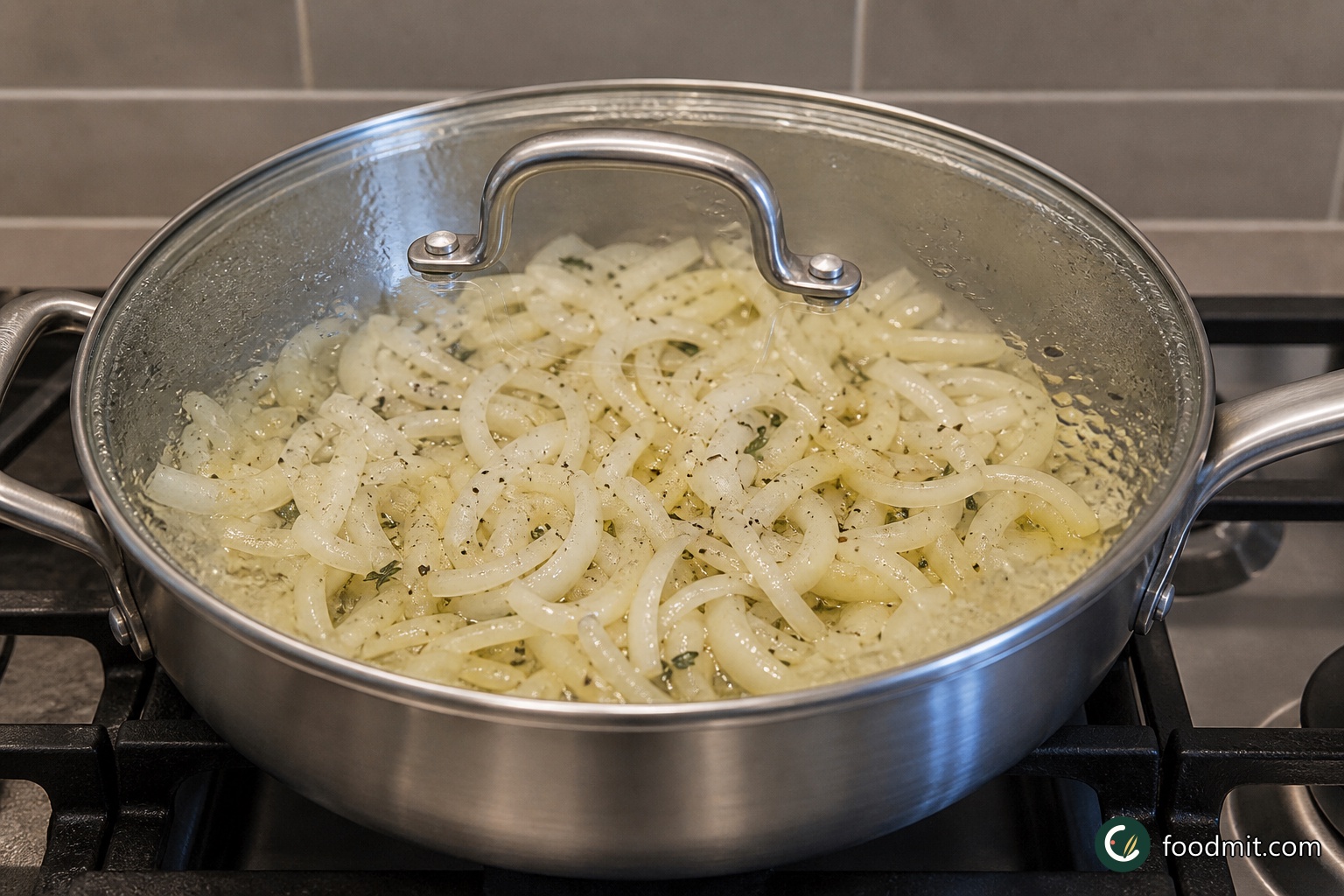
Heat the oven to 450°F. Melt 2 tablespoons of the butter in a large skillet over medium heat. Add the sliced onions and thyme, season with kosher salt and black pepper, and stir to coat. Cover the skillet and cook for 5 minutes; the onions should begin to soften and release moisture.
-
Step 2
Brown the onions
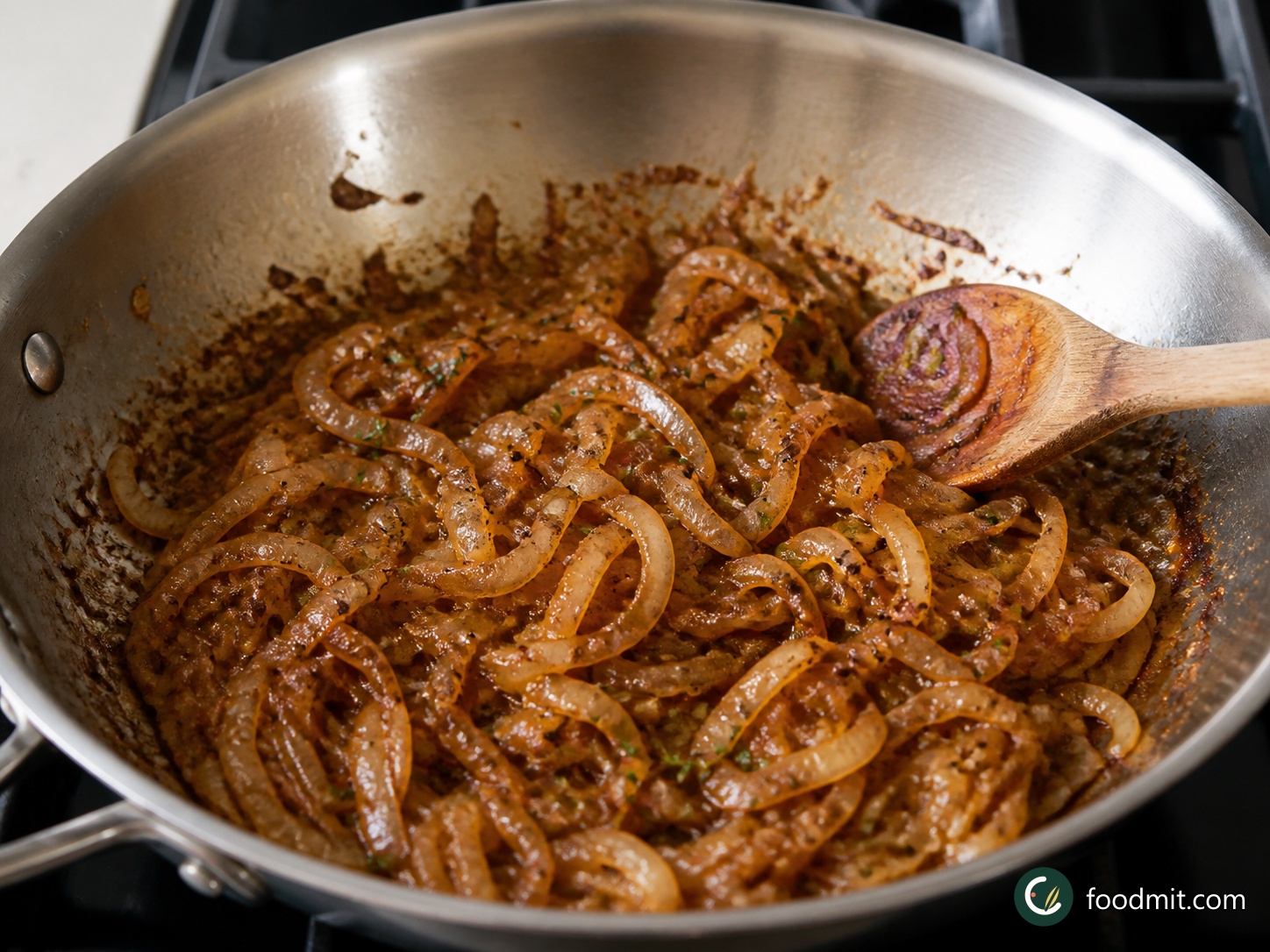
Remove the lid and continue cooking over medium heat, stirring frequently so the slices color evenly rather than catching on the pan. Cook for 15 to 20 minutes, until the onions are soft and golden brown throughout. Let their appearance guide you: pale onions need more time even if the timer has ended.
-
Step 3
Deglaze and season
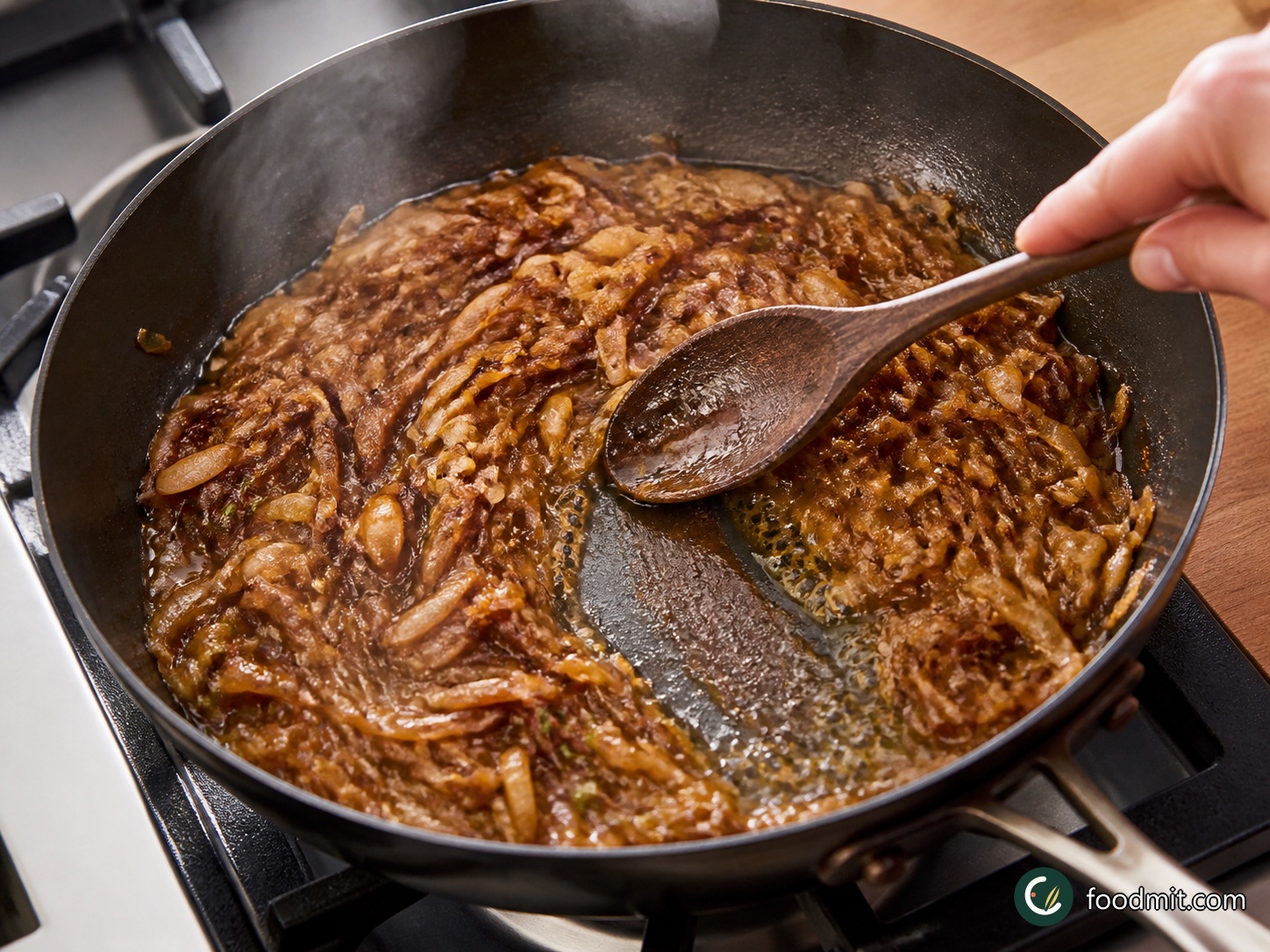
Pour the white wine into the skillet and work a wooden spoon across the bottom to loosen the flavorful browned residue. Stir in the Dijon mustard and the crumbled beef bouillon, if using, until evenly dispersed. Take the skillet off the heat and keep the onion mixture nearby for assembly.
-
Step 4
Undercook the shells
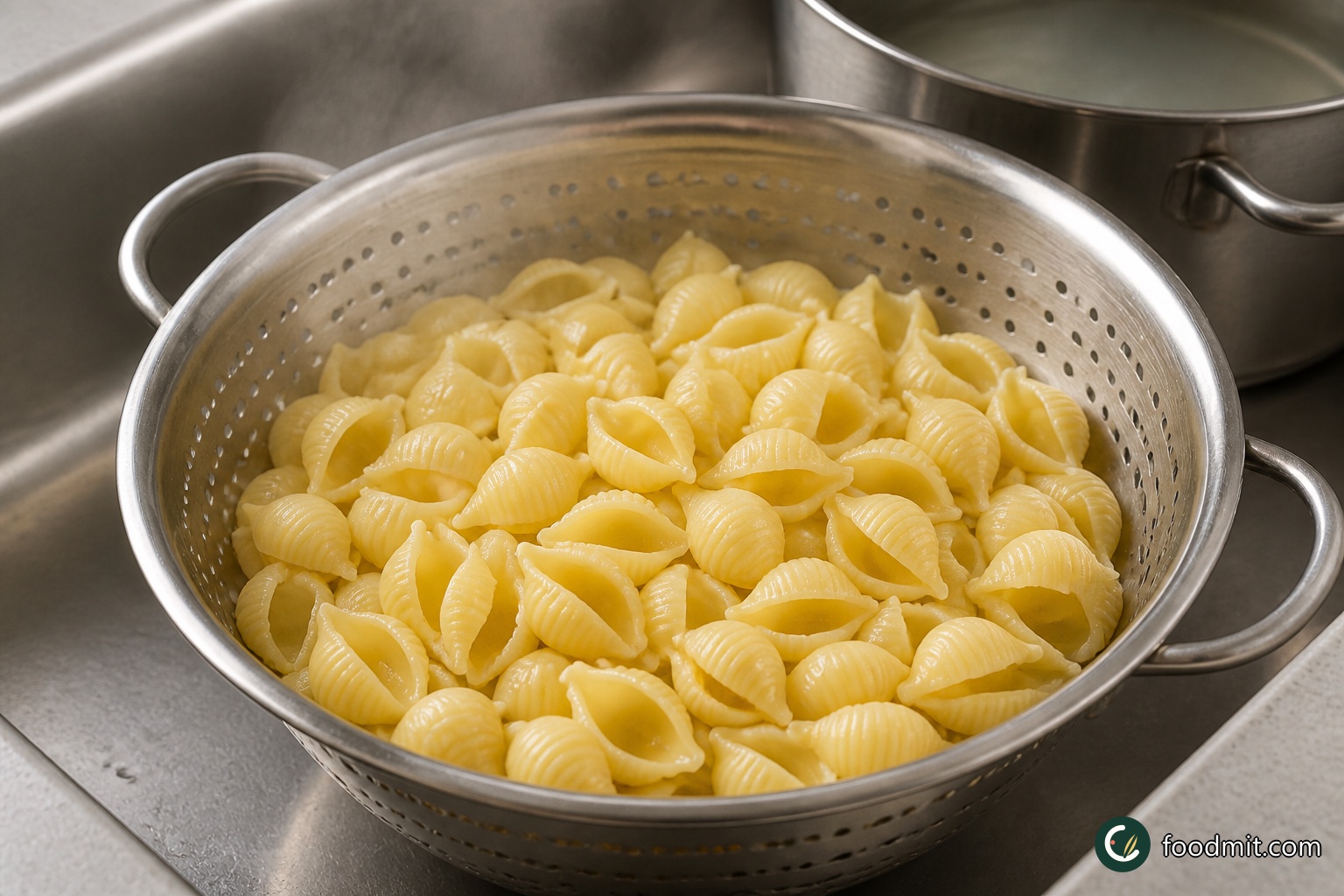
While the onions are cooking, bring a large pot of well-salted water to a boil. Add the medium shells and cook them for 5 minutes less than the package directs. They should still be distinctly firm, because they will continue cooking in the oven. Scoop out 1/2 cup of the pasta water, then drain the shells.
-
Step 5
Cook the roux
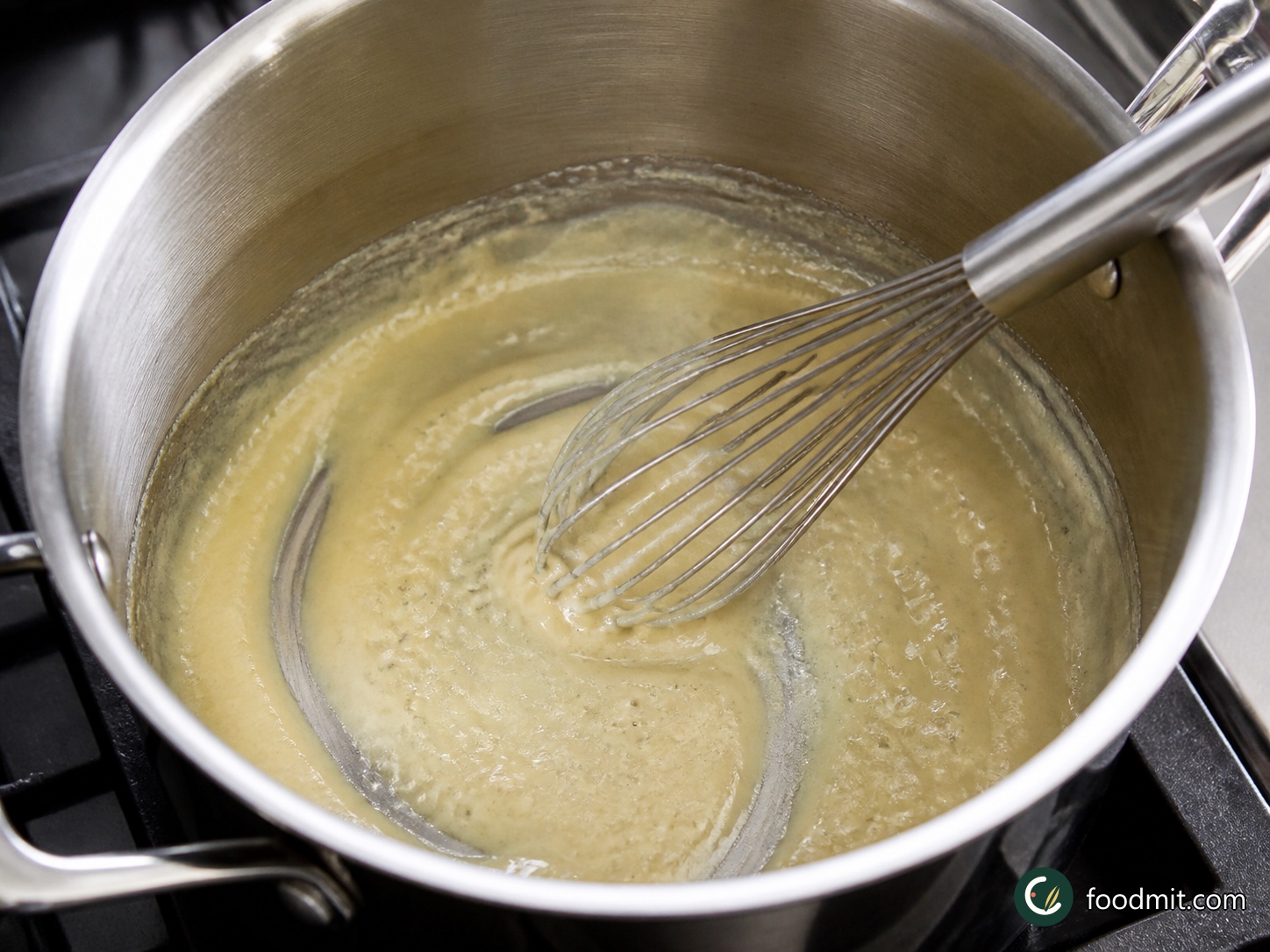
Return the same pot to medium-high heat and melt the remaining 4 tablespoons butter. Sprinkle in the flour and whisk constantly for 1 minute. The mixture should be smooth and gently bubbling, with no dry flour remaining, but it does not need to darken.
-
Step 6
Build the milk sauce
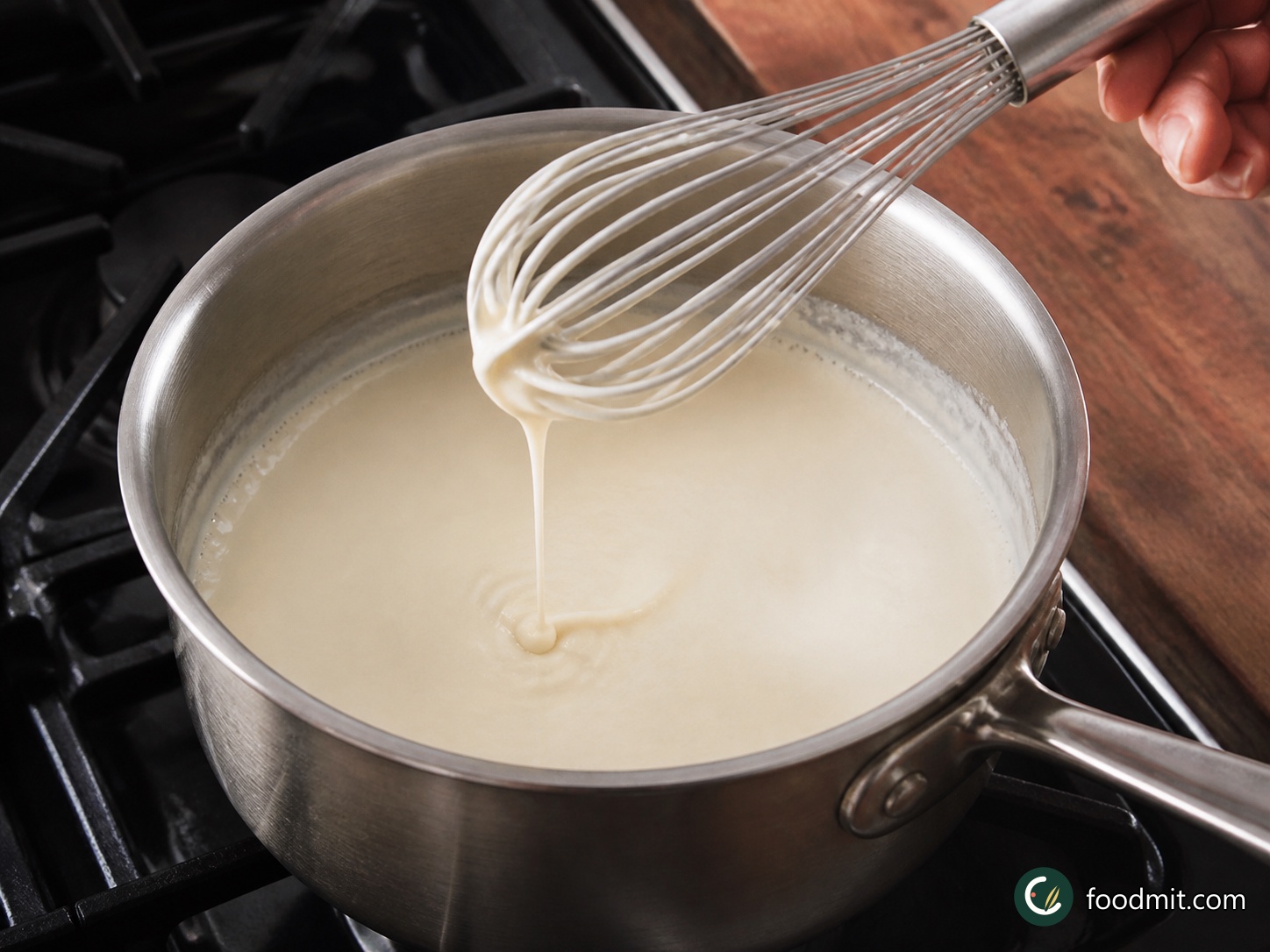
Add the whole milk gradually while whisking, then whisk in the reserved 1/2 cup pasta water. Keep the pot over the heat and whisk from time to time as the sauce comes to a boil. Once it is bubbling, cook for 1 minute; it should look smooth and lightly thickened. Remove the pot from the heat.
-
Step 7
Melt the cheese and fill the ramekins
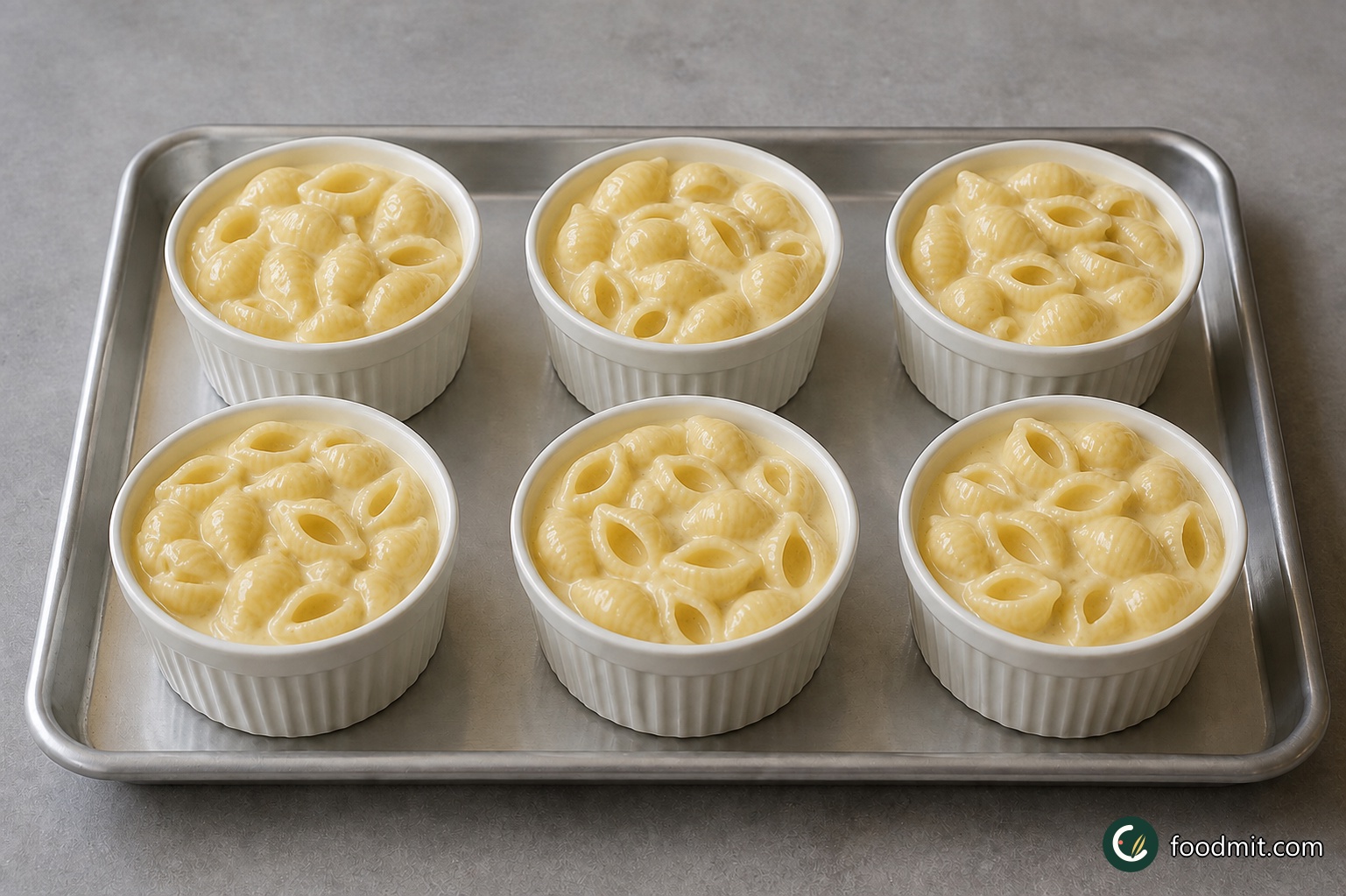
Mix the grated Gruyère, fontina, and Emmentaler together; the combined cheese should measure about 5 cups. Reserve 1 cup for the finish and stir the rest into the hot sauce until melted. Fold in the drained shells and season with salt. Divide the mixture evenly among six 6-ounce ramekins arranged on a rimmed baking sheet.
-
Step 8
Add onions and bread
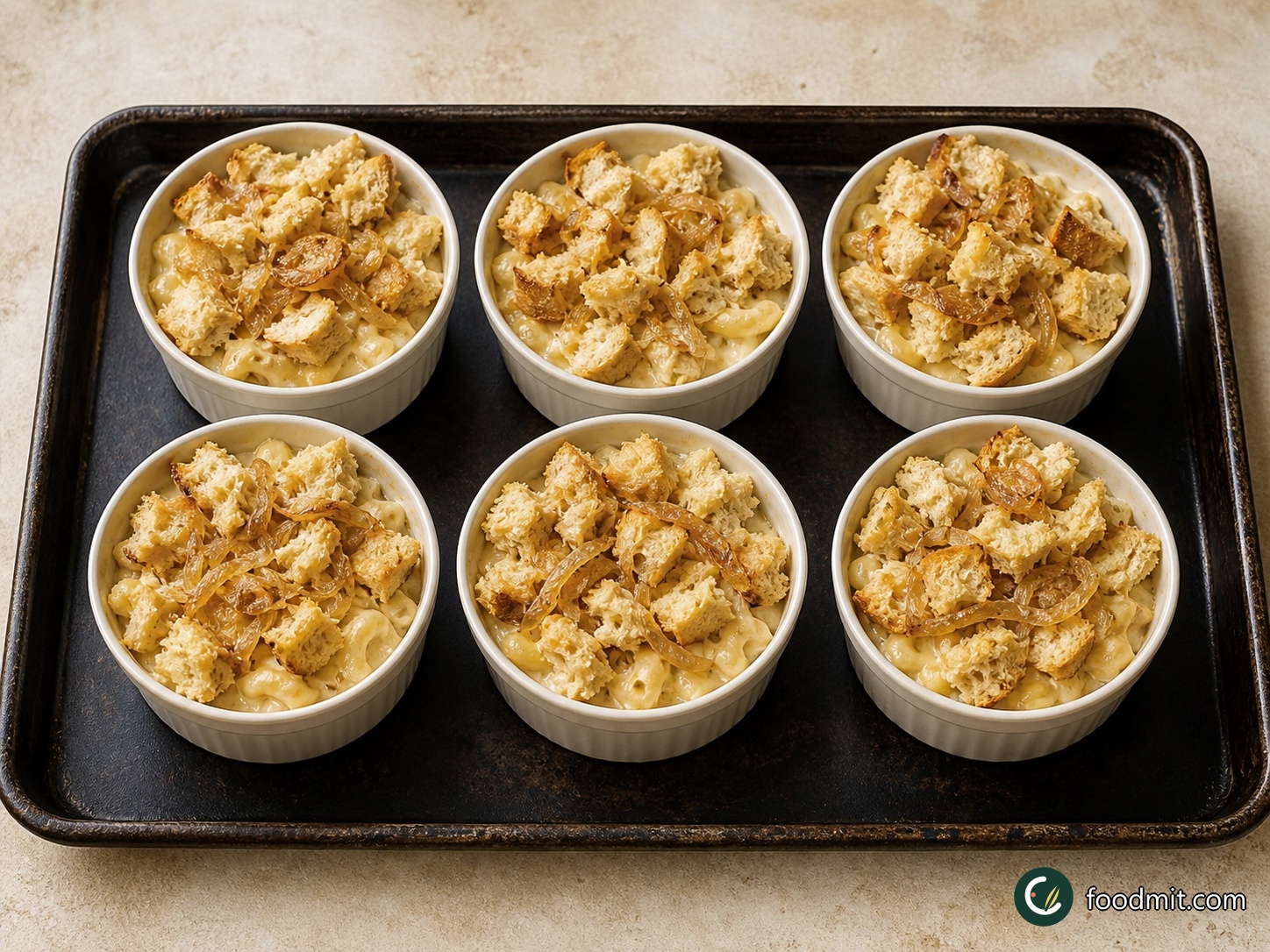
Distribute the onion mixture evenly over the six ramekins, making sure each portion gets both tender onion strands and the seasoned pan juices. Top with the torn rustic bread or baguette slices. Bake for 7 minutes, until the sauce is hot and the bread is beginning to crisp at its exposed edges.
-
Step 9
Finish with the reserved cheese
Scatter the reserved 1 cup cheese over the tops and return the ramekins to the oven for 6 to 8 minutes. They are ready when the sauce is visibly bubbling and the final layer of cheese has melted into the bread and onions. Finish with fresh thyme leaves and serve the ramekins hot.
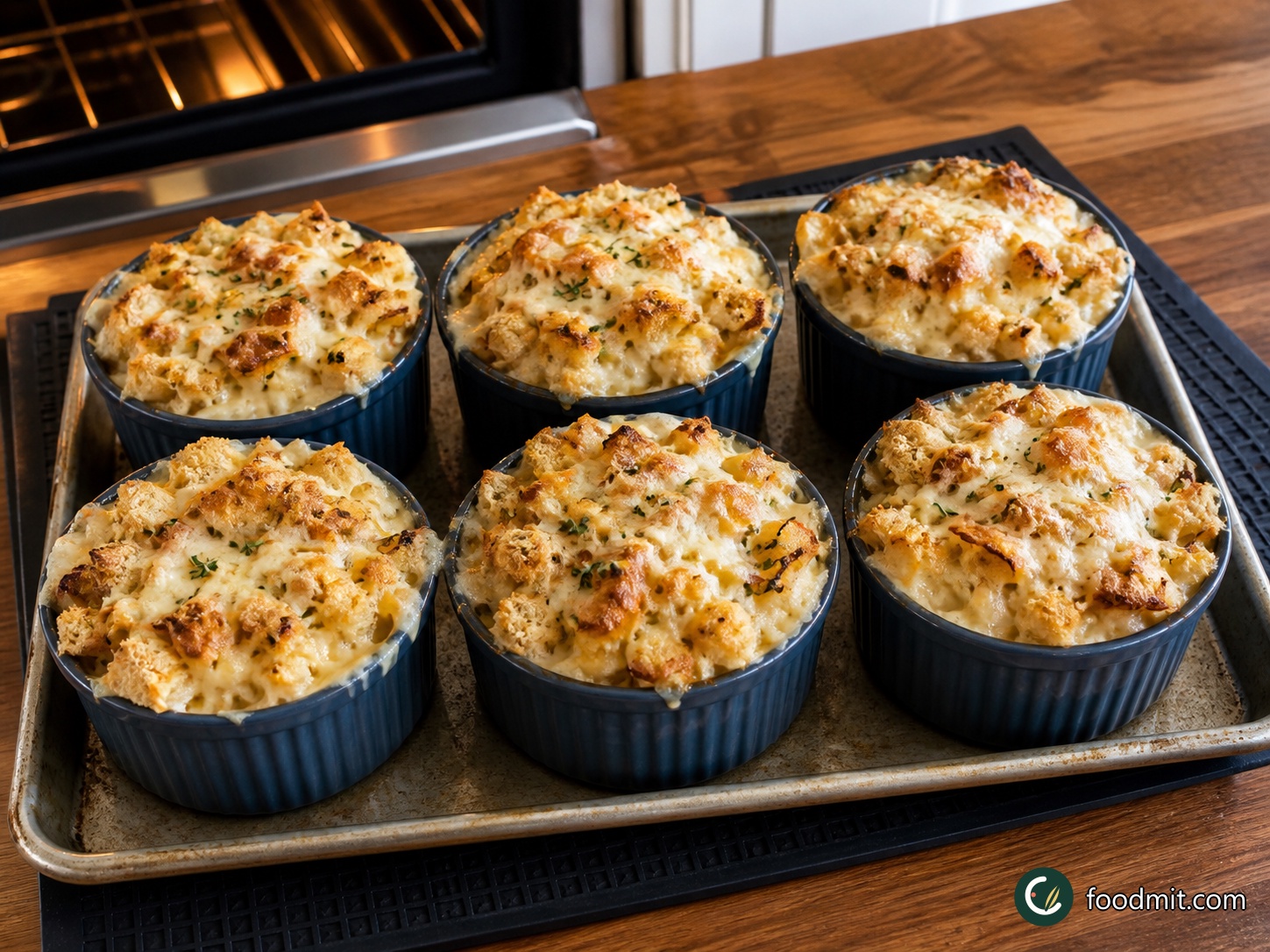
Grate and combine all three cheeses before starting the sauce, then remove the reserved cup immediately; this makes it much harder to accidentally melt the topping portion into the pot.
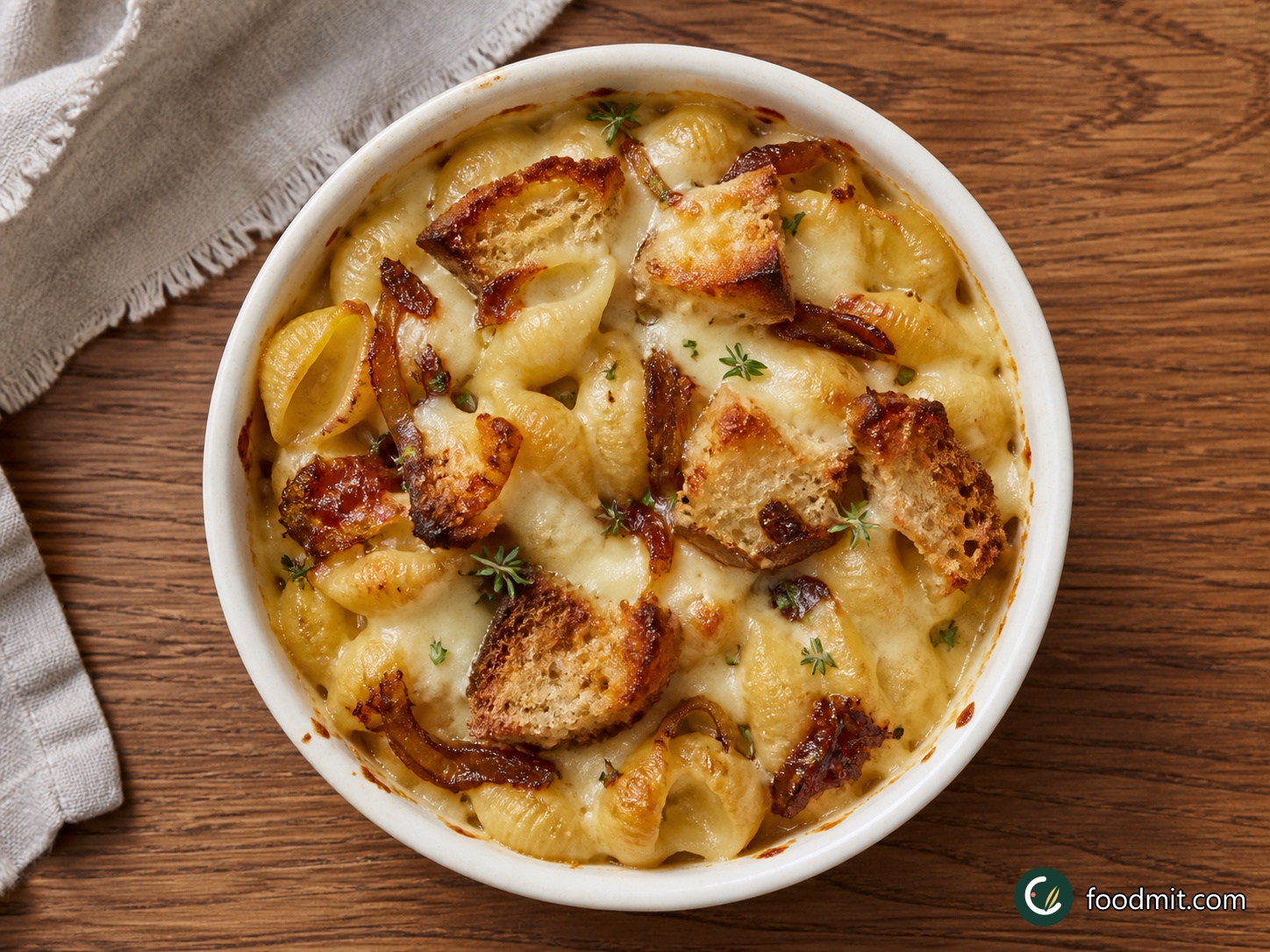
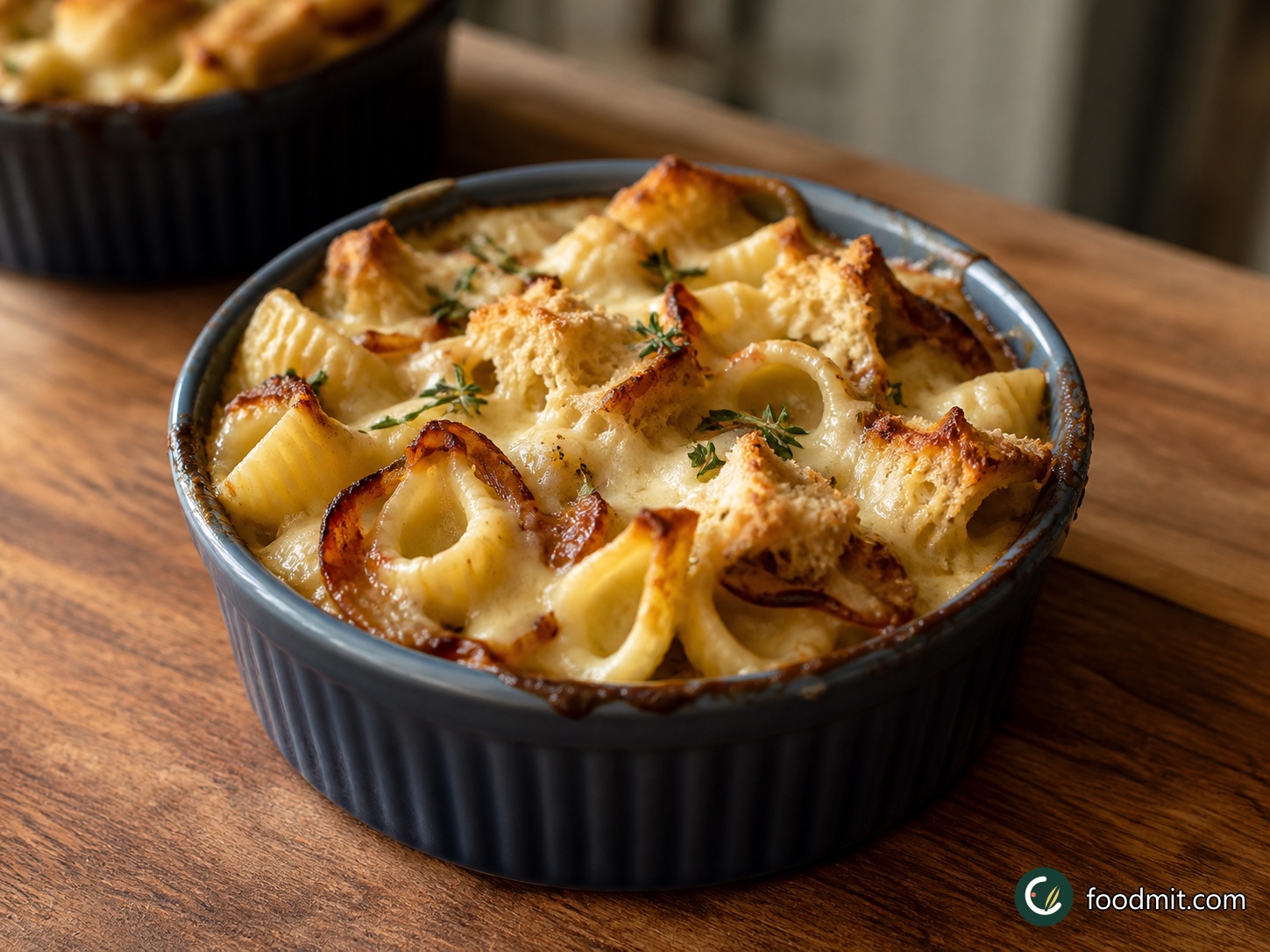
French Onion Mac and Cheese, ready to serve
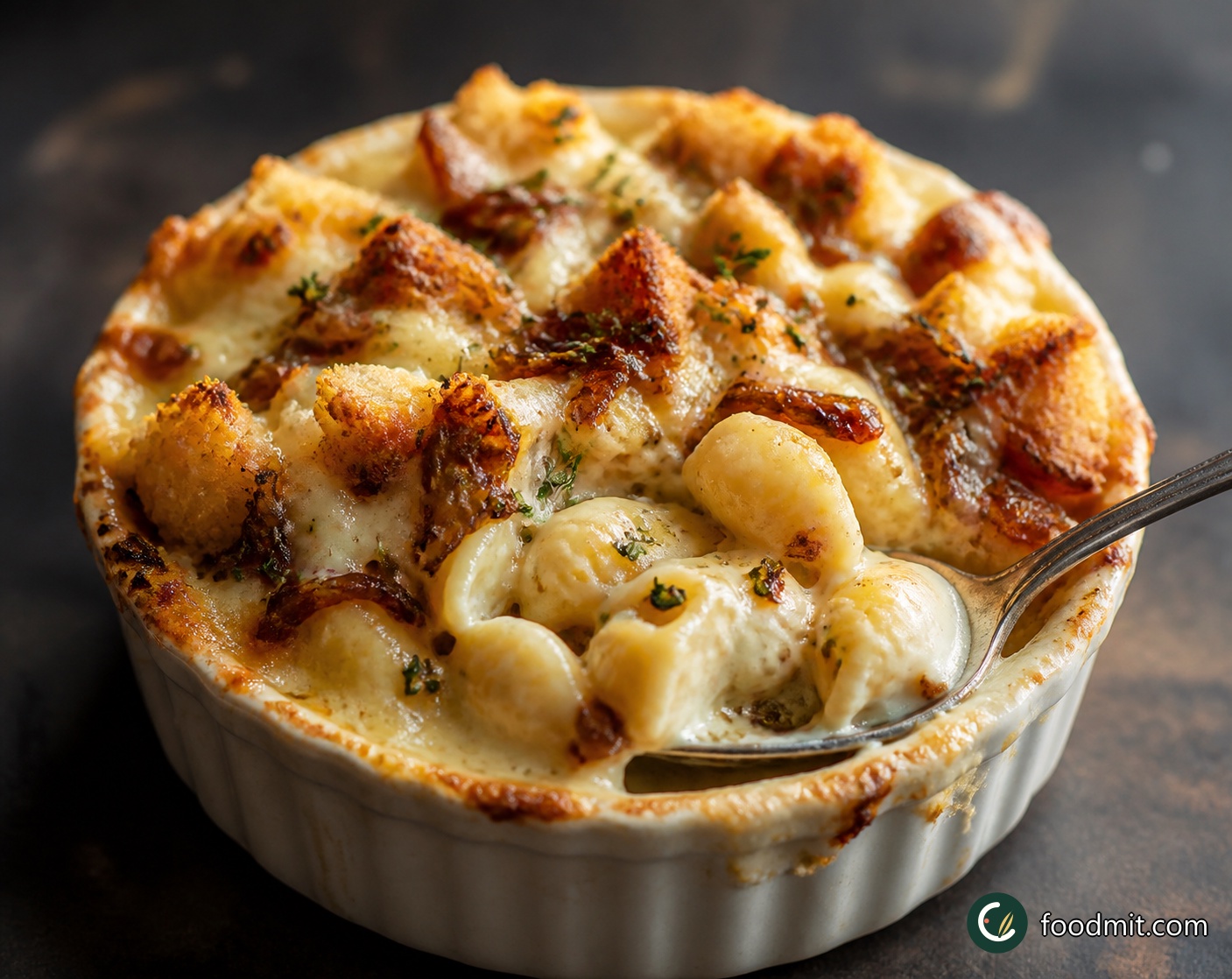
Serving ideas for French Onion Mac and Cheese
Choose a presentation that fits the occasion, from relaxed sharing to individual plates.
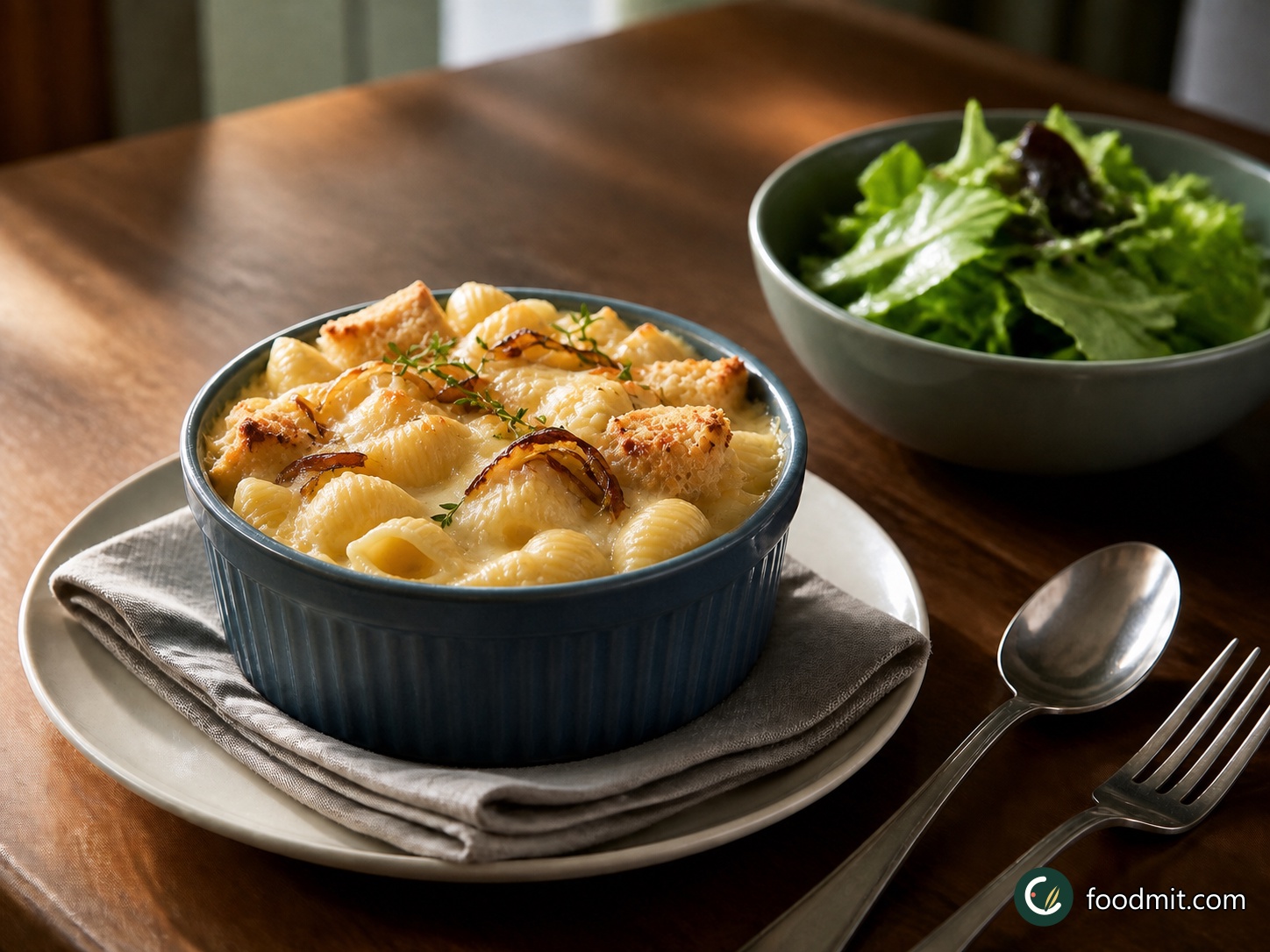
Cozy Ramekin Supper
Place each hot ramekin on a small heatproof plate with a folded napkin beneath it, and remind everyone that the dish itself is hot. A sharply dressed green salad served in a separate bowl is a useful counterpoint to the buttery sauce and three cheeses. Keep the table simple and let the irregular bread topping stay visible; its toasted edges are part of the appeal. This presentation suits a relaxed family dinner when everyone can eat soon after the ramekins leave the oven.
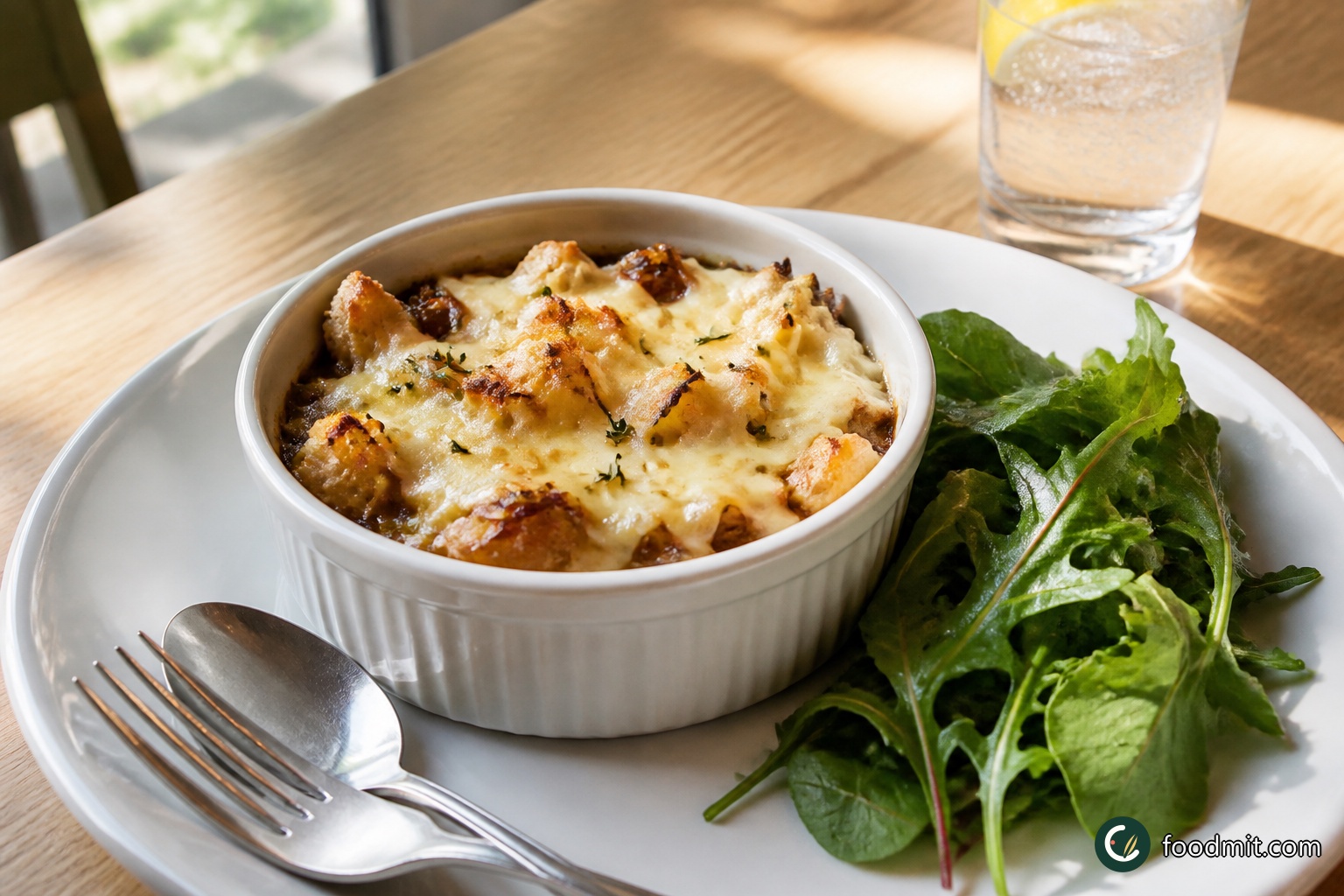
Bistro-Style Lunch
For lunch, set one ramekin on a wide white plate and add a modest pile of peppery leaves beside it rather than transferring the pasta out of its baking dish. The dark golden onions, pale melted cheese, and rough bread pieces look especially inviting against plain tableware. Offer forks and sturdy spoons so diners can reach both the crisp top and the saucy shells below. Small glasses of sparkling water with lemon keep the setting fresh without competing with the thyme and wine in the dish.
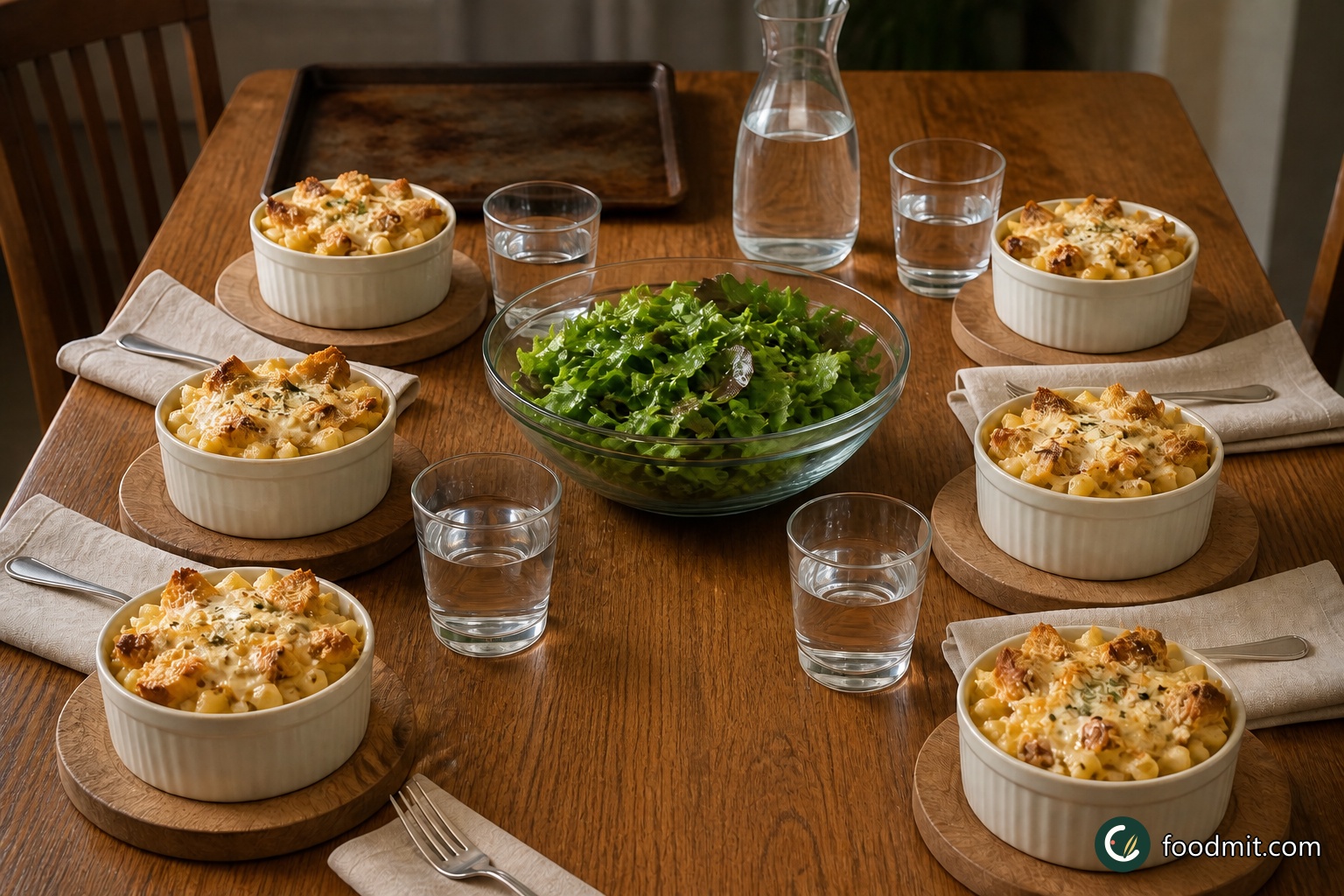
Casual Dinner Party
Arrange all six ramekins on the rimmed baking sheet for the trip from oven to table, then move each one onto an individual wooden trivet or heatproof plate. The matching portions make service straightforward and ensure no guest misses the onion-and-bread topping. Add a large bowl of simply dressed greens and plenty of water at the center of the table. Because the pasta is at its best while the cheese is still fluid and the edges are bubbling, have the accompaniments ready before the final bake ends.
Let’s cook French Onion Mac and Cheese together
Check off your ingredients, follow each step, and start the timers when you are ready.
Get everything ready
Step-by-step with timers
Start the onions
Heat the oven to 450°F. Melt 2 tablespoons of the butter in a large skillet over medium heat. Add the sliced onions and thyme, season with kosher salt and black pepper, and stir to coat. Cover the skillet and cook for 5 minutes; the onions should begin to soften and release moisture.
Brown the onions
Remove the lid and continue cooking over medium heat, stirring frequently so the slices color evenly rather than catching on the pan. Cook for 15 to 20 minutes, until the onions are soft and golden brown throughout. Let their appearance guide you: pale onions need more time even if the timer has ended.
Deglaze and season
Pour the white wine into the skillet and work a wooden spoon across the bottom to loosen the flavorful browned residue. Stir in the Dijon mustard and the crumbled beef bouillon, if using, until evenly dispersed. Take the skillet off the heat and keep the onion mixture nearby for assembly.
Undercook the shells
While the onions are cooking, bring a large pot of well-salted water to a boil. Add the medium shells and cook them for 5 minutes less than the package directs. They should still be distinctly firm, because they will continue cooking in the oven. Scoop out 1/2 cup of the pasta water, then drain the shells.
Cook the roux
Return the same pot to medium-high heat and melt the remaining 4 tablespoons butter. Sprinkle in the flour and whisk constantly for 1 minute. The mixture should be smooth and gently bubbling, with no dry flour remaining, but it does not need to darken.
Build the milk sauce
Add the whole milk gradually while whisking, then whisk in the reserved 1/2 cup pasta water. Keep the pot over the heat and whisk from time to time as the sauce comes to a boil. Once it is bubbling, cook for 1 minute; it should look smooth and lightly thickened. Remove the pot from the heat.
Melt the cheese and fill the ramekins
Mix the grated Gruyère, fontina, and Emmentaler together; the combined cheese should measure about 5 cups. Reserve 1 cup for the finish and stir the rest into the hot sauce until melted. Fold in the drained shells and season with salt. Divide the mixture evenly among six 6-ounce ramekins arranged on a rimmed baking sheet.
Add onions and bread
Distribute the onion mixture evenly over the six ramekins, making sure each portion gets both tender onion strands and the seasoned pan juices. Top with the torn rustic bread or baguette slices. Bake for 7 minutes, until the sauce is hot and the bread is beginning to crisp at its exposed edges.
Finish with the reserved cheese
Scatter the reserved 1 cup cheese over the tops and return the ramekins to the oven for 6 to 8 minutes. They are ready when the sauce is visibly bubbling and the final layer of cheese has melted into the bread and onions. Finish with fresh thyme leaves and serve the ramekins hot.
French Onion Mac and Cheese Recipe Inspired by Martha Stewart
The story behind French Onion Mac and Cheese
Recipe notes by Claire
Why This One Drew Me In
I am always interested when Sarah Carey takes a familiar dish and gives every ingredient a clear job. After reading through this recipe, I could see that the onion-soup inspiration was built into the method rather than added as a label: slow browning, thyme, wine, and a touch of mustard all happen before the pasta is assembled. Cooking it confirmed that impression. It is unapologetically rich, but the onion mixture supplies enough depth that the cheese never tastes flat or one-note.
The Stage Worth Watching
My most useful lesson came from the skillet. Five covered minutes softened the onions quickly, but the uncovered cooking was where the character developed. I stirred often and watched the paler pieces catch up with the darker ones instead of treating 15 minutes as an automatic stopping point. When the wine went in, it lifted the concentrated bits from the skillet and folded them back into the onions. That small moment made the finished topping taste integrated rather than simply scattered over the pasta.
What I Loved at the Table
The ramekins came out with exactly the contrast I had hoped for: creamy shells below, sweet-savory onions through the top, and irregular pieces of bread with crisp tips and cheese-soaked centers. I also appreciated that dividing the mixture before baking gave every person the best edges. The fresh thyme at the end may look modest, but its aroma cuts through the warmth of the cheese. I served the portions directly on small plates so the hot dishes were easy to carry and the bubbling sauce had a minute to settle.