
Macaroni and Cheese Recipe Inspired by Martha Stewart
I first saved the mac and cheese recipe Martha Stewart published because I have always admired how she gives familiar comfort food a sense of occasion. After cooking it myself, I understood its staying power: the method is deliberate, the pan is generous, and every step earns its place. Baked macaroni and cheese can turn heavy or dry, but this one landed in the sweet spot for me. The elbows stayed distinct inside a silky sauce, sharp white cheddar brought a clean tang, and Gruyère added a rounded, nutty depth. Fresh buttered bread became a craggy golden lid, while nutmeg, black pepper, and cayenne quietly kept the richness in balance. The most useful lesson was to stop boiling the pasta while its center was still underdone. Rinsing it cold halted the cooking, so the elbows could finish in the oven without losing their shape. I also found that adding hot milk gradually to the brief butter-and-flour base made it much easier to whisk the sauce smooth and judge its thickness before the cheese went in. I would bring the casserole to the table in its baking dish and let everyone see that browned top before serving. It makes twelve portions, so it suits a family supper, a potluck, or a holiday spread; after the five-minute rest, the sauce remains creamy but the spoonfuls hold together more neatly.
 Foodmit
recipe
Per 1/12 casserole (about 1 cup)
Nutrition for Macaroni and Cheese
- Saturated fat
- 20 g
- Fiber
- 2 g
- Sugars
- 8 g
- Sodium
- 840 mg
Estimated values. Nutrition values are approximate. More precise calculations will be added in a future update.
How to make Macaroni and Cheese
-
Step 1
Heat the oven and prepare the dish
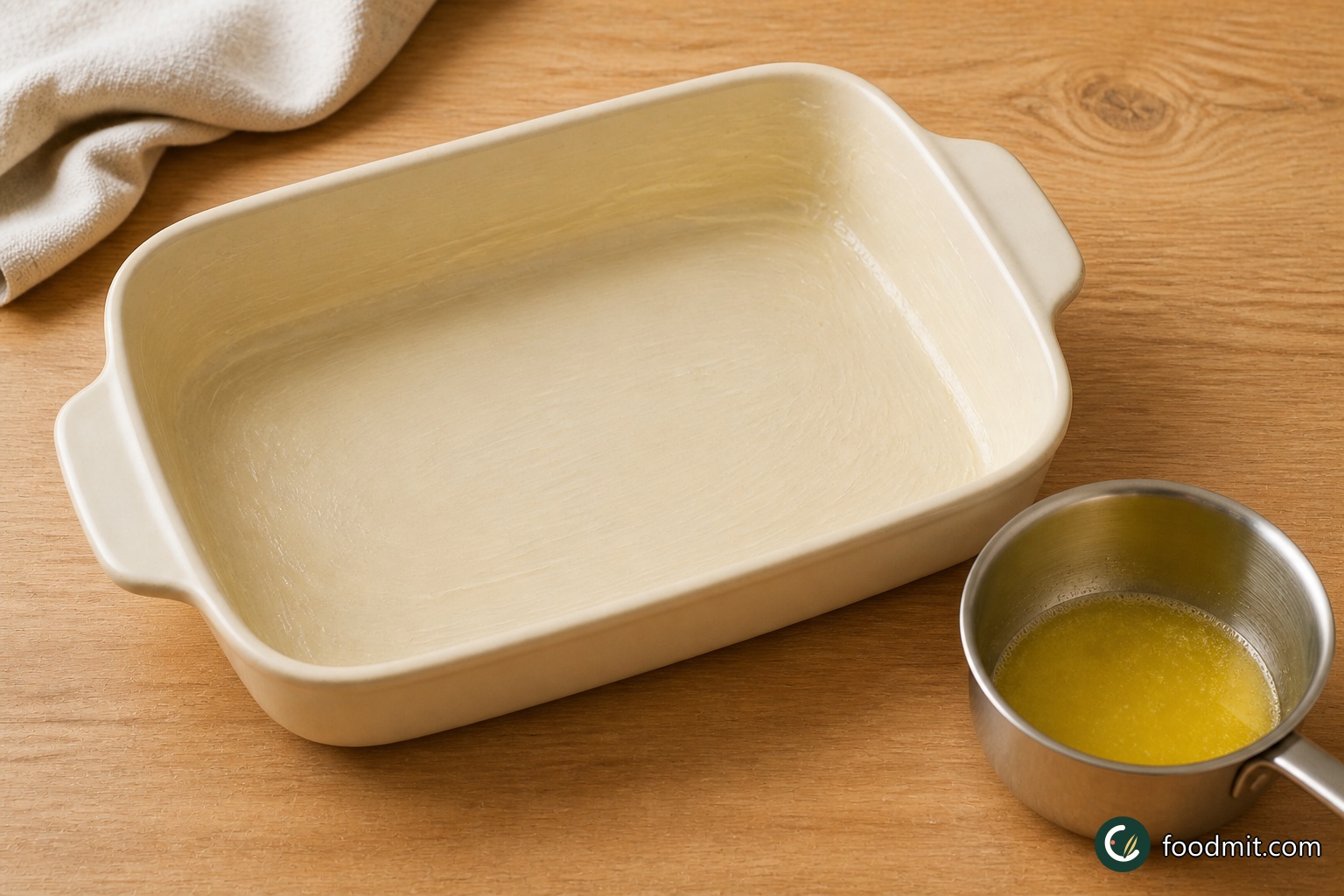
Set the oven to 375°F and butter a 3-quart casserole dish, covering the bottom and sides. Melt 2 tablespoons of the butter in a small saucepan over medium heat; take it off the heat as soon as it is fully liquid.
-
Step 2
Coat the bread
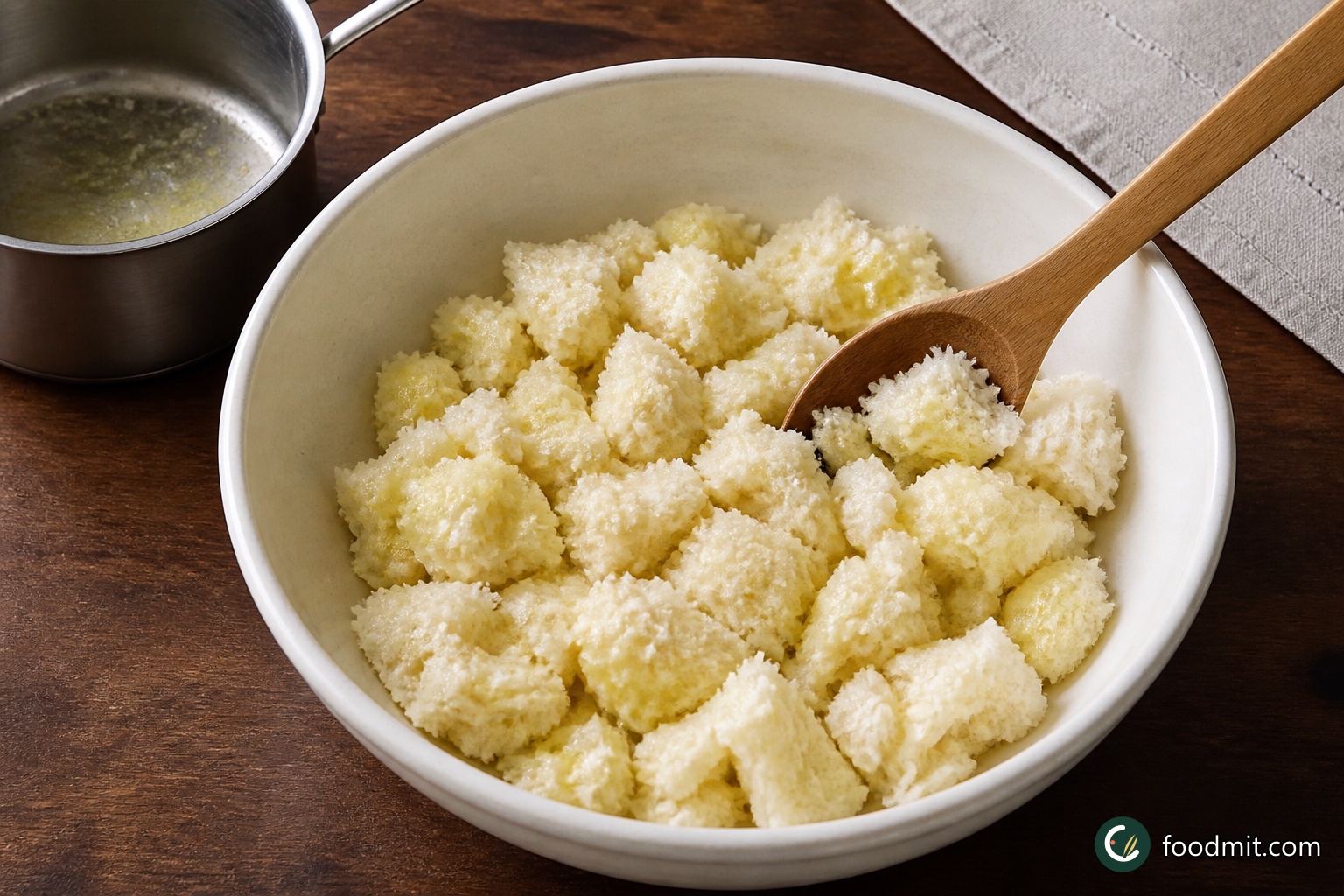
Put the torn bread in a medium bowl, pour over the 2 tablespoons of melted butter, and toss until the irregular pieces are lightly coated. Leave this topping aside while you make the sauce.
-
Step 3
Warm the milk
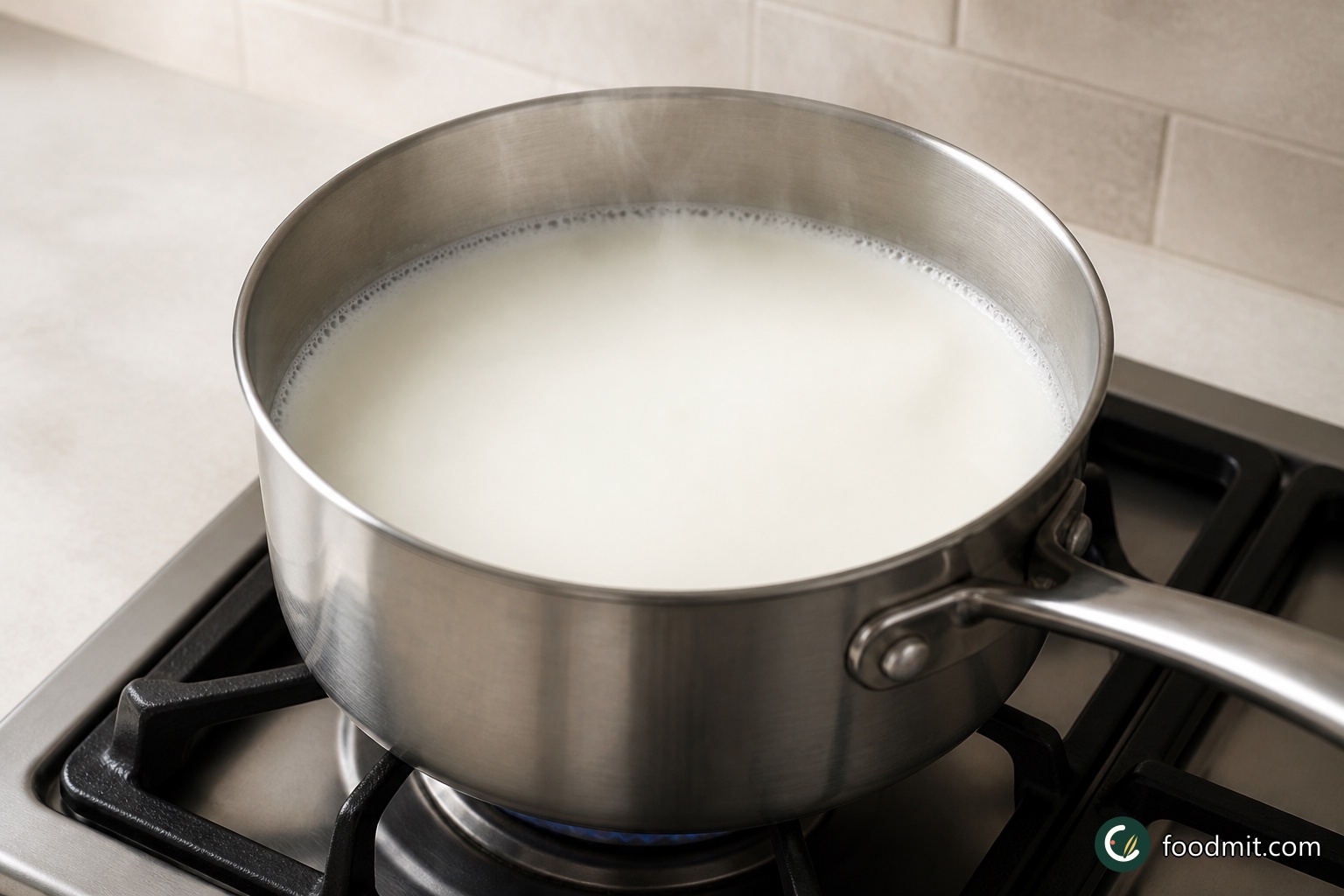
Pour the milk into a medium saucepan and place it over medium heat. Warm it through so it is hot when it meets the flour mixture, but watch the edges and do not let it boil over.
-
Step 4
Cook the flour base
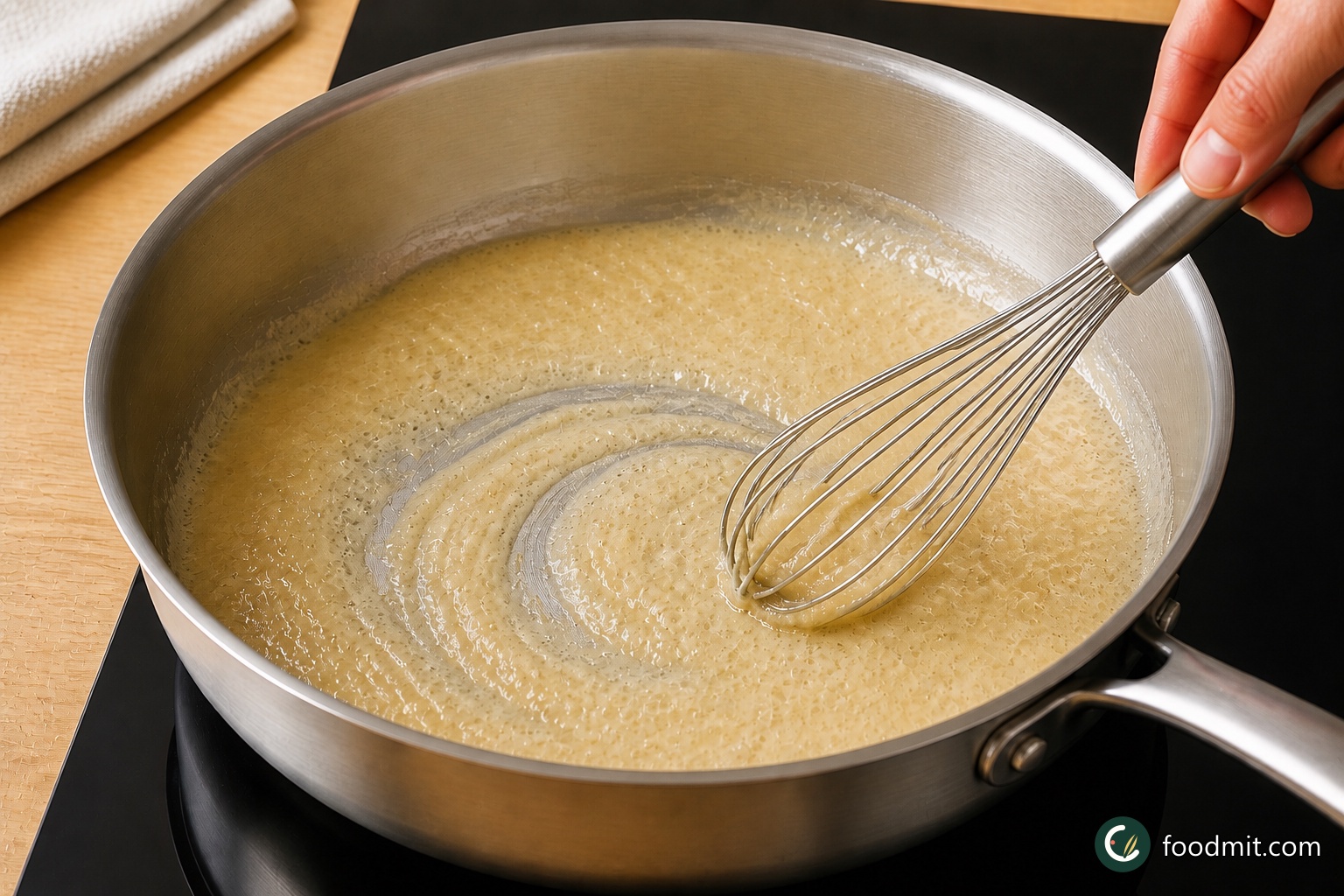
Melt the remaining 6 tablespoons butter in a high-sided skillet over medium heat. Once the butter is bubbling, whisk in the flour and keep whisking for 1 minute, until the mixture is cohesive and no dry flour remains.
-
Step 5
Thicken the sauce
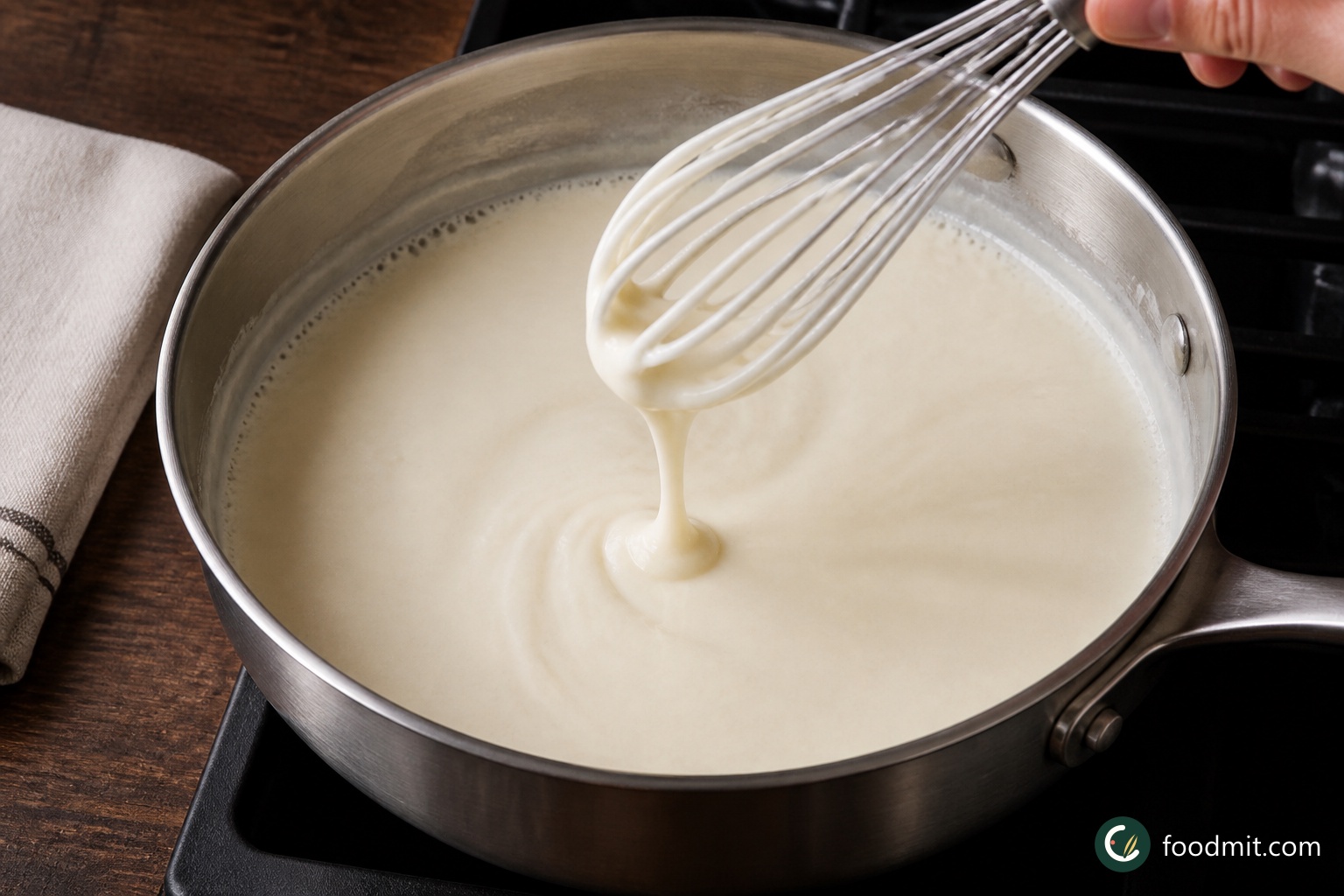
Pour the hot milk into the skillet in a slow stream while whisking continuously, working out any lumps as you go. Continue to cook and whisk over medium heat until the sauce begins to bubble and has visibly thickened enough to coat the whisk.
-
Step 6
Add the cheese and seasonings
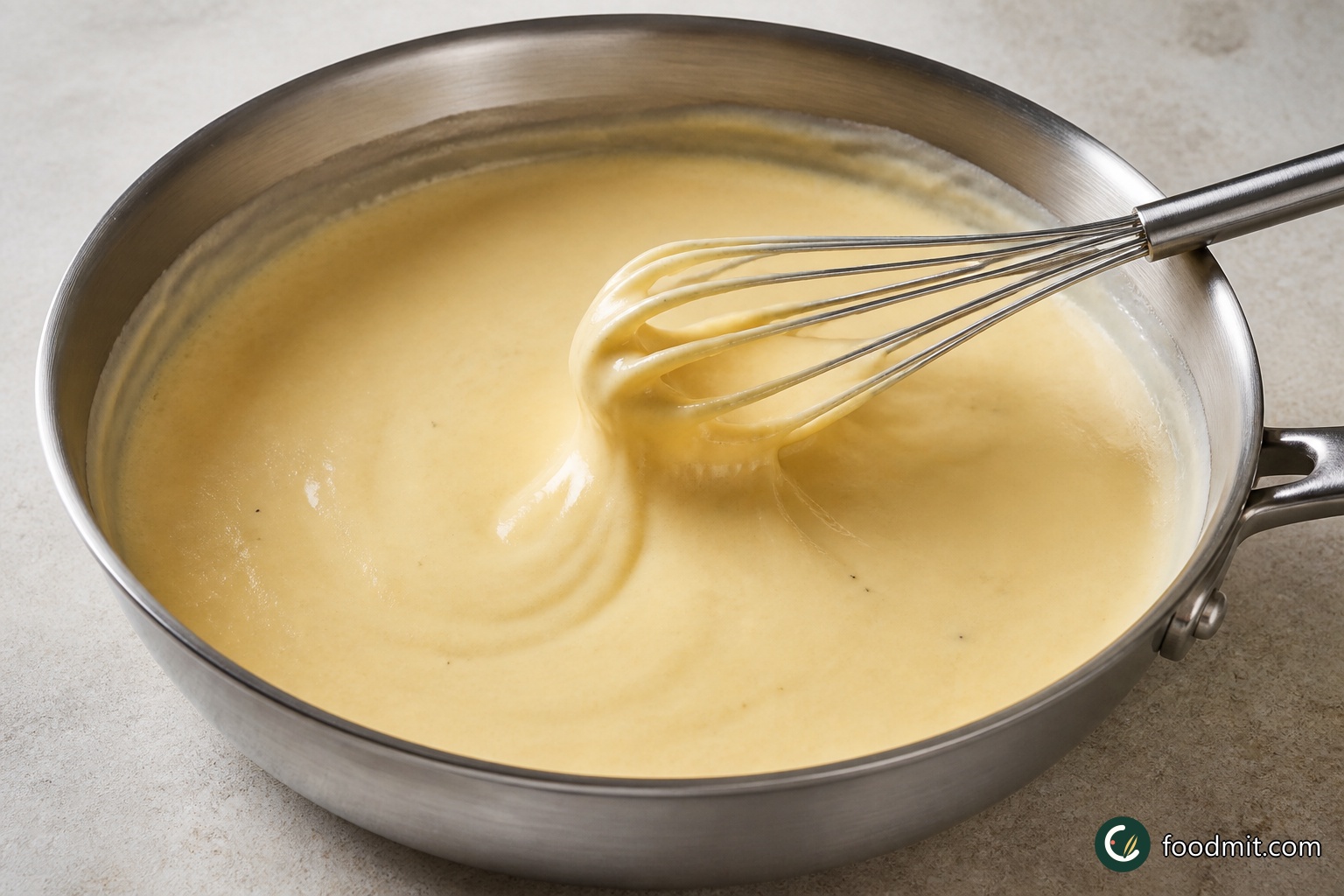
Remove the skillet from the heat. Stir in the salt, nutmeg, black pepper, cayenne, 3 cups of the cheddar, and either 1 1/2 cups of the Gruyère or 1 cup of the Pecorino Romano. Mix until the cheese has melted into a smooth sauce, then set it aside.
-
Step 7
Partially cook the macaroni
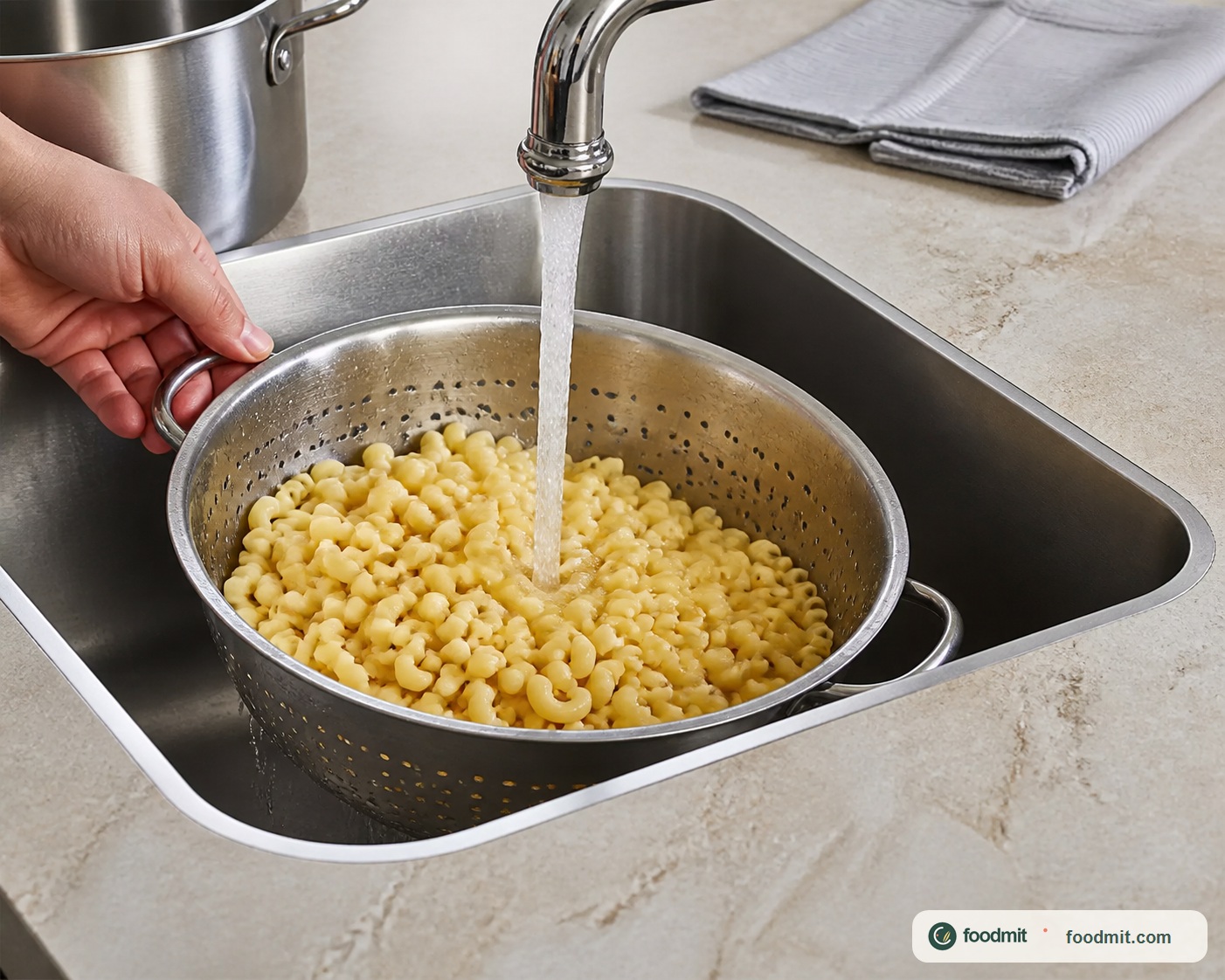
Bring a large saucepan of water to a boil and add the elbow macaroni. Cook it for 2 to 3 minutes less than the package directs: the outside should be cooked, but the center should still be noticeably underdone. Drain in a colander, rinse under cold running water to stop the cooking, and drain very well.
-
Step 8
Combine pasta and sauce
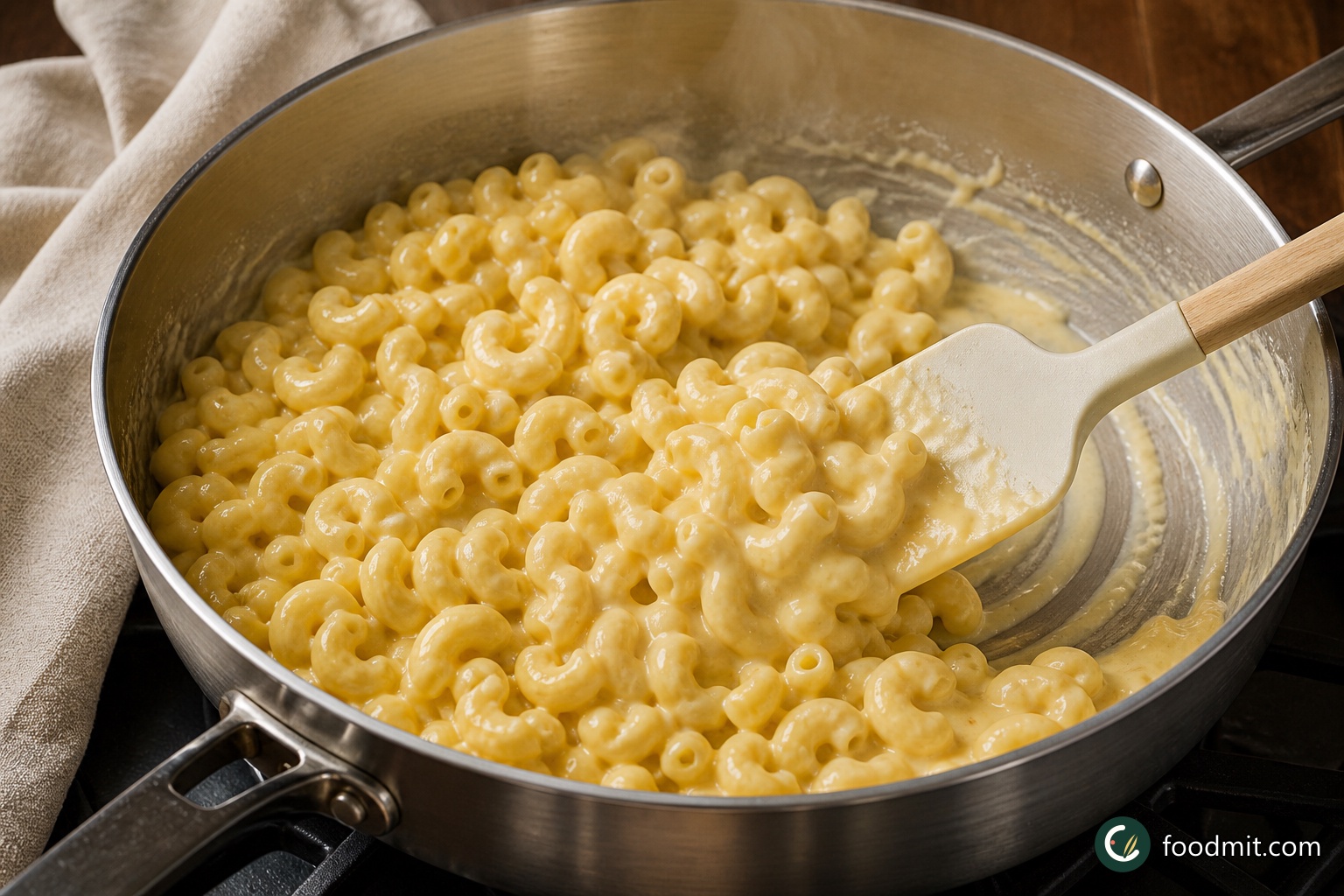
Add the well-drained macaroni to the reserved cheese sauce. Fold until every elbow is coated and the sauce is evenly distributed, scraping along the bottom and sides of the skillet so no pockets of plain pasta remain.
-
Step 9
Fill and top the casserole
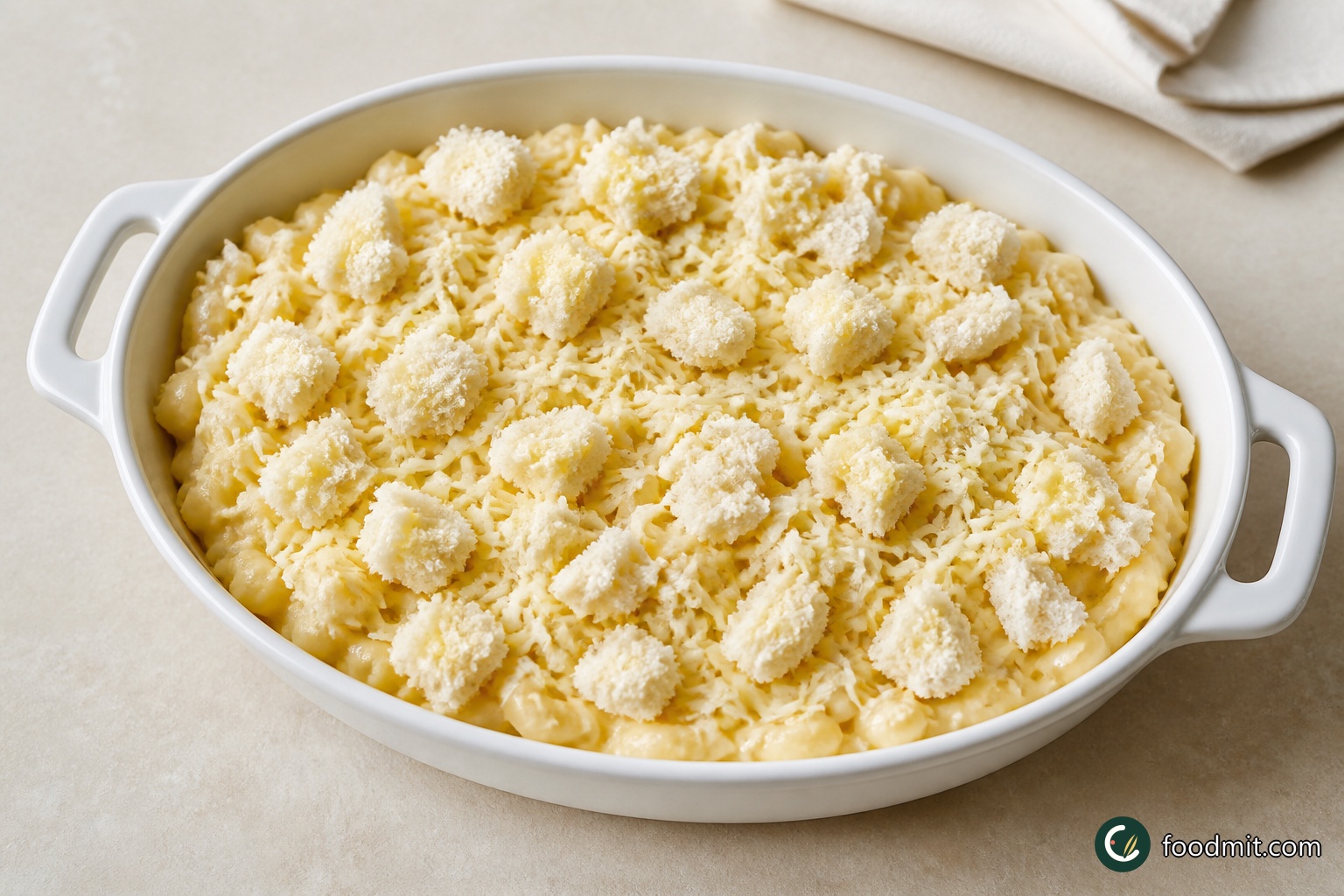
Transfer the coated macaroni to the buttered dish and spread it into an even layer. Scatter over the remaining 1 1/2 cups cheddar, then add either the remaining 1/2 cup Gruyère or 1/4 cup Pecorino Romano. Finish with the buttered bread pieces, distributing them across the surface.
-
Step 10
Bake and rest
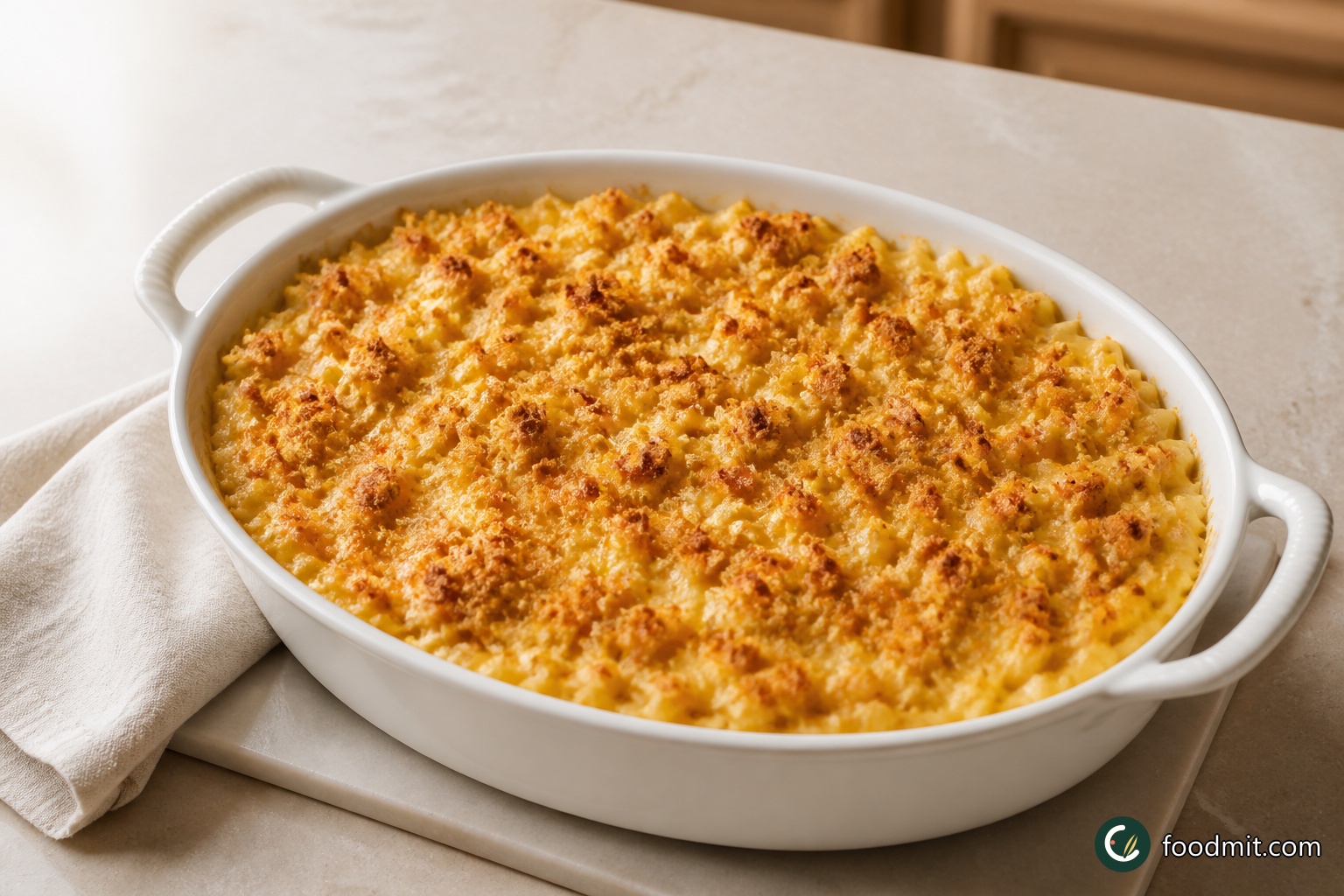
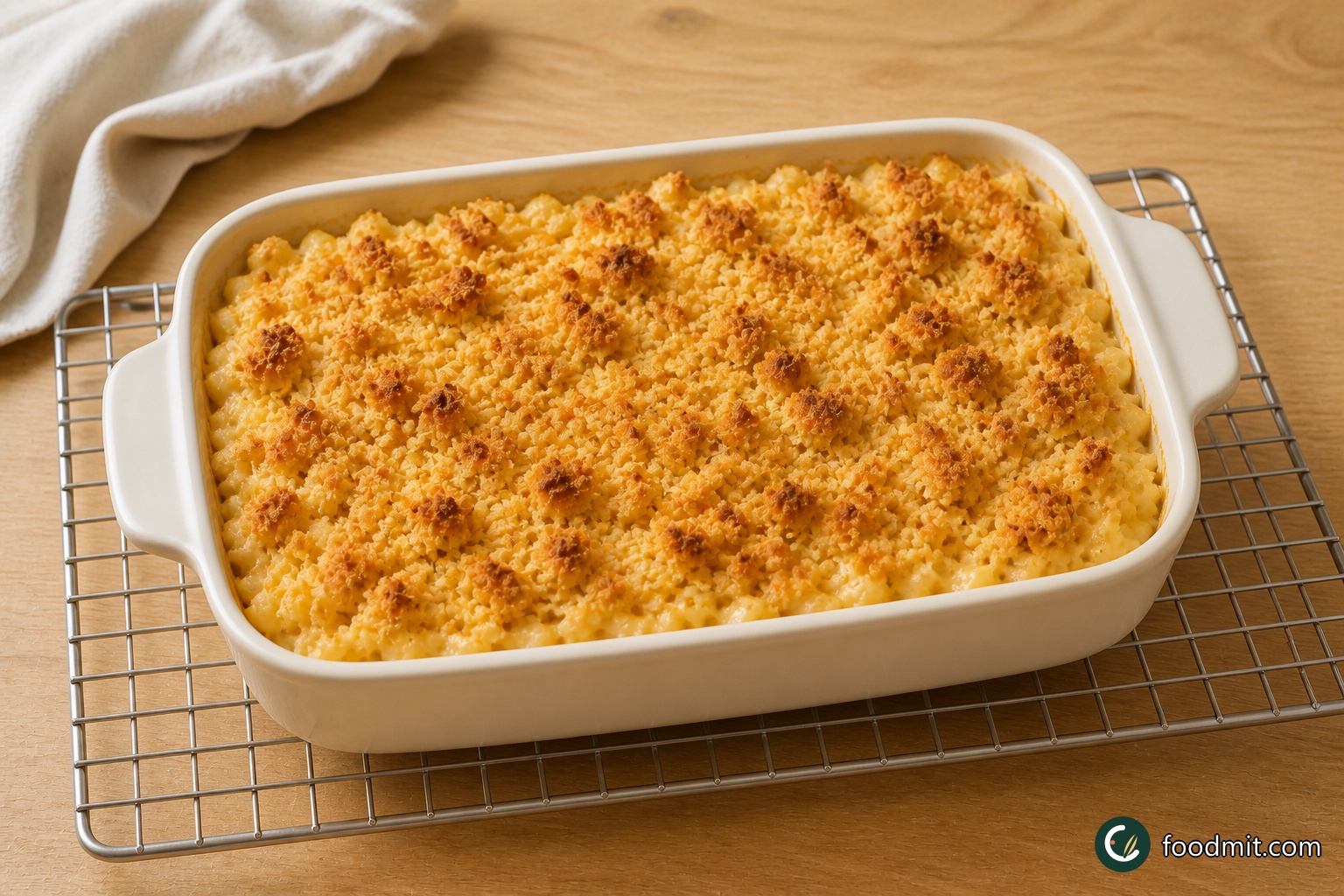
Bake for about 30 minutes, until the top is well browned and the sauce is bubbling around the edges. Move the dish to a wire rack and let it stand for 5 minutes before serving hot; the brief rest allows the sauce to settle without losing its creamy texture.
Measure the sauce cheeses and topping cheeses into separate bowls before cooking; the simple setup prevents you from melting the reserved portion into the sauce and protects the browned finish.
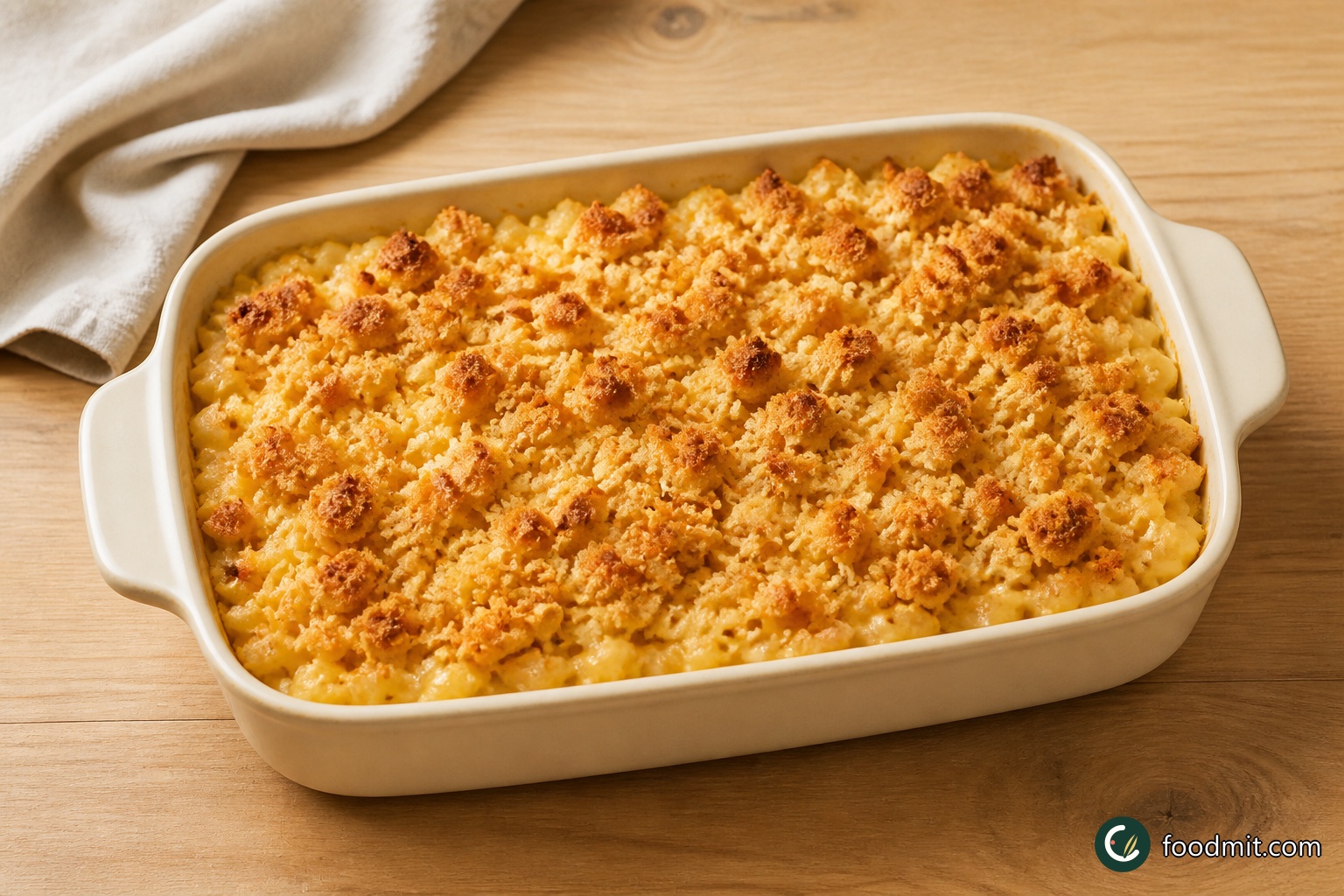
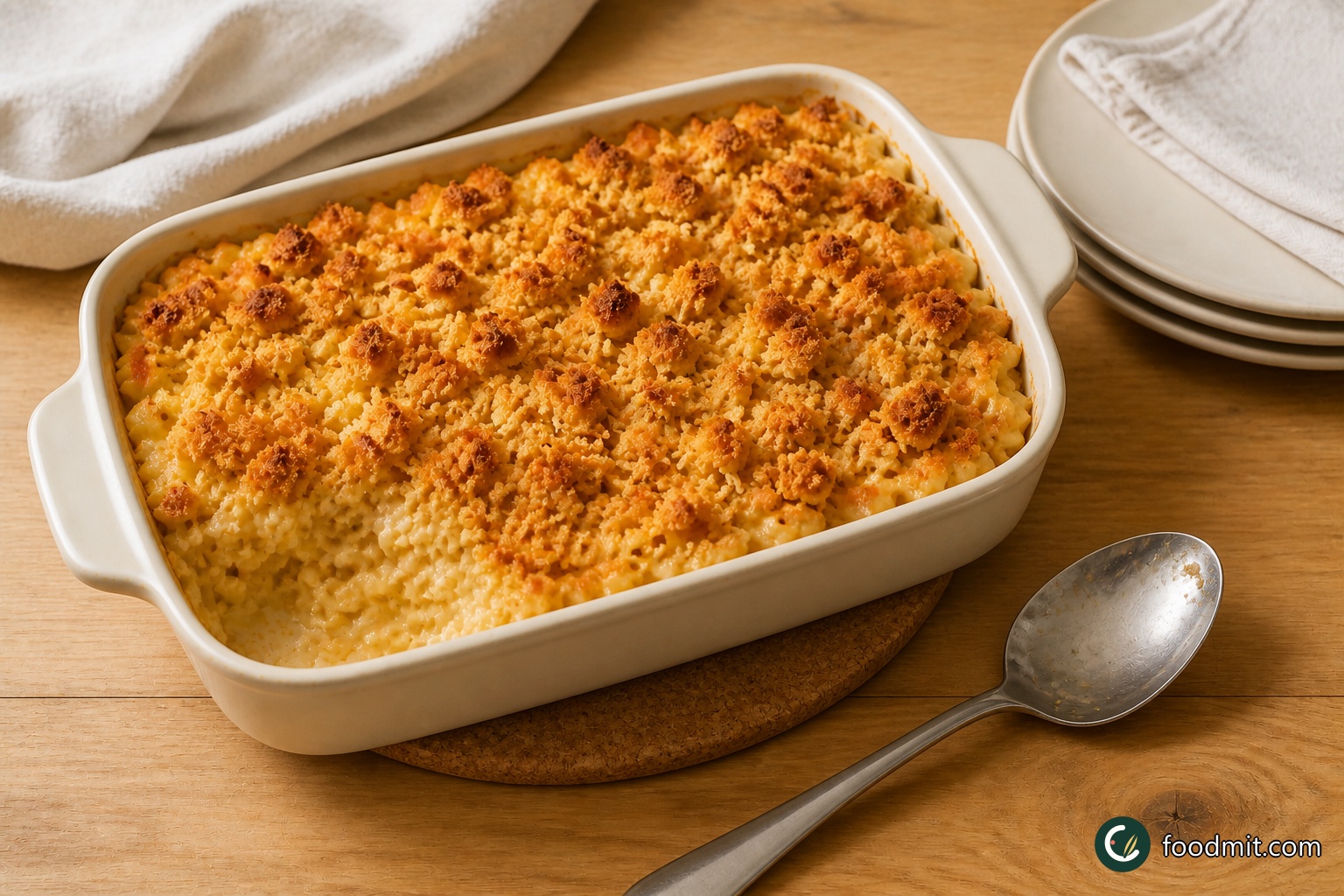
Macaroni and Cheese, ready to serve
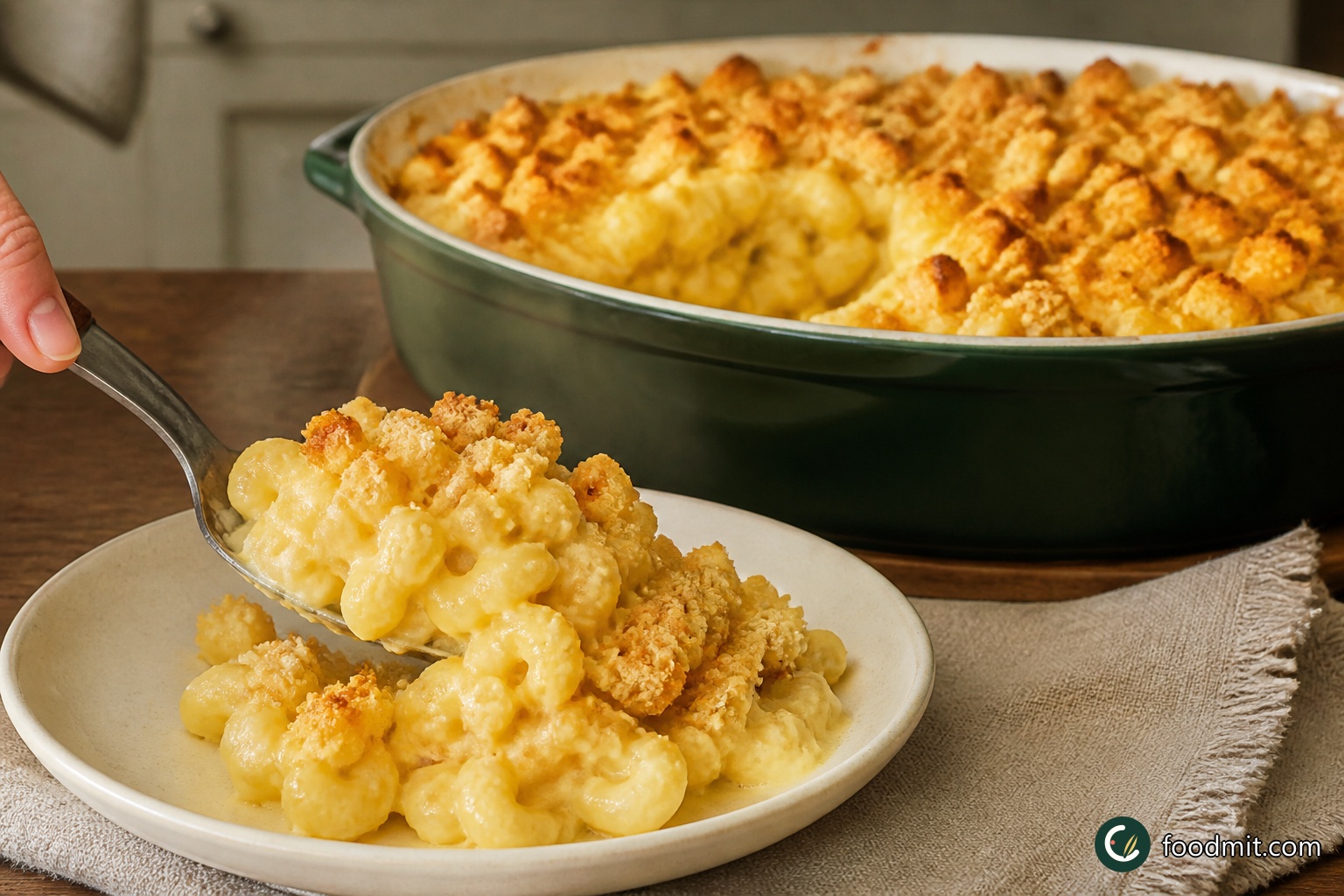
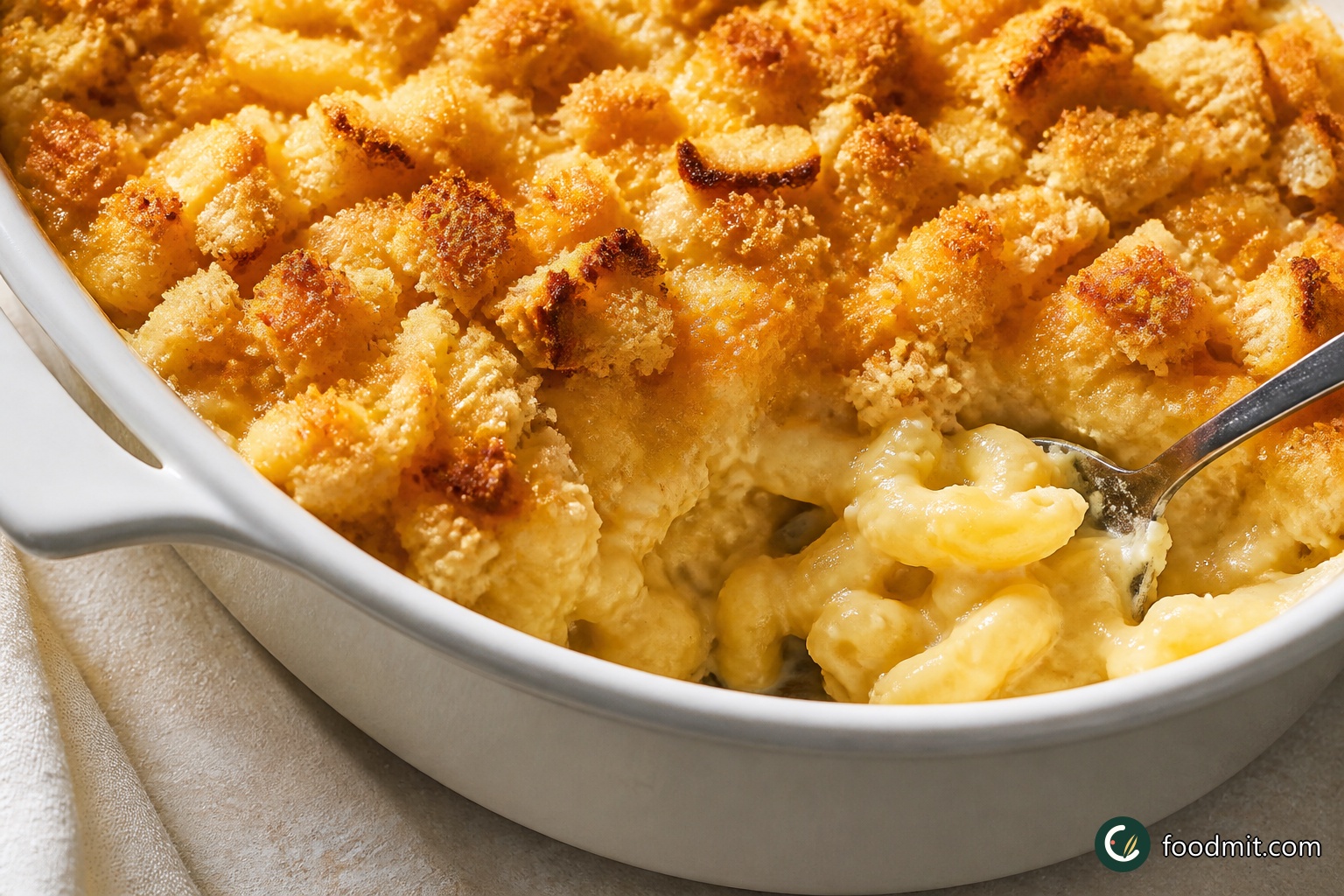
Serving ideas for Macaroni and Cheese
Choose a presentation that fits the occasion, from relaxed sharing to individual plates.
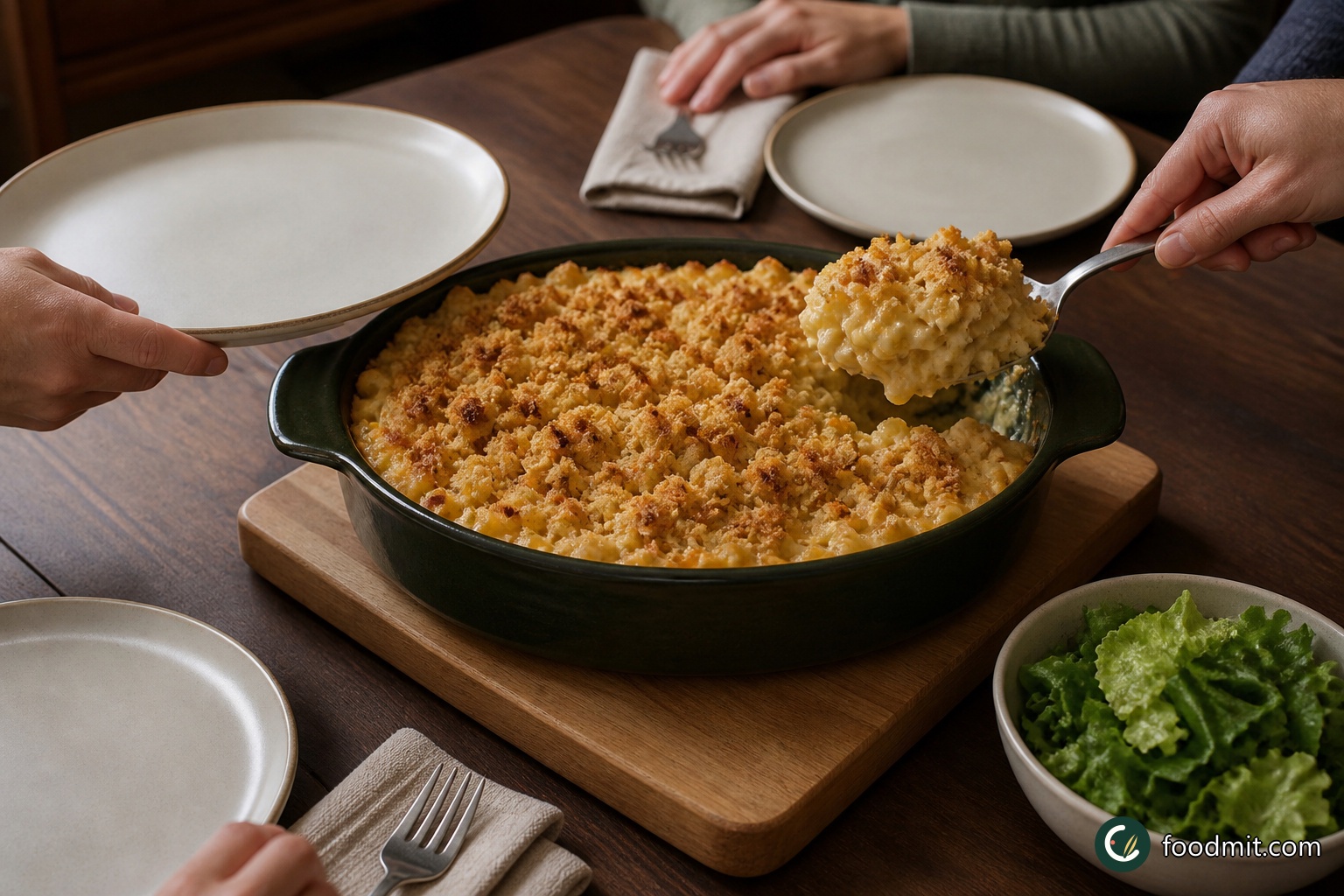
Family Supper at the Table
Carry the casserole to the table in its baking dish and place it on a heatproof board so the deeply browned top stays visible. Use a broad serving spoon that can reach through the crisp bread and lift the creamy elbows underneath. For a relaxed family dinner, pair each portion with a plainly dressed green salad or simply cooked green vegetables, which bring freshness beside the rich cheese sauce. Warm, uncomplicated tableware suits the comfort of the dish, and serving directly from the pan lets everyone choose a softer center scoop or a corner with extra crust.
Holiday Sideboard
Present smaller spoonfuls from the casserole as a substantial side on a Thanksgiving or Christmas sideboard. A wide, shallow serving bowl makes the golden bread topping easy to see, though keeping the dish in its original baker preserves the handsome crust with less handling. Set it near roasted vegetables and the other savory sides rather than covering it with garnishes; its own browned surface is the decoration. Because the recipe makes twelve servings, guests can take a modest first portion and return for more without the pan disappearing after the first few plates.
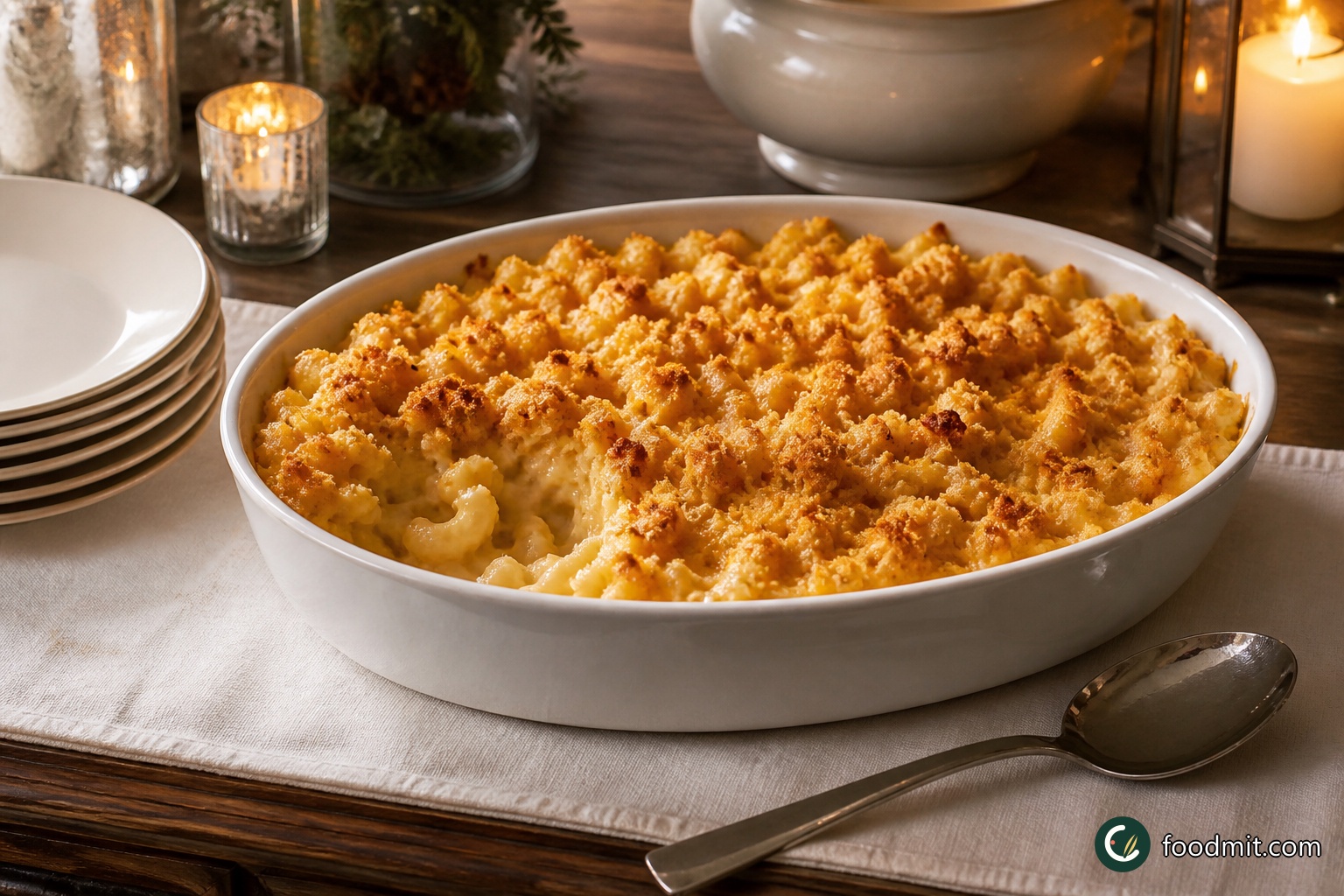
Casual Potluck Pan
For a potluck, use the sturdy 3-quart casserole itself as the serving piece and set it out only after its five-minute rest. Bring a trivet and a large spoon, then position the pan where guests can approach it without crowding the rest of the spread. The bread topping gives the dish enough visual texture that no extra garnish is needed. Offer it as a generous main option with a crisp salad, or let people take smaller scoops alongside other shared dishes; either approach respects the original twelve-serving yield and keeps the presentation easygoing.
Let’s cook Macaroni and Cheese together
Check off your ingredients, follow each step, and start the timers when you are ready.
Get everything ready
Step-by-step with timers
Heat the oven and prepare the dish
Set the oven to 375°F and butter a 3-quart casserole dish, covering the bottom and sides. Melt 2 tablespoons of the butter in a small saucepan over medium heat; take it off the heat as soon as it is fully liquid.
Coat the bread
Put the torn bread in a medium bowl, pour over the 2 tablespoons of melted butter, and toss until the irregular pieces are lightly coated. Leave this topping aside while you make the sauce.
Warm the milk
Pour the milk into a medium saucepan and place it over medium heat. Warm it through so it is hot when it meets the flour mixture, but watch the edges and do not let it boil over.
Cook the flour base
Melt the remaining 6 tablespoons butter in a high-sided skillet over medium heat. Once the butter is bubbling, whisk in the flour and keep whisking for 1 minute, until the mixture is cohesive and no dry flour remains.
Thicken the sauce
Pour the hot milk into the skillet in a slow stream while whisking continuously, working out any lumps as you go. Continue to cook and whisk over medium heat until the sauce begins to bubble and has visibly thickened enough to coat the whisk.
Add the cheese and seasonings
Remove the skillet from the heat. Stir in the salt, nutmeg, black pepper, cayenne, 3 cups of the cheddar, and either 1 1/2 cups of the Gruyère or 1 cup of the Pecorino Romano. Mix until the cheese has melted into a smooth sauce, then set it aside.
Partially cook the macaroni
Bring a large saucepan of water to a boil and add the elbow macaroni. Cook it for 2 to 3 minutes less than the package directs: the outside should be cooked, but the center should still be noticeably underdone. Drain in a colander, rinse under cold running water to stop the cooking, and drain very well.
Combine pasta and sauce
Add the well-drained macaroni to the reserved cheese sauce. Fold until every elbow is coated and the sauce is evenly distributed, scraping along the bottom and sides of the skillet so no pockets of plain pasta remain.
Fill and top the casserole
Transfer the coated macaroni to the buttered dish and spread it into an even layer. Scatter over the remaining 1 1/2 cups cheddar, then add either the remaining 1/2 cup Gruyère or 1/4 cup Pecorino Romano. Finish with the buttered bread pieces, distributing them across the surface.
Bake and rest
Bake for about 30 minutes, until the top is well browned and the sauce is bubbling around the edges. Move the dish to a wire rack and let it stand for 5 minutes before serving hot; the brief rest allows the sauce to settle without losing its creamy texture.
Macaroni and Cheese Recipe Inspired by Martha Stewart
The story behind Macaroni and Cheese
Recipe notes by Claire
Why I Kept This One
I am a genuine Martha Stewart fan, but admiration alone would not make me keep a recipe in my regular rotation. Cooking this one did. I liked that the ingredient list was familiar while the result felt carefully composed: plenty of sauce, two cheeses with different personalities, and torn bread rather than a fine, uniform crumb. When I lifted the first spoonful, the contrast was exactly what I had hoped for—crisp ridges on top, creamy elbows below, and a gentle warmth from the pepper and cayenne rather than obvious heat. It tasted nostalgic without feeling plain, and the large yield made the work at the stove feel worthwhile.
What the Stove Taught Me
The sauce was the part I watched most closely. A minute of whisking the flour into bubbling butter took away its raw look, and the warmed milk blended in more calmly than cold milk would have. I resisted rushing the thickening stage; the visible bubbles and the way the sauce clung to the whisk were better guides than the clock. The pasta mattered just as much. It seemed almost too firm when I drained it, yet that was precisely right after another half hour in the oven. On my table, Gruyère gave the casserole a mellow, savory finish, though the listed Pecorino Romano route is kept in the recipe with its smaller quantities. That careful split between cheese for the sauce and cheese for the top is a detail I would measure before beginning.