
Christmas Sherry Mincemeat Cake Recipe Inspired by Delia Smith
As a longtime admirer of Delia Smith's calm, practical approach to festive baking, I was delighted by how manageable this Christmas Sherry Mincemeat Cake felt in my own kitchen. It has the generous look of a traditional celebration cake, yet the mixing itself is refreshingly direct. The sherry-soaked mincemeat, prunes, cherries, dried fruit and candied peel give the cake a deep fruitiness, while citrus zest keeps that richness from tasting flat. Wholemeal flour makes the crumb substantial, and the chopped nuts add little pockets of crunch beneath the striking whole-nut top. The most useful lesson for me was to respect both the soak and the parchment cover. Three days gives the fruit ample time with the sherry, although the three-hour option still makes the recipe practical; the double paper shield then protects the decorated surface during the long, gentle bake. I like it in slim slices once completely cool, when the moist crumb and glazed nuts are easiest to appreciate. Kept in an airtight tin, it stays inviting for three to four weeks, so it can be baked ahead or brought to the table later in the Christmas season.
 Foodmit
recipe
Per 1 slice (1/16 of cake)
Nutrition for Christmas Sherry Mincemeat Cake
- Saturated fat
- 7 g
- Fiber
- 5 g
- Sugars
- 39 g
- Sodium
- 150 mg
Estimated values. Nutrition values are approximate. More precise calculations will be added in a future update.
How to make Christmas Sherry Mincemeat Cake
-
Step 1
Soak the fruit
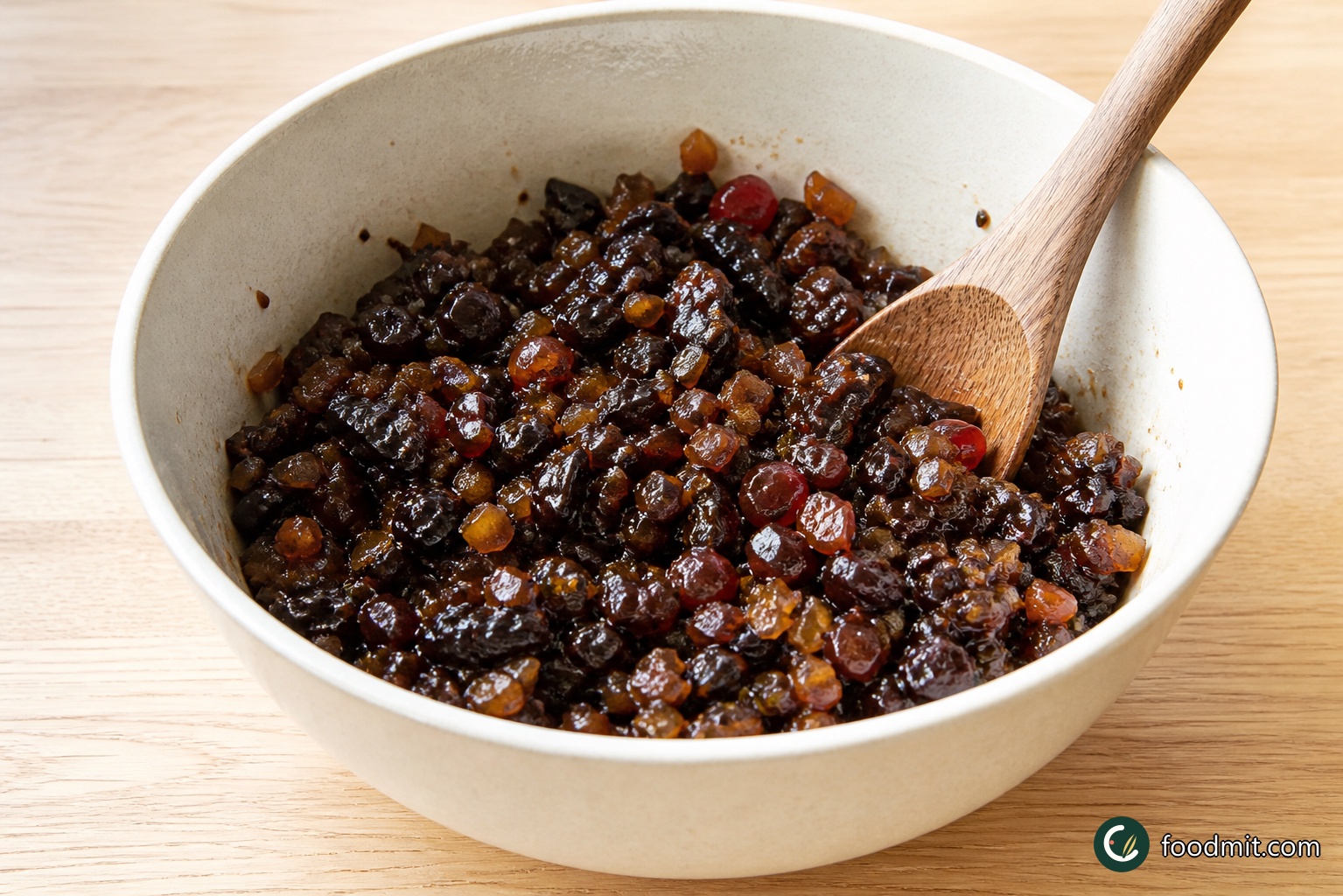
Three days before baking, put the mincemeat, prunes, glace cherries, mixed dried fruits, candied peel and sherry into a bowl. Stir until every piece is coated, cover the bowl with a clean cloth and leave it in a cool place. If time is short, give the mixture at least 3 hours; after either soak, it should look evenly moist and the fruit should have taken up much of the sherry.
-
Step 2
Prepare the tin and batter
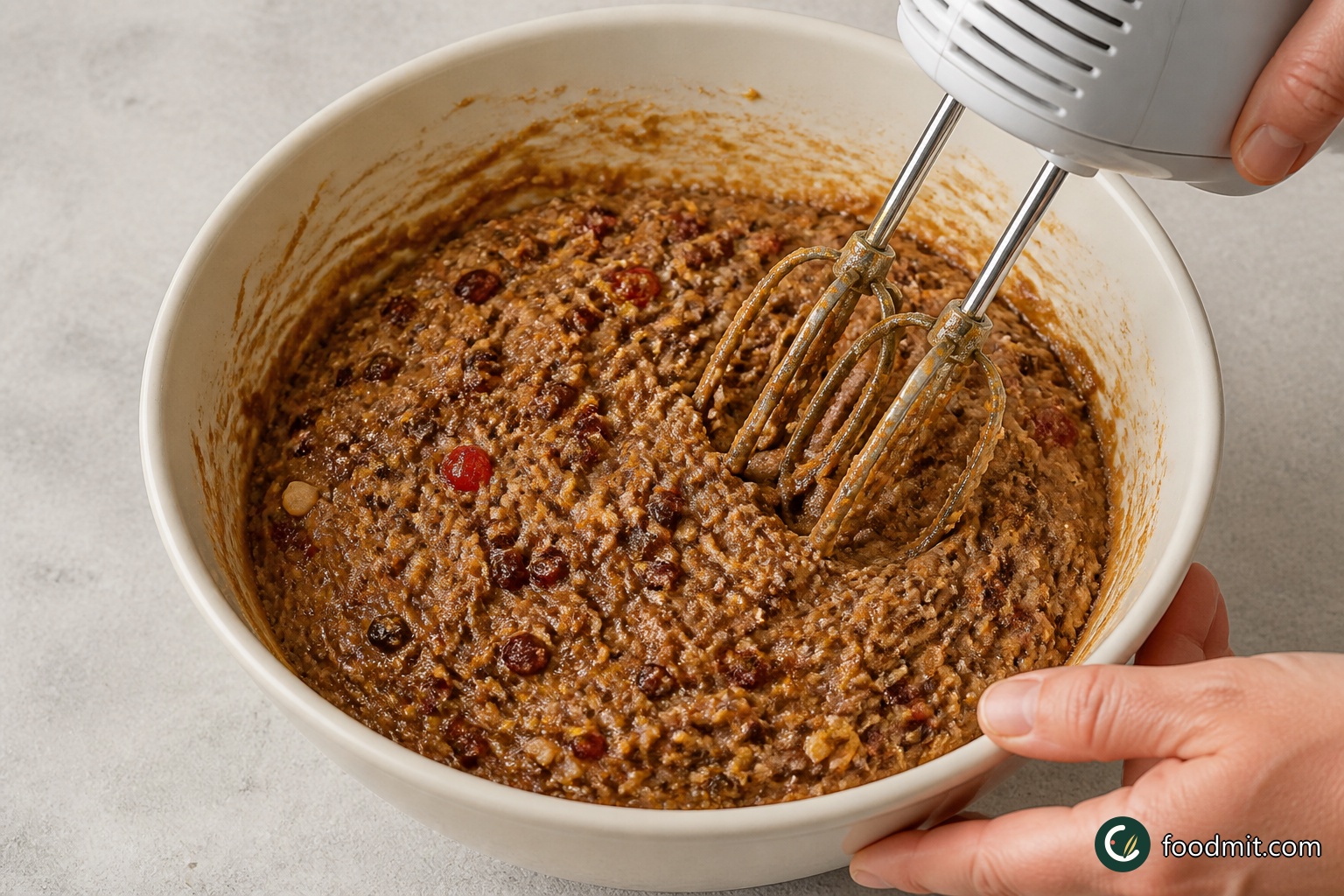
Heat the oven to 170 C, gas mark 3. Lightly oil a 20 cm round cake tin, then line both its base and sides with baking parchment. Put the entire soaked mixture in a roomy bowl with the flour, baking powder, softened butter, brown sugar, orange and lemon zest, chopped Brazil nuts, mixed chopped nuts and eggs. Beat thoroughly with an electric hand mixer for about 1 minute, or work firmly with a wooden spoon, until no dry flour remains and the dense batter is even throughout.
-
Step 3
Fill and decorate
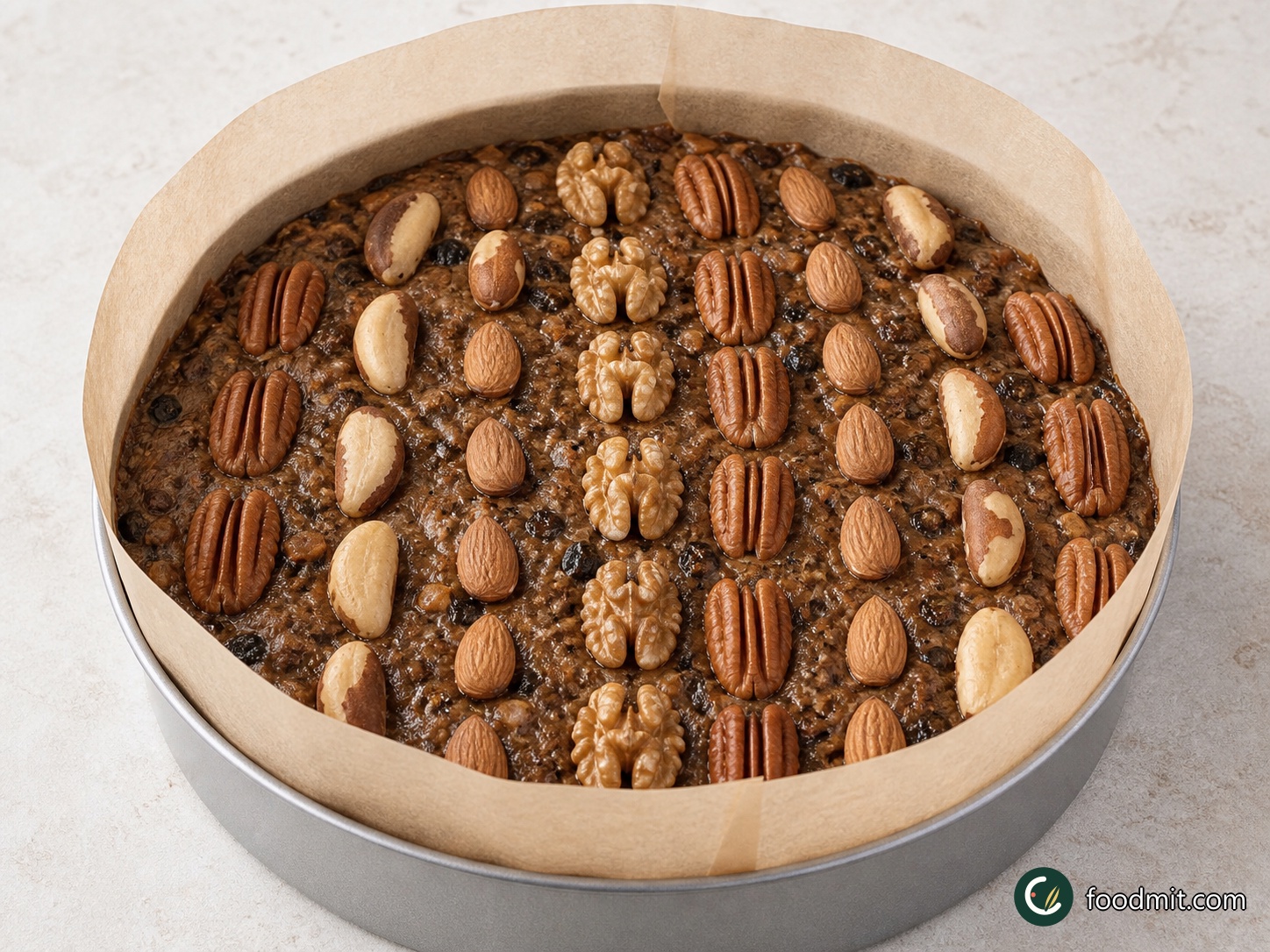
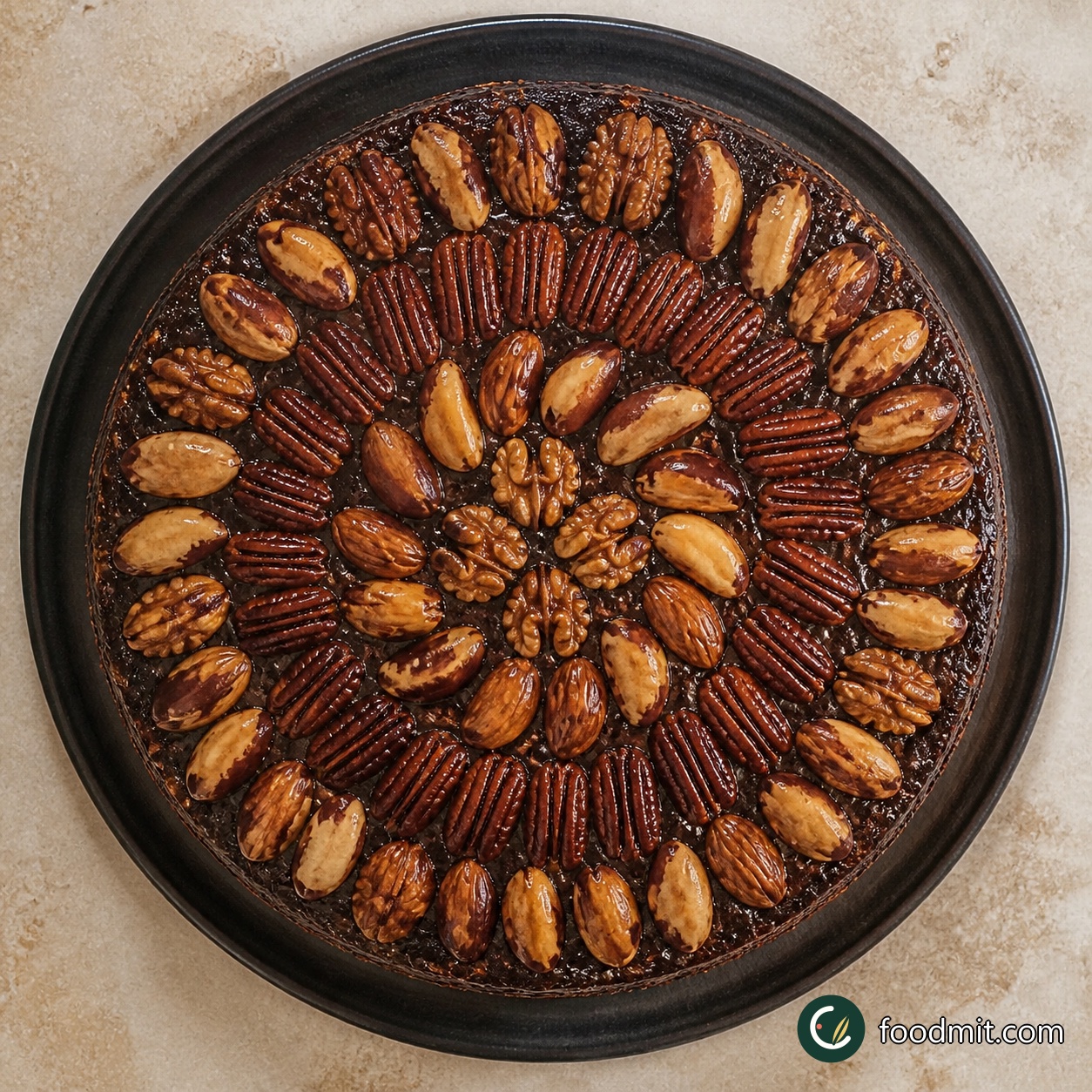
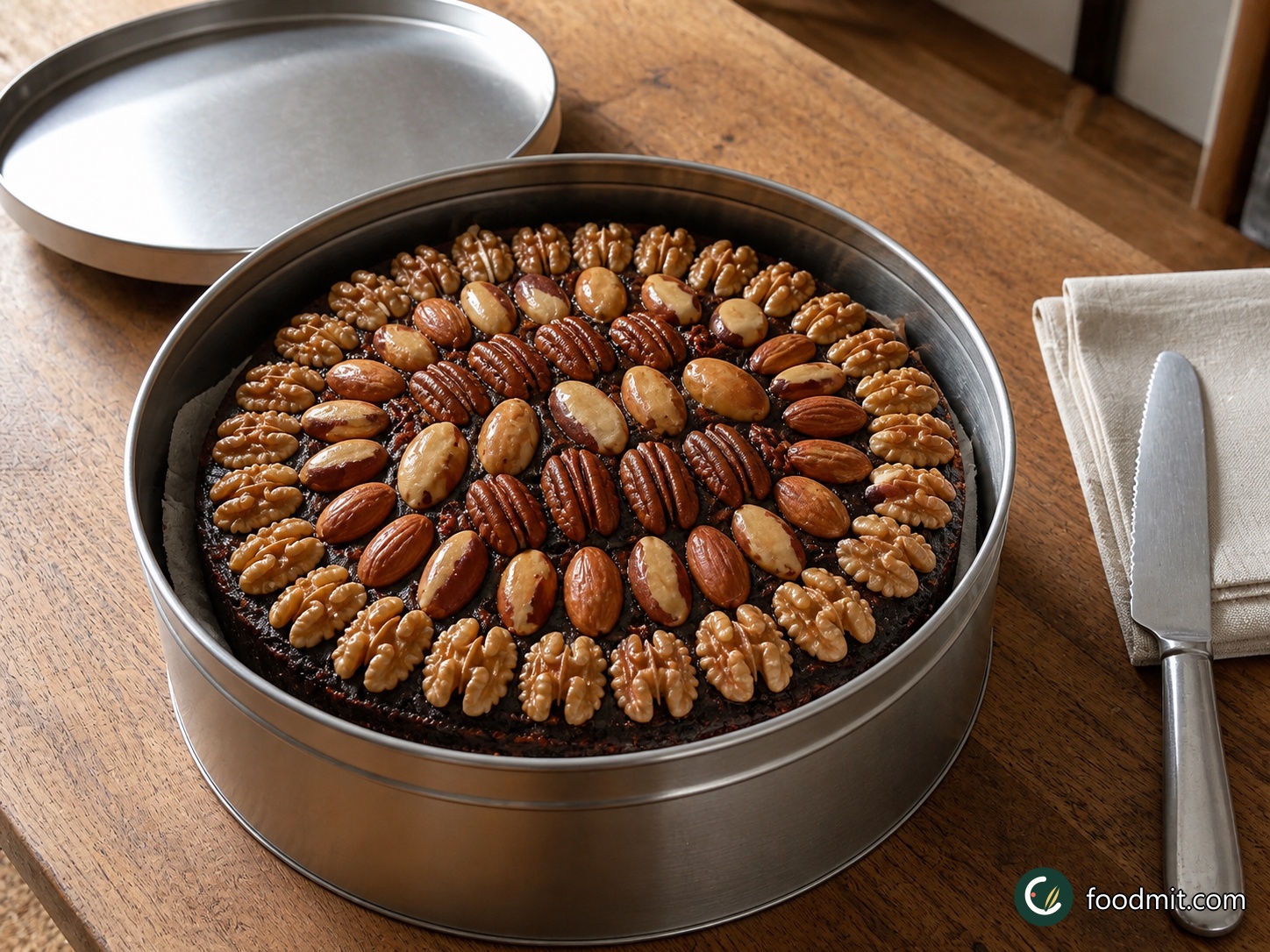
Transfer the batter to the lined tin and level it right to the edges so the cake rises evenly. Arrange the walnut halves, pecan halves, almonds and whole Brazil nuts in tidy rows across the surface, alternating the types as you go. Keep the nuts resting on top rather than pressing them deep into the batter; they should form a complete decorative pattern that remains visible after baking.
-
Step 4
Shield and bake
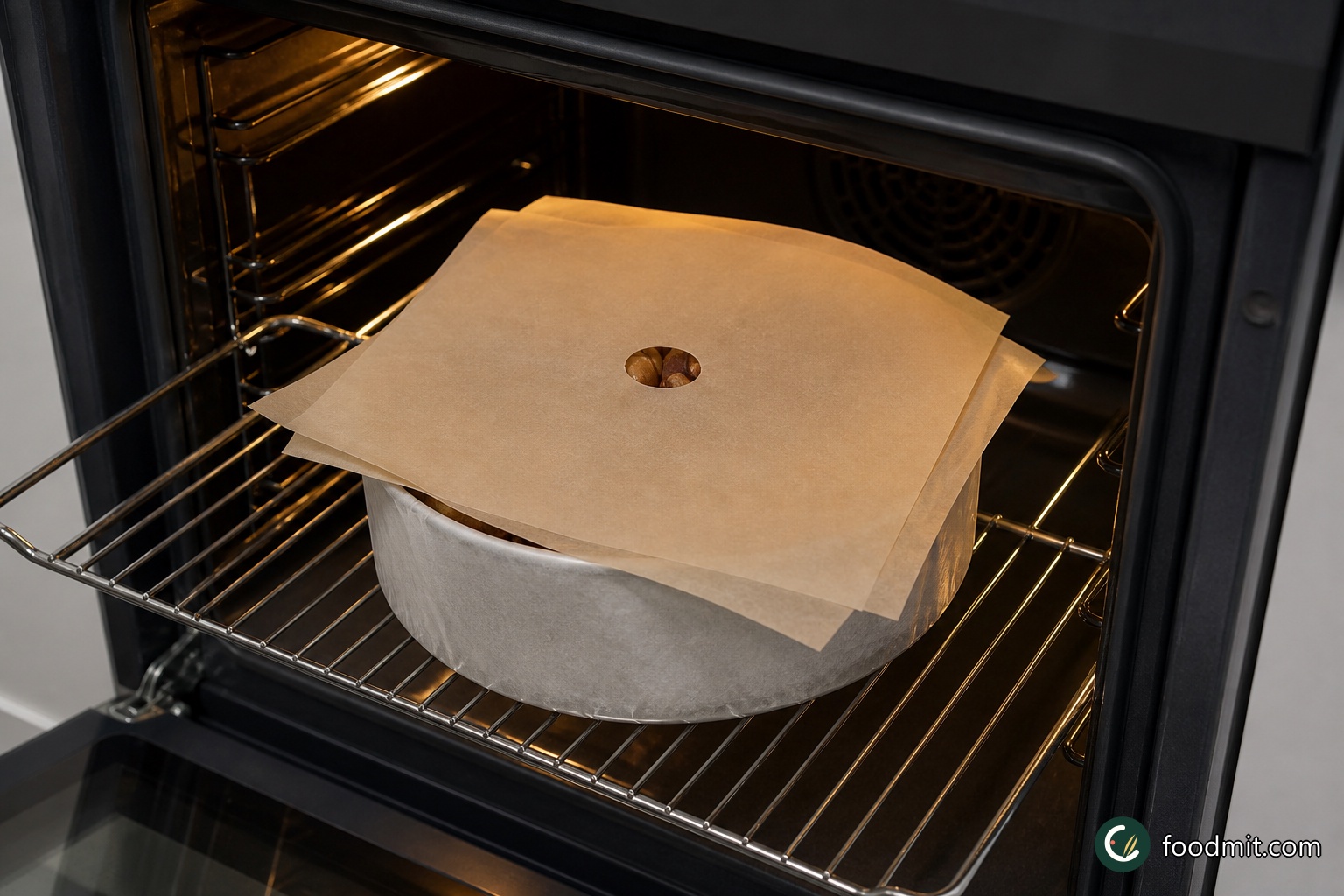
Cut two squares of baking parchment large enough to cover the tin and make a small central opening roughly the diameter of a 50p coin. Lay the double parchment cover over the cake, place the tin on the centre shelf and bake for 2 to 2 1/2 hours. Begin checking at the earlier time: the middle is ready when it springs back after a light touch, rather than retaining an indentation.
-
Step 5
Cool the cake
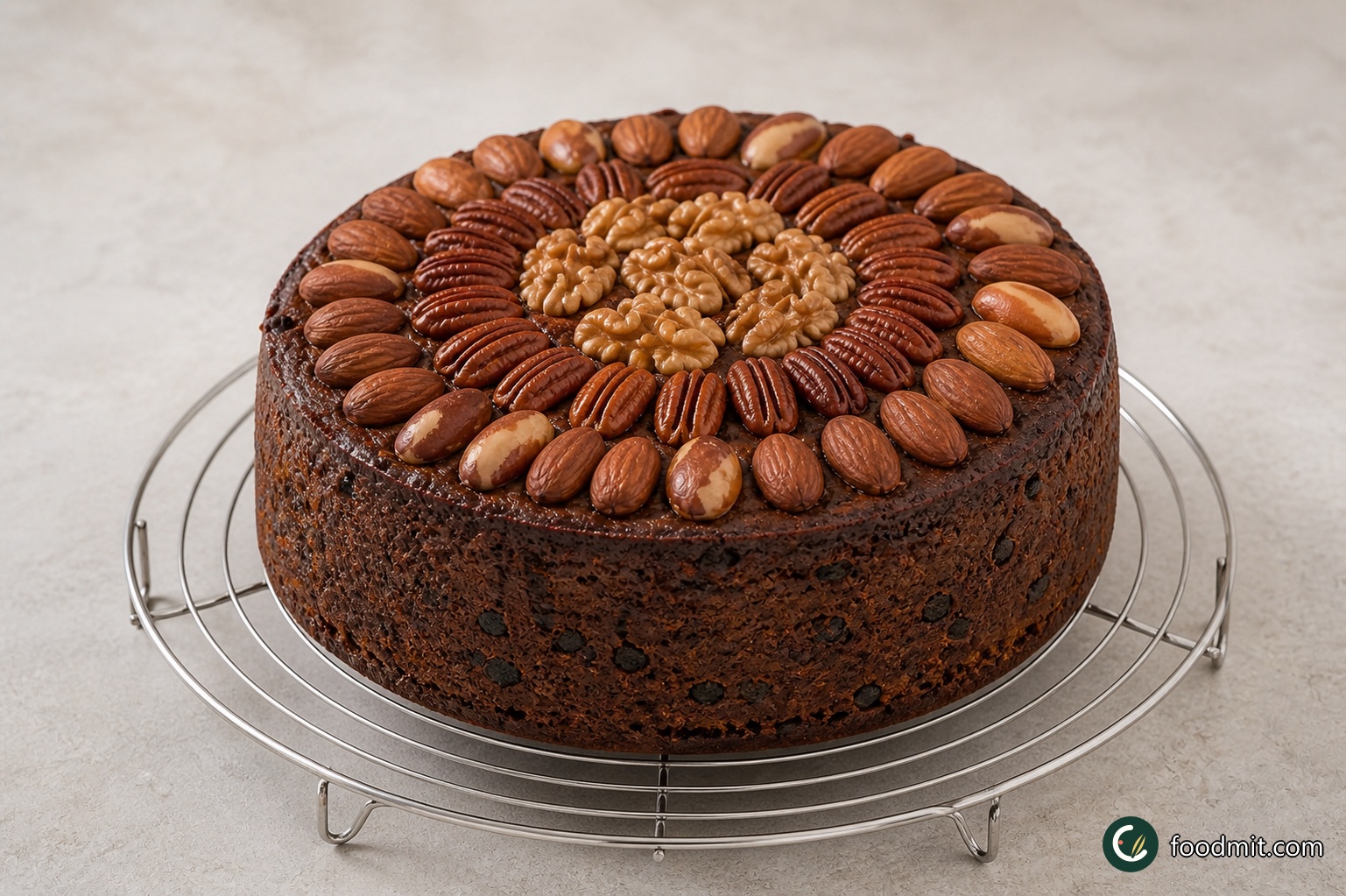
Leave the baked cake in its tin for 30 minutes so the fruit-rich crumb can settle before it is moved. Carefully turn it out, remove the lining paper and place it on a wire rack to cool completely. Handle it gently while warm because the cake is heavy with fruit; wait until there is no residual warmth before glazing or storing it.
-
Step 6
Glaze the nuts
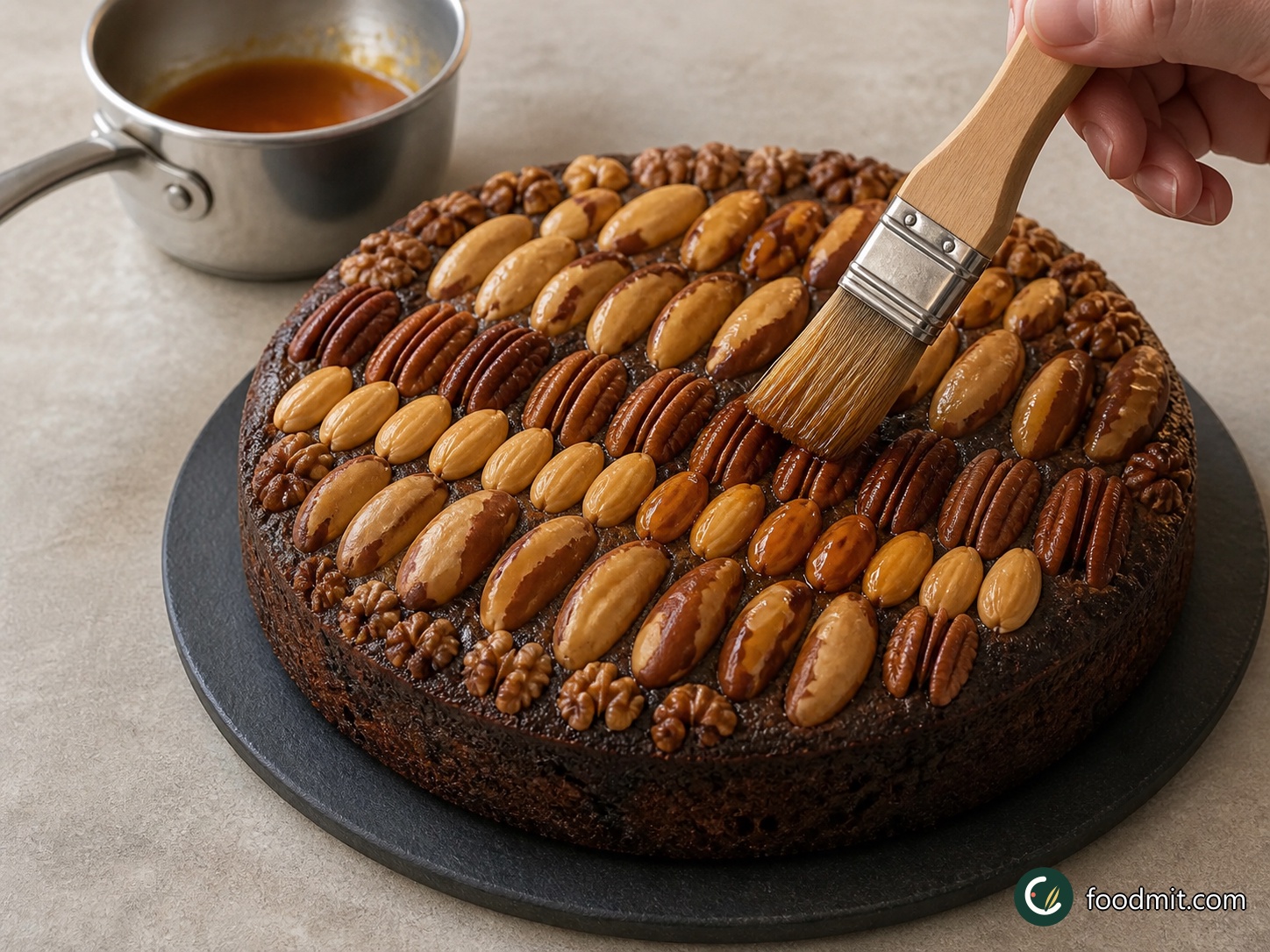
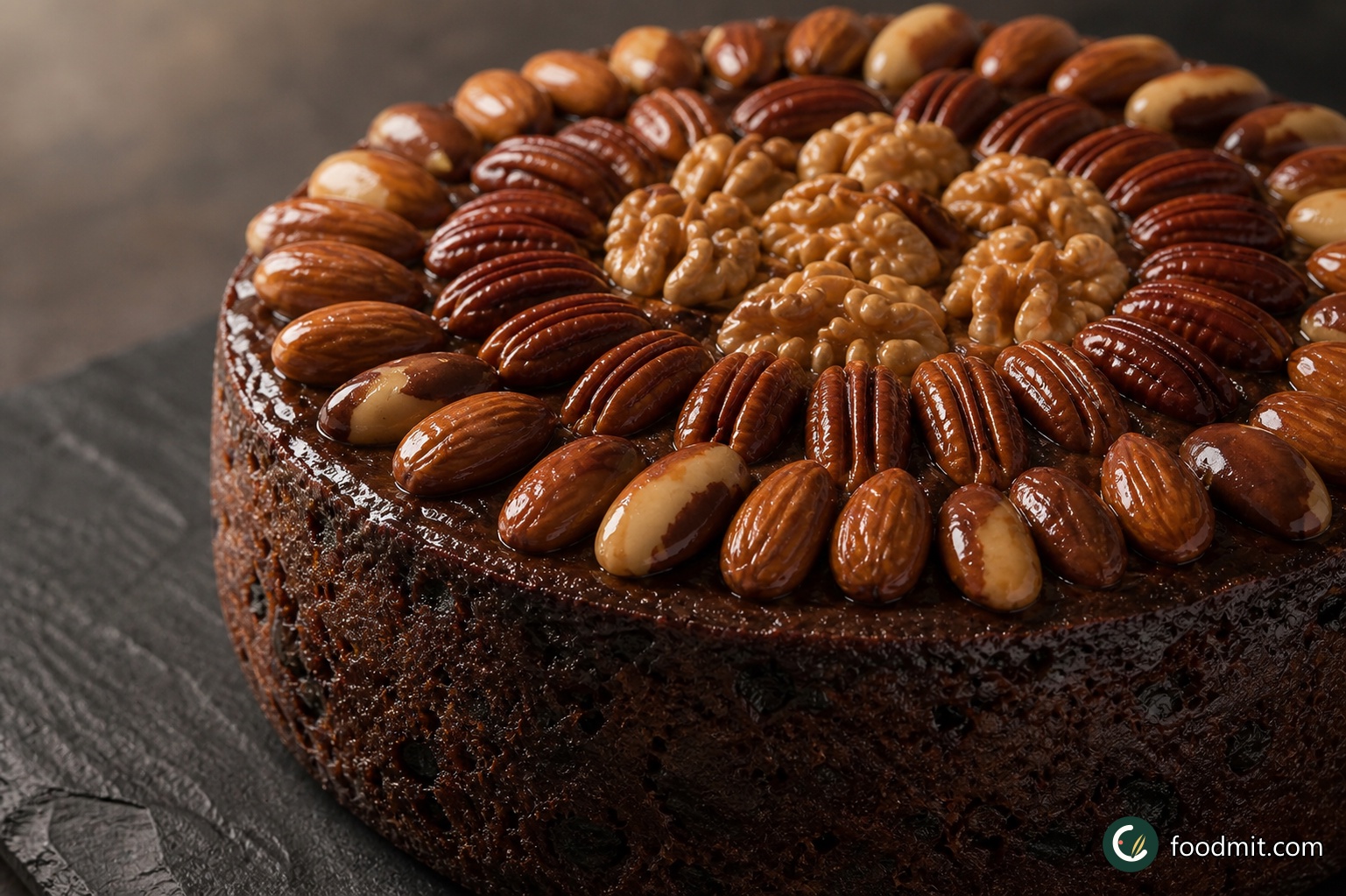
Warm the sieved apricot jam and brandy together in a small pan just until the mixture loosens and can be brushed. Paint it over the exposed nuts in a thin, even layer, reaching into the spaces between them without soaking the cake. The topping should look glossy rather than wet, with the rows of different nuts still clearly defined.
-
Step 7
Store airtight
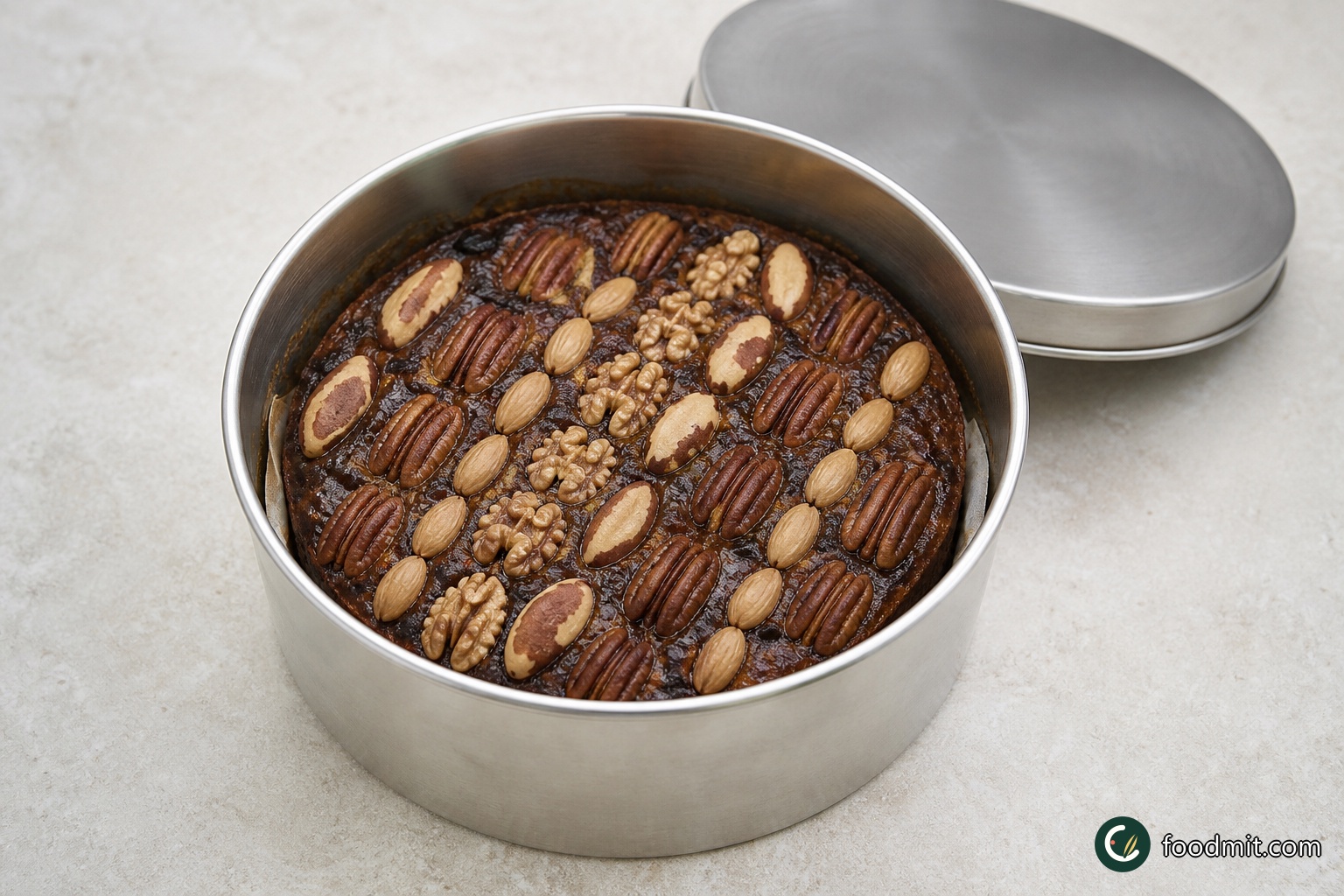
Let the glaze settle, then place the fully cooled cake in an airtight tin. Keep it sealed between servings so the crumb retains its moisture. Stored this way, the cake keeps well for 3 to 4 weeks; use a clean, sharp knife for each cut and close the tin again once the slices have been removed.
Do not judge this dark fruit cake by surface color alone. Keep the double parchment shield in place during the slow bake, then test the centre at the two-hour mark; take it out only when a light fingertip press springs back without leaving a dent.
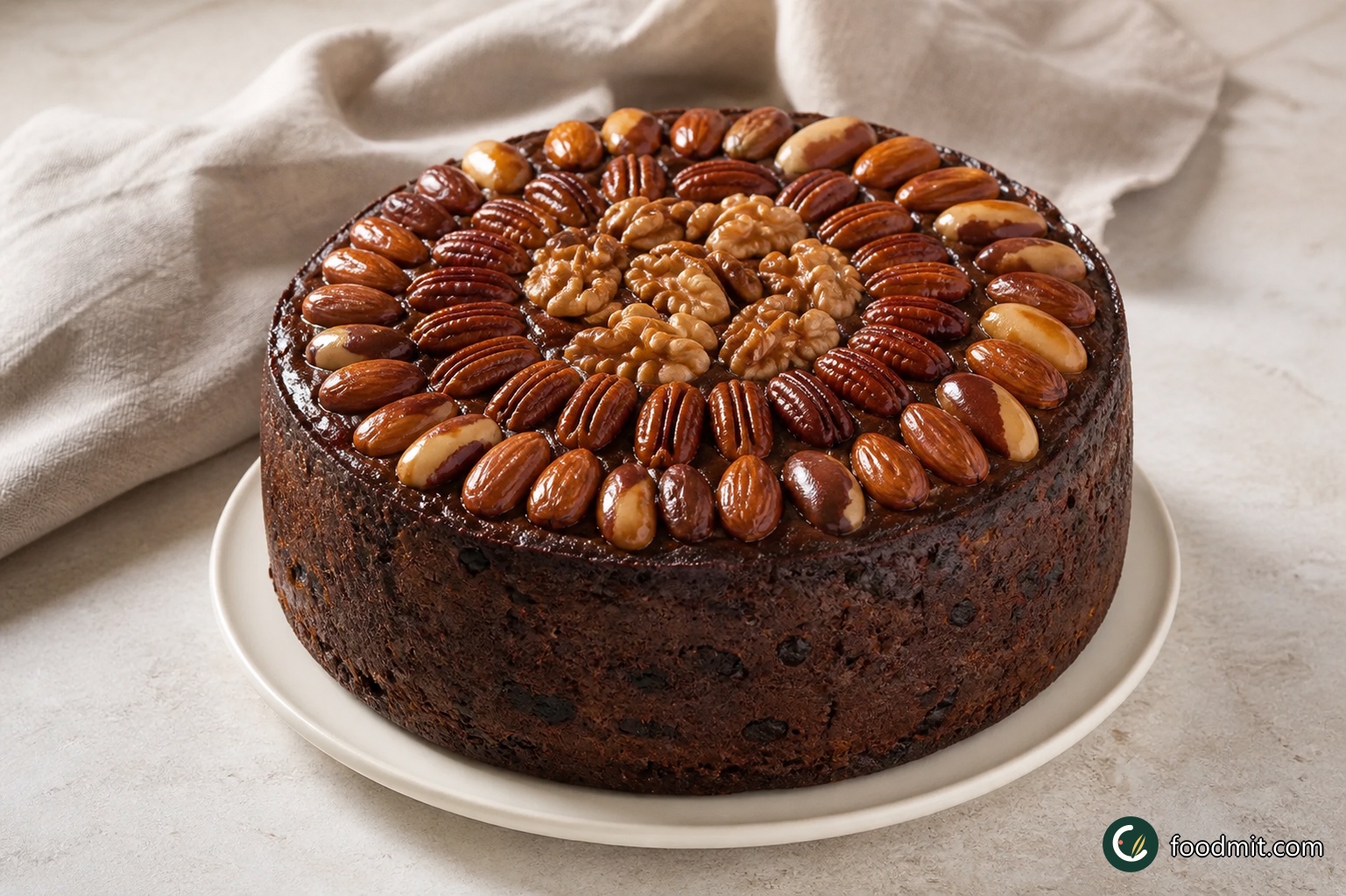
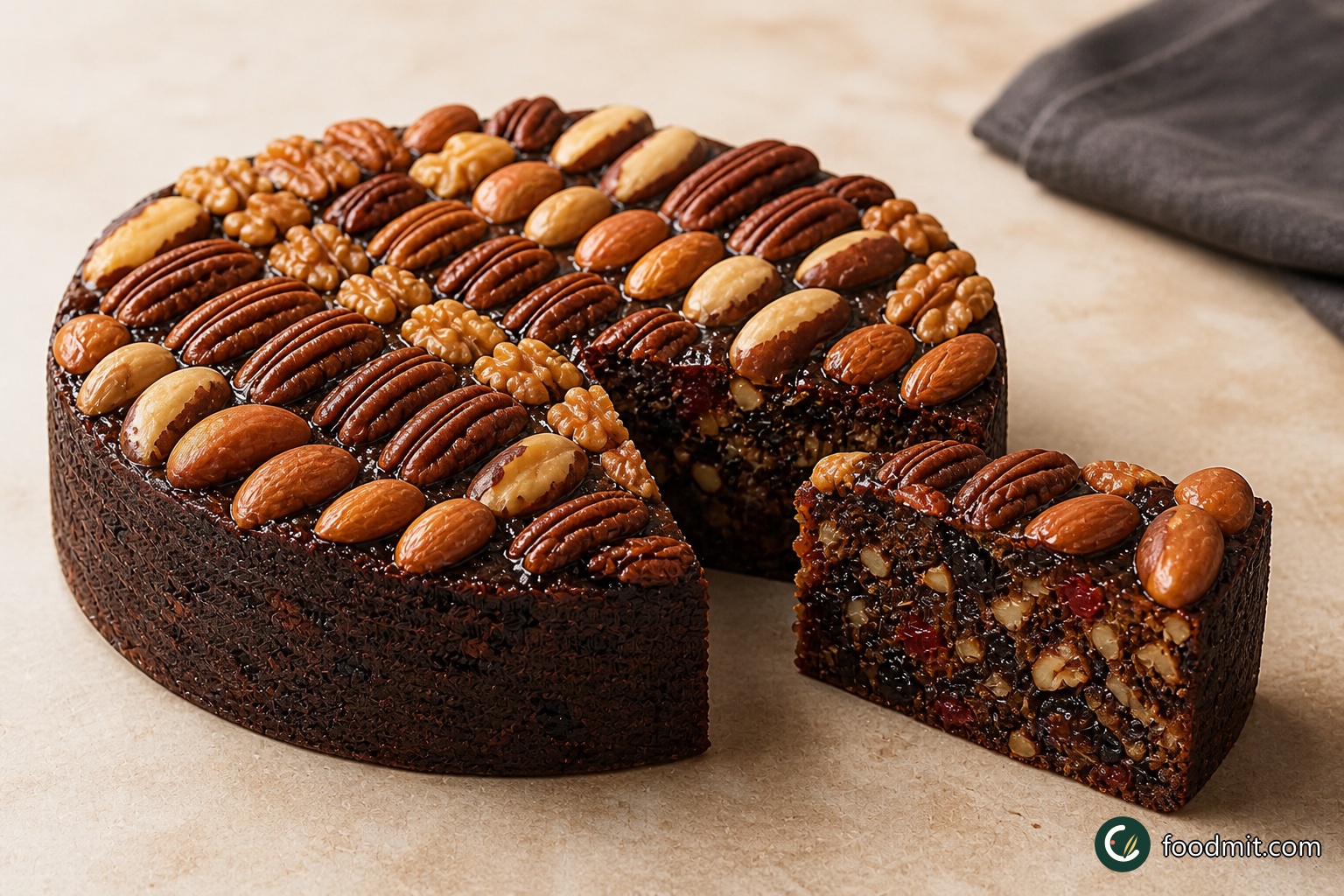
Christmas Sherry Mincemeat Cake, ready to serve
Serving ideas for Christmas Sherry Mincemeat Cake
Choose a presentation that fits the occasion, from relaxed sharing to individual plates.
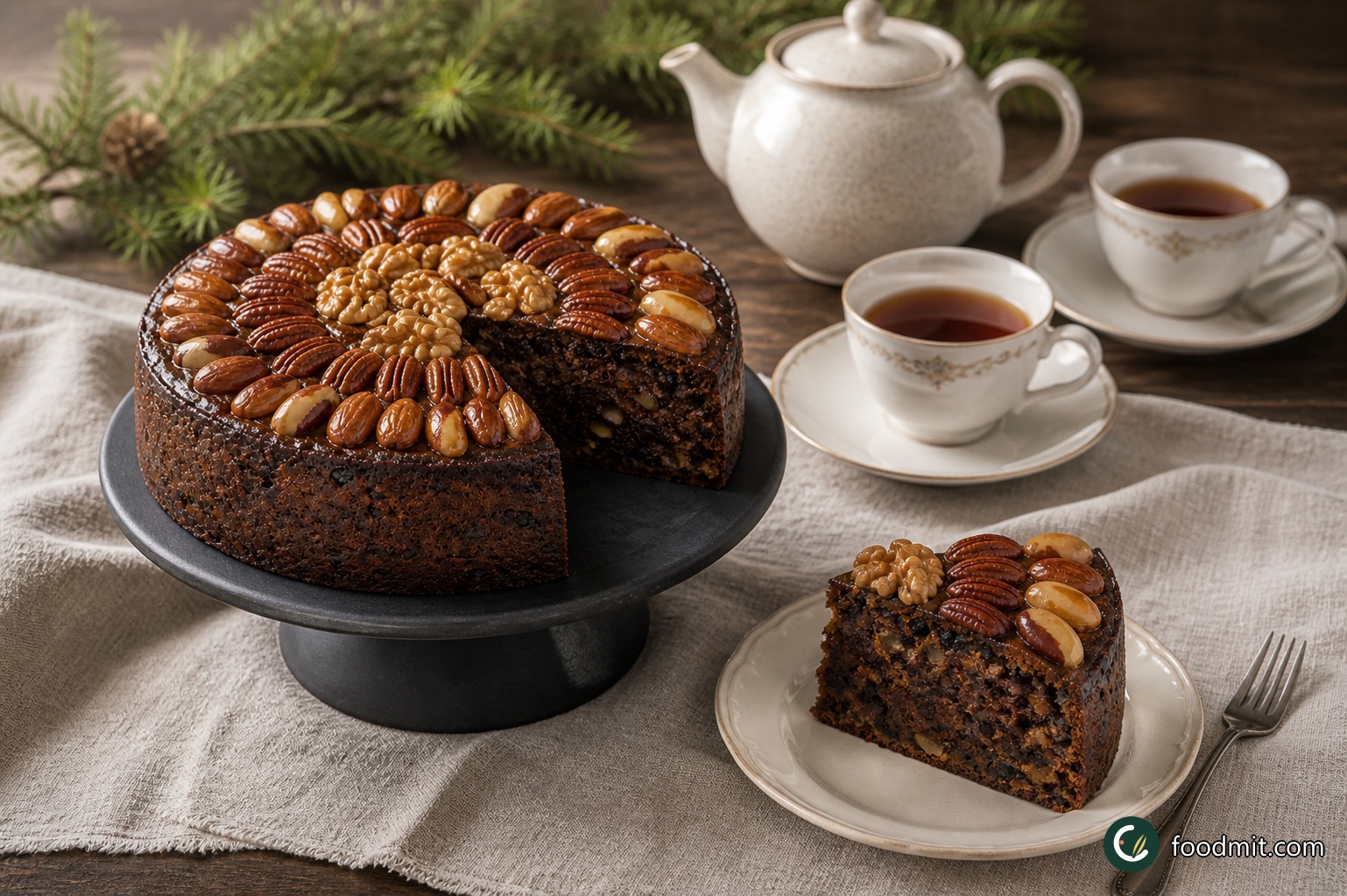
Christmas Tea Table
Set the whole cake on a low, dark cake stand so the glossy pattern of walnuts, pecans, almonds and Brazil nuts remains the focus. I would cut slim wedges at the table and serve them on small china plates with hot black tea. A plain linen cloth and a little seasonal greenery are enough around such a detailed top, making this a relaxed afternoon presentation that still feels unmistakably festive.
After-Dinner Slices
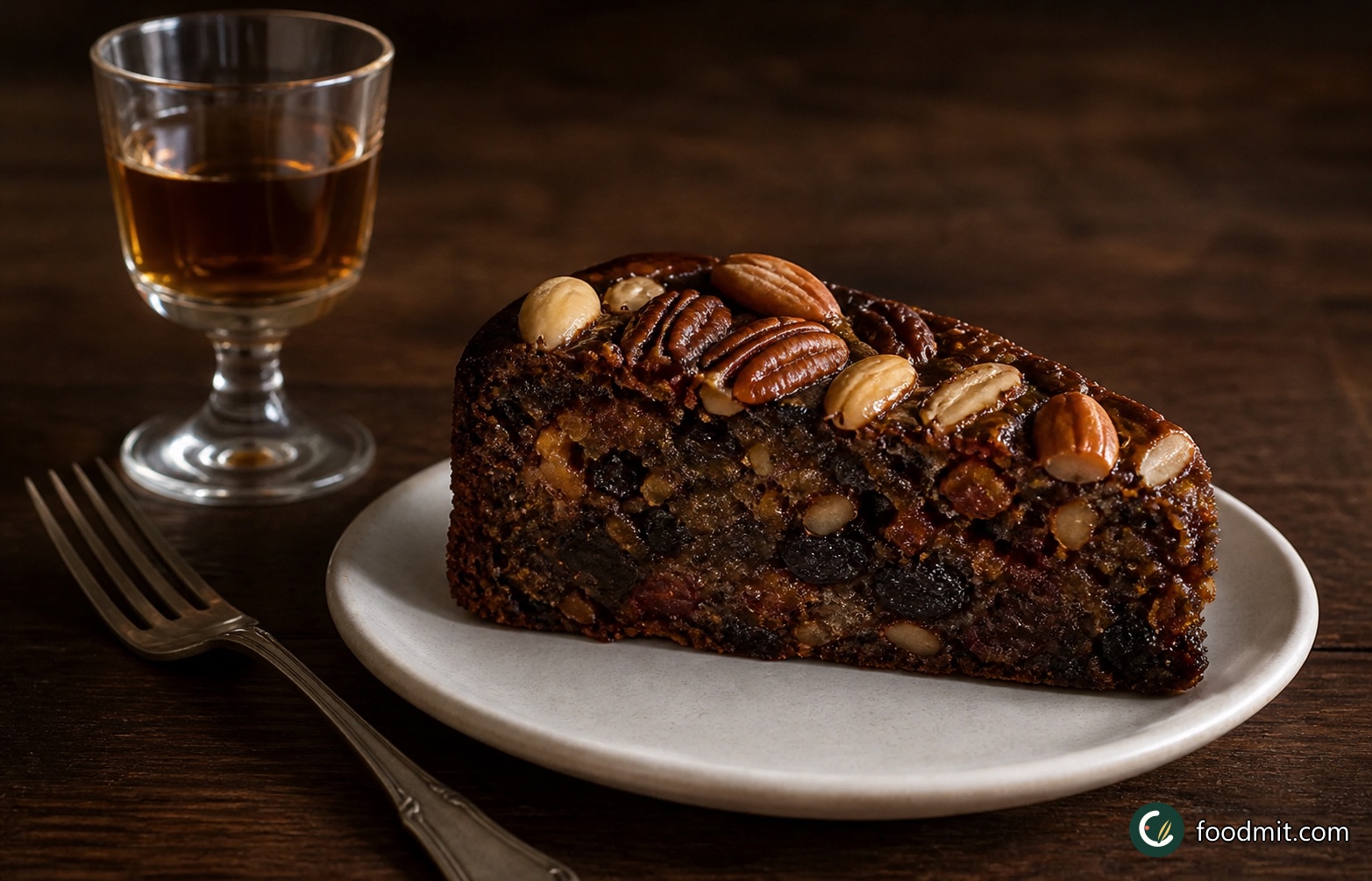
For the end of a holiday meal, slice the cake narrowly because the fruit, nuts and butter make it satisfyingly rich. Arrange one slice per small dessert plate with the cut face visible, and add a dessert fork plus coffee or medium sherry alongside. I like this quieter presentation because guests can see the close, moist crumb as well as the glazed top, while the modest portion sits comfortably after dinner.
Airtight Tin for Sharing
Use the cake's keeping quality for a practical sharing presentation. Once the glaze is set, place the whole cake on a fitted circle of baking parchment inside an airtight metal tin, with a clean knife and small napkins ready nearby when it is opened. The tin suits a Christmas visit or buffet where slices may be taken gradually, and its lid can go straight back on to protect the moist crumb between servings.
Let’s cook Christmas Sherry Mincemeat Cake together
Check off your ingredients, follow each step, and start the timers when you are ready.
Get everything ready
Step-by-step with timers
Soak the fruit
Three days before baking, put the mincemeat, prunes, glace cherries, mixed dried fruits, candied peel and sherry into a bowl. Stir until every piece is coated, cover the bowl with a clean cloth and leave it in a cool place. If time is short, give the mixture at least 3 hours; after either soak, it should look evenly moist and the fruit should have taken up much of the sherry.
Prepare the tin and batter
Heat the oven to 170 C, gas mark 3. Lightly oil a 20 cm round cake tin, then line both its base and sides with baking parchment. Put the entire soaked mixture in a roomy bowl with the flour, baking powder, softened butter, brown sugar, orange and lemon zest, chopped Brazil nuts, mixed chopped nuts and eggs. Beat thoroughly with an electric hand mixer for about 1 minute, or work firmly with a wooden spoon, until no dry flour remains and the dense batter is even throughout.
Fill and decorate
Transfer the batter to the lined tin and level it right to the edges so the cake rises evenly. Arrange the walnut halves, pecan halves, almonds and whole Brazil nuts in tidy rows across the surface, alternating the types as you go. Keep the nuts resting on top rather than pressing them deep into the batter; they should form a complete decorative pattern that remains visible after baking.
Shield and bake
Cut two squares of baking parchment large enough to cover the tin and make a small central opening roughly the diameter of a 50p coin. Lay the double parchment cover over the cake, place the tin on the centre shelf and bake for 2 to 2 1/2 hours. Begin checking at the earlier time: the middle is ready when it springs back after a light touch, rather than retaining an indentation.
Cool the cake
Leave the baked cake in its tin for 30 minutes so the fruit-rich crumb can settle before it is moved. Carefully turn it out, remove the lining paper and place it on a wire rack to cool completely. Handle it gently while warm because the cake is heavy with fruit; wait until there is no residual warmth before glazing or storing it.
Glaze the nuts
Warm the sieved apricot jam and brandy together in a small pan just until the mixture loosens and can be brushed. Paint it over the exposed nuts in a thin, even layer, reaching into the spaces between them without soaking the cake. The topping should look glossy rather than wet, with the rows of different nuts still clearly defined.
Store airtight
Let the glaze settle, then place the fully cooled cake in an airtight tin. Keep it sealed between servings so the crumb retains its moisture. Stored this way, the cake keeps well for 3 to 4 weeks; use a clean, sharp knife for each cut and close the tin again once the slices have been removed.
Christmas Sherry Mincemeat Cake Recipe Inspired by Delia Smith
The story behind Christmas Sherry Mincemeat Cake
Recipe notes by Emily
The Festive Bake I Nearly Left Too Late
I have always liked the way Delia Smith makes traditional baking feel orderly and possible, so this was the cake I turned to when my Christmas preparations had slipped behind. The long ingredient list initially looked serious, but most of it was fruit and nuts waiting to be measured rather than a series of difficult jobs. Once my fruit had soaked, I was genuinely surprised that the batter came together in one bowl. There was no creaming stage and no succession of delicate folds; I simply made sure the softened butter and eggs were fully dispersed and that no pocket of flour hid beneath the heavy fruit. That straightforward method gave me room to pay attention to the details that actually shape the result: lining the tin carefully, leveling the dense mixture and laying the nuts in clean rows. It felt satisfying to put such a festive-looking cake in the oven without having spent the whole day making it.
What the Sherry Soak Changed
For my bake, I used the full three-day soak, stirring the mixture well at the start and leaving it covered in a cool corner. By baking day the prunes, cherries, peel and mixed fruit looked cohesive with the mincemeat rather than like separate additions, and the medium sherry gave the mixture a rounded aroma. The recipe also allows a three-hour soak, which is the useful escape route when the calendar is tight, but I would still give those few hours their full value instead of mixing and baking immediately. The batter is unusually laden with fruit, so a large bowl matters more than I expected; it let me beat everything thoroughly without throwing flour over the counter. I stopped after about a minute, when the butter was no longer visible and the mixture looked consistent from top to bottom. Overmixing was unnecessary, but incomplete mixing would have left uneven streaks in such a thick batter.
The Oven Cues I Would Watch Again
The paper cover was the small technique I was happiest not to skip. With so many nuts exposed on the top and a baking time of up to two and a half hours, the double layer softened the oven's direct heat while the hole in the middle allowed the cake to bake properly. I checked at two hours and relied on touch rather than color alone: the centre needed to rebound gently before I took the tin out. The 30-minute rest made turning out the heavy cake much less nerve-racking, and I left it on the rack until completely cold. Warming the sieved apricot jam with brandy produced a light glaze that caught on the ridges of the walnuts and pecans and made the alternating rows stand out. My first slice showed a close, moist crumb packed with fruit, which was exactly the reward I had hoped for. The airtight tin then did the quiet work, keeping the remaining cake moist over the following weeks.