
Christmas Stollen Recipe Inspired by Delia Smith
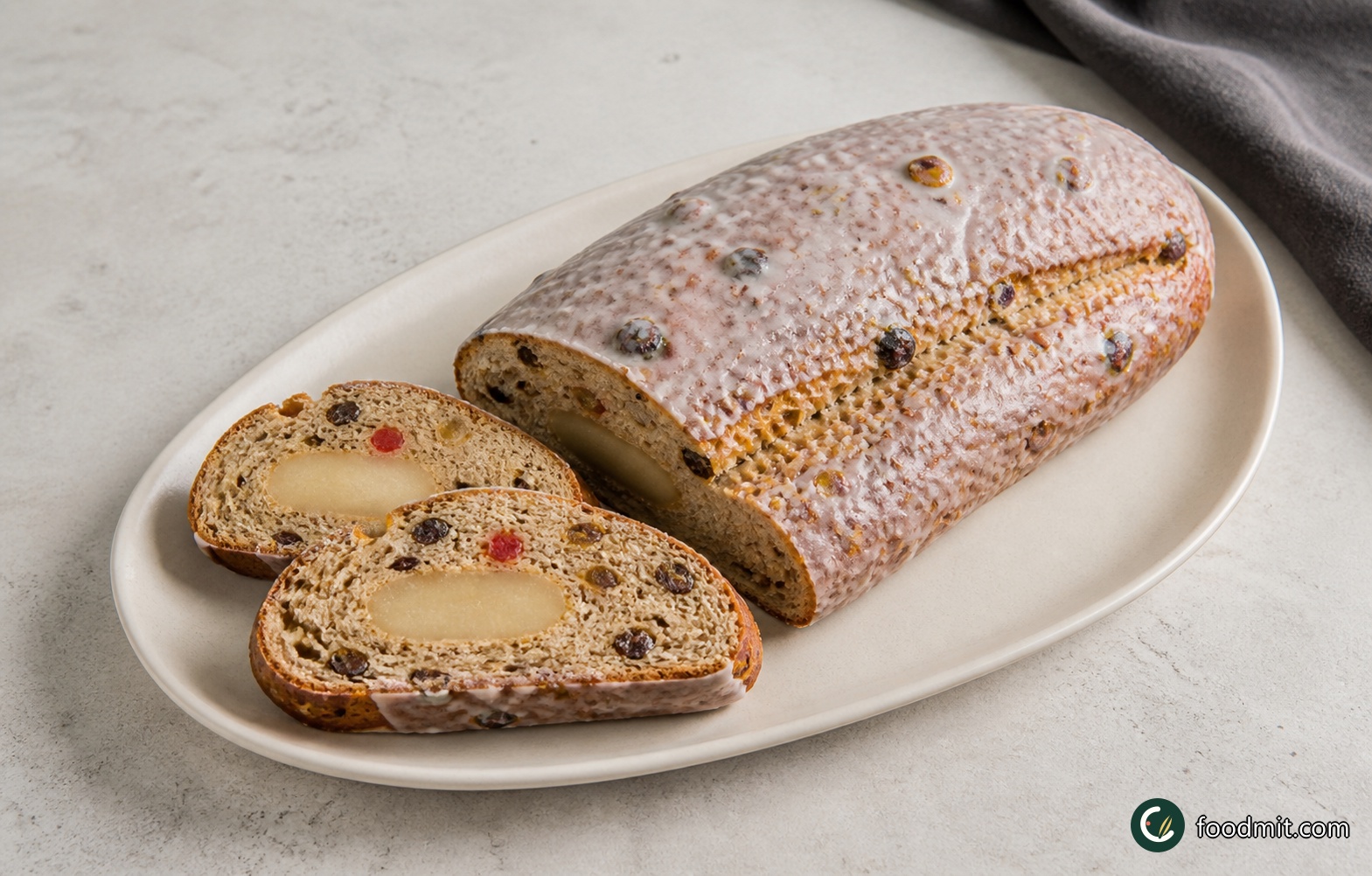
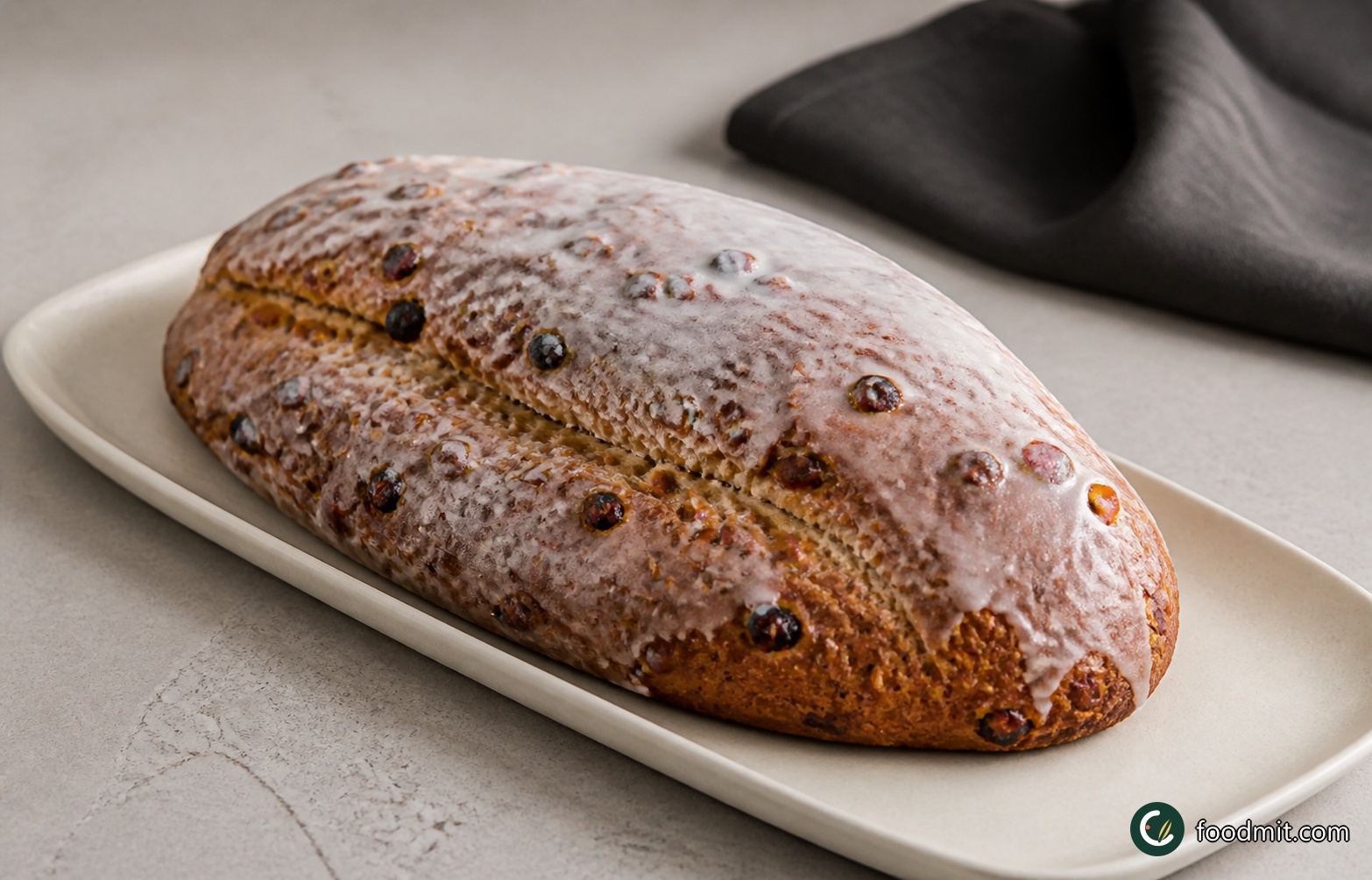
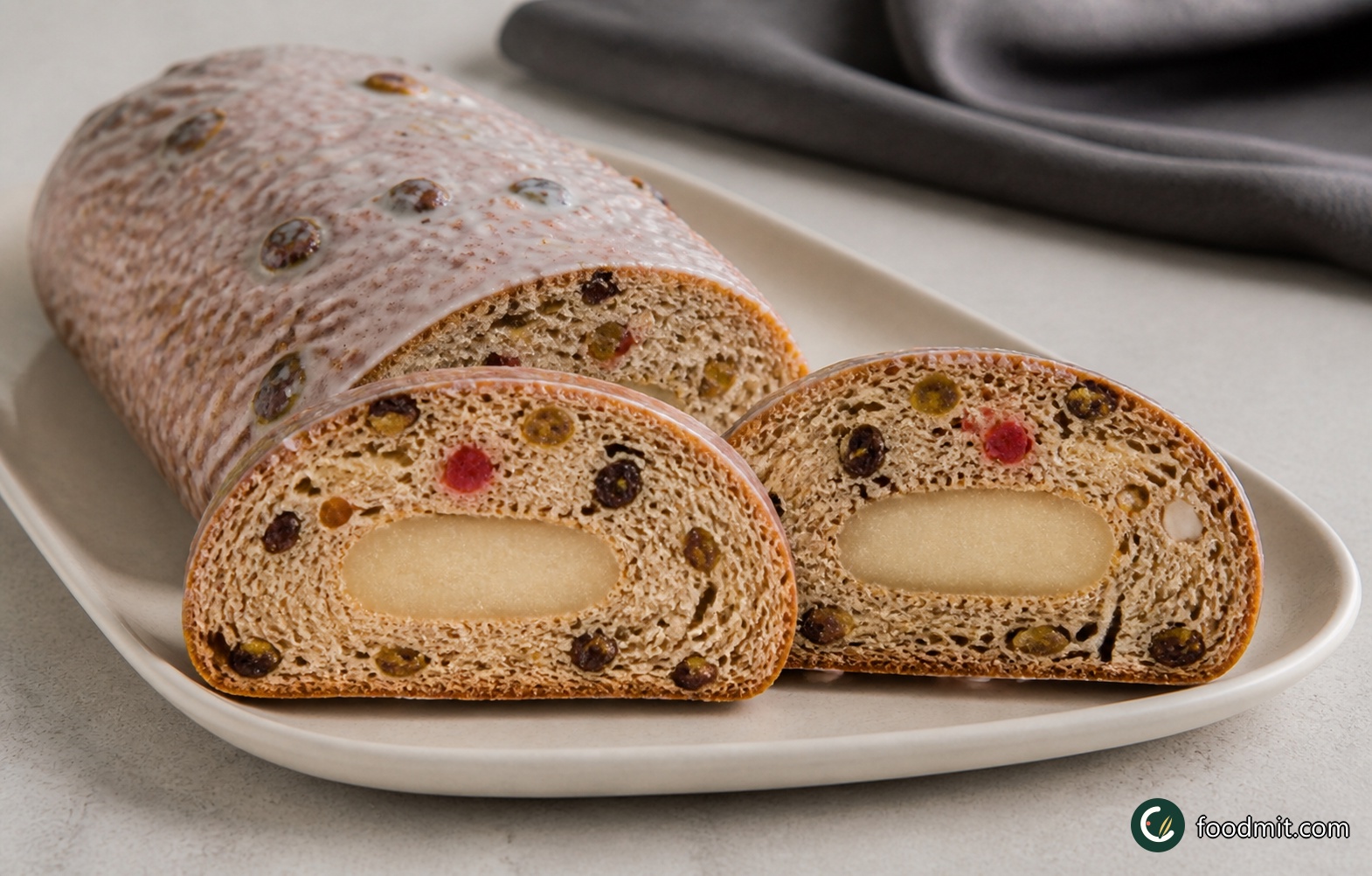
I have always admired Delia Smith's calm, practical way with festive baking, so I was delighted to cook her Christmas Stollen for a houseful. It looks celebratory without feeling fussy, and cutting through the snowy lemon icing to reveal the marzipan centre made the first slice feel properly special. The loaf is rich with currants, sultanas, apricots, cherries, candied peel, almonds, and lemon zest, yet it still eats like bread rather than fruitcake. The crumb is soft and gently sweet, the fruit brings chewy bursts of flavor, and the smooth almond filling gives each thick slice a lovely contrast. The most useful lesson for me was to accept that this is a sticky dough. Flour the board in the measured stages, handle it lightly, and resist working in extra flour, which would make the finished loaf heavy. The two rises are guided by volume rather than the clock: wait for the dough to double each time. I like it best while still fresh, warmed and served in generous slices, either plain or with butter. Any loaf left for the following day is excellent lightly toasted. For planning ahead, cool it completely and freeze it without the glaze, then thaw, warm, and ice it on the day you want to share it.
 Foodmit
recipe
Per 1 thick slice (1/12 loaf)
Nutrition for Christmas Stollen
- Saturated fat
- 5 g
- Fiber
- 3 g
- Sugars
- 33 g
- Sodium
- 90 mg
Estimated values. Nutrition values are approximate. More precise calculations will be added in a future update.
How to make Christmas Stollen
-
Step 1
Combine the Dry Ingredients
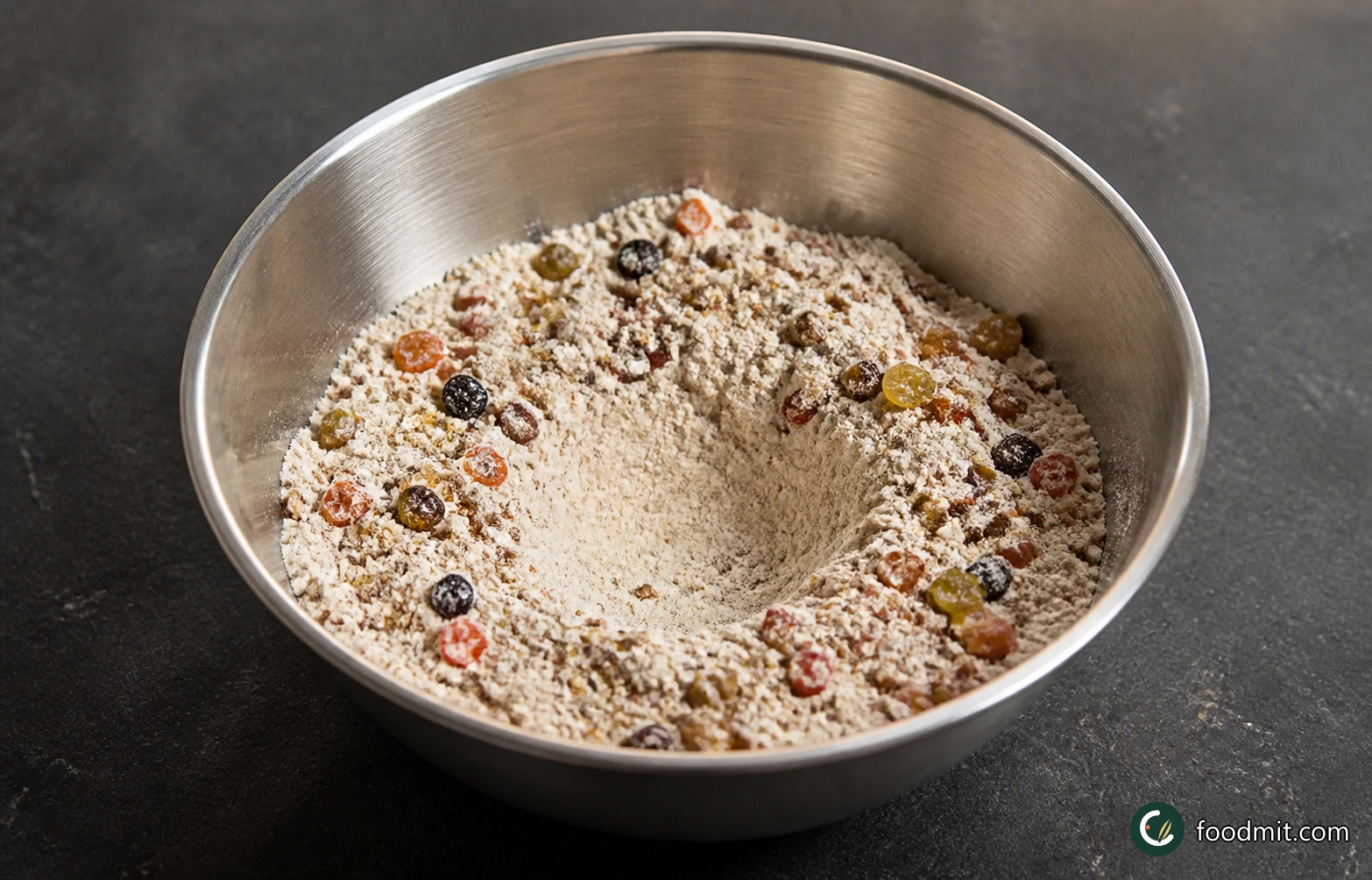
Put 300 g of the flour in a mixing bowl with the salt and easy-bake yeast, and stir briefly. Add the currants, candied peel, sultanas, chopped apricots, quartered glacé cherries, almonds, lemon zest, and golden caster sugar. Mix again so the fruit and nuts are spread evenly, then form a well in the centre.
-
Step 2
Mix and Lightly Knead the Dough
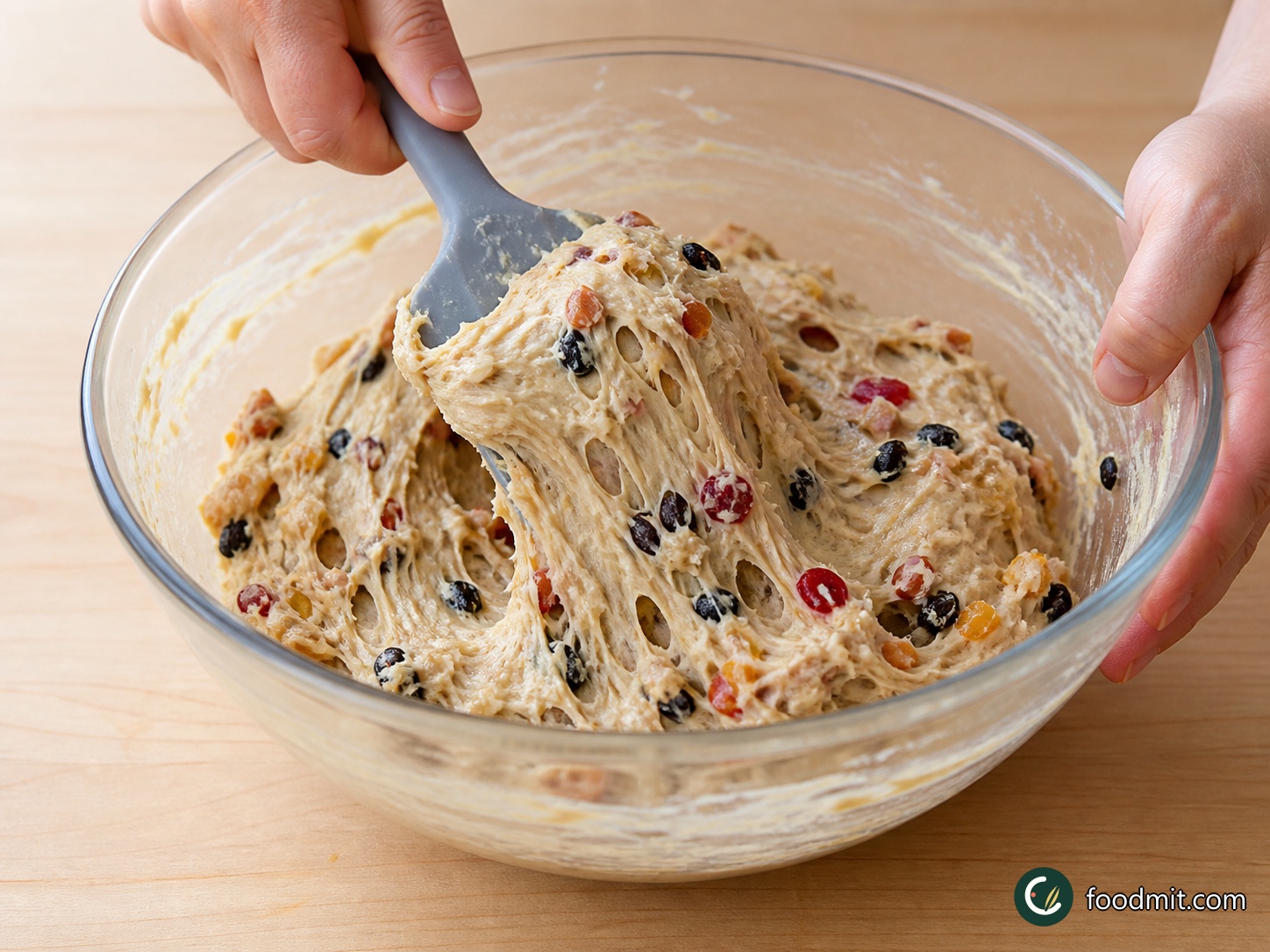
Add the spreadable butter to the well, pour in the hand-hot milk, and add the beaten egg. Mix with a spatula until no dry pockets remain and everything is evenly combined. Scatter 25 g of the flour over a board, turn out the very sticky dough, roll it through the flour, and knead only lightly until it comes together as a ball.
-
Step 3
Let the Dough Rise
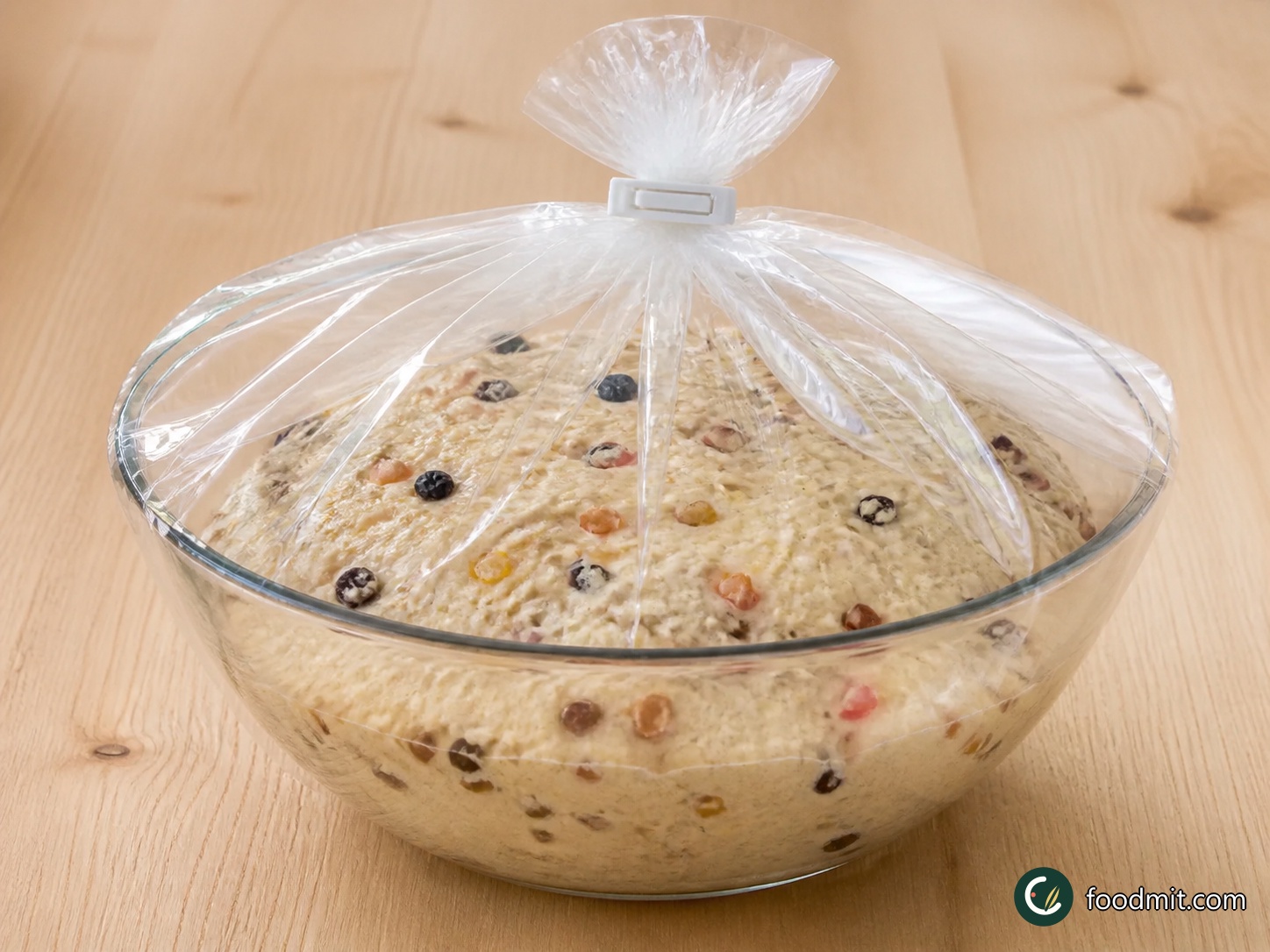
Return the dough to the bowl and enclose the bowl in a large food-safe bag, securing the opening with a clip. Leave it at room temperature until the dough has doubled in size. The room temperature will determine the pace, so use the increase in volume as the deciding cue; it may take as long as 2 hours.
-
Step 4
Shape Around the Marzipan
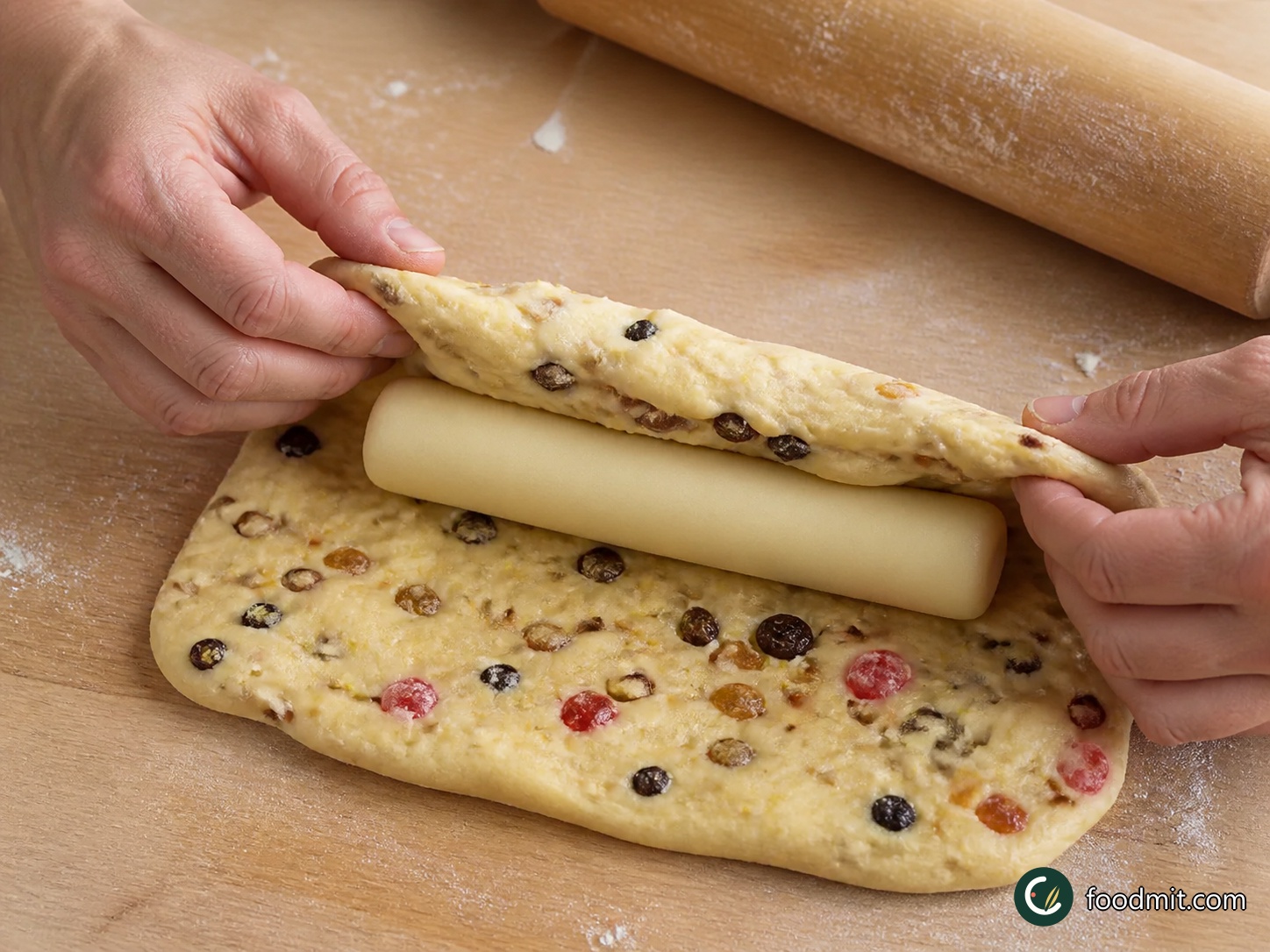
Dust the board with the remaining 25 g flour, turn out the risen dough, press out the gas, and knead it back into a smooth ball. With a floured rolling pin, roll it to a 15 x 20 cm oblong. Shape the marzipan into a 14 cm log and lay it across the middle, stopping short of both edges. Fold one long side over it, then the other; turn the loaf seam-side down and set it diagonally on a lined or well-greased large baking sheet, leaving ample room around it.
-
Step 5
Prove the Shaped Loaf
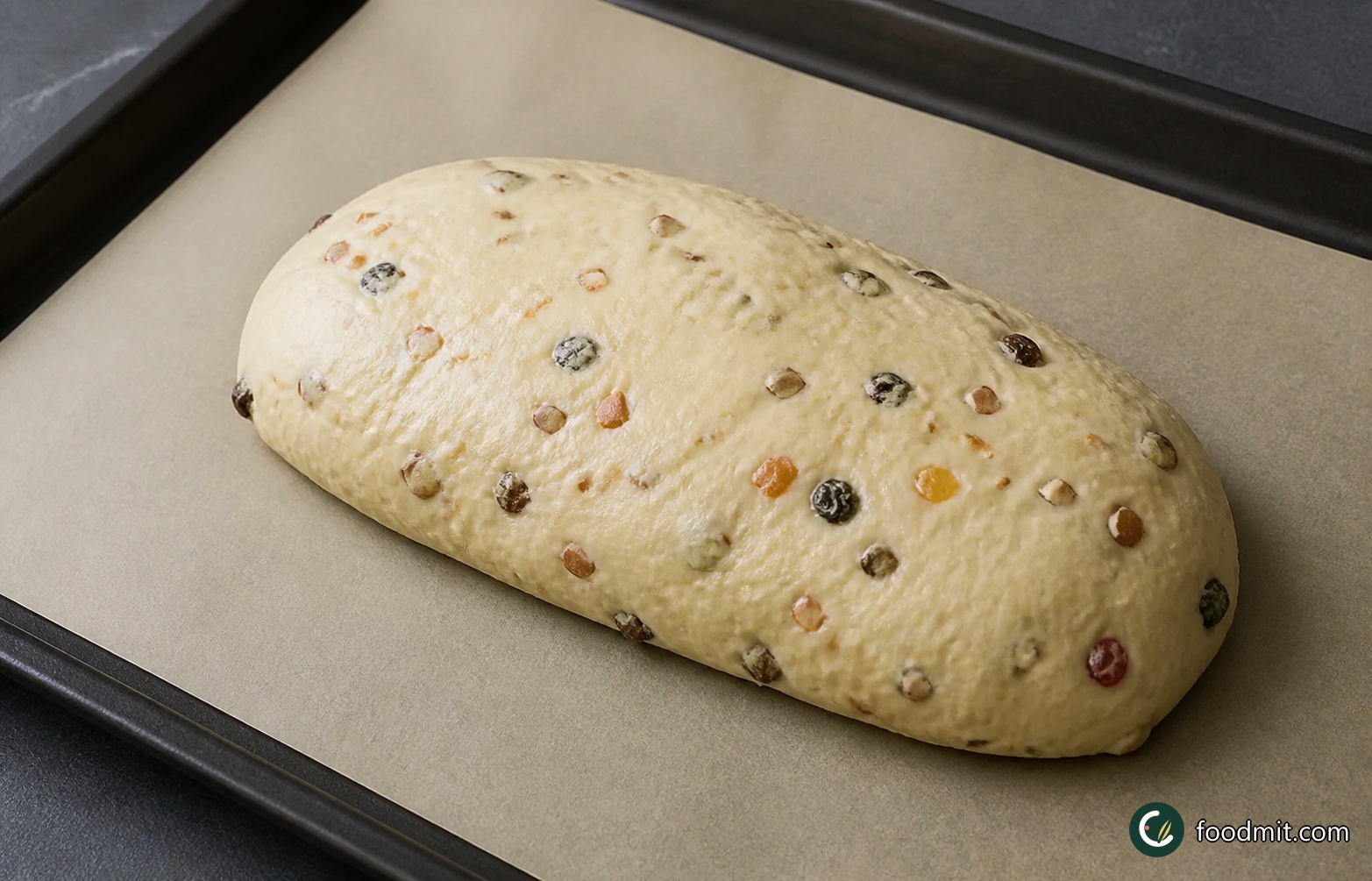
Cover the entire baking sheet with one large, lightly oiled food-safe bag, or use two if needed so the covering does not restrict the loaf. Leave the stollen in a warm place until it has doubled in size again. Expect roughly 1 hour, but judge readiness by the loaf's volume rather than removing the cover simply because the hour has passed.
-
Step 6
Bake Until Deeply Golden
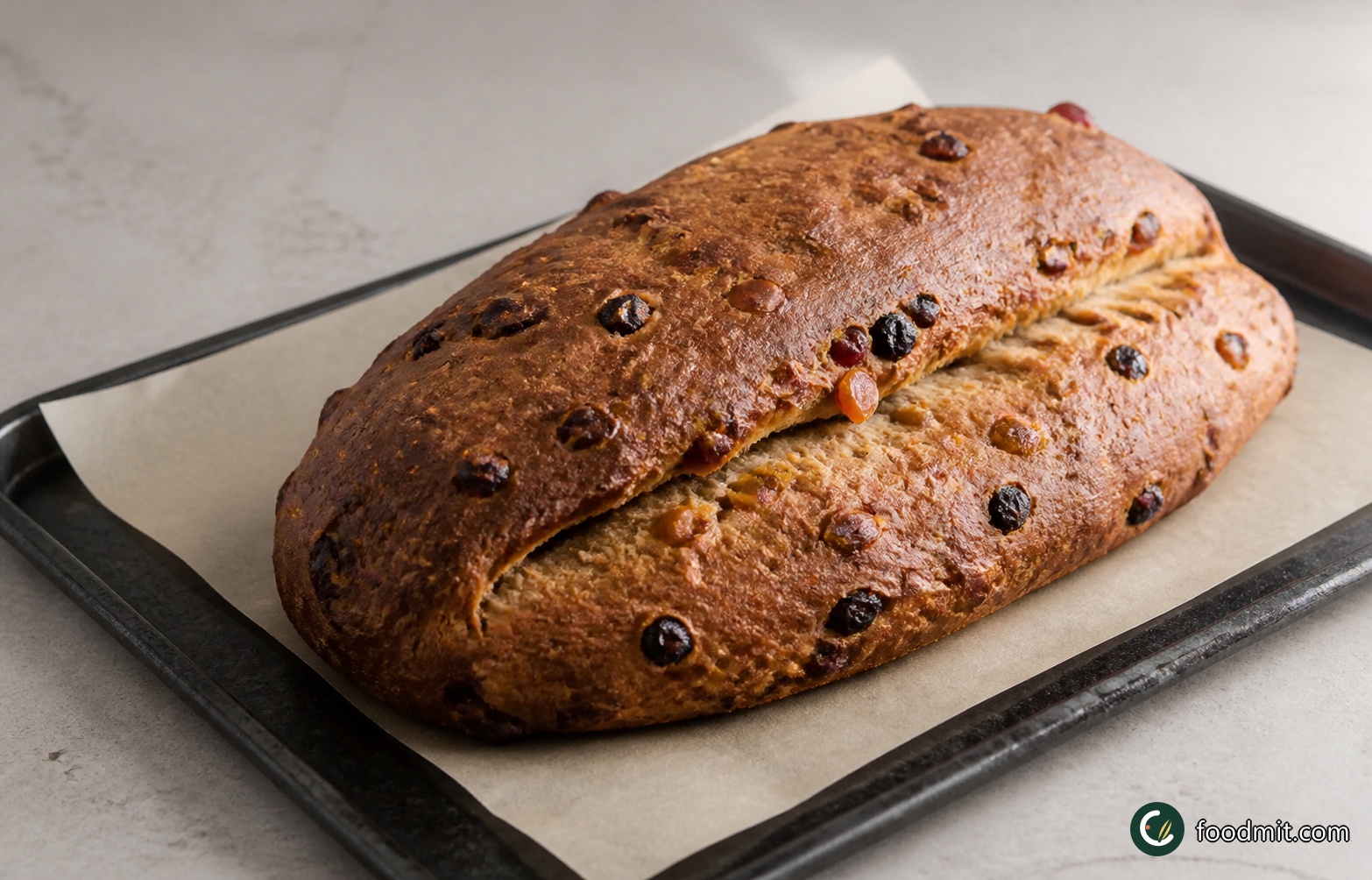
Preheat the oven to 180°C (gas mark 4). Once it is fully heated, remove the bag and bake the stollen in the centre of the oven for 40 minutes. The loaf should be well risen and deeply golden; a fairly dark crust is normal, but if it is browning too aggressively, check that the oven is not running hot.
-
Step 7
Cool Briefly and Glaze
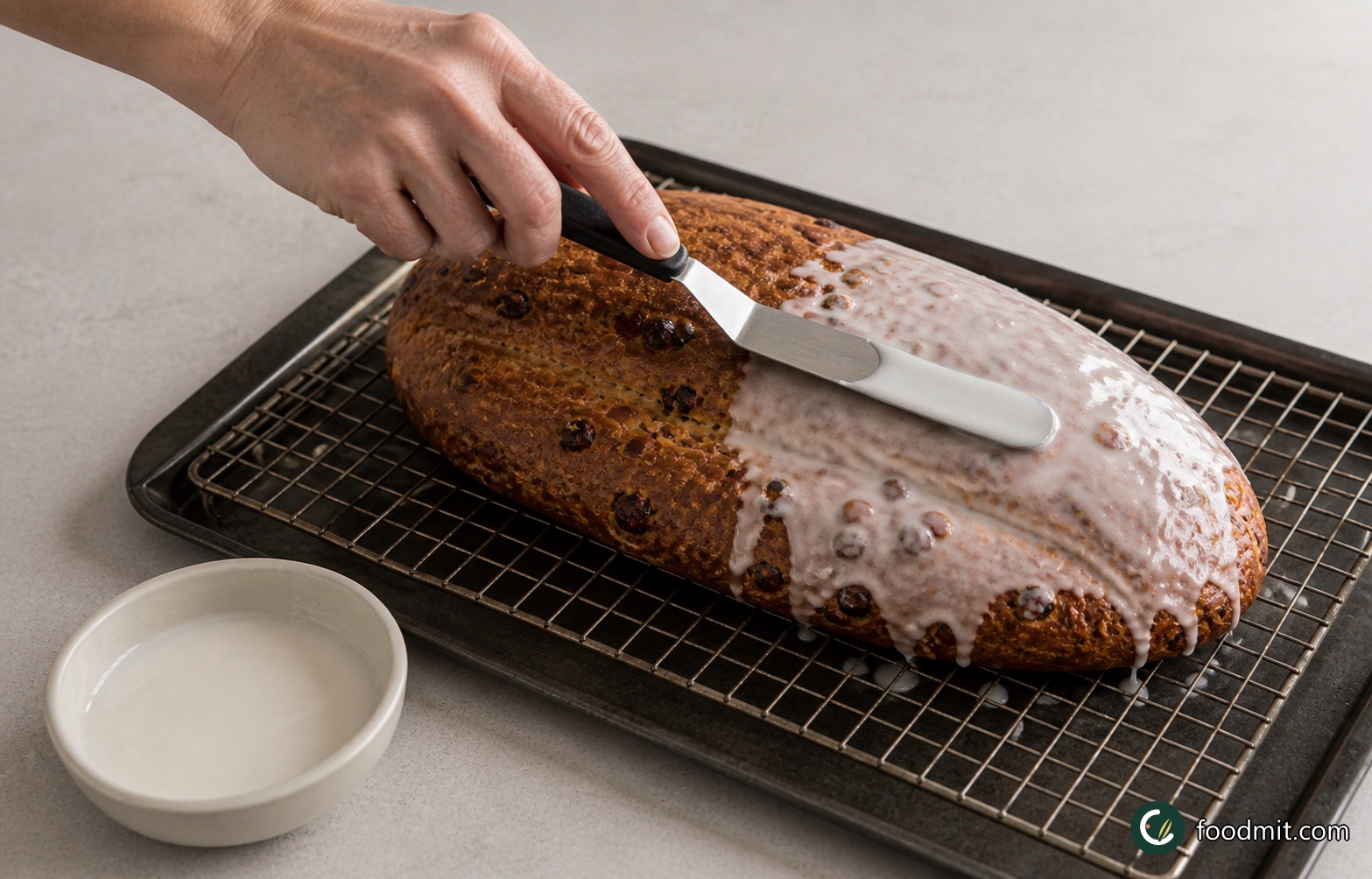
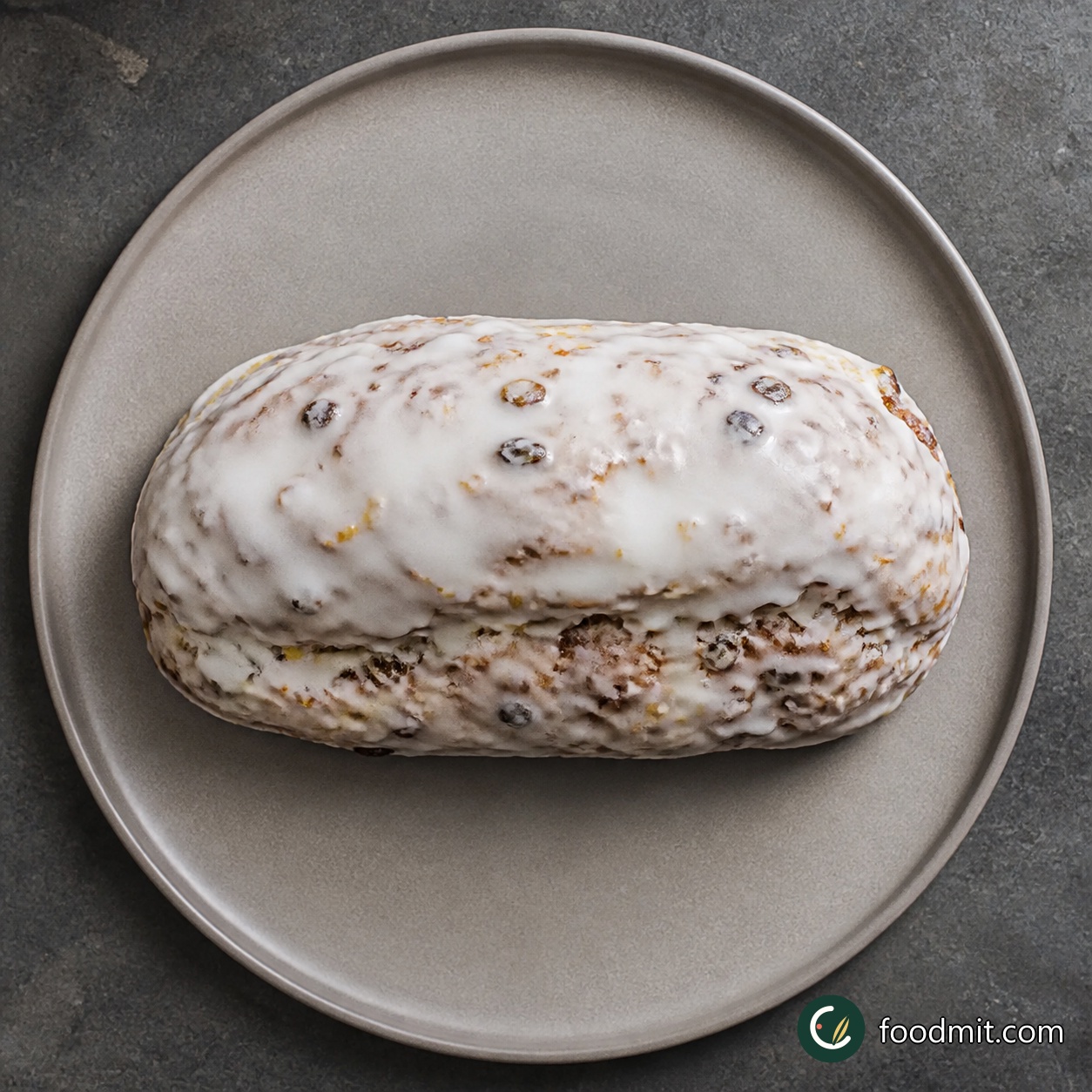
Leave the baked loaf on its sheet for about 5 minutes, then carefully transfer it to a wire rack. Stir the sifted icing sugar and lemon juice together until smooth. While the stollen is still warm, spread the glaze over the whole top with a palette knife and let it settle before cutting the loaf into thick slices.
Measure out the two 25 g flour portions before mixing; keeping them for the two kneading stages makes the sticky dough manageable without accidentally adding enough flour to toughen the loaf.
Christmas Stollen, ready to serve
Serving ideas for Christmas Stollen
Choose a presentation that fits the occasion, from relaxed sharing to individual plates.
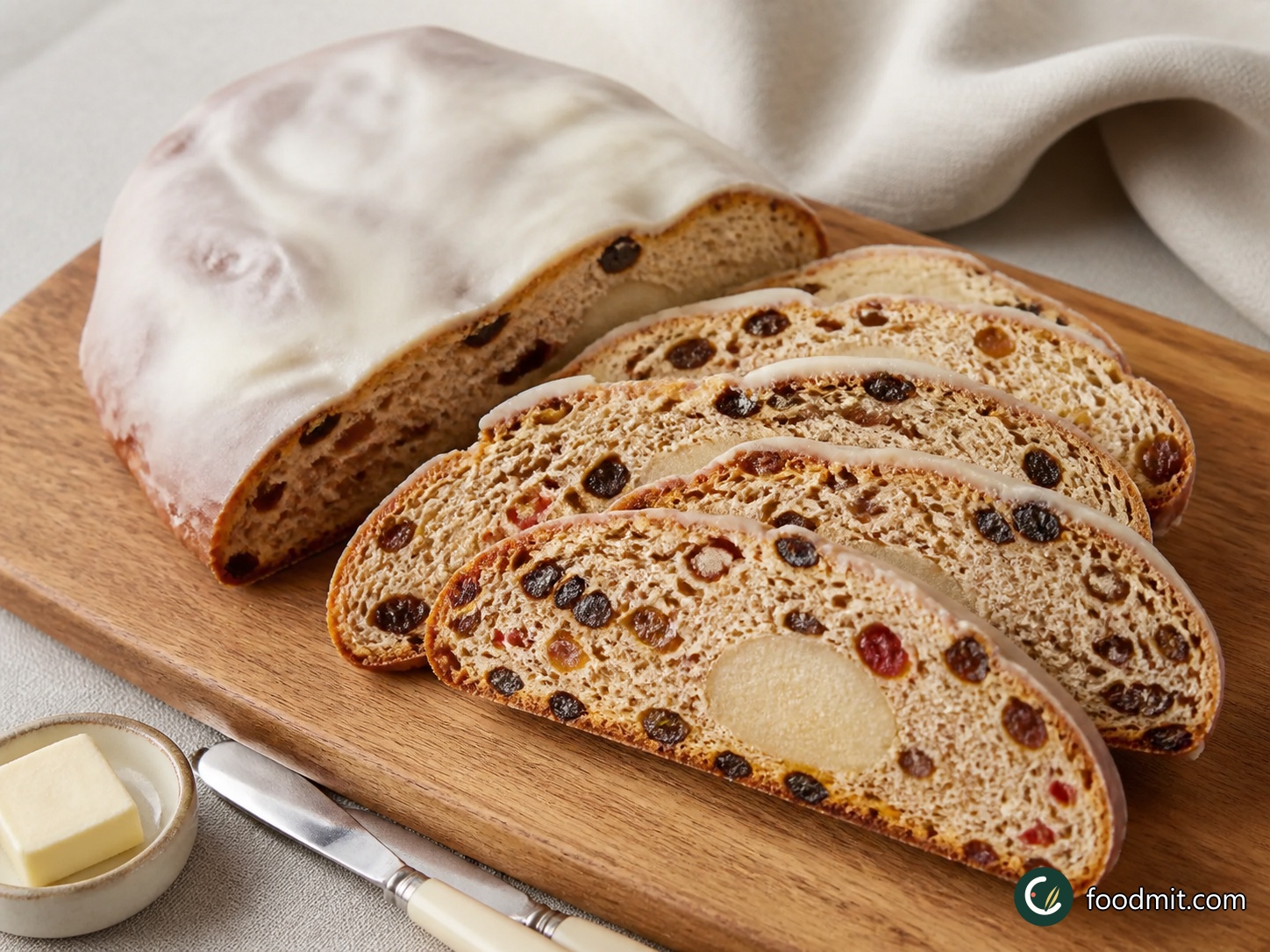
Warm Christmas Breakfast Board
Warm the loaf gently, cut it into thick slices, and overlap them on a broad wooden board or simple white platter so the fruit and marzipan centre remain visible. Set a small butter dish and spreading knives alongside rather than buttering every slice in advance. This arrangement suits a relaxed Christmas breakfast or brunch with several guests, since people can take a slice as they arrive and choose whether to eat it plain or with butter.
Lightly Toasted Next-Day Slices
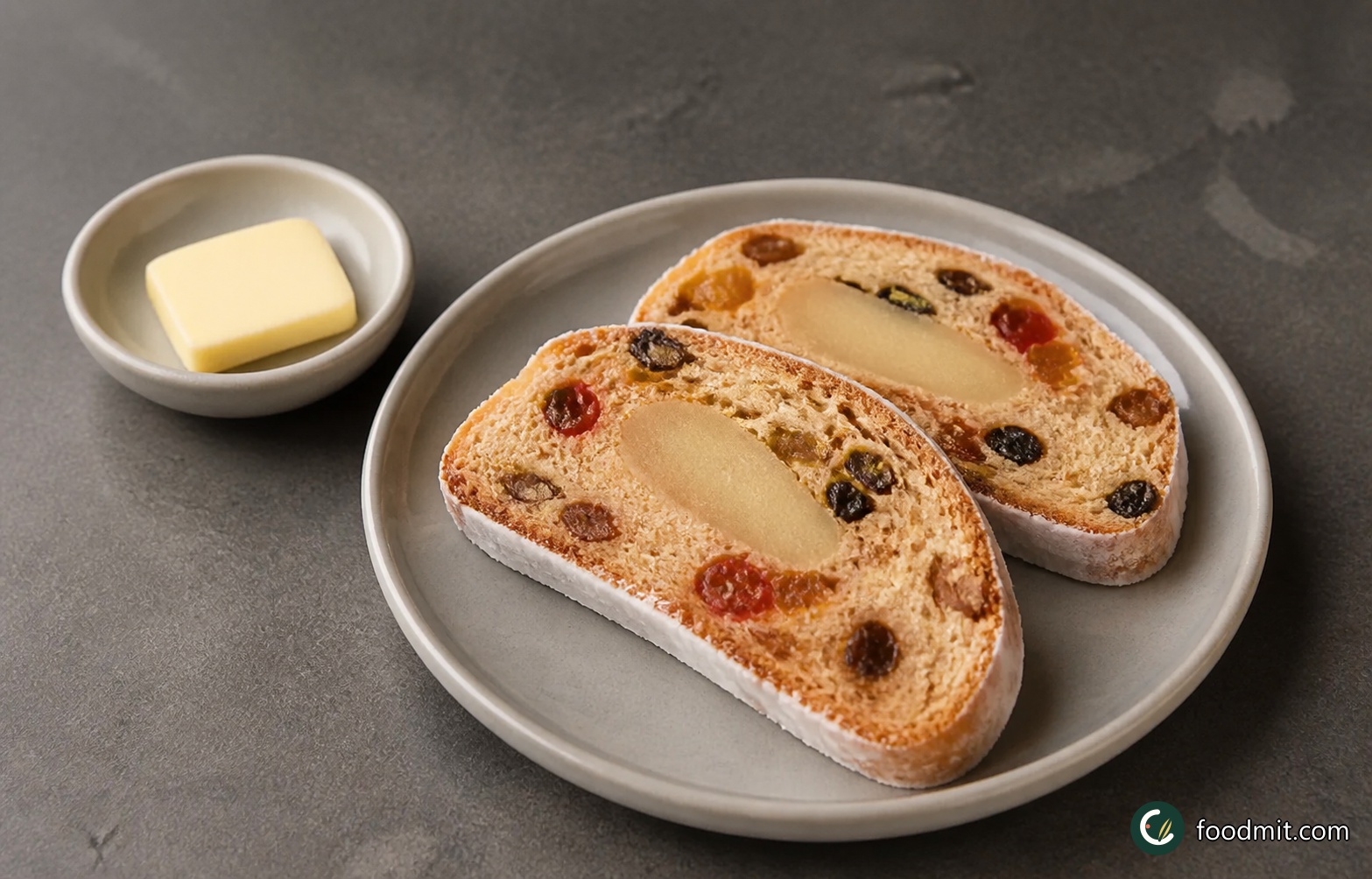
For the following day's breakfast or snack, slice the stollen thickly and toast it only until the cut faces are warm and lightly crisp. Arrange two slices per plate with the marzipan stripe facing upward, and offer butter on the side. A small plate keeps this presentation cozy and unfussy. Watch the slices closely as they toast: the sugary fruit and icing can color quickly, and the aim is to refresh the bread rather than make it dry or deeply browned.
Holiday Sharing Platter
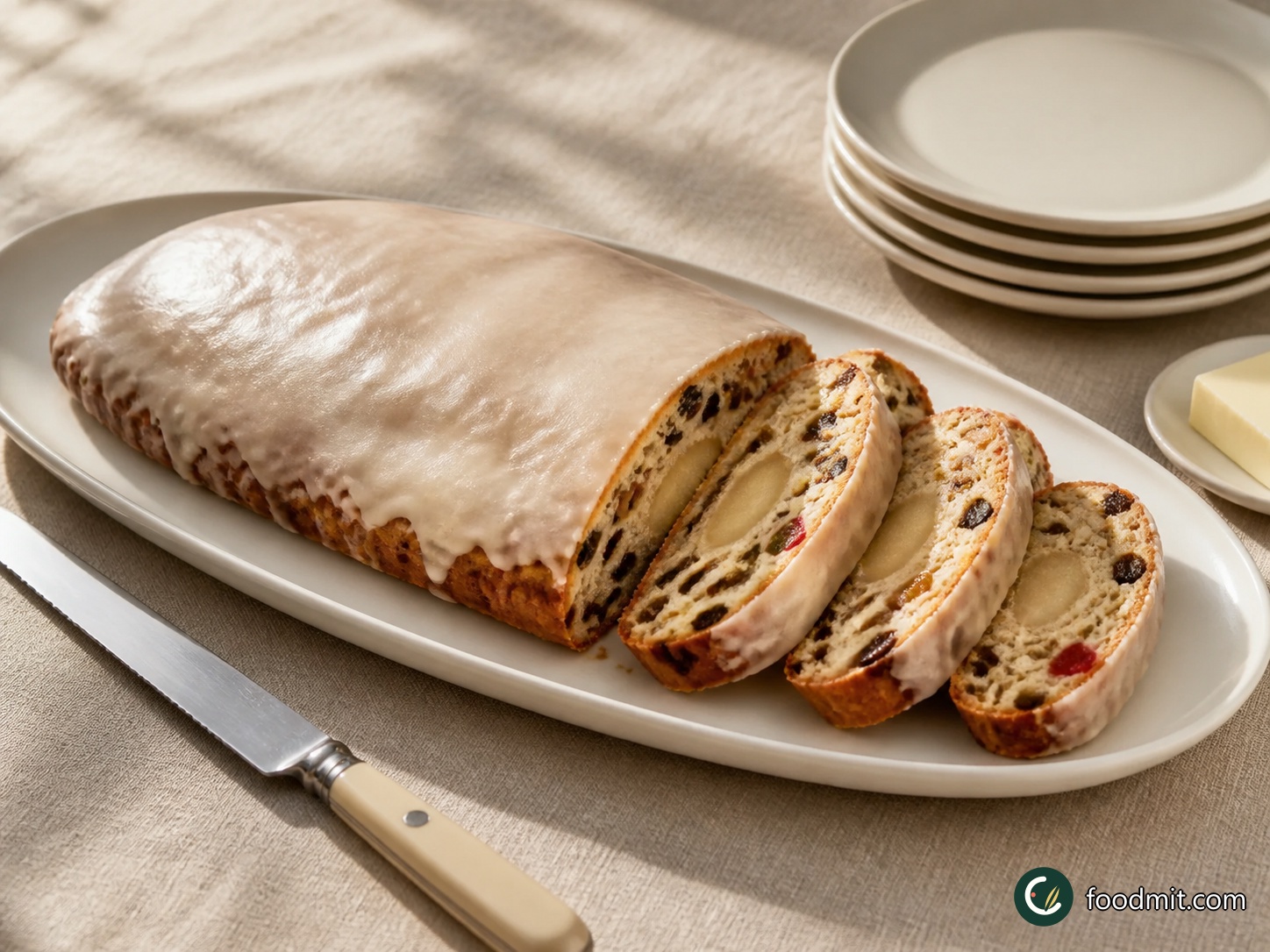
For an afternoon holiday table, place the whole glazed loaf on a long serving platter and cut several thick slices while leaving the rest intact. Angle the first slices outward so guests can see the almond centre, jewel-like fruit, and pale icing before serving themselves. Keep a serrated knife and a few small plates nearby, with butter available but optional. The loaf's generous size and make-ahead freezing option make this an easy centerpiece when a larger group is visiting.
Let’s cook Christmas Stollen together
Check off your ingredients, follow each step, and start the timers when you are ready.
Get everything ready
Step-by-step with timers
Combine the Dry Ingredients
Put 300 g of the flour in a mixing bowl with the salt and easy-bake yeast, and stir briefly. Add the currants, candied peel, sultanas, chopped apricots, quartered glacé cherries, almonds, lemon zest, and golden caster sugar. Mix again so the fruit and nuts are spread evenly, then form a well in the centre.
Mix and Lightly Knead the Dough
Add the spreadable butter to the well, pour in the hand-hot milk, and add the beaten egg. Mix with a spatula until no dry pockets remain and everything is evenly combined. Scatter 25 g of the flour over a board, turn out the very sticky dough, roll it through the flour, and knead only lightly until it comes together as a ball.
Let the Dough Rise
Return the dough to the bowl and enclose the bowl in a large food-safe bag, securing the opening with a clip. Leave it at room temperature until the dough has doubled in size. The room temperature will determine the pace, so use the increase in volume as the deciding cue; it may take as long as 2 hours.
Shape Around the Marzipan
Dust the board with the remaining 25 g flour, turn out the risen dough, press out the gas, and knead it back into a smooth ball. With a floured rolling pin, roll it to a 15 x 20 cm oblong. Shape the marzipan into a 14 cm log and lay it across the middle, stopping short of both edges. Fold one long side over it, then the other; turn the loaf seam-side down and set it diagonally on a lined or well-greased large baking sheet, leaving ample room around it.
Prove the Shaped Loaf
Cover the entire baking sheet with one large, lightly oiled food-safe bag, or use two if needed so the covering does not restrict the loaf. Leave the stollen in a warm place until it has doubled in size again. Expect roughly 1 hour, but judge readiness by the loaf's volume rather than removing the cover simply because the hour has passed.
Bake Until Deeply Golden
Preheat the oven to 180°C (gas mark 4). Once it is fully heated, remove the bag and bake the stollen in the centre of the oven for 40 minutes. The loaf should be well risen and deeply golden; a fairly dark crust is normal, but if it is browning too aggressively, check that the oven is not running hot.
Cool Briefly and Glaze
Leave the baked loaf on its sheet for about 5 minutes, then carefully transfer it to a wire rack. Stir the sifted icing sugar and lemon juice together until smooth. While the stollen is still warm, spread the glaze over the whole top with a palette knife and let it settle before cutting the loaf into thick slices.
The story behind Christmas Stollen
Recipe notes by Emily
Why I Wanted to Bake It
I came to this loaf as a genuine admirer of Delia Smith's wonderfully steady recipe writing. Her approach made a fruit-filled yeast bread seem manageable rather than ceremonial, which was exactly the encouragement I needed. Once I had weighed the colorful fruit and chopped almonds into the bowl, the kitchen already smelled faintly of lemon and Christmas. The finished loaf rewarded that modest bit of planning: it looked generous, sliced cleanly through its almond centre, and felt made for passing around a busy holiday breakfast table.
What the Dough Taught Me
When I mixed the dough, my first instinct was to add more flour because it clung to the spatula and board. I stayed with Delia's measured flour instead, using 25 g for the first light knead and saving the final 25 g for shaping after the rise. That restraint mattered. The dough became easier to handle as it developed, while the baked crumb stayed tender rather than tight. I also learned not to hurry either proof: watching for a true doubling was far more reliable than treating the suggested times as deadlines.
Fresh Slices and the Day After
The first thick slice was my favorite, still fresh enough for the soft crumb, bright lemon topping, and marzipan to feel distinct in every bite. I served some plain and put butter alongside for anyone who wanted it. The next morning I toasted the remaining slices lightly, which revived the edges without drying the fruit. If I were baking for a later gathering, I would use the recipe's make-ahead route: freeze the fully cooled loaf unglazed, then thaw it, warm it through, and add the icing shortly before serving.