
Classic Christmas Cake Recipe Inspired by Delia Smith
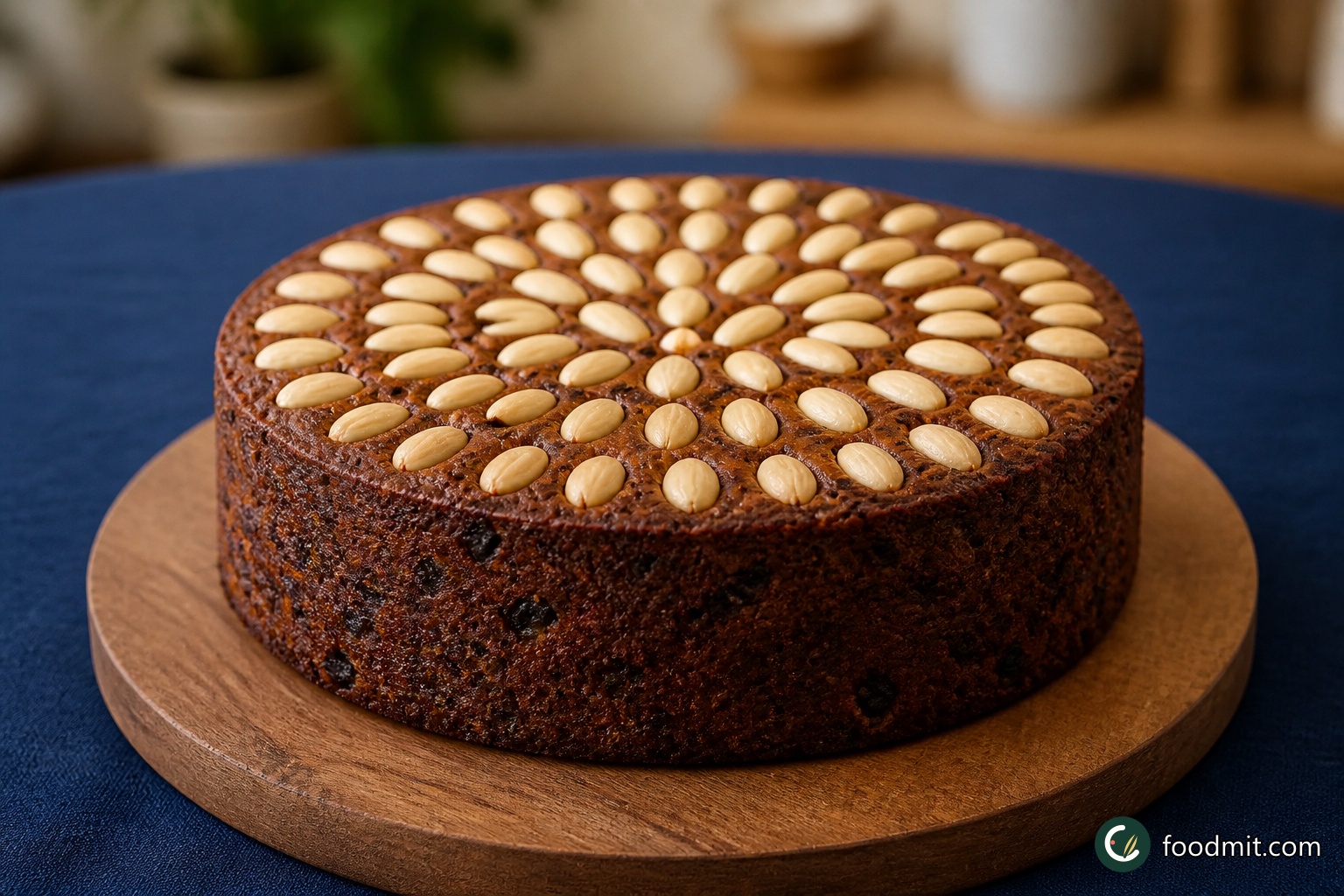
I came to this Classic Christmas Cake as a devoted admirer of Delia Smith's calm, dependable baking. After making it myself, I understood why the recipe asks for patience: the overnight soak and long, gentle bake turn a very full bowl of dried fruit into a cake that feels properly celebratory rather than merely heavy. The crumb is dark, close, and moist, with currants, sultanas, raisins, glacé cherries, and candied peel in nearly every slice. Brown sugar and black treacle deepen the flavor, while lemon and orange zest lift the sweetness; nutmeg, mixed spice, brandy, and almonds give it a warm, rounded finish. The most useful lesson for me was to protect the cake before it goes into the oven. A lined 20 cm tin, a double brown-paper band around the outside, and a loose parchment cover above the batter slow the coloring while the center cooks. I resisted opening the oven for four hours and relied on the springy-center test before giving it any extra time. Once completely cool, the cake can be pricked, fed with Armagnac or brandy, wrapped carefully, and kept in an airtight tin. I like the uniced version with blanched almonds arranged over the top: it looks traditional on a holiday table, cuts neatly into small rich slices, and rewards making it well before it is needed.
 Foodmit
recipe
Per 1 of 20 slices, with almond topping and one 2-tablespoon feed
Nutrition for Classic Christmas Cake
- Saturated fat
- 6.5 g
- Fiber
- 3.8 g
- Sugars
- 40.8 g
- Sodium
- 160 mg
Estimated values. Nutrition values are approximate. More precise calculations will be added in a future update.
How to make Classic Christmas Cake
-
Step 1
Soak the fruit overnight
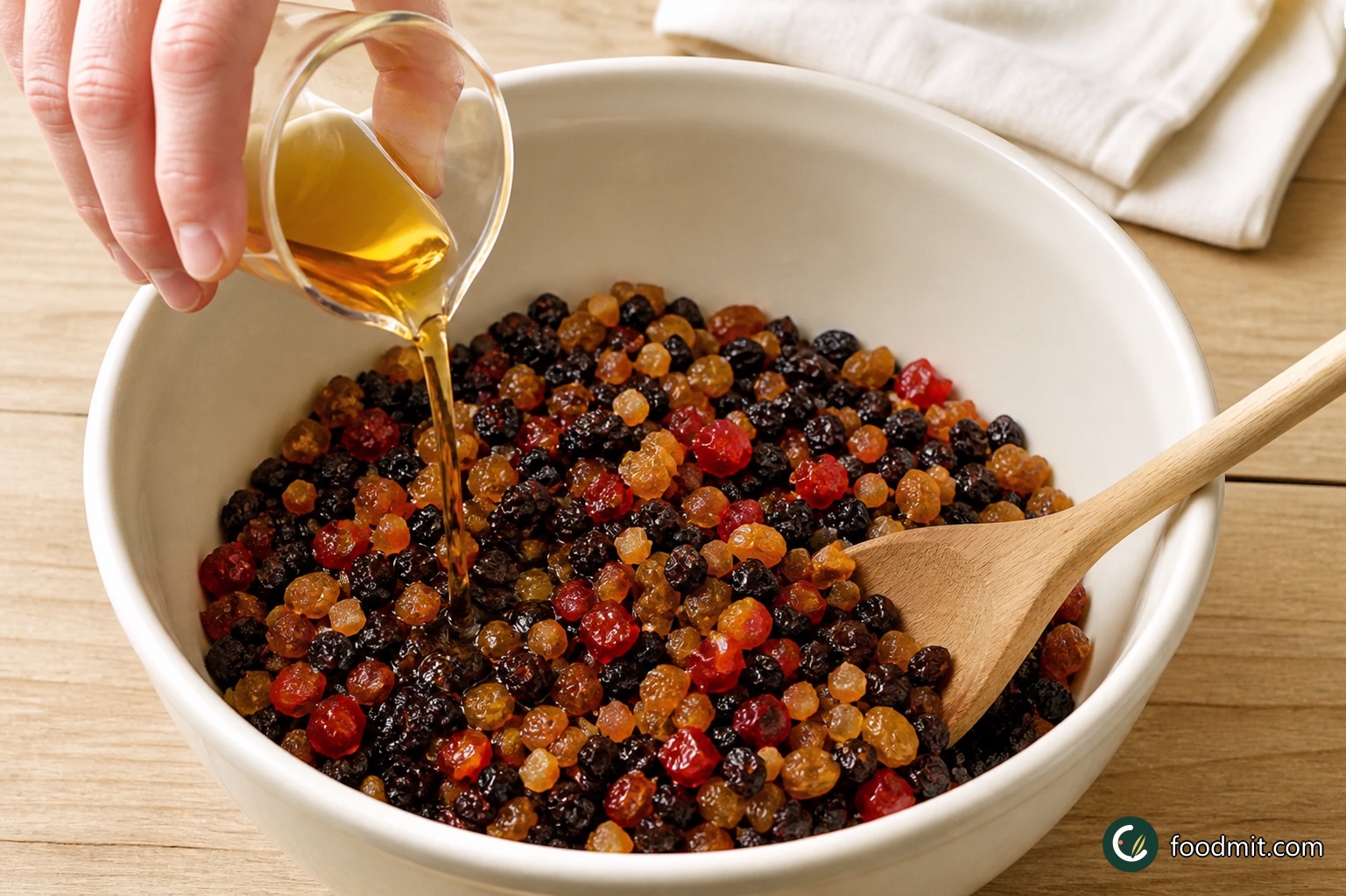
The night before baking, combine the currants, sultanas, raisins, chopped glacé cherries, and chopped candied peel in a large bowl. Pour over the 100 ml brandy and turn everything thoroughly so the fruit is evenly moistened. Cover the bowl with a clean cloth and leave it for at least 12 hours.
-
Step 2
Prepare the tin and oven
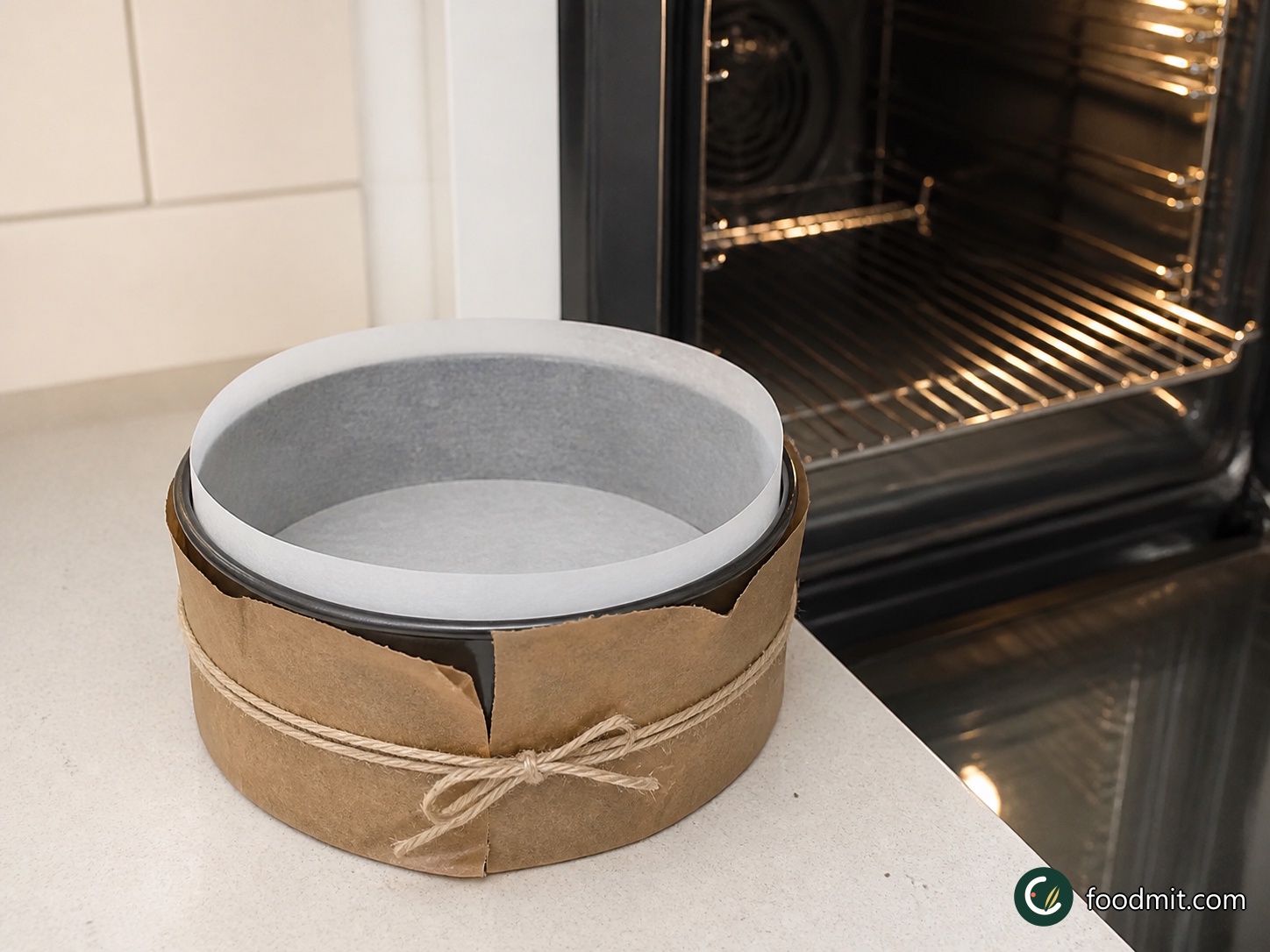
When you are ready to bake, heat a conventional oven to 140°C, gas mark 1. If the fan cannot be switched off, reduce the setting by 20°C and also follow the oven manufacturer's guidance. Grease a 20 cm round loose-based cake tin, line its base and sides, then tie a double band of brown paper securely around the outside to shield the edge during the long bake.
-
Step 3
Beat the cake mixture
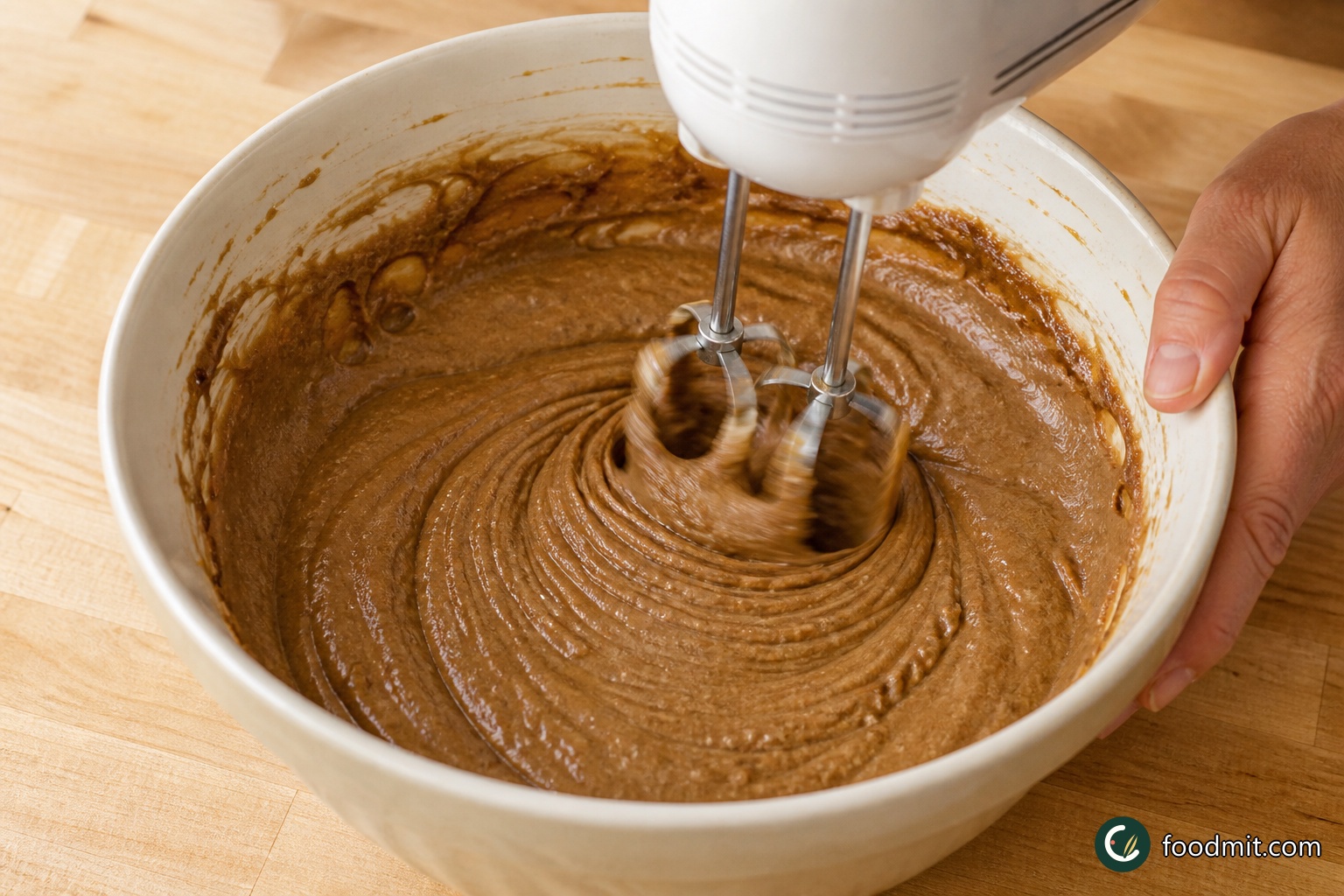
Sift the flour, salt, nutmeg, and mixed spice into a very large mixing bowl. Add the dark brown sugar, eggs, gently warmed treacle, and spreadable butter. Beat with an electric hand whisk until the mixture is evenly blended, smooth, and aerated, scraping the bowl as needed so no flour remains at the bottom.
-
Step 4
Fold in fruit, nuts, and zest
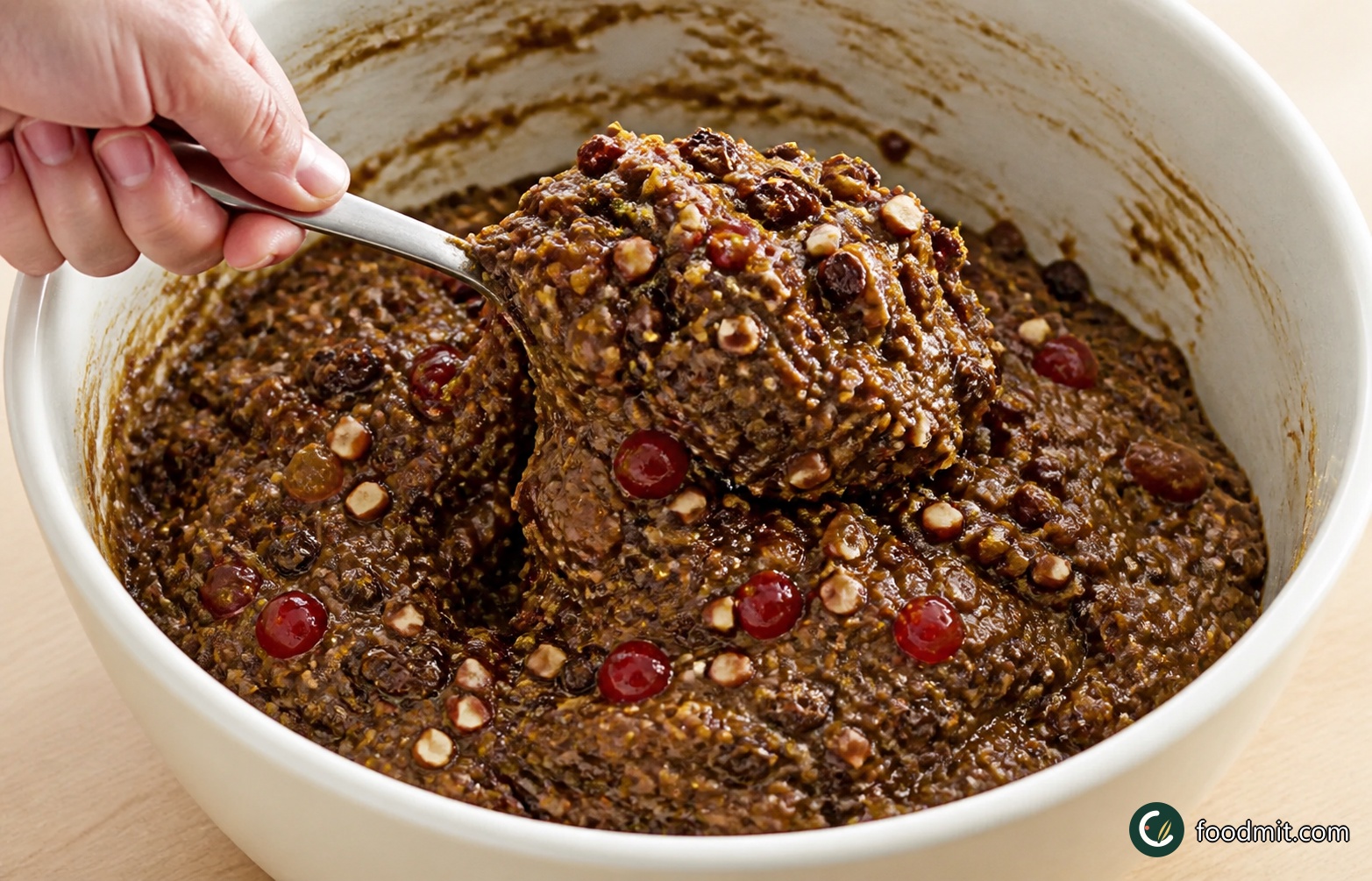
Fold the soaked fruit into the batter gradually, including any brandy left in the bowl. Follow with the chopped skin-on almonds, then the finely grated lemon and orange zests. Use a large spoon and turn the heavy mixture patiently until the fruit and nuts are spread evenly from top to bottom.
-
Step 5
Fill and finish the tin
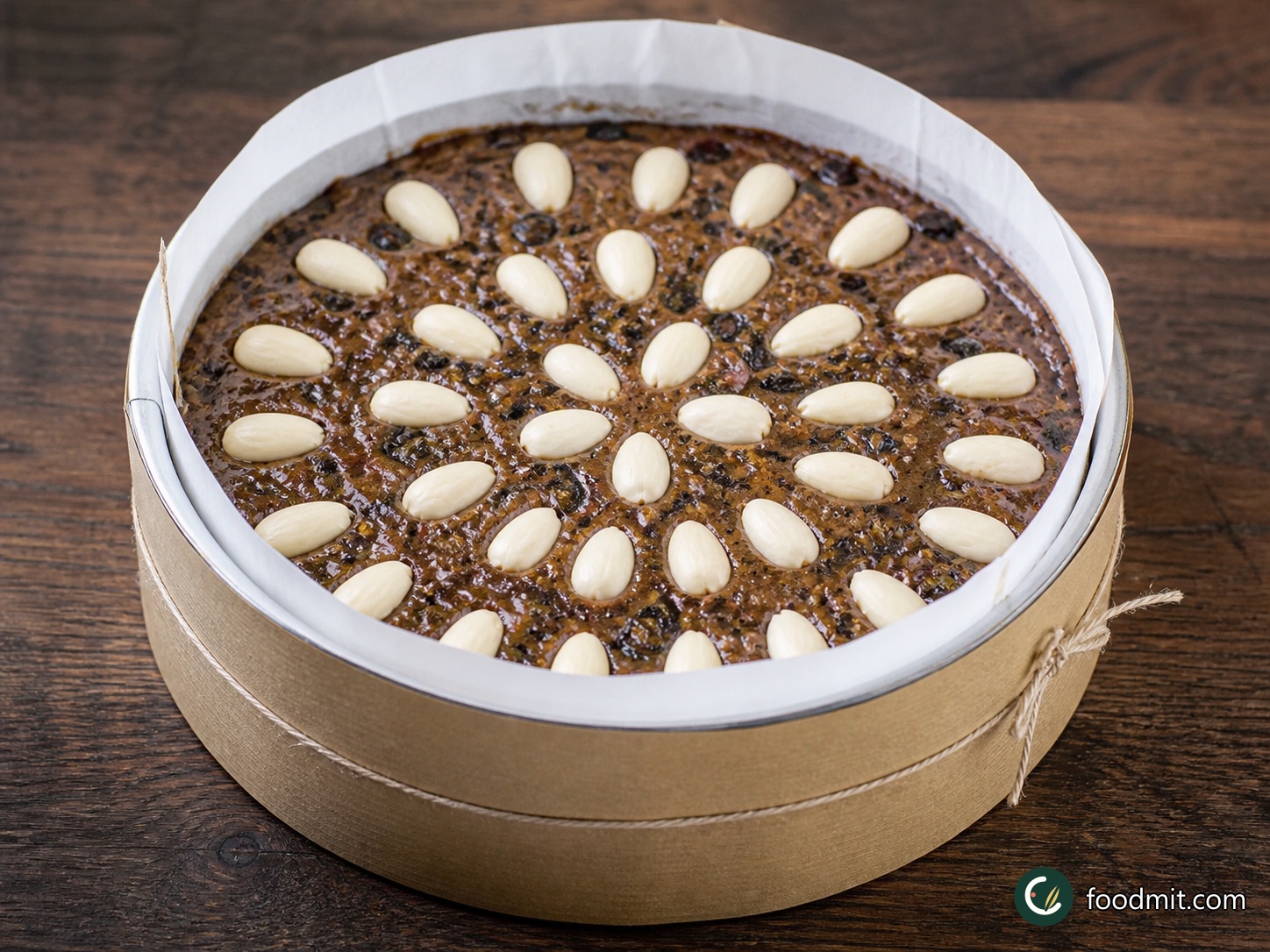
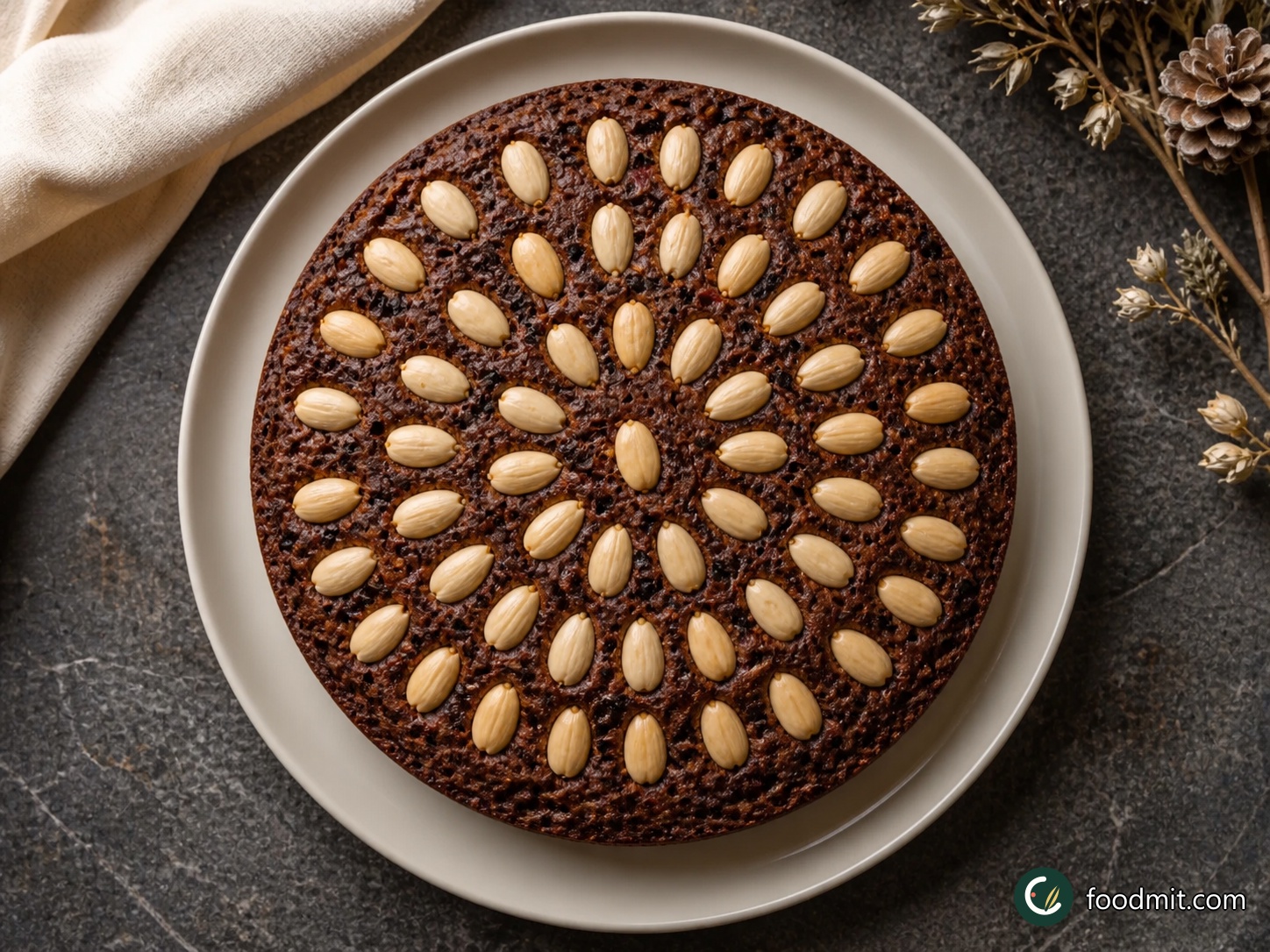
Spoon the mixture into the prepared tin, pressing it gently into the edges and leveling the surface with the back of the spoon. If the cake will be served without marzipan and icing, arrange the whole blanched almonds lightly in concentric circles over the top; omit them if you plan to ice it later.
-
Step 6
Protect and slow-bake
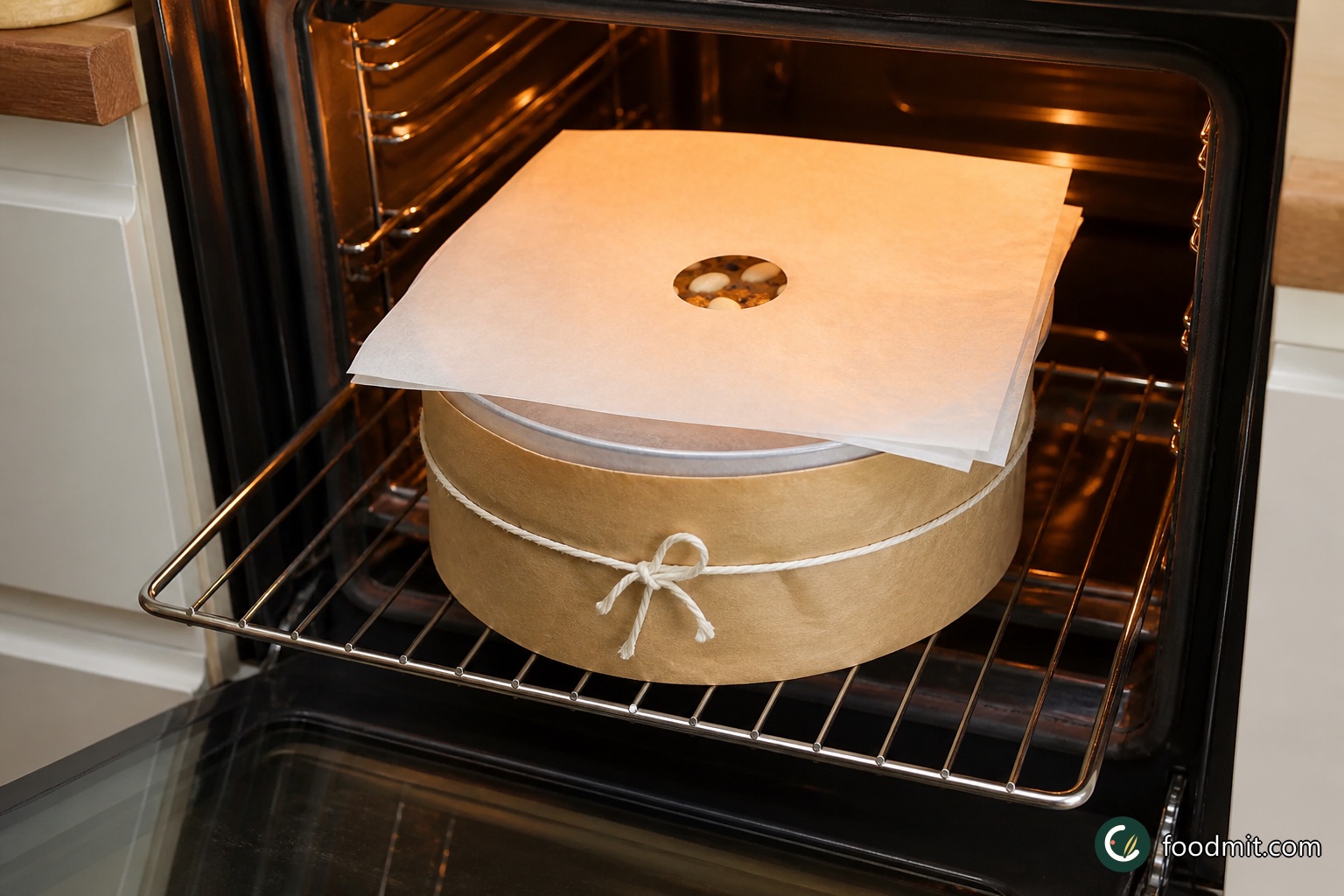
Cut a double square of baking parchment large enough to span the tin and make an opening about 3 cm wide in its center. Rest this cover on the rim of the brown-paper collar so it sits above, rather than on, the batter. Bake on the oven's lowest shelf and do not open the door for 4 hours. The center is ready when it springs back under a light fingertip; if it does not, continue baking for another 30 to 45 minutes and check toward the end.
-
Step 7
Cool the cake
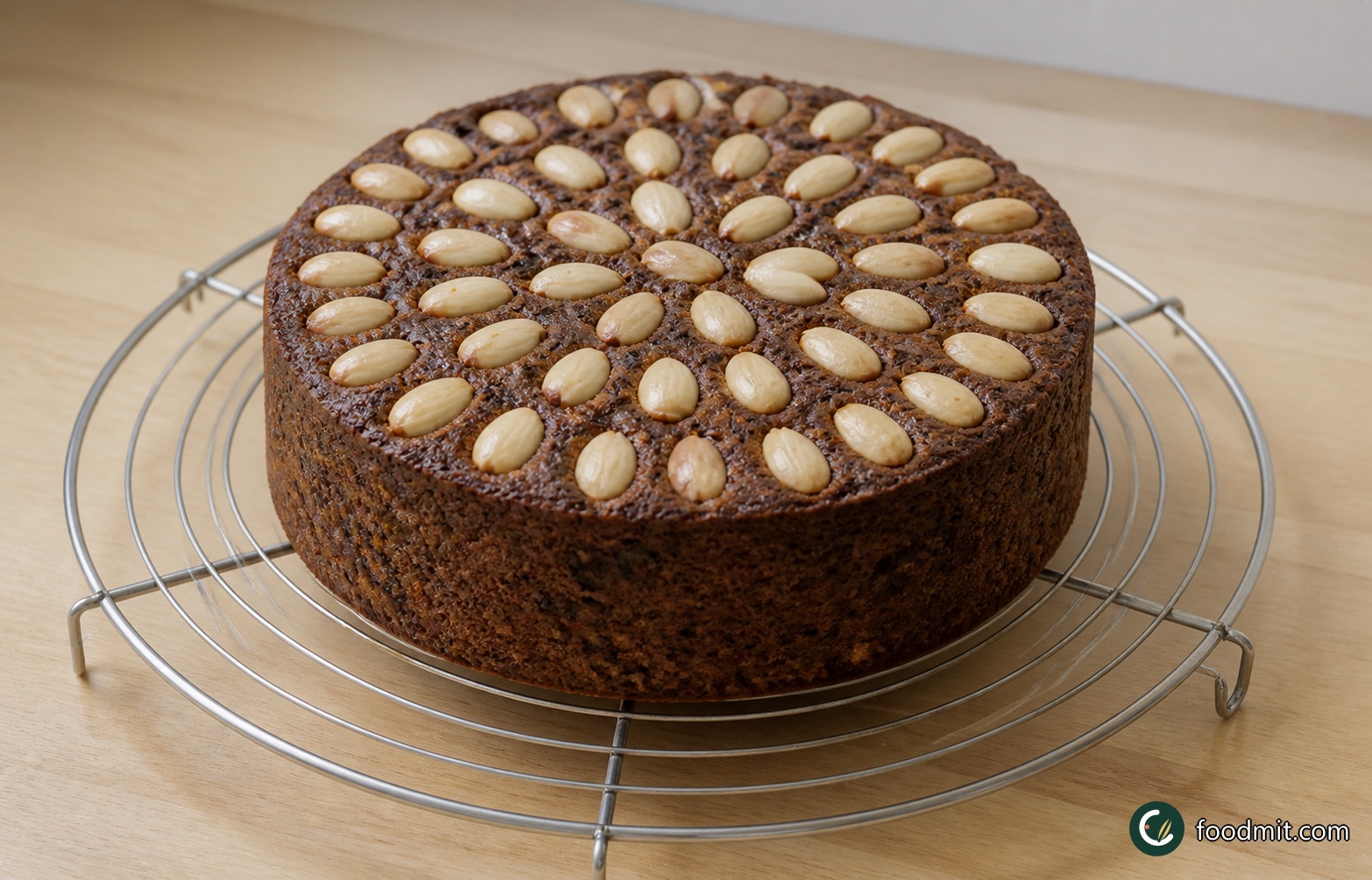
Leave the baked cake in its tin for 30 minutes so the structure can settle. Carefully release it, remove the lining, and transfer it to a wire rack. Let it become completely cold before adding any spirit or wrapping it; enclosing it while warm would trap unwanted condensation.
-
Step 8
Feed, wrap, and store
Once cold, use a cocktail stick to make small holes over both the top and bottom. Spoon over 2 tablespoons of Armagnac or brandy, allowing it to soak in rather than pool. Wrap the cake in foil lined with baking parchment and place it in an airtight tin. Add another modest feeding at occasional intervals until you are ready to ice or serve it.
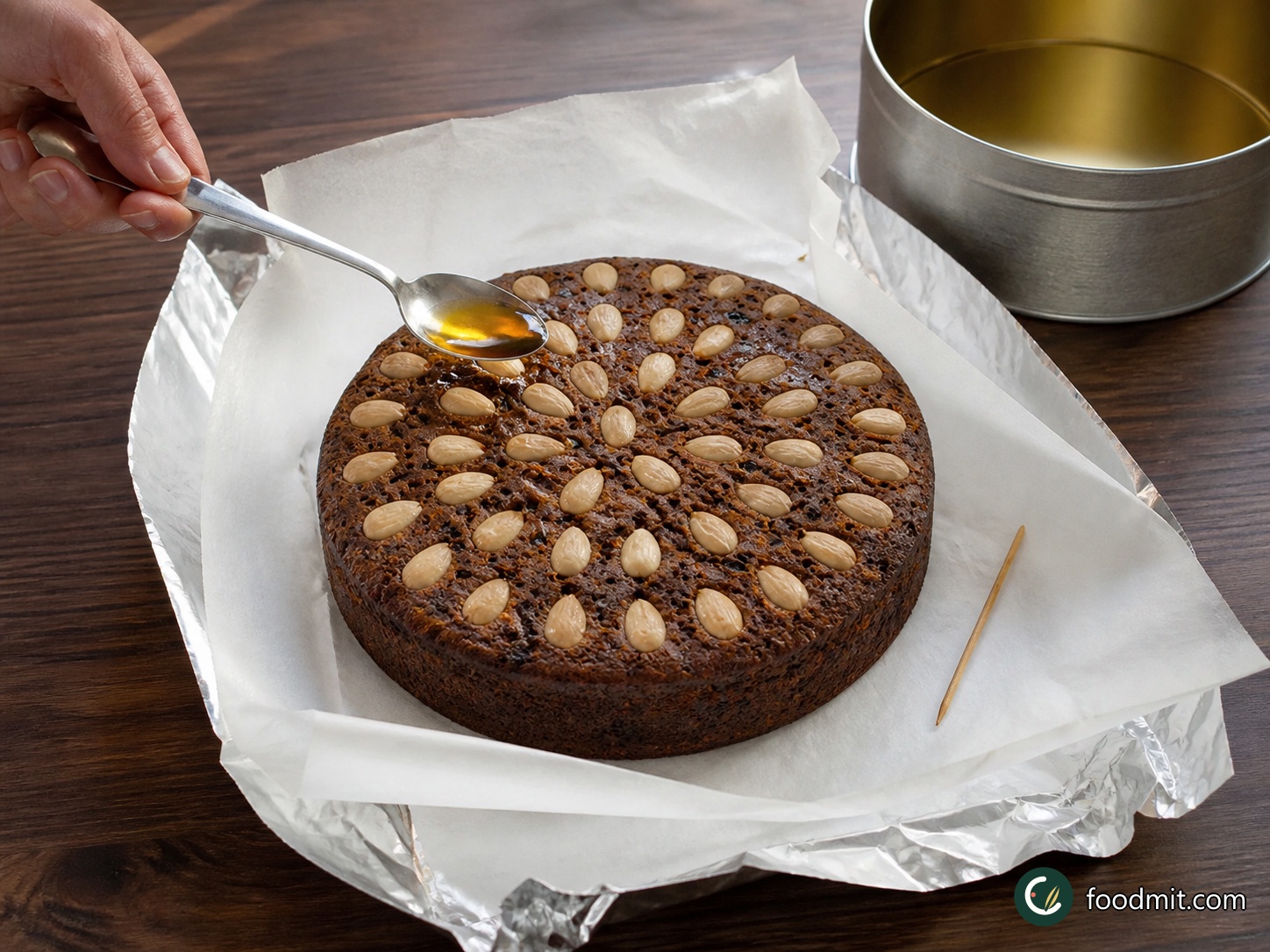
Warm the treacle only until it flows easily; it will leave the spoon cleanly and disperse through the batter instead of collecting in a sticky streak.
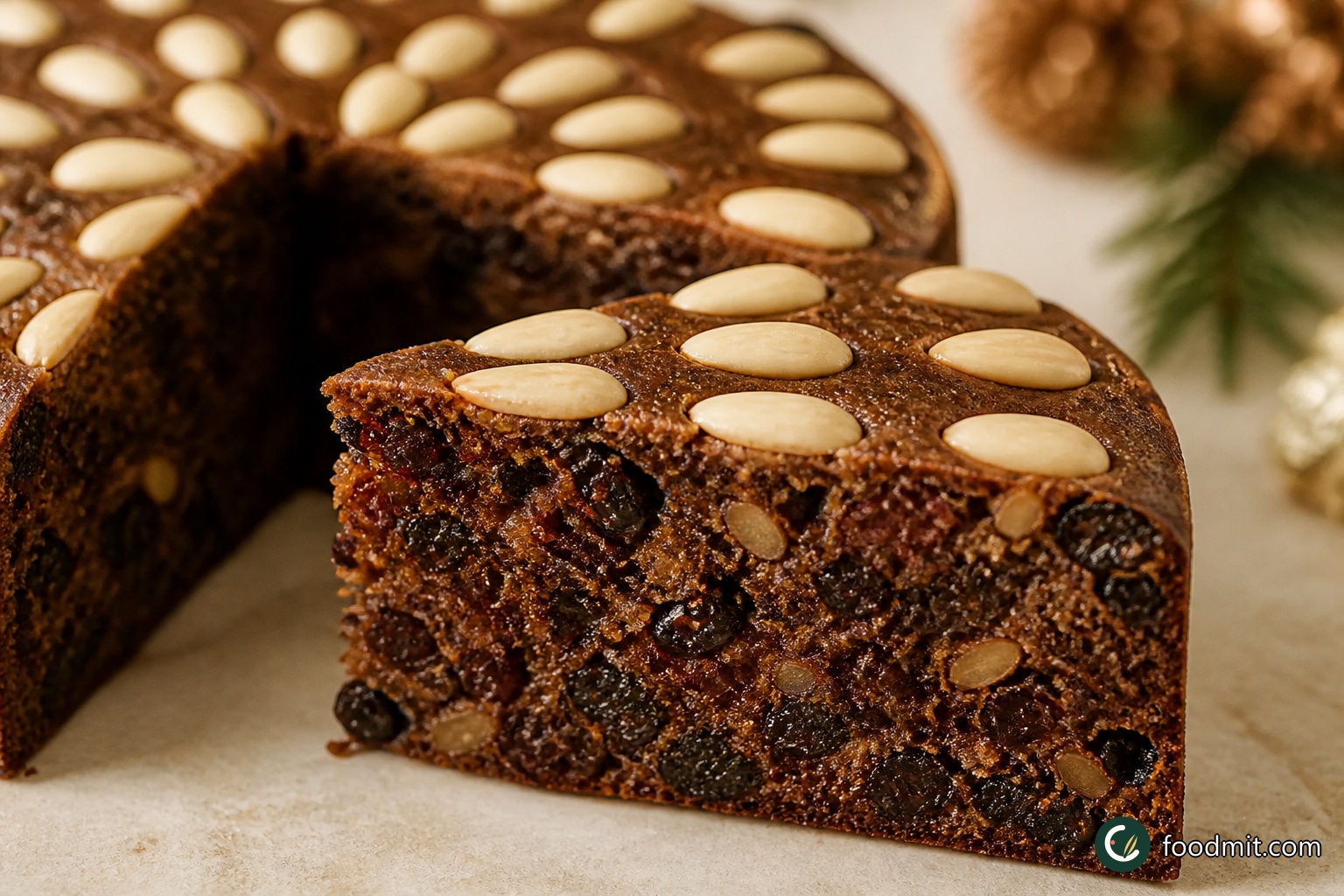
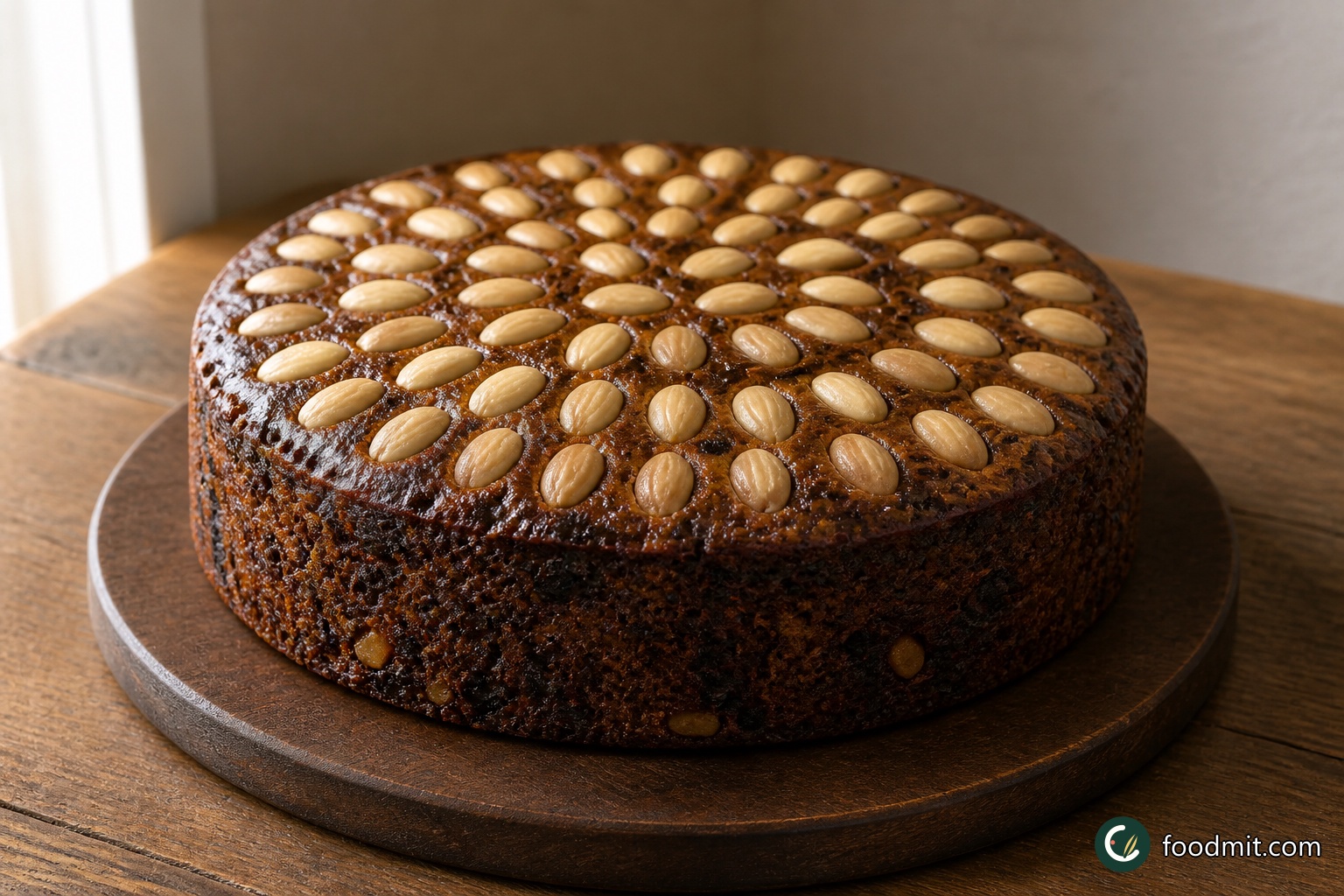
Classic Christmas Cake, ready to serve
Serving ideas for Classic Christmas Cake
Choose a presentation that fits the occasion, from relaxed sharing to individual plates.
Uniced Almond Centrepiece
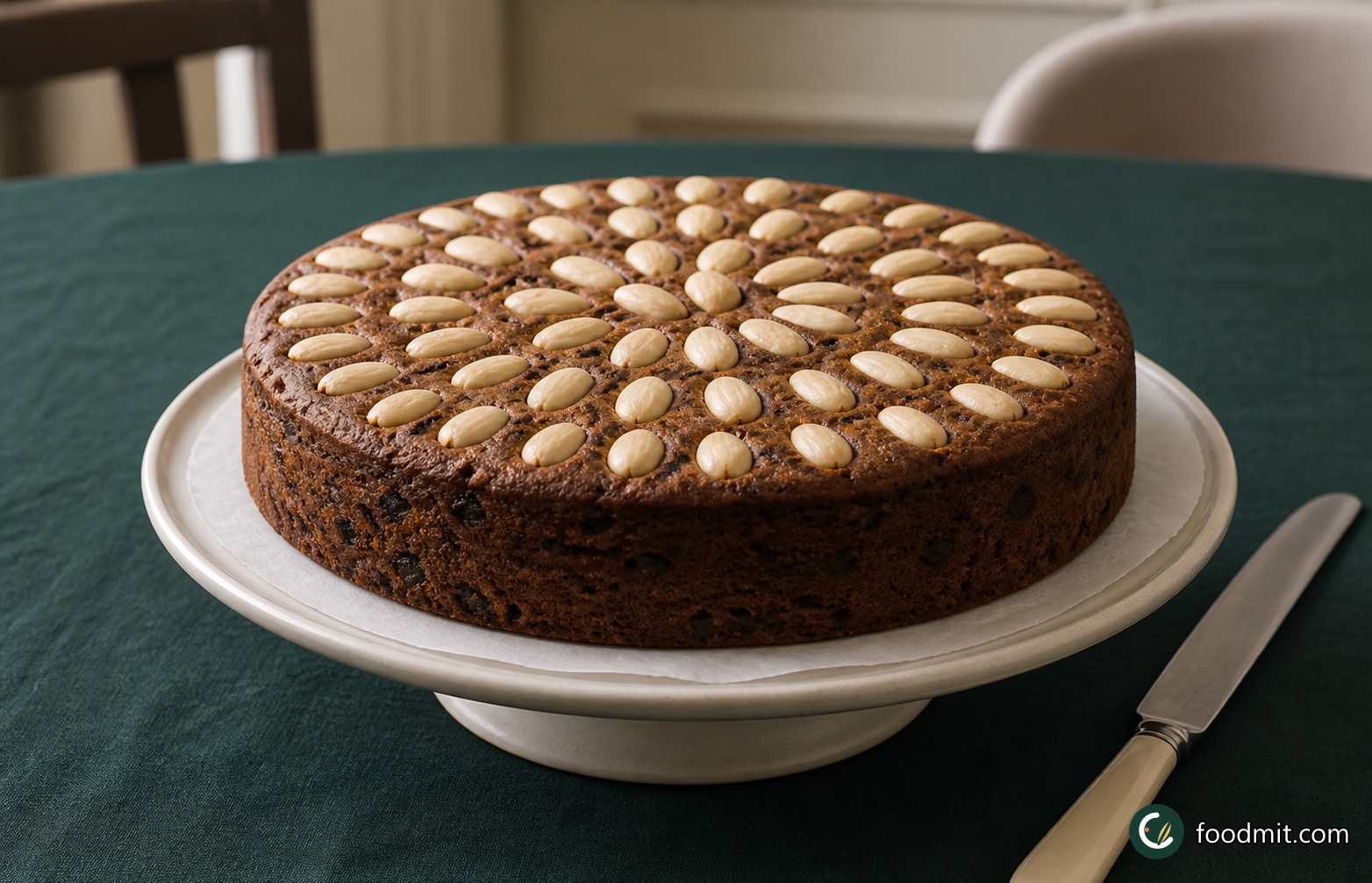
Present the whole uniced cake on a low, plain cake stand so the rings of blanched almonds remain the focus. A sheet of fresh parchment beneath it makes transferring the rich cake easier and keeps the stand tidy. Bring it to the holiday table whole, then use a sharp knife to cut modest slices; the fruit-packed crumb is satisfying in small portions, and the dark cake with its pale almond pattern already looks finished without extra decoration.
Tea-Time Slices
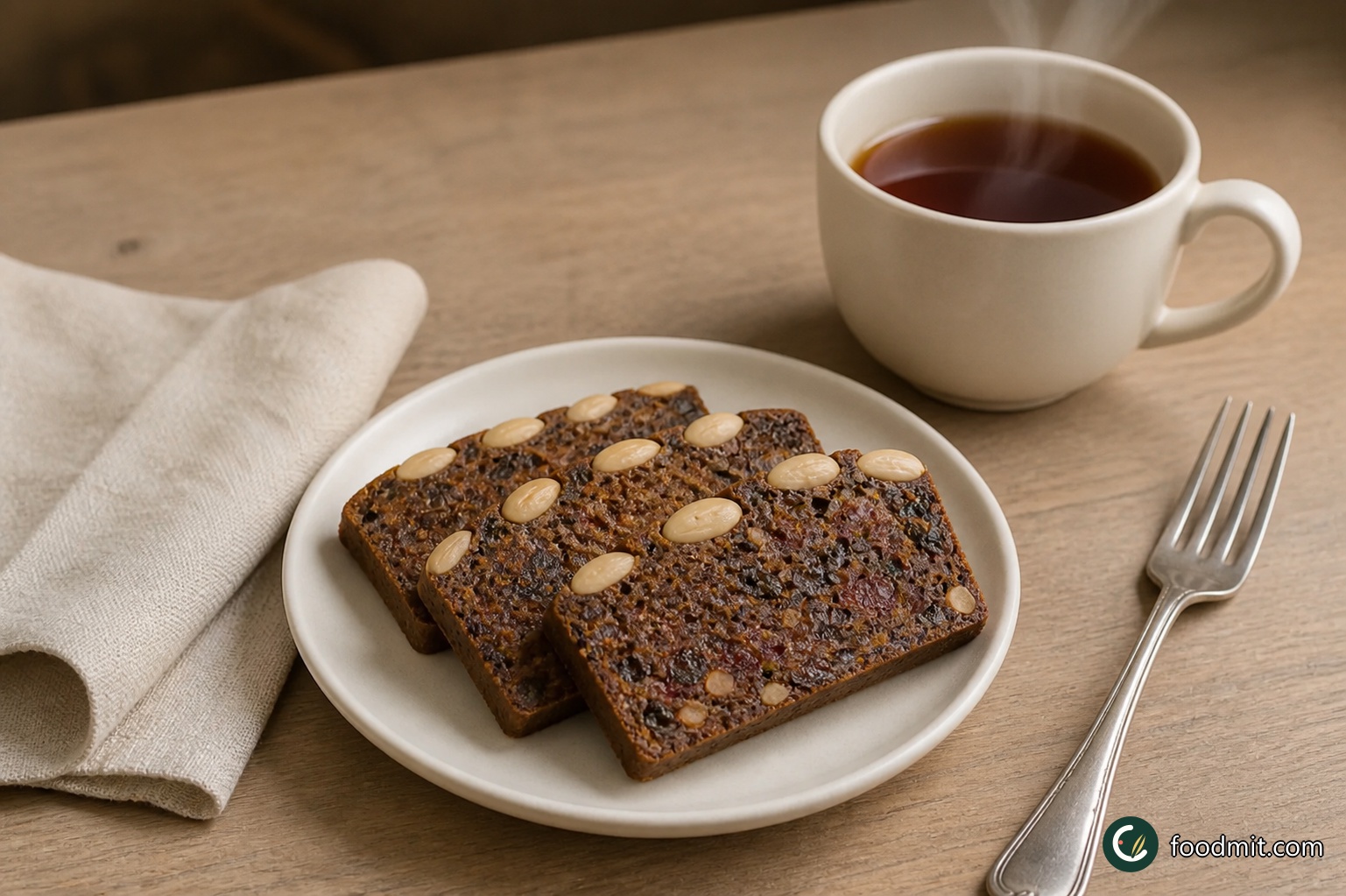
For a quieter serving, cut the cake into thin slices and arrange two or three slightly overlapping pieces on small dessert plates. Serve them with hot tea or coffee and let the citrus, spice, and brandy carry the flavor rather than adding a rich sauce. A small fork and a simple cloth napkin suit the close, moist crumb. This presentation works especially well when the cake has been made ahead and you want to bring out only as much as the table will eat.
Festive Gift Tin
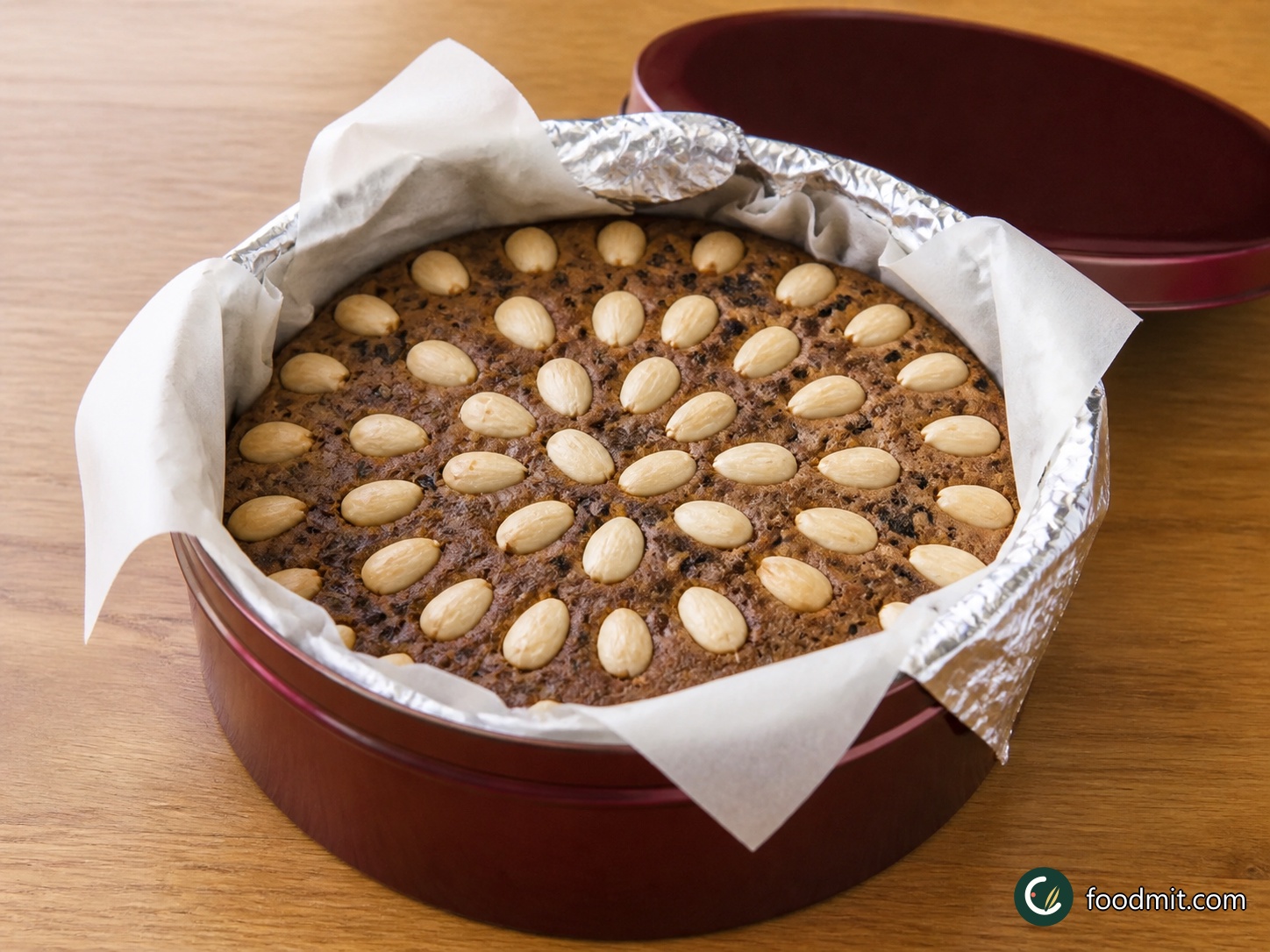
To give the cake, keep it in its parchment-lined foil and place it snugly in a clean, airtight presentation tin. Add a separate note explaining that it contains almonds and has been fed with Armagnac or brandy, and mention whether the blanched-almond top is present. The recipient can unwrap it onto a small board and slice it at the table. This approach protects the cake in transit, respects its make-ahead character, and turns the careful wrapping into part of the presentation.
Let’s cook Classic Christmas Cake together
Check off your ingredients, follow each step, and start the timers when you are ready.
Get everything ready
Step-by-step with timers
Soak the fruit overnight
The night before baking, combine the currants, sultanas, raisins, chopped glacé cherries, and chopped candied peel in a large bowl. Pour over the 100 ml brandy and turn everything thoroughly so the fruit is evenly moistened. Cover the bowl with a clean cloth and leave it for at least 12 hours.
Prepare the tin and oven
When you are ready to bake, heat a conventional oven to 140°C, gas mark 1. If the fan cannot be switched off, reduce the setting by 20°C and also follow the oven manufacturer's guidance. Grease a 20 cm round loose-based cake tin, line its base and sides, then tie a double band of brown paper securely around the outside to shield the edge during the long bake.
Beat the cake mixture
Sift the flour, salt, nutmeg, and mixed spice into a very large mixing bowl. Add the dark brown sugar, eggs, gently warmed treacle, and spreadable butter. Beat with an electric hand whisk until the mixture is evenly blended, smooth, and aerated, scraping the bowl as needed so no flour remains at the bottom.
Fold in fruit, nuts, and zest
Fold the soaked fruit into the batter gradually, including any brandy left in the bowl. Follow with the chopped skin-on almonds, then the finely grated lemon and orange zests. Use a large spoon and turn the heavy mixture patiently until the fruit and nuts are spread evenly from top to bottom.
Fill and finish the tin
Spoon the mixture into the prepared tin, pressing it gently into the edges and leveling the surface with the back of the spoon. If the cake will be served without marzipan and icing, arrange the whole blanched almonds lightly in concentric circles over the top; omit them if you plan to ice it later.
Protect and slow-bake
Cut a double square of baking parchment large enough to span the tin and make an opening about 3 cm wide in its center. Rest this cover on the rim of the brown-paper collar so it sits above, rather than on, the batter. Bake on the oven's lowest shelf and do not open the door for 4 hours. The center is ready when it springs back under a light fingertip; if it does not, continue baking for another 30 to 45 minutes and check toward the end.
Cool the cake
Leave the baked cake in its tin for 30 minutes so the structure can settle. Carefully release it, remove the lining, and transfer it to a wire rack. Let it become completely cold before adding any spirit or wrapping it; enclosing it while warm would trap unwanted condensation.
Feed, wrap, and store
Once cold, use a cocktail stick to make small holes over both the top and bottom. Spoon over 2 tablespoons of Armagnac or brandy, allowing it to soak in rather than pool. Wrap the cake in foil lined with baking parchment and place it in an airtight tin. Add another modest feeding at occasional intervals until you are ready to ice or serve it.
Classic Christmas Cake recipe Inspired by Delia Smith
The story behind Classic Christmas Cake
Recipe notes by Emily
The Night Before
Delia Smith is one of the chefs whose recipes make me slow down and trust the order of things, so I approached this cake as a fan rather than trying to streamline it. The night before baking, I weighed the currants, sultanas, raisins, cherries, and peel into my largest bowl and stirred in the brandy. At first the fruit looked glossy only in patches, but a thorough turn of the spoon distributed the liquid; by morning it had settled into a fragrant, plump mixture. That quiet overnight stage changed the whole bake for me. I was not chasing moisture later or forcing a dry mass together at the last minute. I also prepared the tin carefully before mixing the batter. Lining the base and sides and tying the brown-paper band around the outside felt pleasantly traditional, yet it made perfect sense once I considered how long the cake would remain in the oven. This was where I most appreciated Delia's practical style: every bit of preparation had a job, and none of it called for flashy equipment.
Patience on Baking Day
On baking day, the batter came together more easily than its long ingredient list suggested. Warming the treacle just enough to loosen it helped it disappear into the butter, eggs, sugar, and spiced flour, and folding the soaked fruit in a little at a time kept the mixing manageable. Once the tin was full, the cake felt substantial enough to test both my spoon and my patience. I used the parchment cover, put the tin on the lowest shelf, and left the oven door alone for the full four hours. That restraint mattered: when I finally checked, I could judge the center by touch without repeatedly losing heat. Mine needed more time, and I waited until the middle pushed back lightly rather than relying only on the clock. After cooling, I fed it with brandy and wrapped it as directed. The finished slices were dense without seeming leaden, moist from the soaked fruit, and balanced by citrus and spice. I especially liked the pale almonds against the dark top. Cooking this particular recipe made me admire how Delia builds reliability from small safeguards—the paper collar, the parchment lid, and the clear final touch test—rather than from complicated technique.