
Home-made Christmas Mincemeat Recipe Inspired by Delia Smith
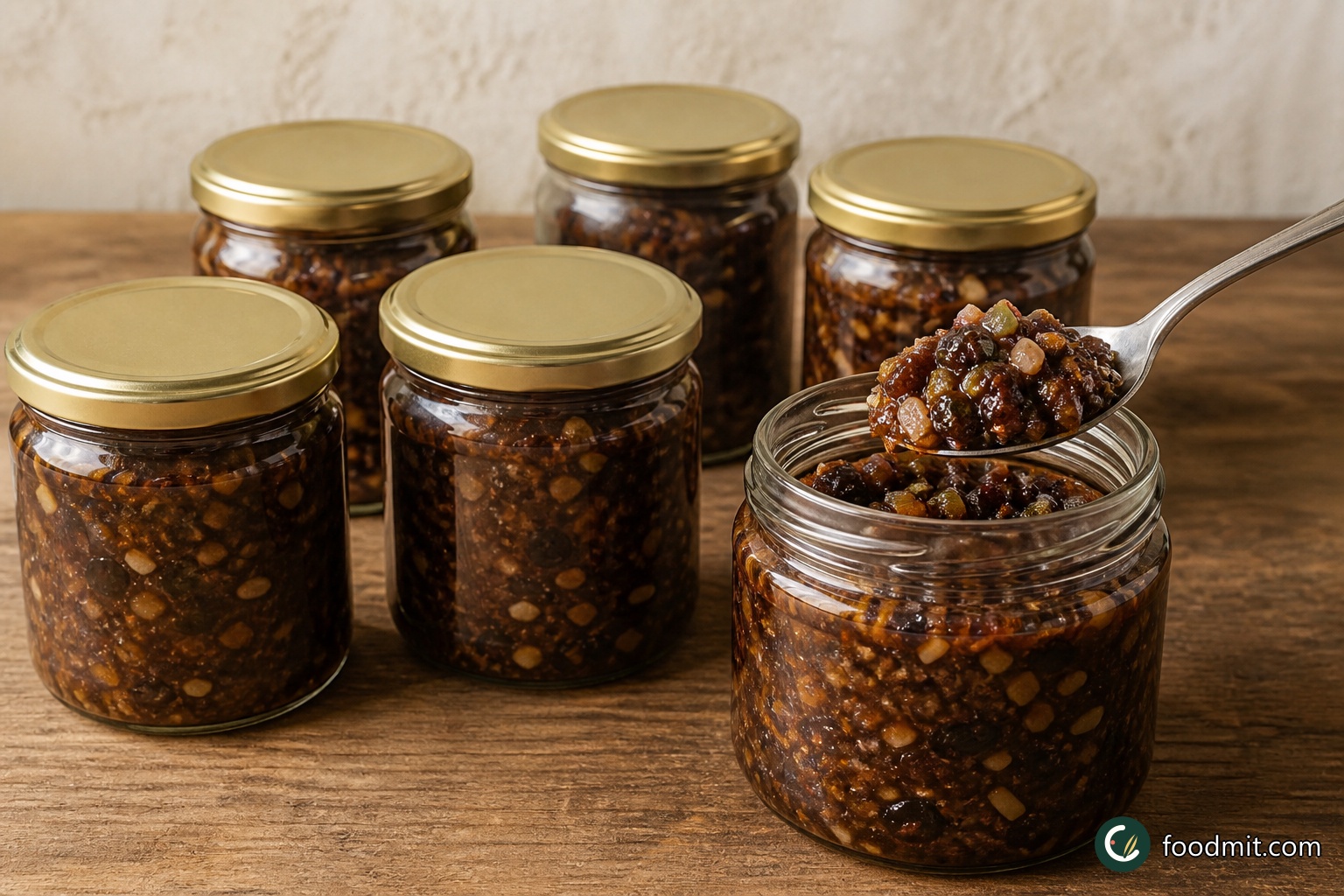
I have long admired Delia Smith for recipes that explain the quiet bit of kitchen logic behind a traditional result. When I finally made her Home-made Christmas Mincemeat, I understood why this one has such a loyal following: the work is mostly careful chopping and mixing, yet the finished jars feel wonderfully festive and substantial. I followed her method at home, and these notes reflect what I saw in my own bowl. The mixture is dark, generous and packed with contrast. Raisins, sultanas and currants bring concentrated sweetness; Bramley apple adds a fresher, tart edge; and chopped candied peel, orange and lemon keep the richness lively. Slivered almonds give occasional bite, while mixed spice, cinnamon and nutmeg make the aroma unmistakably wintry. The brandy is noticeable without obscuring the fruit, and the finished texture is moist, glossy and well bound rather than runny. The clever part is the low, slow oven treatment. After the fruit rests for twelve hours, the covered bowl spends three hours at 120°C, allowing the shredded suet to melt and work through every piece. Mine looked alarmingly loose when it first came out, with liquid fat surrounding the fruit, but that was exactly the stage to expect. Stirring occasionally during cooling redistributed the fat until it formed a fine coating, so the apple juices stayed held within the mixture. This makes six 350 ml jars, enough for a good stretch of Christmas baking or for sharing a sealed jar with another baker. I like having it ready before pastry day because all the fruit preparation is already done; the jar only needs opening and stirring before use. Keep the sealed mincemeat in a cool, dark cupboard and aim to enjoy it within a year, when the citrus, spice and brandy are still at their most expressive.
 Foodmit
recipe
Per 1 jar (about 350 ml)
Nutrition for Home-made Christmas Mincemeat
- Saturated fat
- 20 g
- Fiber
- 11 g
- Sugars
- 180 g
- Sodium
- 70 mg
Estimated values. Nutrition values are approximate. More precise calculations will be added in a future update.
How to make Home-made Christmas Mincemeat
-
Step 1
Combine the fruit and spices
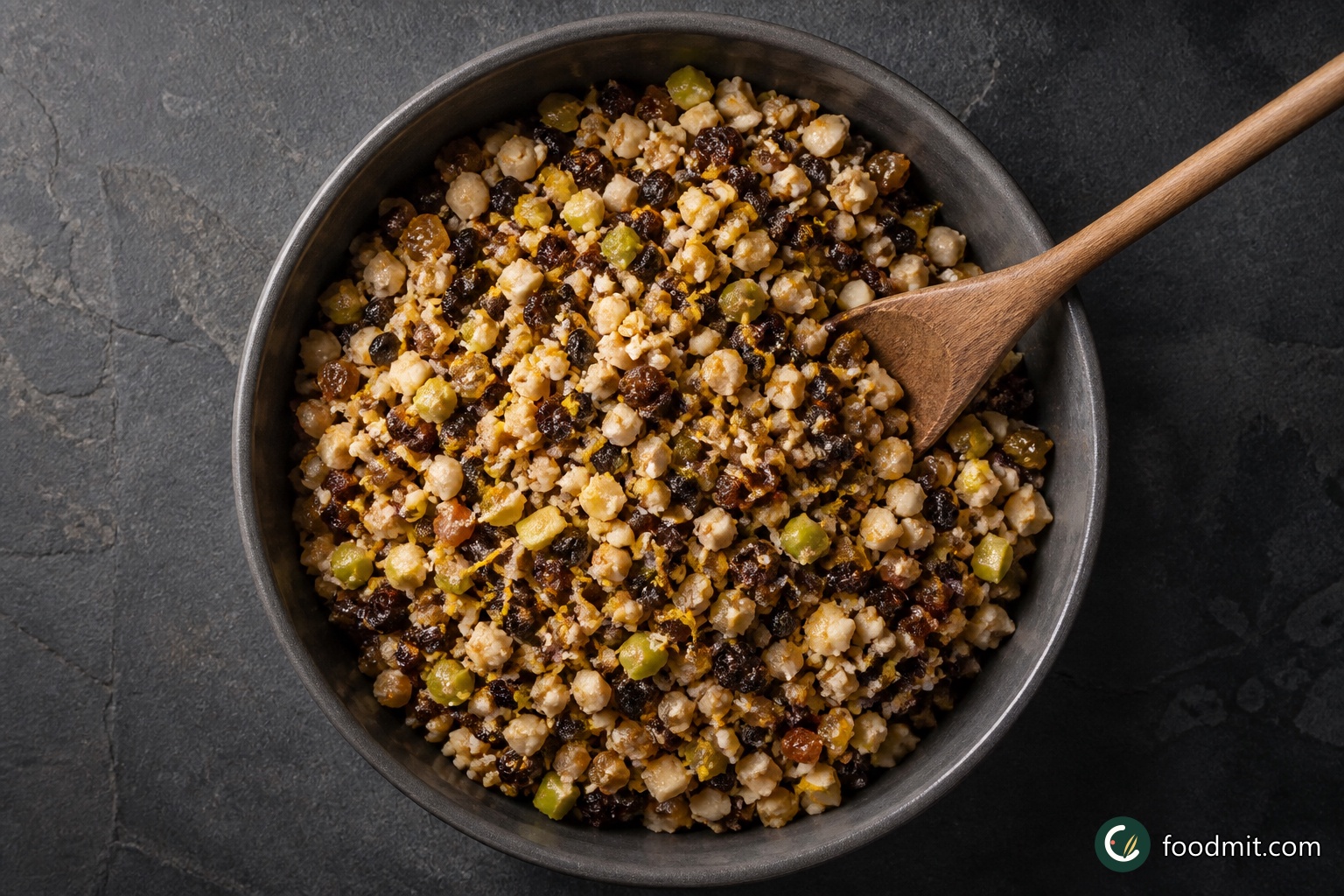
Put the chopped Bramley apples, slivered almonds, mixed spice, cinnamon, nutmeg, shredded suet, raisins, sultanas, currants, candied peel, brown sugar, orange zest and juice, and lemon zest and juice into a large heatproof mixing bowl. Keep the brandy aside. Turn everything over thoroughly, scraping right to the bottom, until the three dried fruits are evenly distributed and no dry pockets of sugar or spice remain.
-
Step 2
Rest the mixture overnight
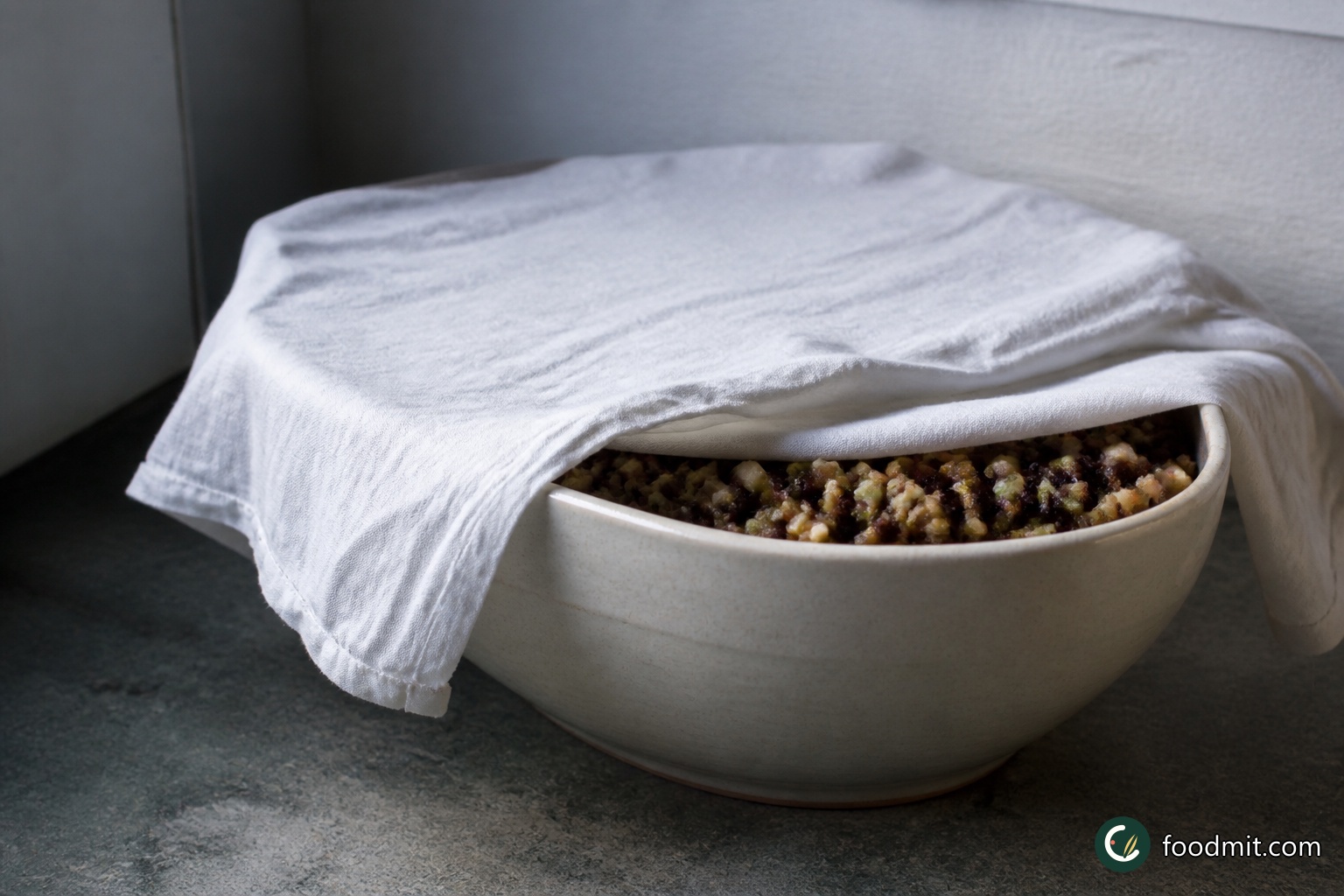
Cover the bowl with a clean cloth and leave it in a cool place for 12 hours or overnight. This unhurried rest gives the fruit time to absorb the citrus juices and lets the spice spread through the mixture. At the end of the rest, the fruit should appear moister, the sugar should be beginning to dissolve and the contents should smell noticeably more integrated.
-
Step 3
Warm slowly in the oven
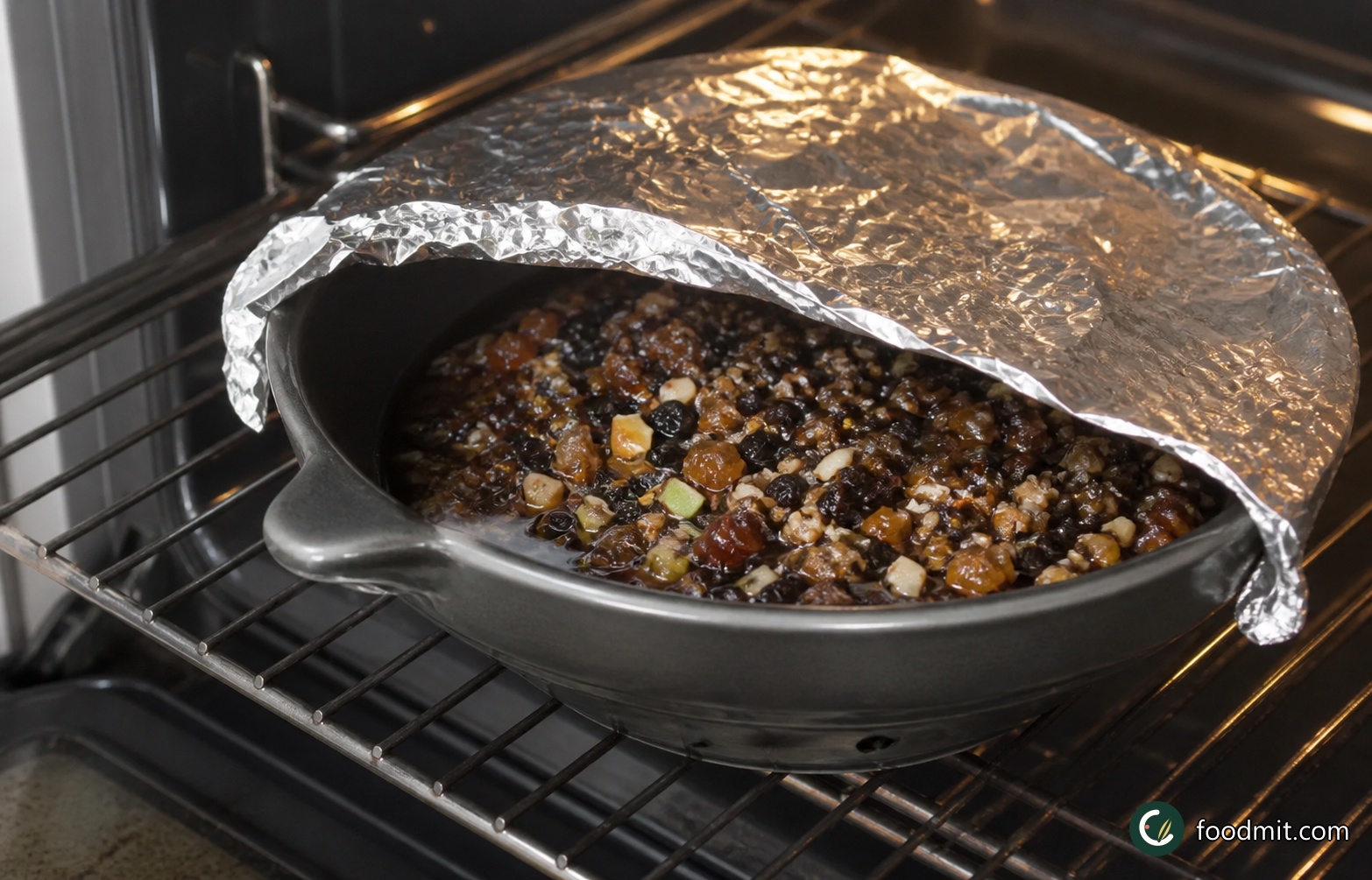
Preheat a conventional oven to 120°C, gas mark 1/4; for a fan oven, use about 100°C. Loosely cover the bowl with foil and bake for 3 hours. The low heat should gradually melt the suet without aggressively cooking the fruit. When the bowl comes out, the mixture will be very loose and glossy, with a conspicuous pool of melted fat around the fruit. That appearance is correct, so do not drain anything away.
-
Step 4
Stir while cooling
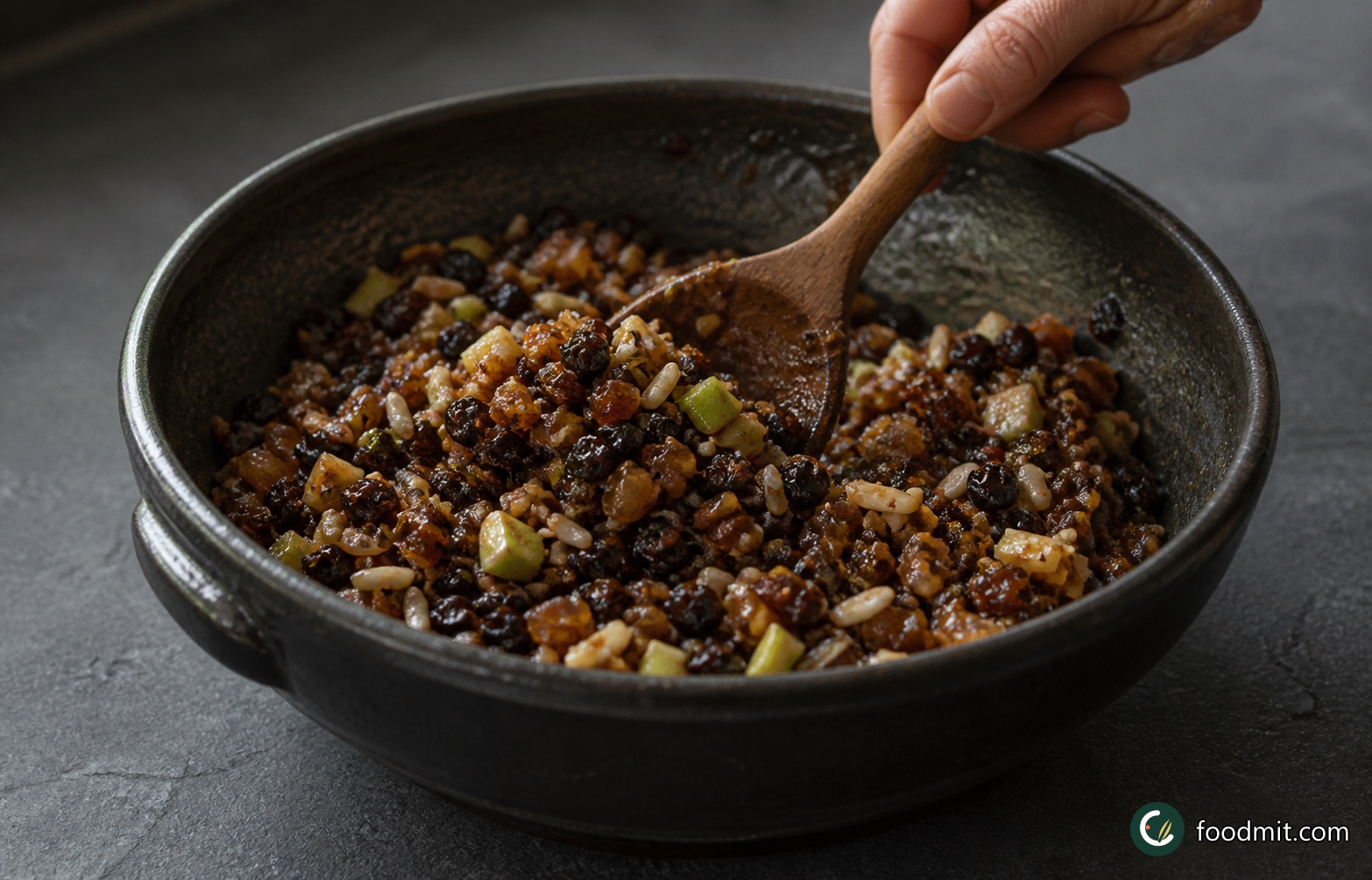
Leave the mincemeat in its bowl and stir it gently from time to time as it cools, bringing the wetter mixture at the bottom up through the fruit. With each stir, the melted suet will become less separate and will begin to coat the apple and dried fruit. Continue until the mixture is completely cold, cohesive and spoonable, with no broad layer of liquid fat remaining on the surface.
-
Step 5
Sterilize the preserving jars
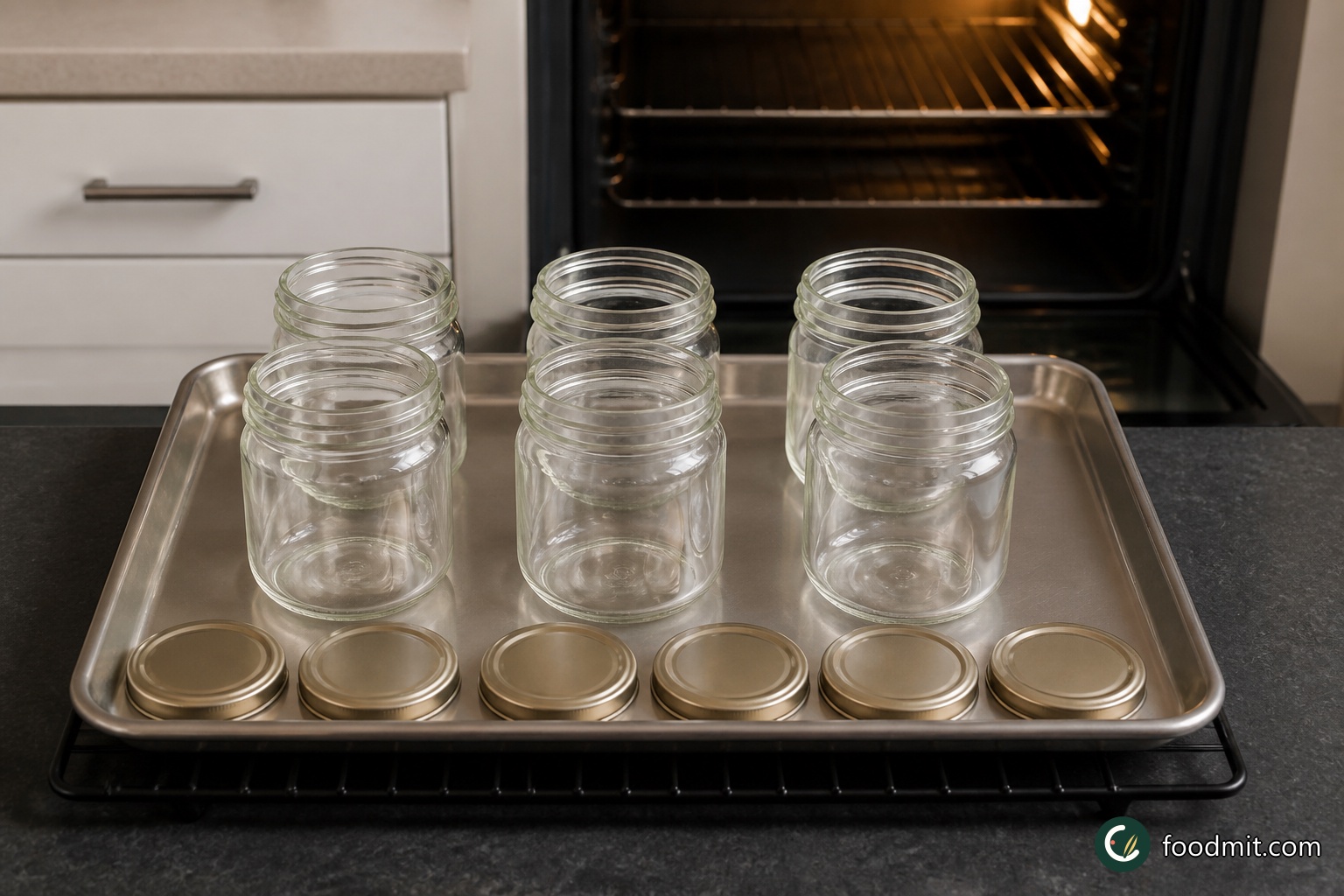
Wash six 350 ml preserving jars and their lids in warm, soapy water, rinse them well and dry them thoroughly with a clean tea towel. Set the jars and lids on a baking tray and heat them for 5 minutes in an oven at 180°C, gas mark 4. Handle the hot glass carefully and place it on a heatproof surface while it cools. Have six clean waxed discs ready for sealing.
-
Step 6
Add the brandy and seal
Once the mincemeat is fully cold, pour in the brandy and stir patiently until it is evenly worked through the whole bowl. Divide the mixture among the six sterilized 350 ml jars, distributing the fruit and juices evenly. Place a waxed disc over the surface of each filled jar and close the lids securely. Label the jars and store them in a cool, dark cupboard; although the preserve keeps very well, its quality is at its best when used within a year.
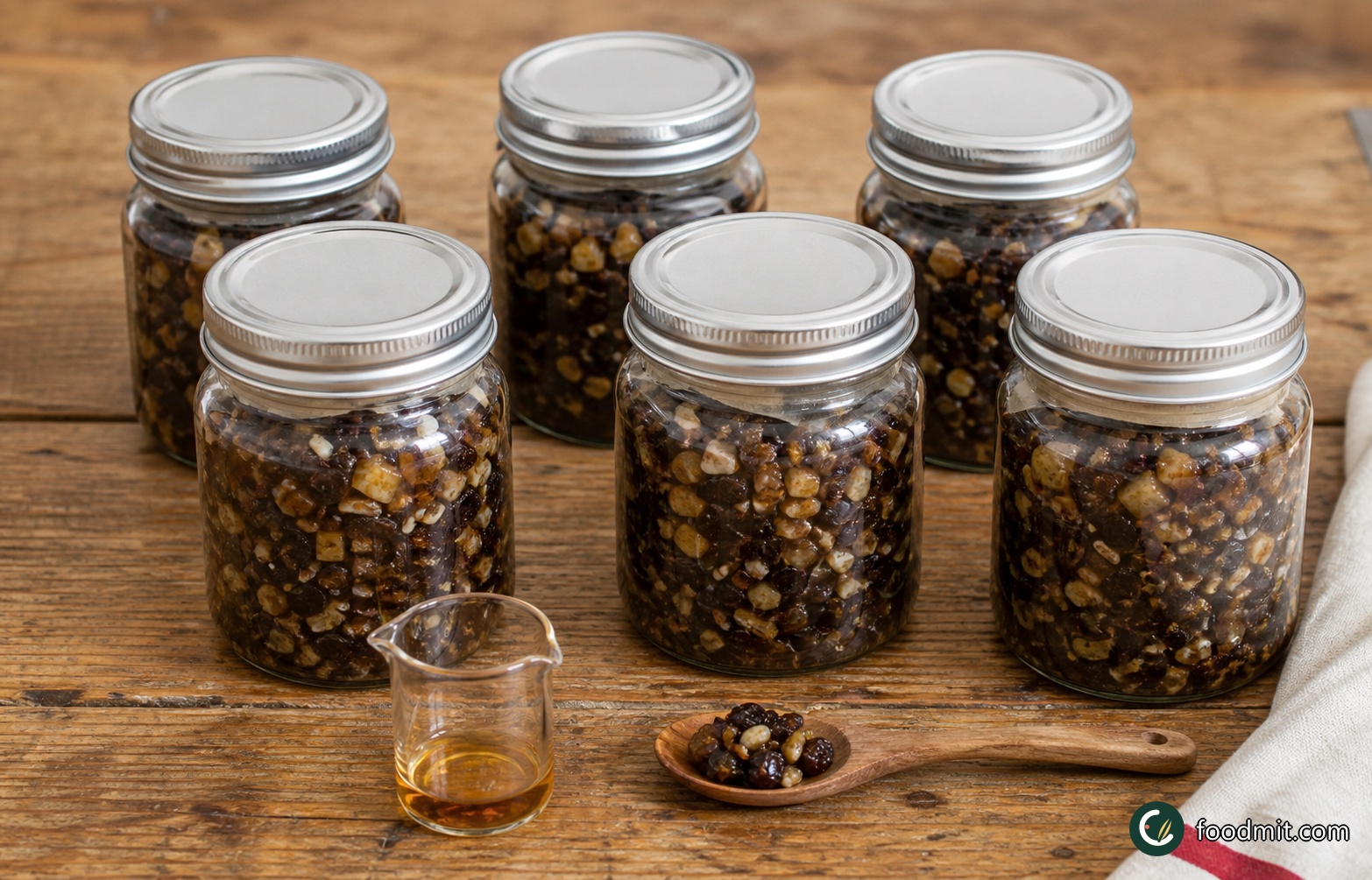
Do not pour off the fat when the bowl leaves the oven. It should look very loose at that point; gentle stirring as it cools is what turns the melted suet into an even coating around the fruit.
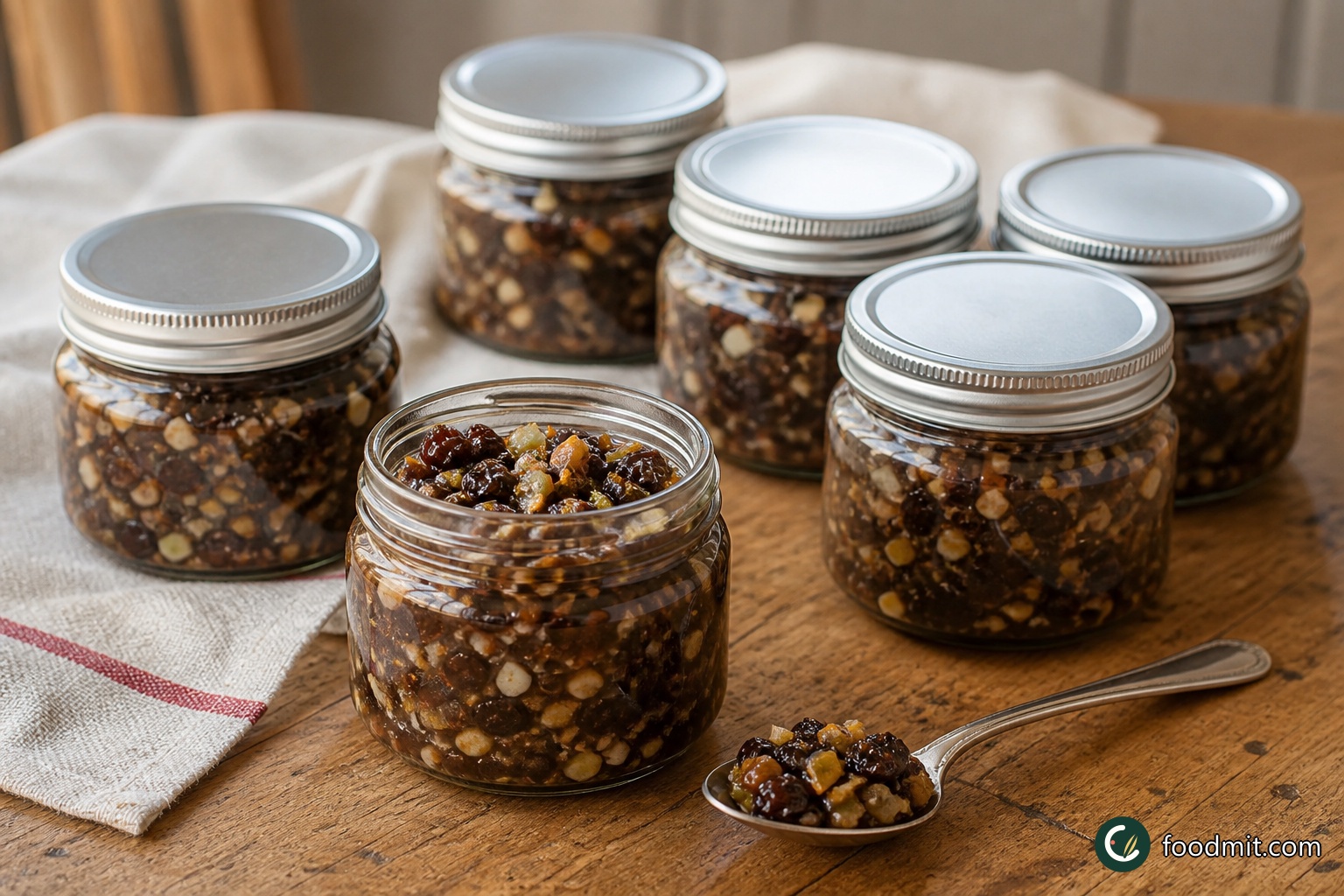
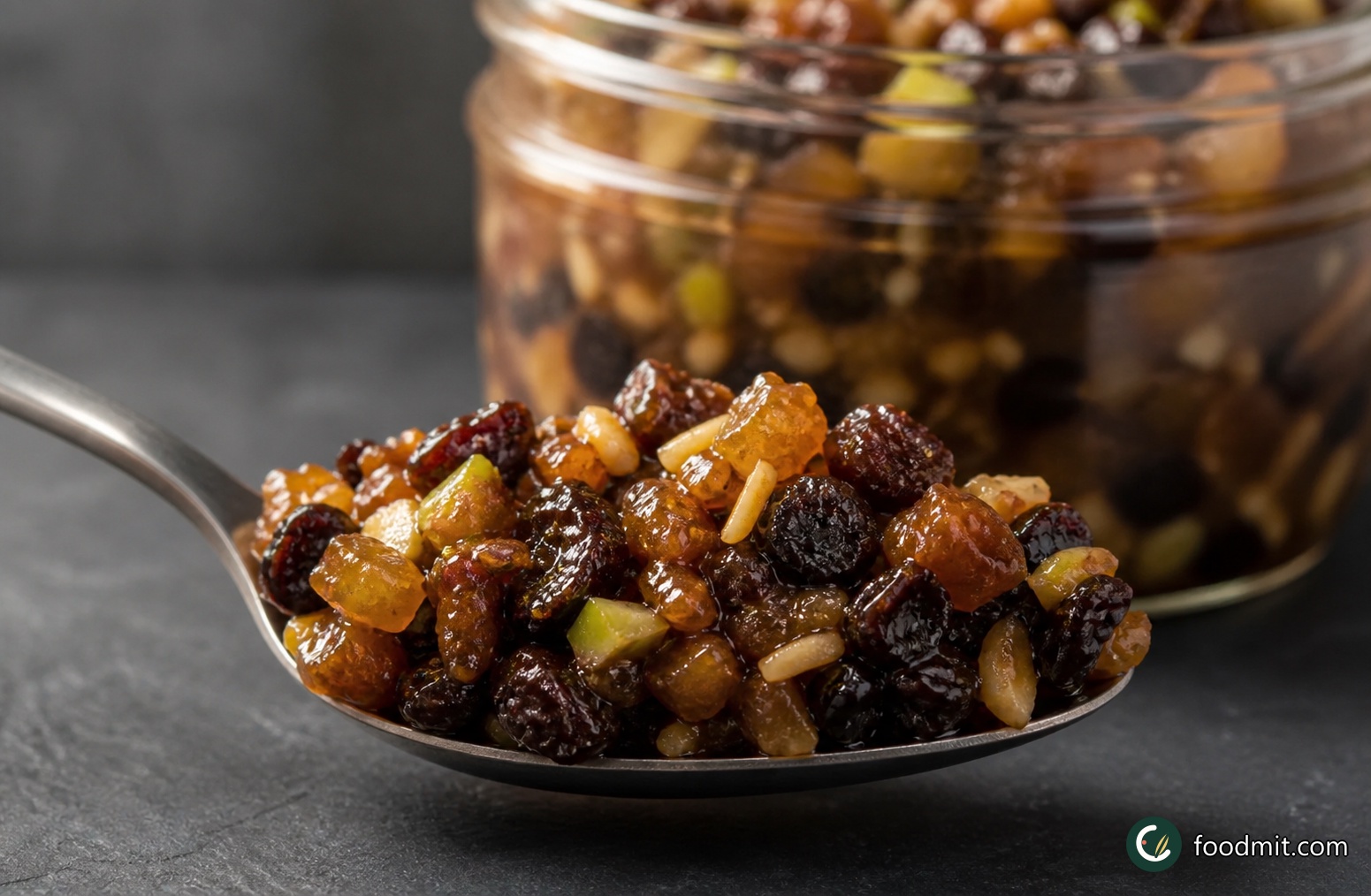
Home-made Christmas Mincemeat, ready to serve
Serving ideas for Home-made Christmas Mincemeat
Choose a presentation that fits the occasion, from relaxed sharing to individual plates.
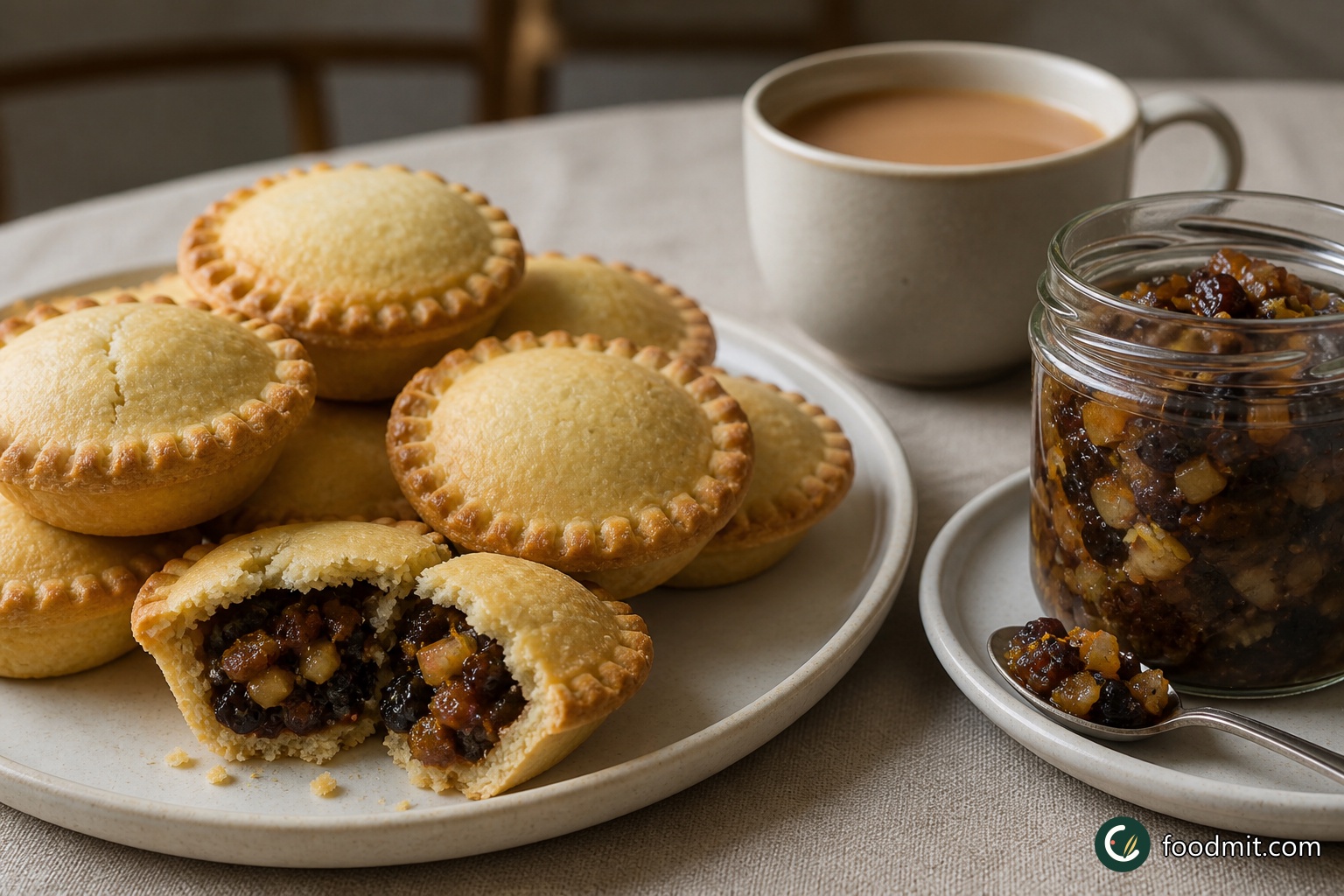
Classic mince-pie tea table
Set an open jar on a small plate with a clean teaspoon, and use the mincemeat as the fruit filling for a batch of traditional mince pies. For serving, arrange the baked pies on a plain ceramic platter so the dark filling and pale pastry remain the focus, with tea or coffee alongside. This presentation suits an afternoon Christmas gathering and lets the citrus-spice aroma come through as the pies are broken open. Keep the remaining jar covered once everyone has been served.
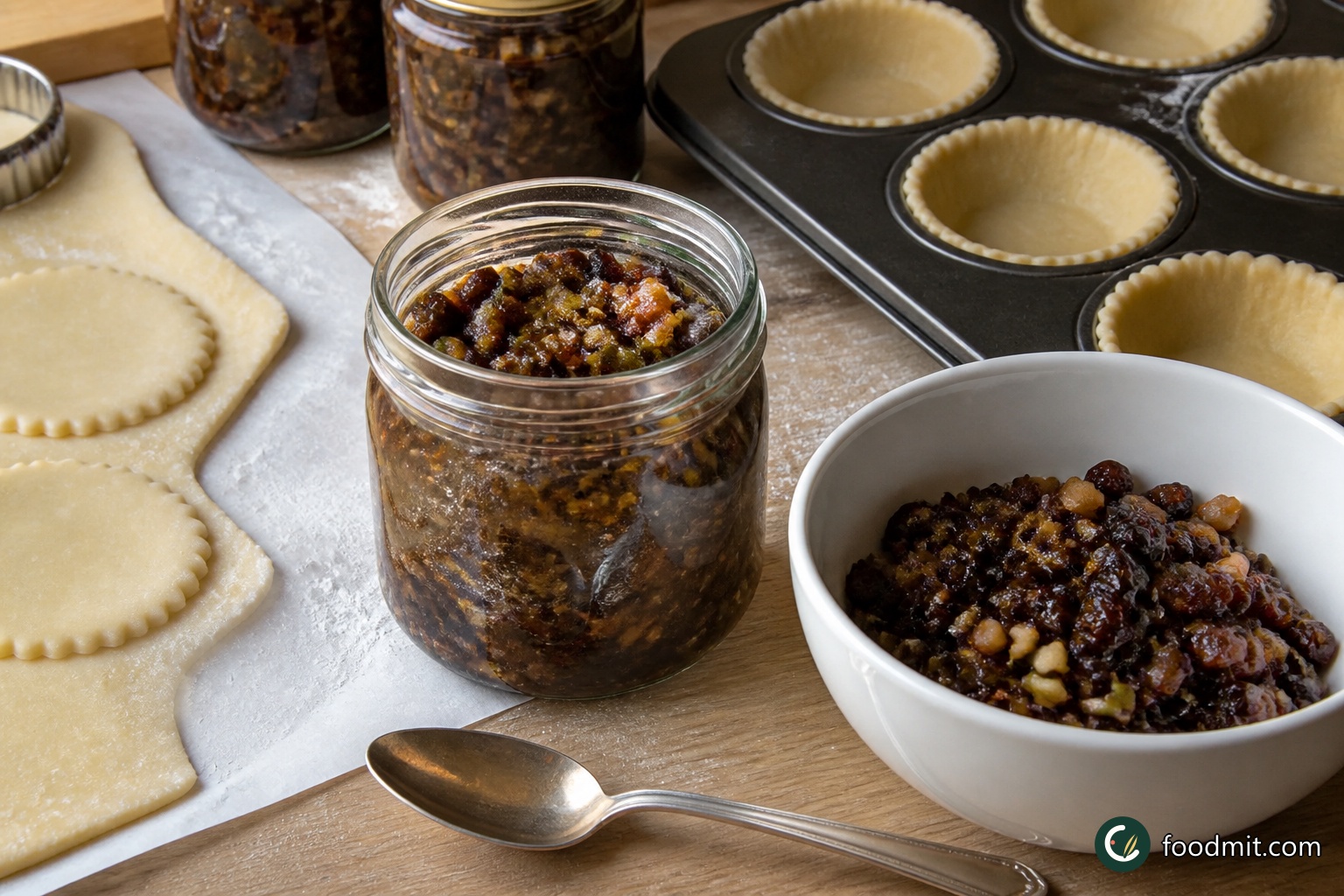
Christmas baking-day setup
Bring one jar to the work surface beside rolled pastry, a teaspoon and the prepared tins, keeping the rest of the batch sealed in the cupboard. The mincemeat's dense, spoonable texture makes it easy to portion neatly without excess liquid running across the pastry. A shallow white bowl can hold the amount needed for the session, while the jar stays clean at the rim. This practical arrangement works well when several trays are being assembled for a family holiday bake.
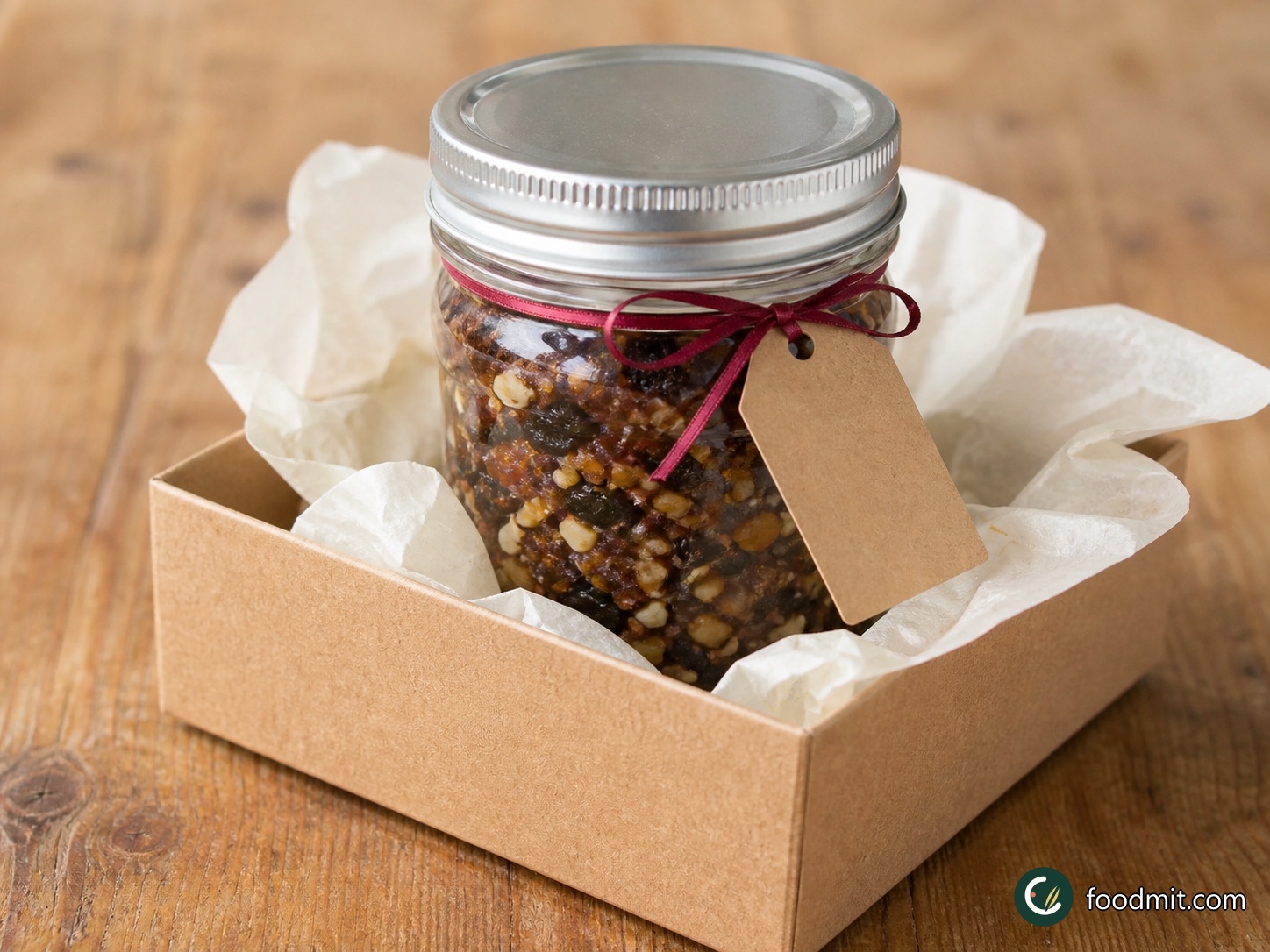
Sealed jar for sharing
Present one completely cooled, tightly sealed 350 ml jar with a simple date label and a note that it should be kept in a cool, dark cupboard. A waxed disc under the lid is part of the original storage method, so leave it in place rather than dressing the jar in a way that interferes with the seal. Set the jar in a small gift bag or box for another keen baker. It is a useful Christmas offering because the recipient can choose when to open it for their own pastry day.
Let’s cook Home-made Christmas Mincemeat together
Check off your ingredients, follow each step, and start the timers when you are ready.
Get everything ready
Step-by-step with timers
Combine the fruit and spices
Put the chopped Bramley apples, slivered almonds, mixed spice, cinnamon, nutmeg, shredded suet, raisins, sultanas, currants, candied peel, brown sugar, orange zest and juice, and lemon zest and juice into a large heatproof mixing bowl. Keep the brandy aside. Turn everything over thoroughly, scraping right to the bottom, until the three dried fruits are evenly distributed and no dry pockets of sugar or spice remain.
Rest the mixture overnight
Cover the bowl with a clean cloth and leave it in a cool place for 12 hours or overnight. This unhurried rest gives the fruit time to absorb the citrus juices and lets the spice spread through the mixture. At the end of the rest, the fruit should appear moister, the sugar should be beginning to dissolve and the contents should smell noticeably more integrated.
Warm slowly in the oven
Preheat a conventional oven to 120°C, gas mark 1/4; for a fan oven, use about 100°C. Loosely cover the bowl with foil and bake for 3 hours. The low heat should gradually melt the suet without aggressively cooking the fruit. When the bowl comes out, the mixture will be very loose and glossy, with a conspicuous pool of melted fat around the fruit. That appearance is correct, so do not drain anything away.
Stir while cooling
Leave the mincemeat in its bowl and stir it gently from time to time as it cools, bringing the wetter mixture at the bottom up through the fruit. With each stir, the melted suet will become less separate and will begin to coat the apple and dried fruit. Continue until the mixture is completely cold, cohesive and spoonable, with no broad layer of liquid fat remaining on the surface.
Sterilize the preserving jars
Wash six 350 ml preserving jars and their lids in warm, soapy water, rinse them well and dry them thoroughly with a clean tea towel. Set the jars and lids on a baking tray and heat them for 5 minutes in an oven at 180°C, gas mark 4. Handle the hot glass carefully and place it on a heatproof surface while it cools. Have six clean waxed discs ready for sealing.
Add the brandy and seal
Once the mincemeat is fully cold, pour in the brandy and stir patiently until it is evenly worked through the whole bowl. Divide the mixture among the six sterilized 350 ml jars, distributing the fruit and juices evenly. Place a waxed disc over the surface of each filled jar and close the lids securely. Label the jars and store them in a cool, dark cupboard; although the preserve keeps very well, its quality is at its best when used within a year.
The story behind Home-made Christmas Mincemeat
Recipe notes by Emily
Following a trusted Christmas recipe
I came to this recipe because Delia Smith has a gift for making old-fashioned methods feel practical rather than mysterious. The ingredient list is generous, but once I had the apple, peel and almonds chopped, the bowl came together easily. I took my time mixing from the bottom so no pockets of brown sugar or spice remained. Even before the overnight rest, the scent of fresh citrus against the dried fruit made the kitchen feel like Christmas preparation had properly begun. What impressed me most was how little fuss the recipe asked for after that first careful mix.
Trusting the glossy stage
The moment that tested my nerve came after three hours in the oven. The fruit was sitting in a shiny layer of melted fat, and my first instinct was to wonder whether something had split. I remembered that this appearance was part of the method, left everything in the bowl and stirred it gently as it cooled. Each pass changed the texture: the separate-looking fat became less obvious and the fruit grew evenly glossy. By the time it was cold, the mixture looked cohesive and spoonable. That transformation made the low-temperature technique make complete sense to me.
Finishing the jars
I waited until the mincemeat was fully cold before stirring in the brandy, then divided it among the six sterilized jars and sealed each one with a waxed disc. The finished batch smelled deeper than it had the night before, but the orange and lemon still came through clearly. I labelled the jars with the date and put them in a cool, dark cupboard. Having several jars ready feels genuinely useful rather than excessive: there is enough for repeated holiday baking, while the smaller containers stay sealed until they are needed.