
Last-minute Brandied Christmas Cake Recipe Inspired by Delia Smith
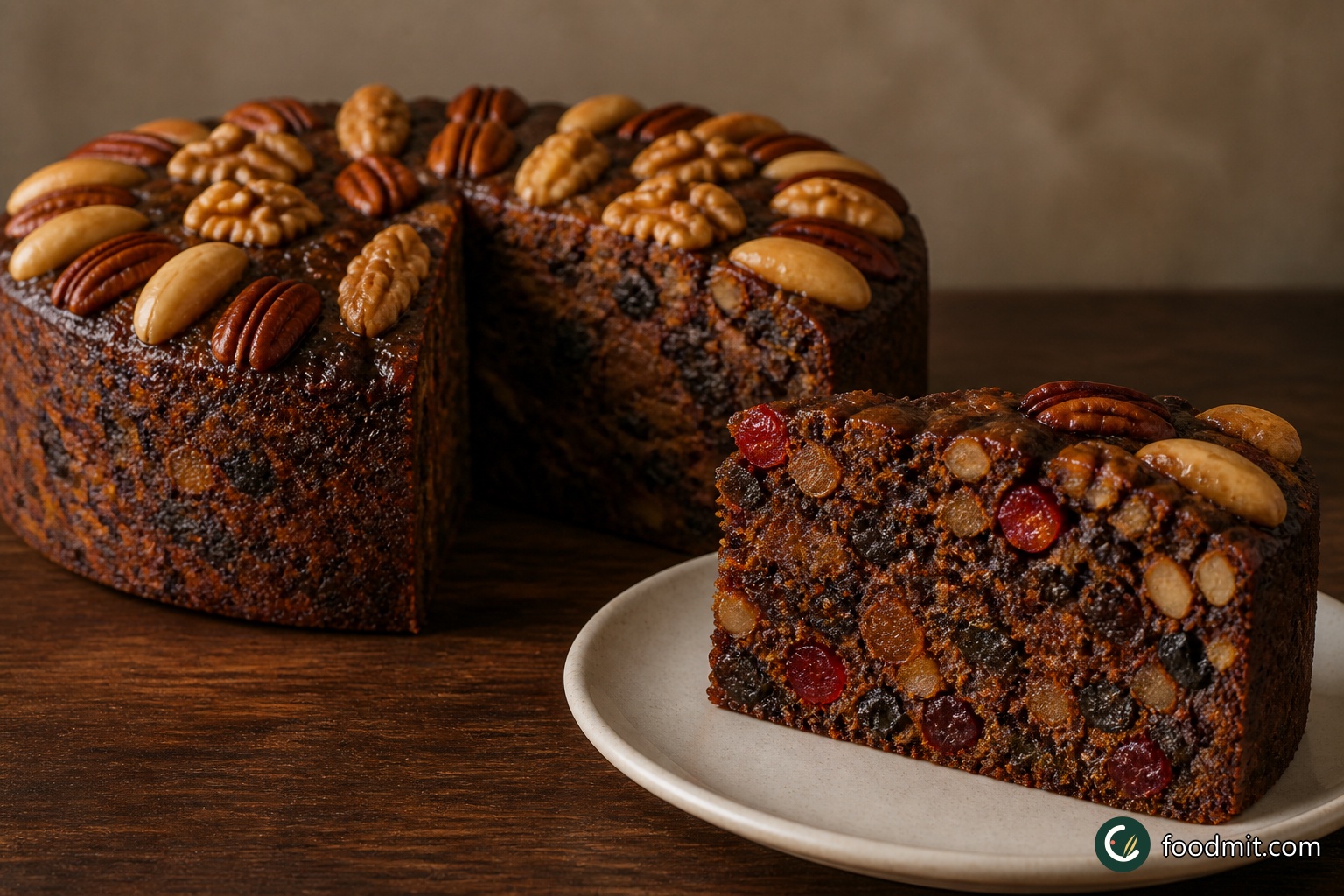
I have long trusted Delia Smith with traditional British baking, so I was delighted to discover that her Last-minute Brandied Christmas Cake does not depend on months of planning. I made it when the festive season had already crept up on me, and it delivered the character of a carefully prepared fruit cake through a much more approachable method. The crumb is dark, moist, and generously packed with brandy-soaked fruit. Mincemeat brings sweetness and richness, while prunes, cherries, mixed fruit, citrus zest, and warm spice give every slice real depth. I especially liked the contrast from the nuts: some are folded through the cake, and the whole nuts on top become fragrant and lightly toasted in the oven. The most useful part of the method is its simplicity. Once the fruit has soaked, nearly everything for the batter goes into one large bowl and is beaten together for about a minute. The parchment cover matters because it shields the fruit and nuts during the long bake; the small opening lets heat circulate while the surface stays protected. I served the cake in modest slices after it had cooled completely and the warm apricot-brandy glaze had set over the nuts. It feels festive without needing a heavy layer of icing, and its ability to remain moist for three to four weeks makes it particularly helpful when Christmas preparations are already competing for attention.
 Foodmit
recipe
Per 1 slice (about 90 g)
Nutrition for Last-minute Brandied Christmas Cake
- Saturated fat
- 6 g
- Fiber
- 3 g
- Sugars
- 31 g
- Sodium
- 120 mg
Estimated values. Nutrition values are approximate. More precise calculations will be added in a future update.
How to make Last-minute Brandied Christmas Cake
-
Step 1
Soak the fruit
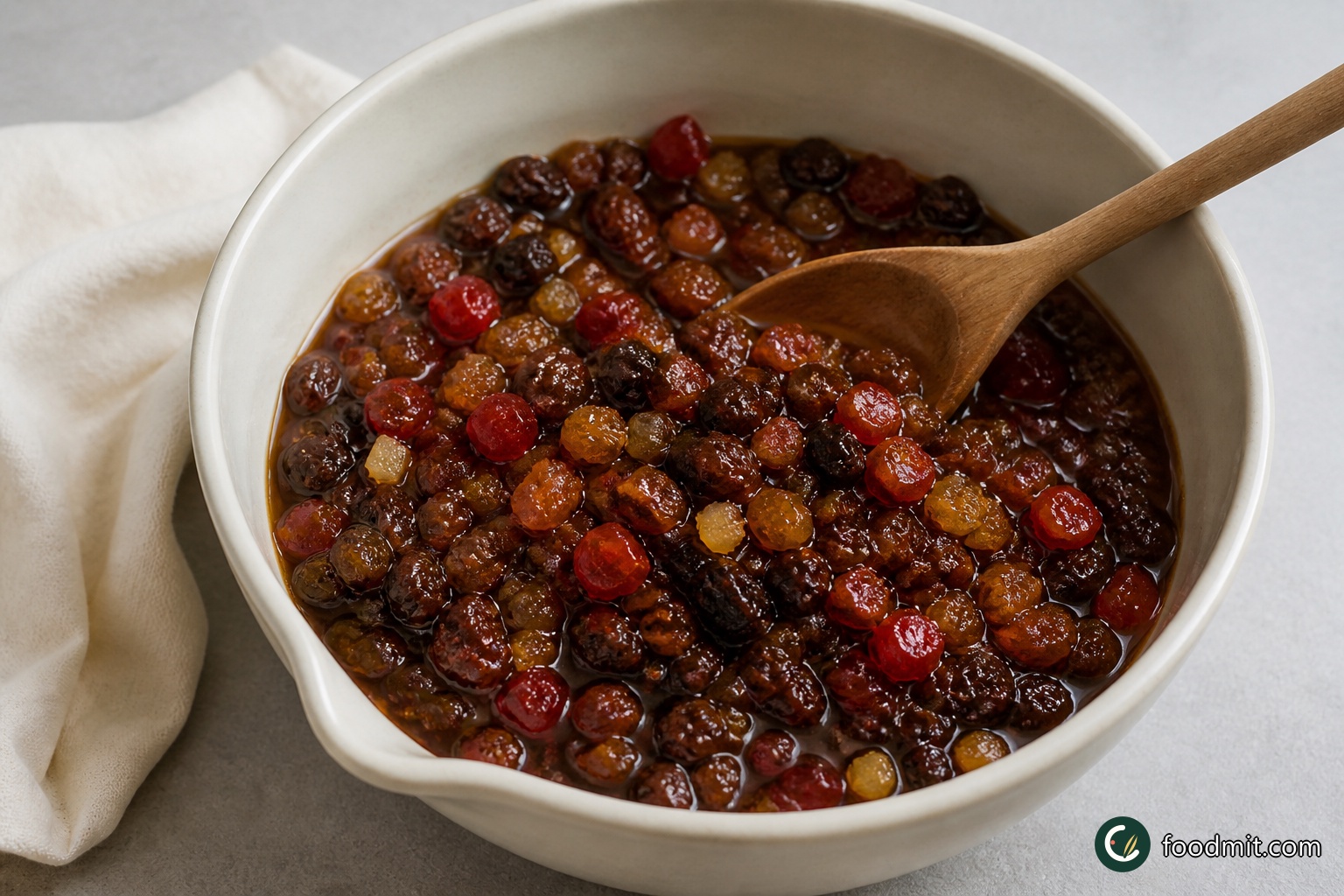
Several hours before baking, or the evening before, put the 150 ml brandy, mincemeat, chopped prunes, quartered glacé cherries, dried mixed fruit, and mixed peel in a bowl. Stir thoroughly so the brandy reaches all the fruit, cover the bowl with a clean cloth, and leave it in a cool place for a few hours or overnight. The mixture should look evenly moistened before it goes into the batter.
-
Step 2
Prepare the oven and tin
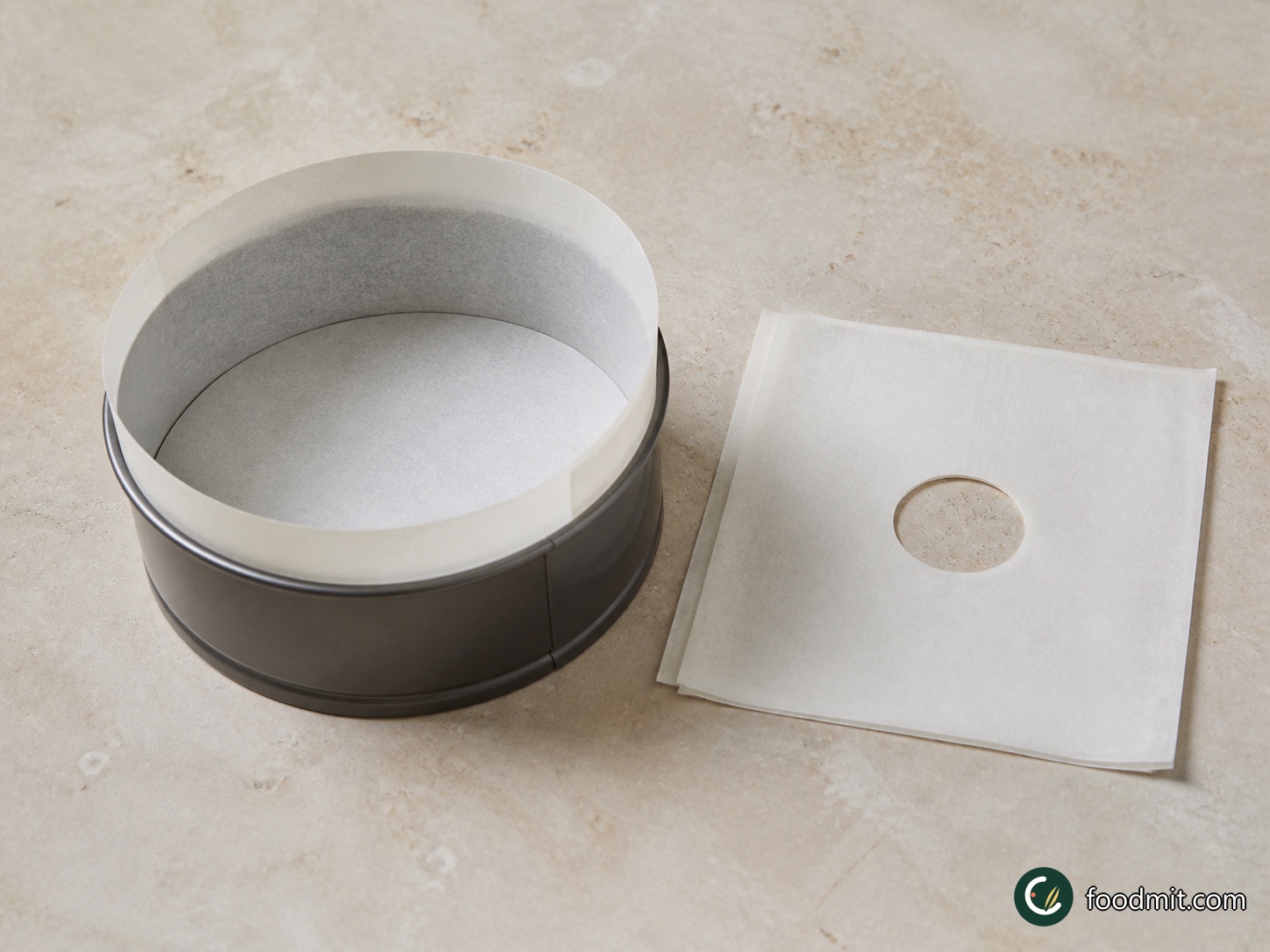
When the fruit is ready, heat the oven to 170°C, 325°F, or gas mark 3, with a rack in the center. Lightly oil a 20 cm round loose-based cake tin, then line both its base and sides with baking parchment. Prepare a double layer of parchment large enough to cover the top of the tin and cut a roughly 3 cm opening in its center; set this cover aside for the bake.
-
Step 3
Beat the batter
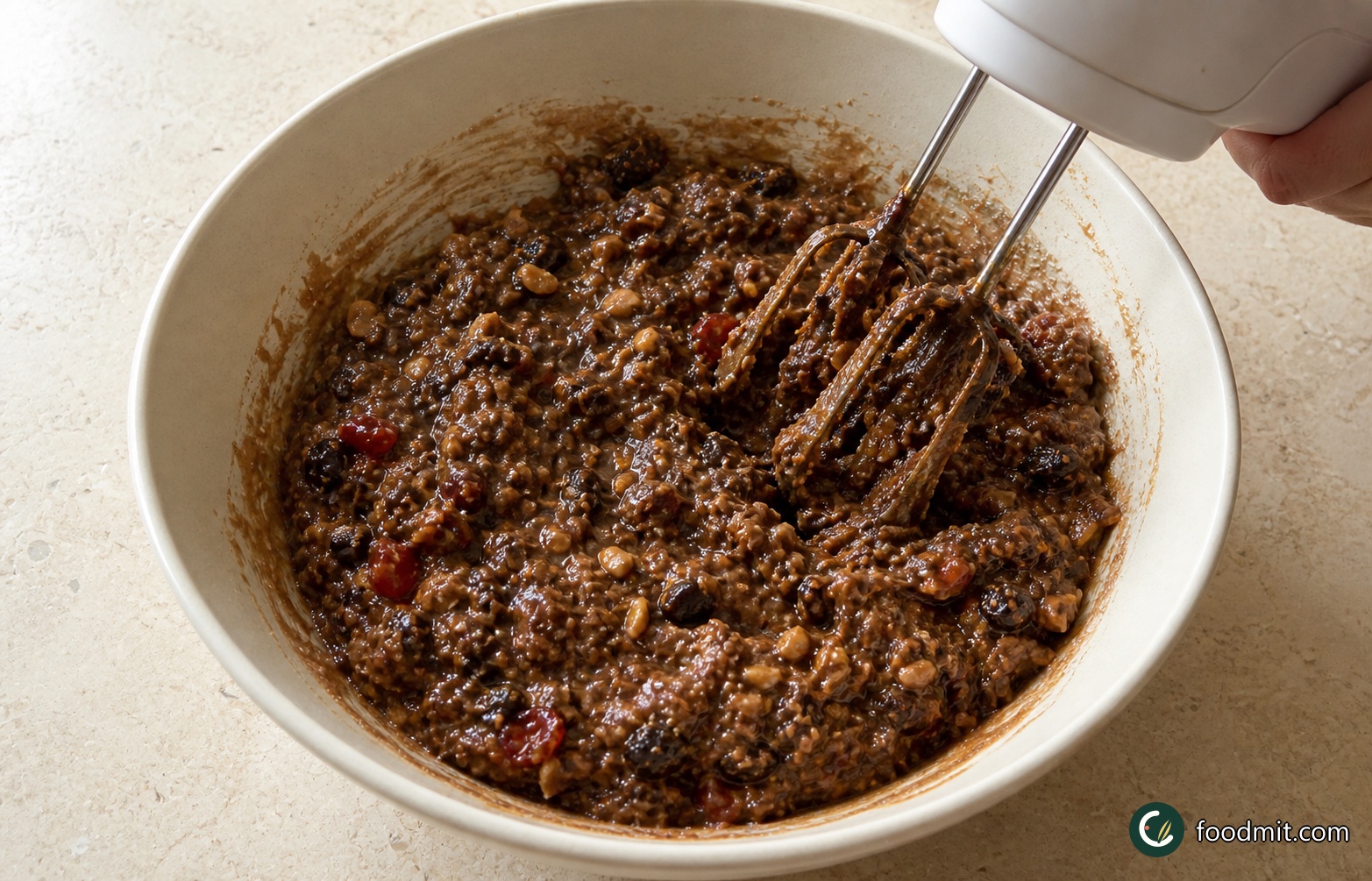
Transfer the soaked fruit and every drop of liquid to a roomy mixing bowl. Add the sifted self-raising flour, mixed spice, baking powder, softened butter, dark muscovado sugar, orange zest, lemon zest, chopped Brazil nuts, mixed chopped nuts, and eggs. Beat everything together with an electric hand mixer for about 1 minute, or work vigorously with a wooden spoon, until no pockets of dry flour remain and the fruit is evenly distributed. Because everything enters the bowl together, it helps to check off each ingredient as you add it.
-
Step 4
Fill and decorate
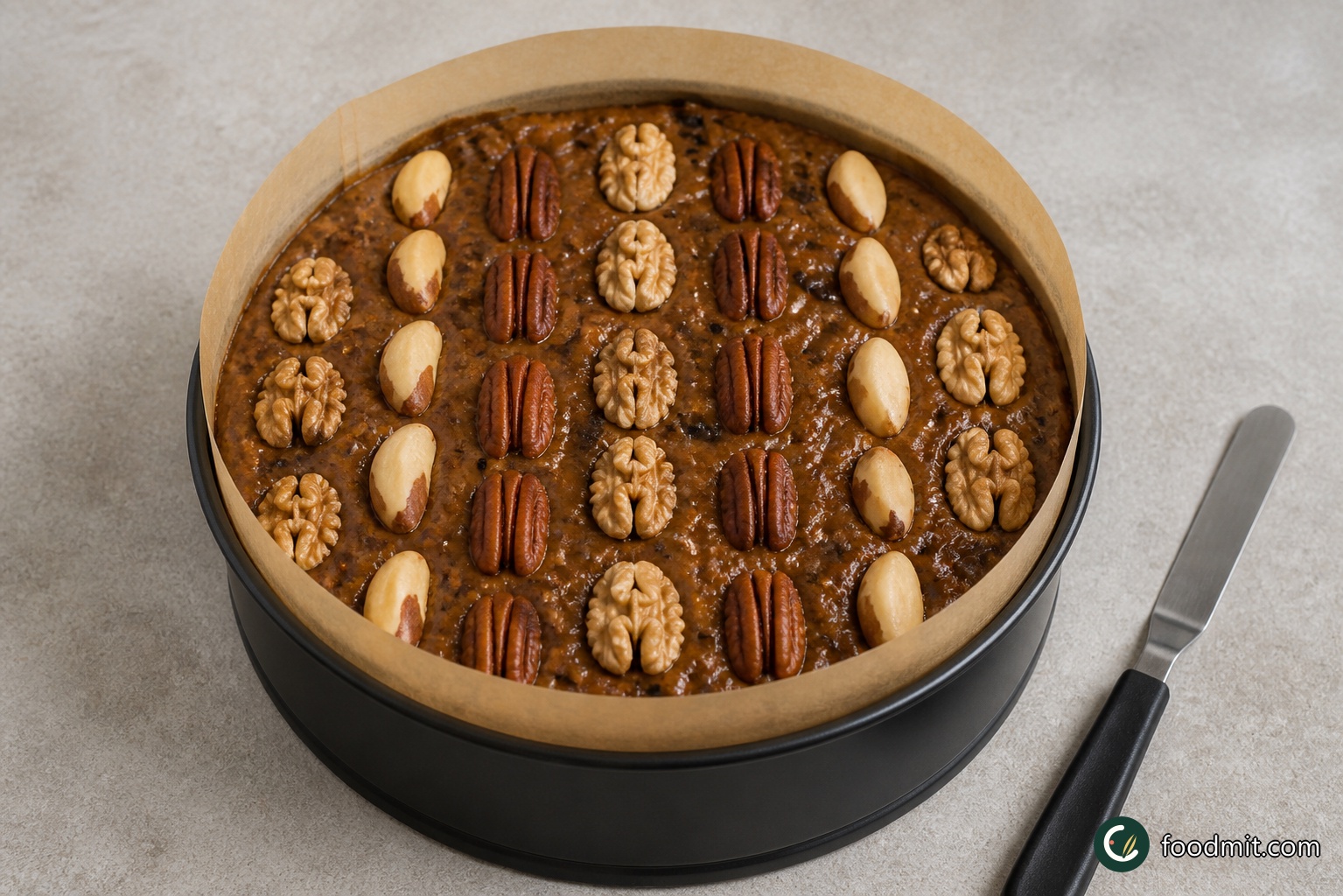
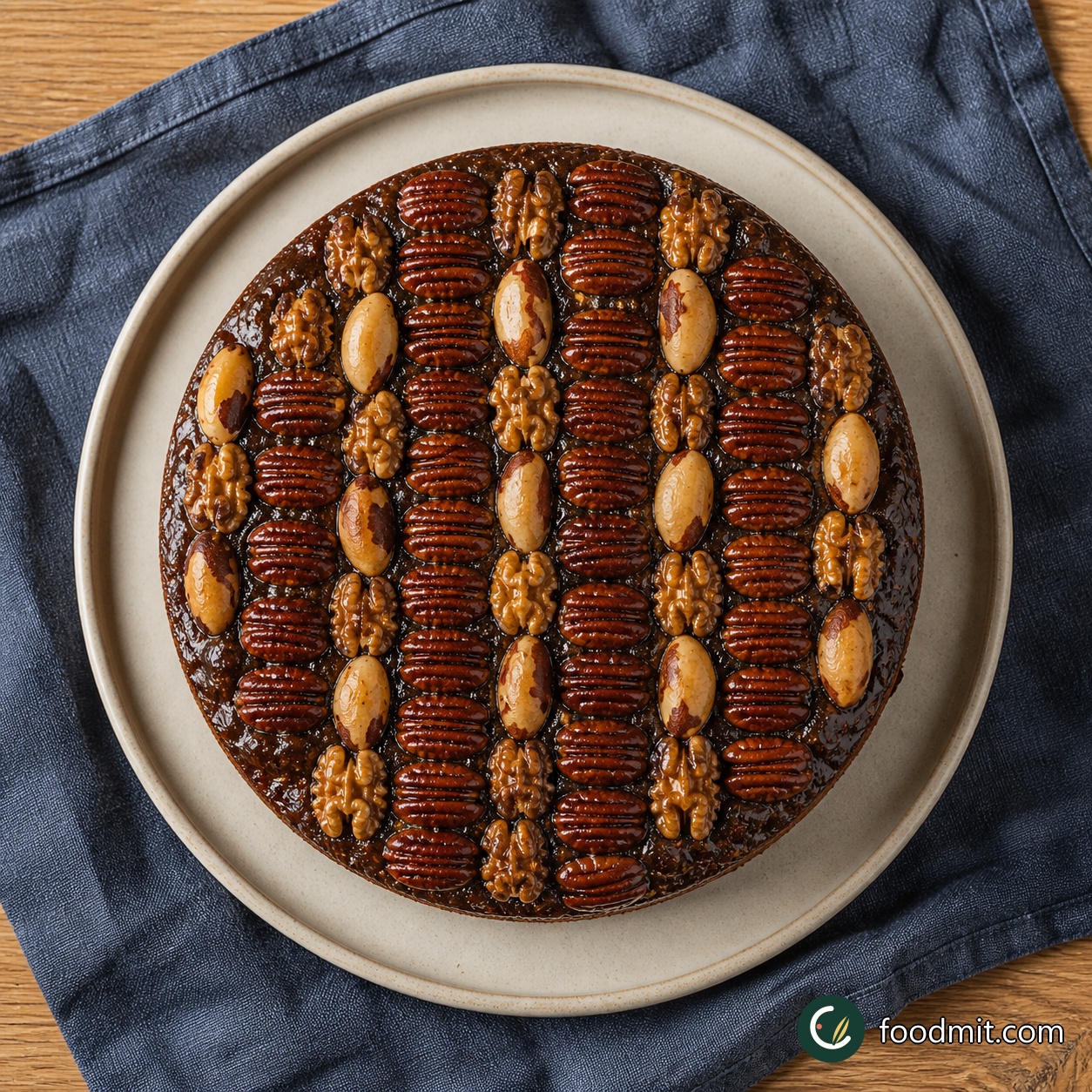
Spoon the heavy batter into the prepared tin and spread it level, taking care to push it fully to the edges. Arrange the walnut halves, pecan halves, and whole Brazil nuts in neat alternating rows across the surface. Keep the nuts resting on top rather than pressing them deeply into the batter, since they should remain visible and toast as the cake bakes.
-
Step 5
Cover and bake
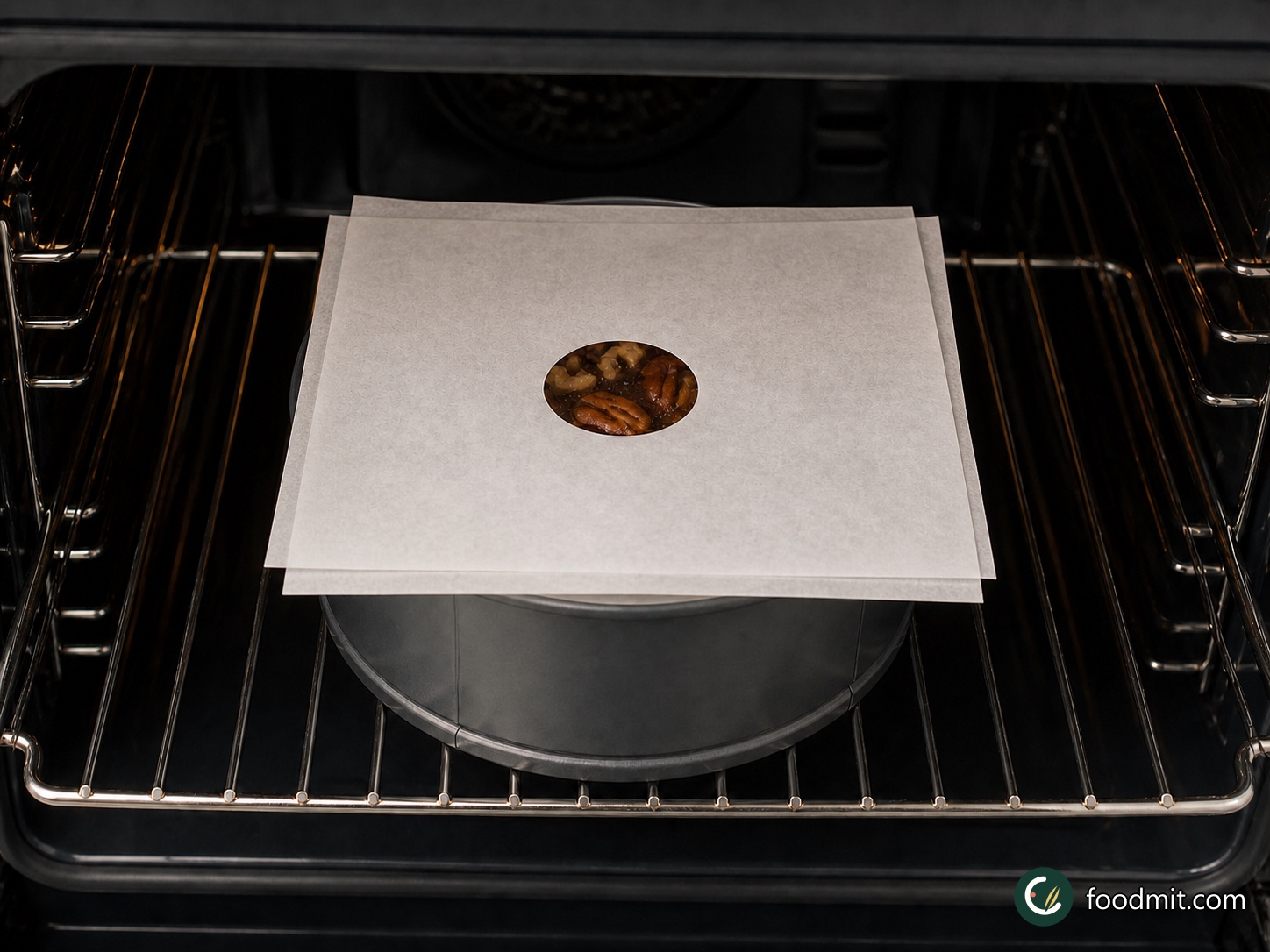
Lay the prepared double parchment cover over the tin, keeping the small opening above the middle of the cake. Set the tin on the center oven rack and bake for about 2 hours. At the end of the baking time, lift the cover carefully and press the center very gently; the cake is ready when the surface rises back under your fingertip rather than retaining an indentation.
-
Step 6
Cool the cake
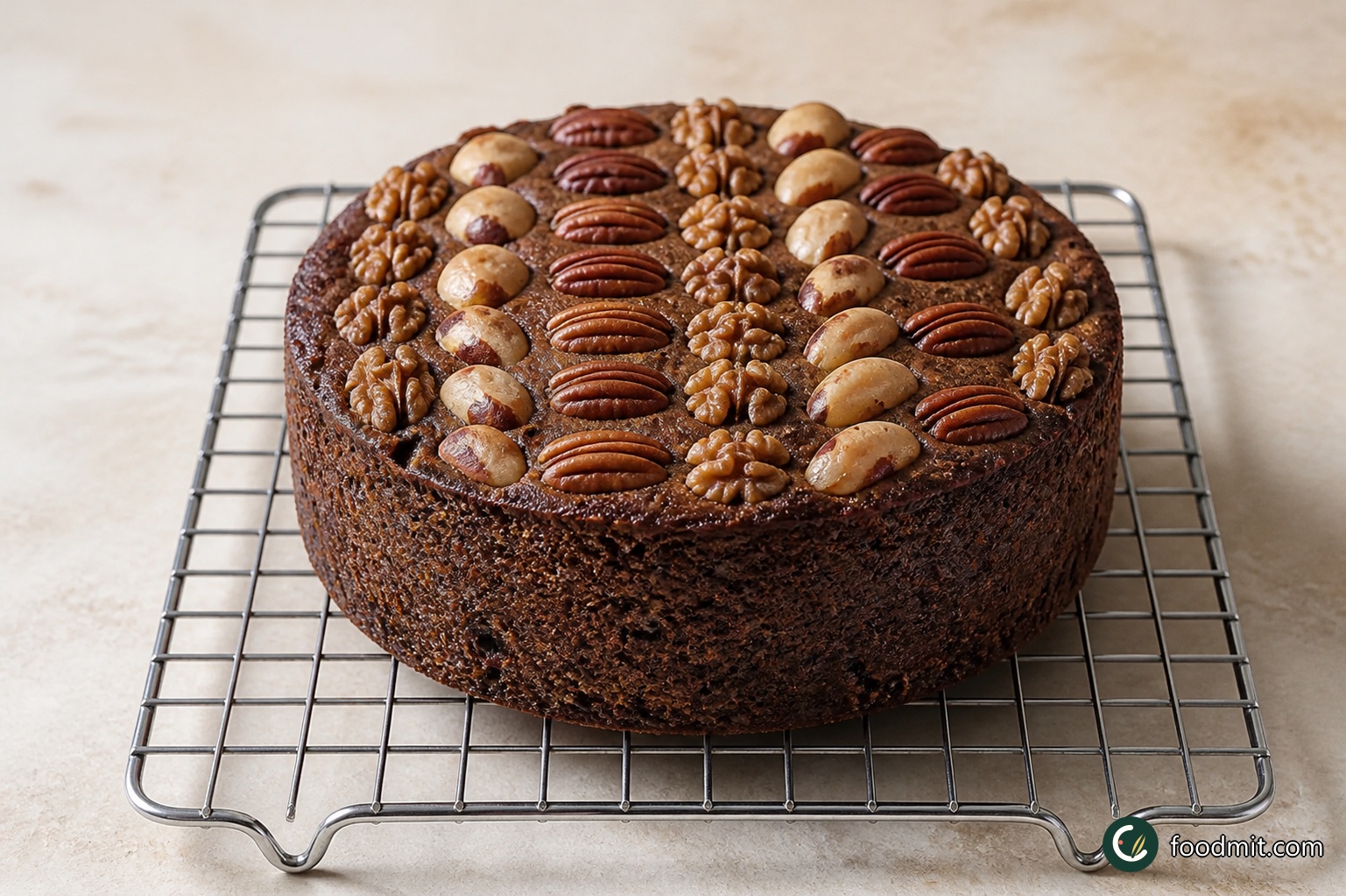
Leave the baked cake undisturbed in its tin for 30 minutes so the rich crumb can settle. Release it carefully, peel away the parchment from the base and sides, and transfer the cake to a wire rack. Let it finish cooling there; supporting the base as you move it will help protect the nut-covered top and prevent the warm cake from cracking.
-
Step 7
Glaze and store
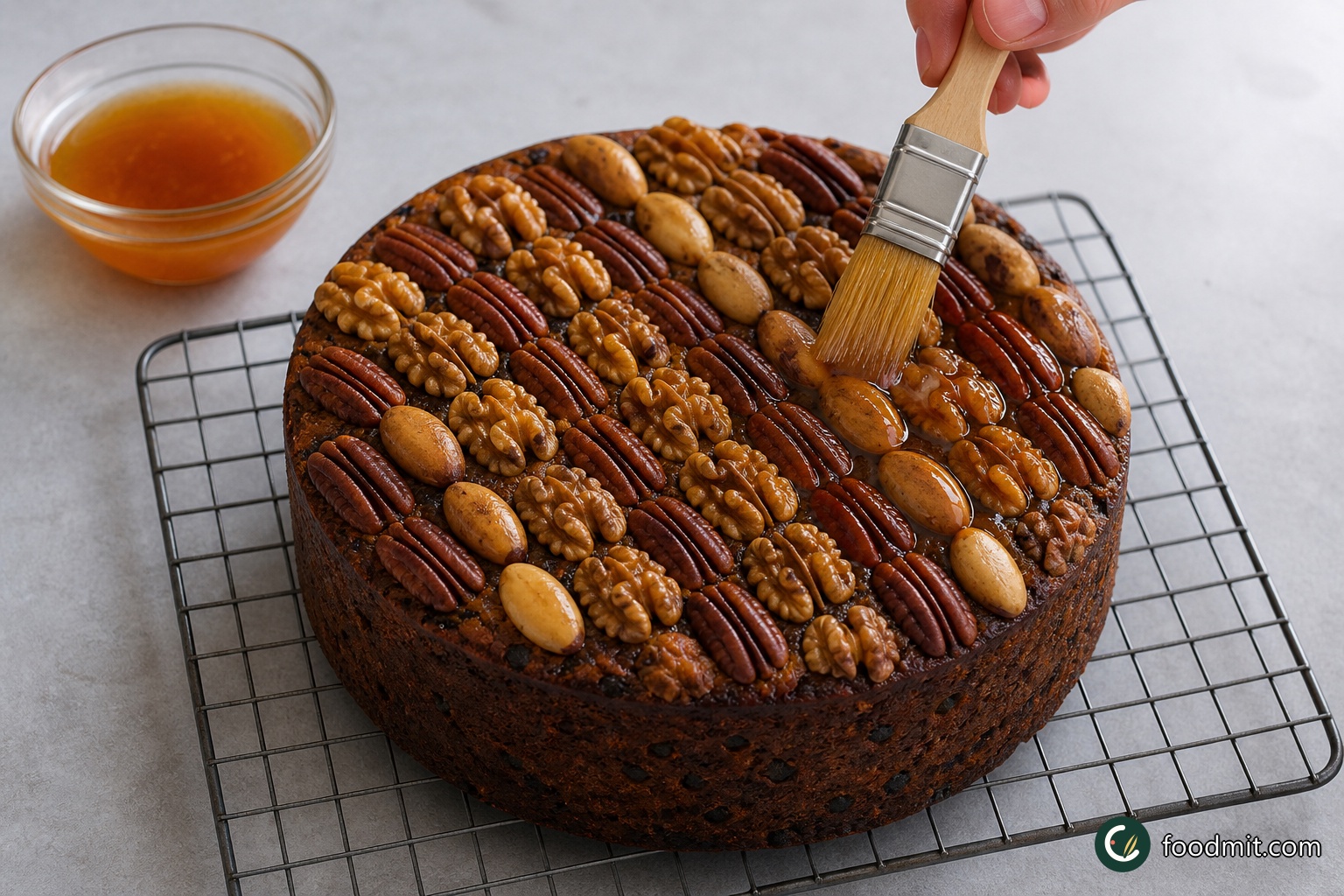
Warm the sieved apricot jam with the remaining tablespoon of brandy over gentle heat, stirring until the mixture is smooth and brushable. Paint the warm glaze over the whole nuts to give the top an even shine, then allow it to set before wrapping or serving. Once completely cool, keep the cake in an airtight tin, or wrap it first in two layers of greaseproof paper and then foil. Stored this way, it should remain moist for 3 to 4 weeks.
Set out and check off every measured ingredient before starting the one-bowl batter; with a long list added in quick succession, this is the simplest way to avoid missing the eggs, raising agents, or citrus zest.
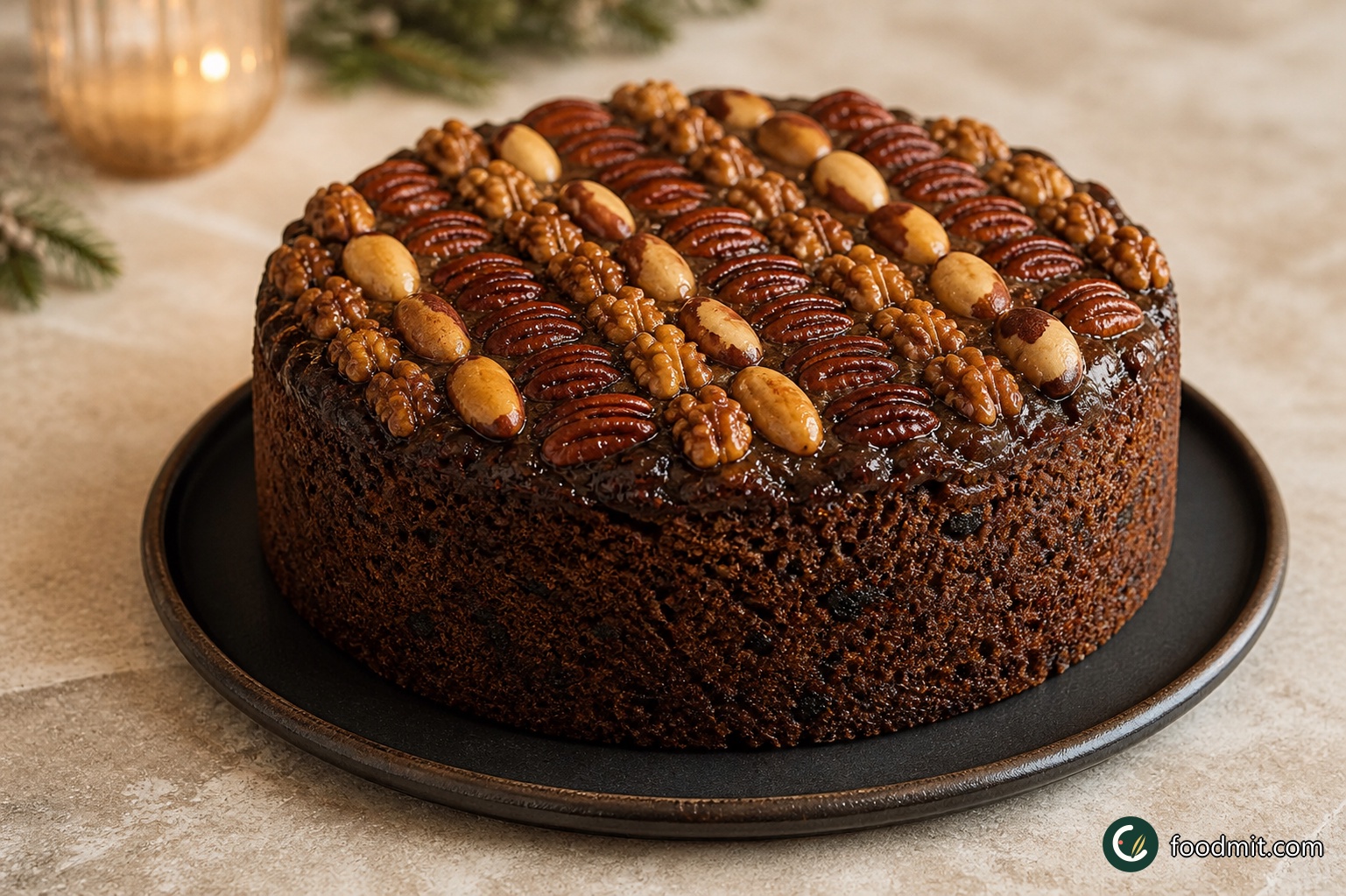
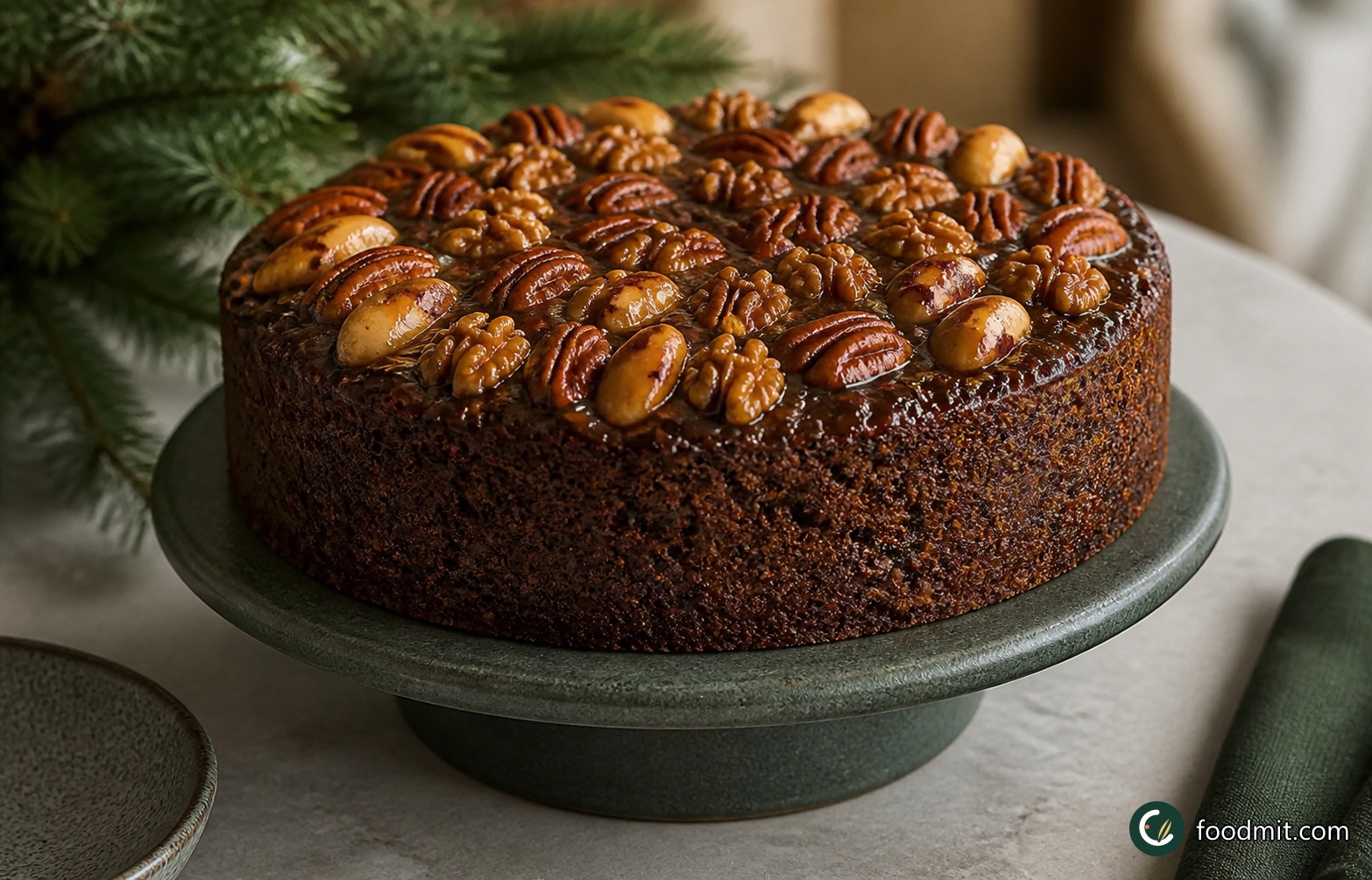
Last-minute Brandied Christmas Cake, ready to serve
Serving ideas for Last-minute Brandied Christmas Cake
Choose a presentation that fits the occasion, from relaxed sharing to individual plates.
Christmas tea table
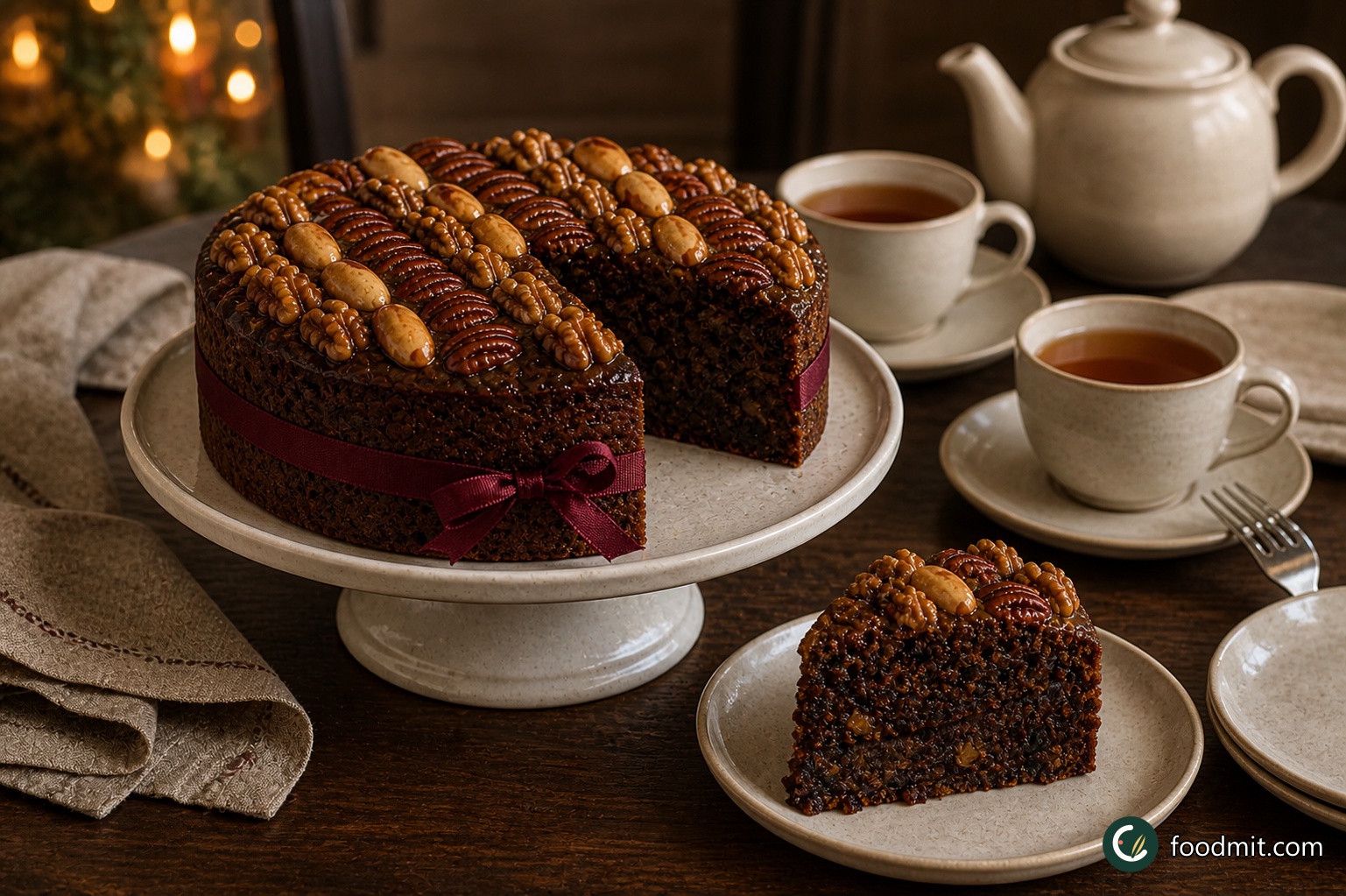
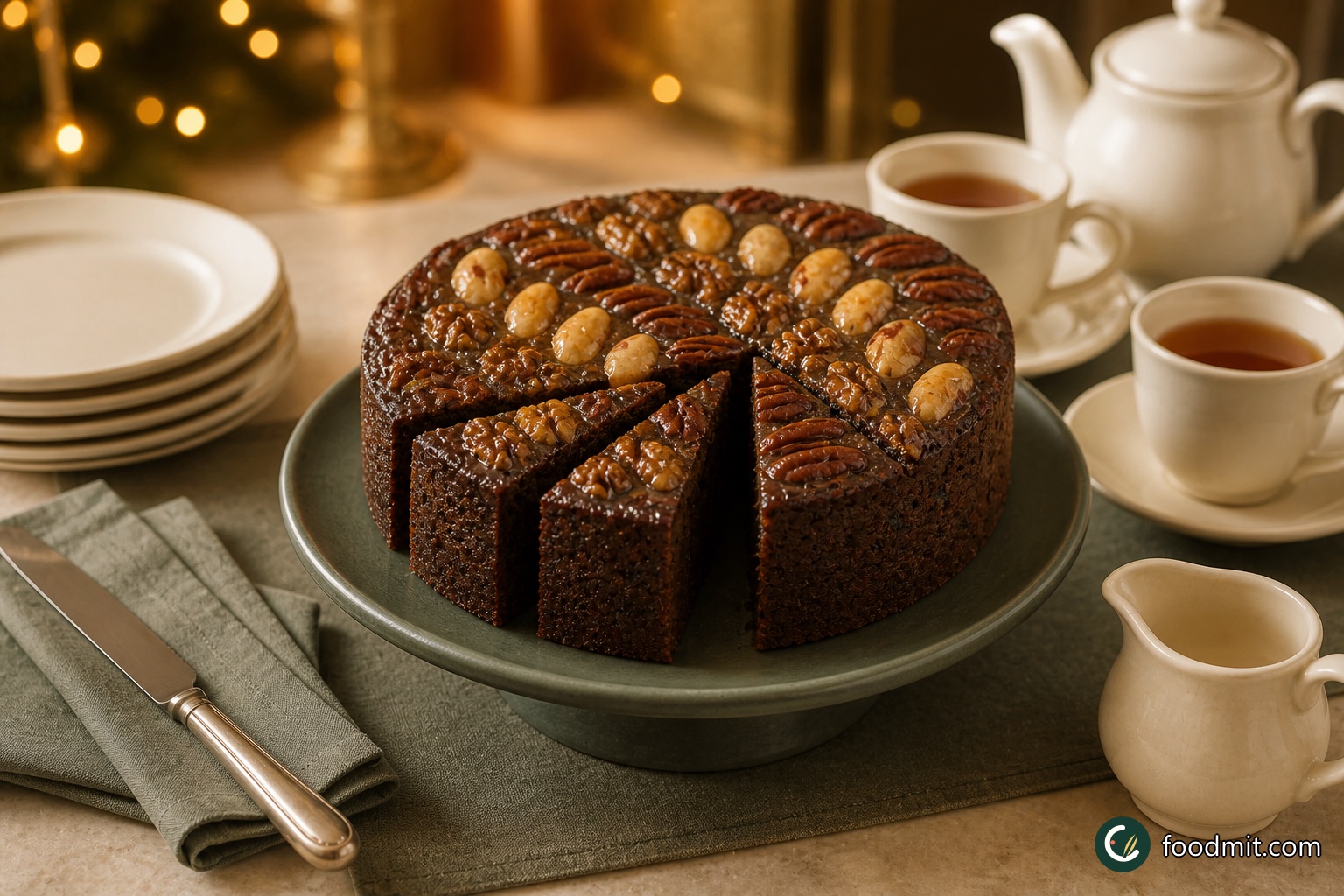
Present the whole cake on a simple ceramic stand so the glossy rows of nuts remain the focus. A ribbon tied around the outside gives it a traditional Christmas-table finish without adding another layer to the cake itself. Cut small, tidy wedges with a sharp knife and serve them on side plates with tea or coffee. The restrained portions suit such a rich fruit cake, while an unsweetened hot drink balances the mincemeat, muscovado sugar, dried fruit, and apricot glaze.
After-dinner slices
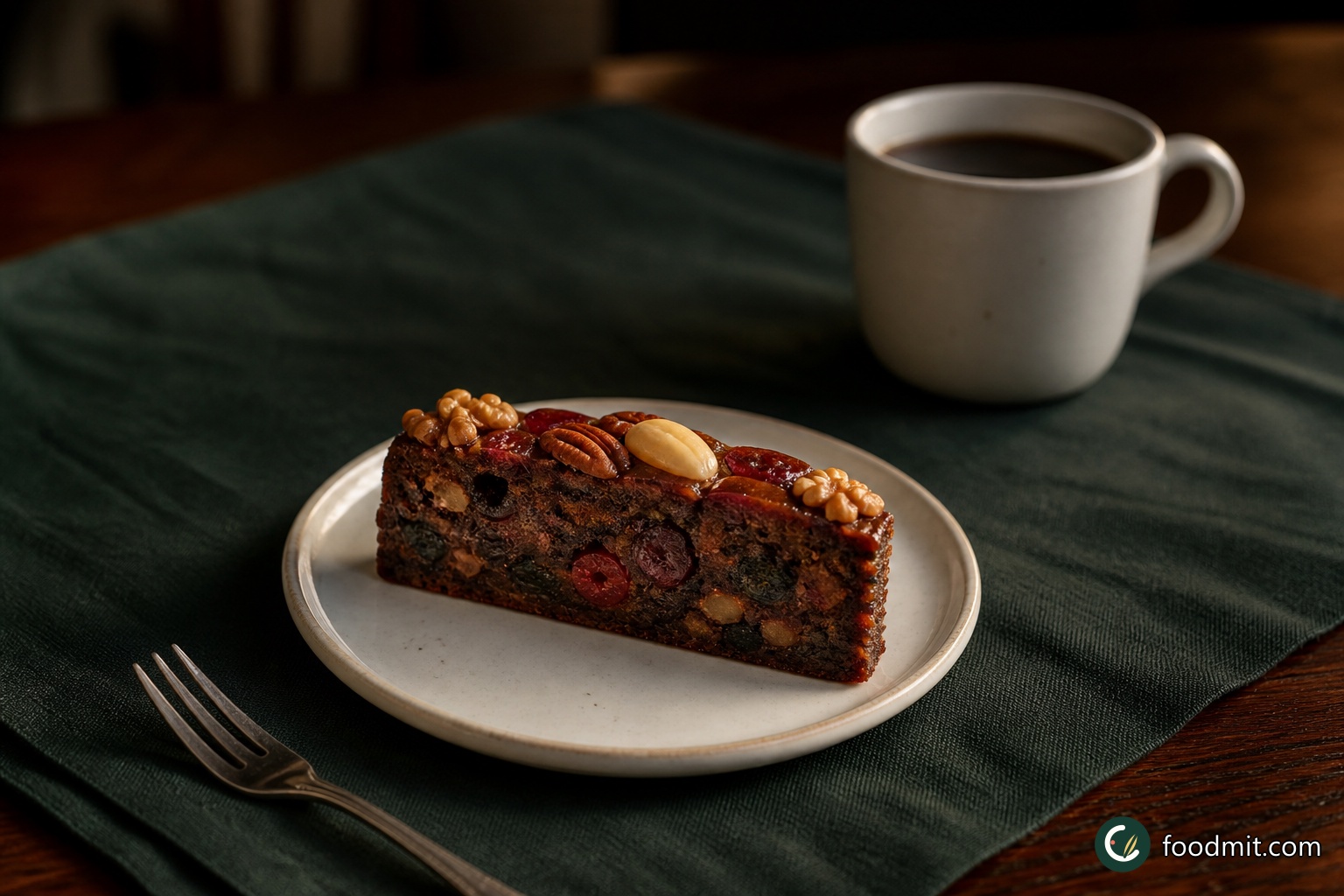
For dessert, cut slim wedges and place each one slightly off-center on a small neutral-colored plate, turning the nut-covered edge toward the diner. Keep the presentation uncluttered because the glazed walnut, pecan, and Brazil nut pattern already supplies plenty of texture and color. Dessert forks and fresh coffee are all that is needed for a relaxed Christmas meal. Bringing the cake to the table whole before slicing also lets everyone see its burnished top and choose a modest or generous portion.
Festive buffet centerpiece
Set the cake on a sturdy low stand at a holiday buffet and cut only a few starter slices, leaving most of the glossy nut design intact for guests to admire. Place small plates, napkins, and a serrated or sharp slicing knife beside it, with tea and coffee available nearby. Since the cake keeps well in an airtight tin or a careful greaseproof-paper-and-foil wrapping, it can be prepared before the gathering and brought out without last-minute assembly. Return any remaining cake to its wrapping once the table is cleared.
Let’s cook Last-minute Brandied Christmas Cake together
Check off your ingredients, follow each step, and start the timers when you are ready.
Get everything ready
Step-by-step with timers
Soak the fruit
Several hours before baking, or the evening before, put the 150 ml brandy, mincemeat, chopped prunes, quartered glacé cherries, dried mixed fruit, and mixed peel in a bowl. Stir thoroughly so the brandy reaches all the fruit, cover the bowl with a clean cloth, and leave it in a cool place for a few hours or overnight. The mixture should look evenly moistened before it goes into the batter.
Prepare the oven and tin
When the fruit is ready, heat the oven to 170°C, 325°F, or gas mark 3, with a rack in the center. Lightly oil a 20 cm round loose-based cake tin, then line both its base and sides with baking parchment. Prepare a double layer of parchment large enough to cover the top of the tin and cut a roughly 3 cm opening in its center; set this cover aside for the bake.
Beat the batter
Transfer the soaked fruit and every drop of liquid to a roomy mixing bowl. Add the sifted self-raising flour, mixed spice, baking powder, softened butter, dark muscovado sugar, orange zest, lemon zest, chopped Brazil nuts, mixed chopped nuts, and eggs. Beat everything together with an electric hand mixer for about 1 minute, or work vigorously with a wooden spoon, until no pockets of dry flour remain and the fruit is evenly distributed. Because everything enters the bowl together, it helps to check off each ingredient as you add it.
Fill and decorate
Spoon the heavy batter into the prepared tin and spread it level, taking care to push it fully to the edges. Arrange the walnut halves, pecan halves, and whole Brazil nuts in neat alternating rows across the surface. Keep the nuts resting on top rather than pressing them deeply into the batter, since they should remain visible and toast as the cake bakes.
Cover and bake
Lay the prepared double parchment cover over the tin, keeping the small opening above the middle of the cake. Set the tin on the center oven rack and bake for about 2 hours. At the end of the baking time, lift the cover carefully and press the center very gently; the cake is ready when the surface rises back under your fingertip rather than retaining an indentation.
Cool the cake
Leave the baked cake undisturbed in its tin for 30 minutes so the rich crumb can settle. Release it carefully, peel away the parchment from the base and sides, and transfer the cake to a wire rack. Let it finish cooling there; supporting the base as you move it will help protect the nut-covered top and prevent the warm cake from cracking.
Glaze and store
Warm the sieved apricot jam with the remaining tablespoon of brandy over gentle heat, stirring until the mixture is smooth and brushable. Paint the warm glaze over the whole nuts to give the top an even shine, then allow it to set before wrapping or serving. Once completely cool, keep the cake in an airtight tin, or wrap it first in two layers of greaseproof paper and then foil. Stored this way, it should remain moist for 3 to 4 weeks.
The story behind Last-minute Brandied Christmas Cake
Recipe notes by Emily
A welcome rescue for a late baker
I admire Delia because her dependable recipes tend to meet home cooks where they actually are, and this one felt especially understanding. I had not started a traditional fruit cake months ahead, yet I still wanted something homemade and recognizably festive. After cooking this particular recipe, I understood why the shortcut works so well: the mincemeat is not merely a convenience but part of the cake's moist, fruit-laden structure. The finished cake had the deep color and generous feel I wanted, without pretending that I had spent the autumn tending it.
The details that earned my trust
The all-in-one mixing method looked almost too easy when I first read it, but the batter came together beautifully once the fruit had absorbed the brandy. I made sure the butter was genuinely soft and used a large bowl, which made the brief mixing much more controlled. The parchment shield was another detail I appreciated after baking: two layers protected the exposed fruit and nuts for the full two hours, while the opening over the center allowed the cake to bake through. That balance gave me a dark, even crumb and toasted nuts without a scorched surface.
The finish I would choose again
I followed the nut-topped version rather than covering the cake with a blanket of sweetness, and it suited my table perfectly. The walnuts, pecans, and Brazil nuts gave the surface a handsome pattern before the tin even reached the oven. Once brushed with warm apricot jam and brandy, they took on a jewel-like gloss that made the cake feel complete. I also liked being able to bake it, cool it, and put it safely away in a tin. When I returned for another slice several days later, the crumb was still moist and the citrus, spice, fruit, and brandy tasted comfortably integrated.