
Last-minute Christmas Mincemeat Cake Recipe Inspired by Delia Smith
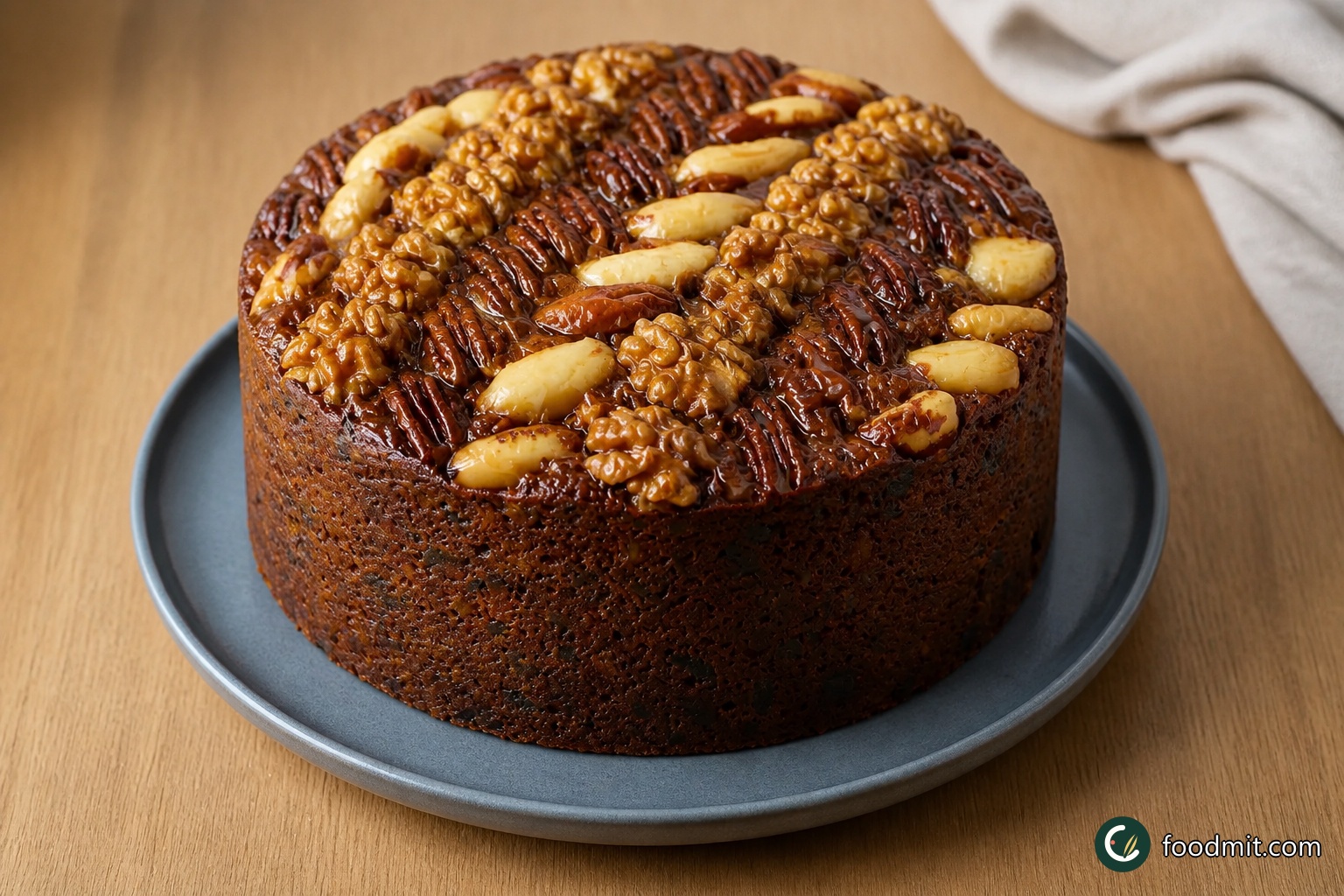
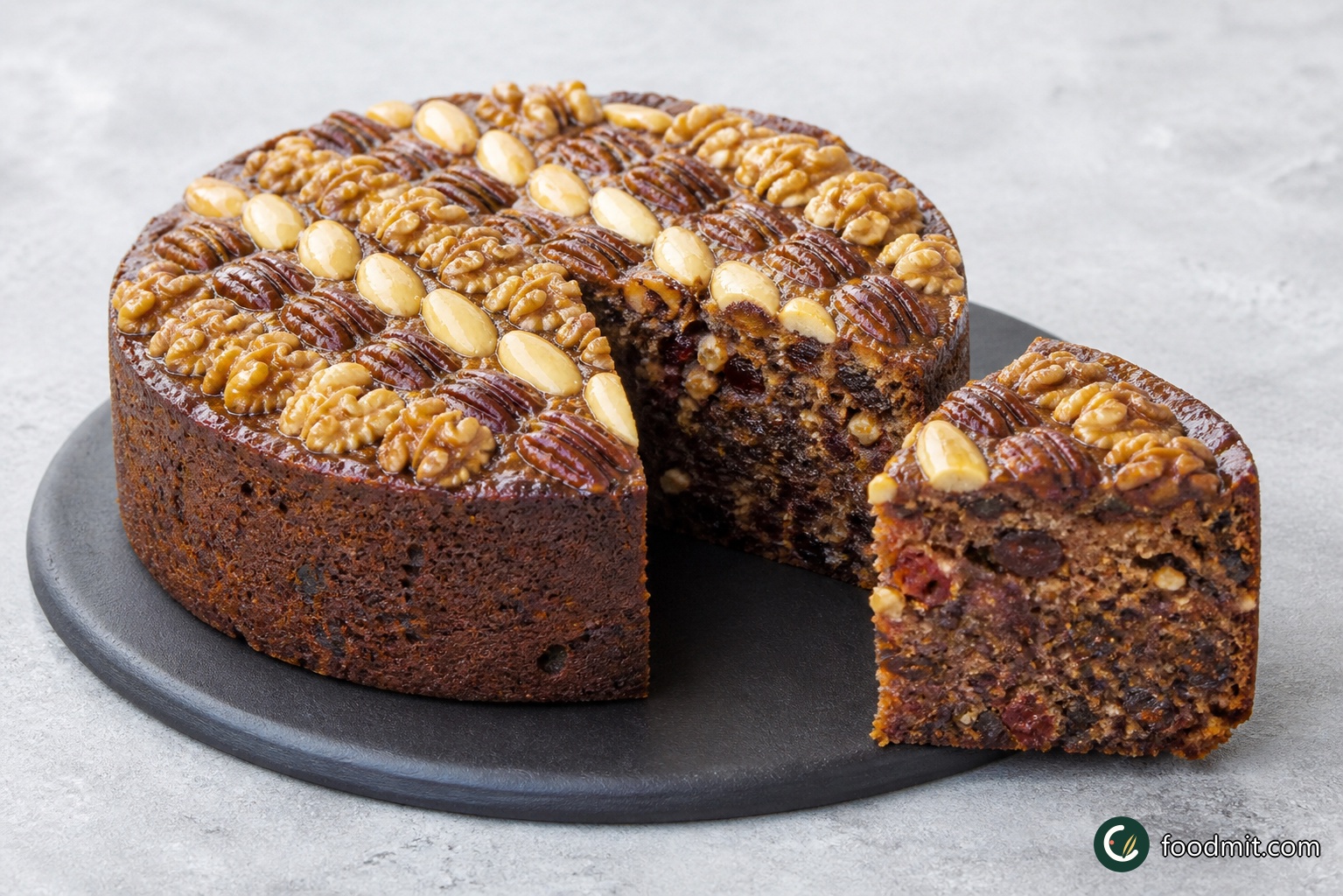
I have long admired Delia Smith for recipes that make a busy cook feel calmly looked after, so I made her Last-minute Christmas Mincemeat Cake when my festive baking had slipped behind schedule. It delivered exactly the kind of practical rescue I hoped for: a proper homemade fruitcake assembled from familiar ingredients, with the mincemeat doing much of the heavy lifting. My cake came out dark, moist, and generously packed with prunes, cherries, dried fruit, candied peel, and nuts. Dark muscovado sugar deepened the caramel notes, mixed spice brought gentle warmth, and the orange and lemon zests kept each rich slice lively. The walnut, pecan, and Brazil nut pattern became especially handsome once brushed with the apricot-and-brandy glaze. The most useful lesson was to give the fruit mixture its full soaking time. Four hours works, but leaving it overnight let the brandy settle evenly into the fruit and made the mixture easy to fold through the soft cake base. I also kept the double parchment shield resting on the tin liner, clear of the batter, which protected the nut-covered top during the long bake. I let the finished cake cool completely before cutting it, and the crumb held together beautifully in slim slices. It is rich enough for a festive dessert plate yet relaxed enough to serve with tea while presents are being wrapped. Stored airtight, it is also a reassuring bake to finish ahead without repeatedly adding more brandy.
 Foodmit
recipe
Per 1 slice (1/20 of cake, about 85 g)
Nutrition for Last-minute Christmas Mincemeat Cake
- Saturated fat
- 6 g
- Fiber
- 3 g
- Sugars
- 28 g
- Sodium
- 165 mg
Estimated values. Nutrition values are approximate. More precise calculations will be added in a future update.
How to make Last-minute Christmas Mincemeat Cake
-
Step 1
Soak the fruit
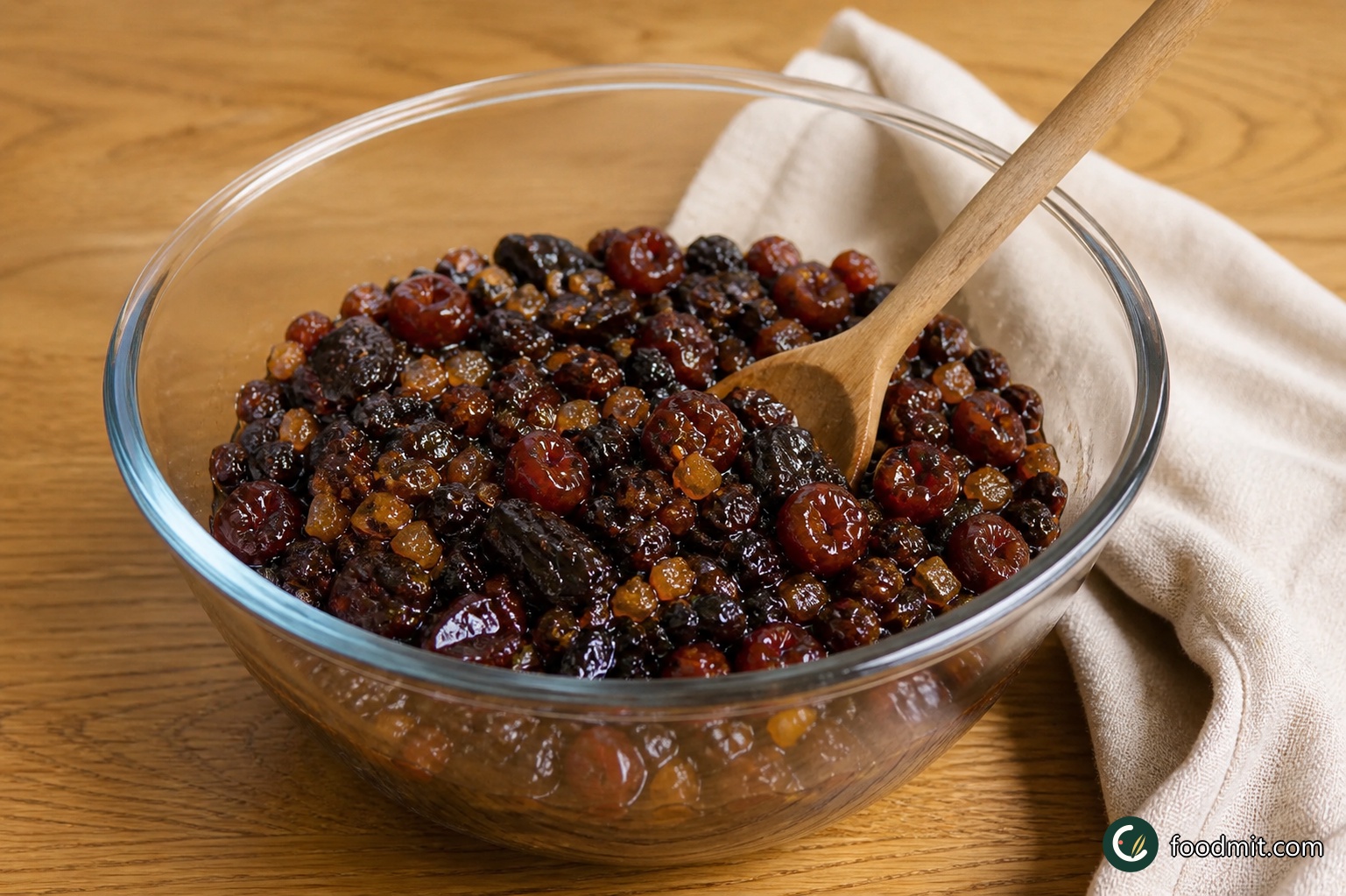
Put the 150 ml brandy, mincemeat, prunes, glacé cherries, dried mixed fruit, and candied peel in a large bowl. Stir until the fruit is evenly coated, cover the bowl with a clean cloth, and leave it in a cool place for at least 4 hours or, preferably, overnight.
-
Step 2
Prepare the oven and tin
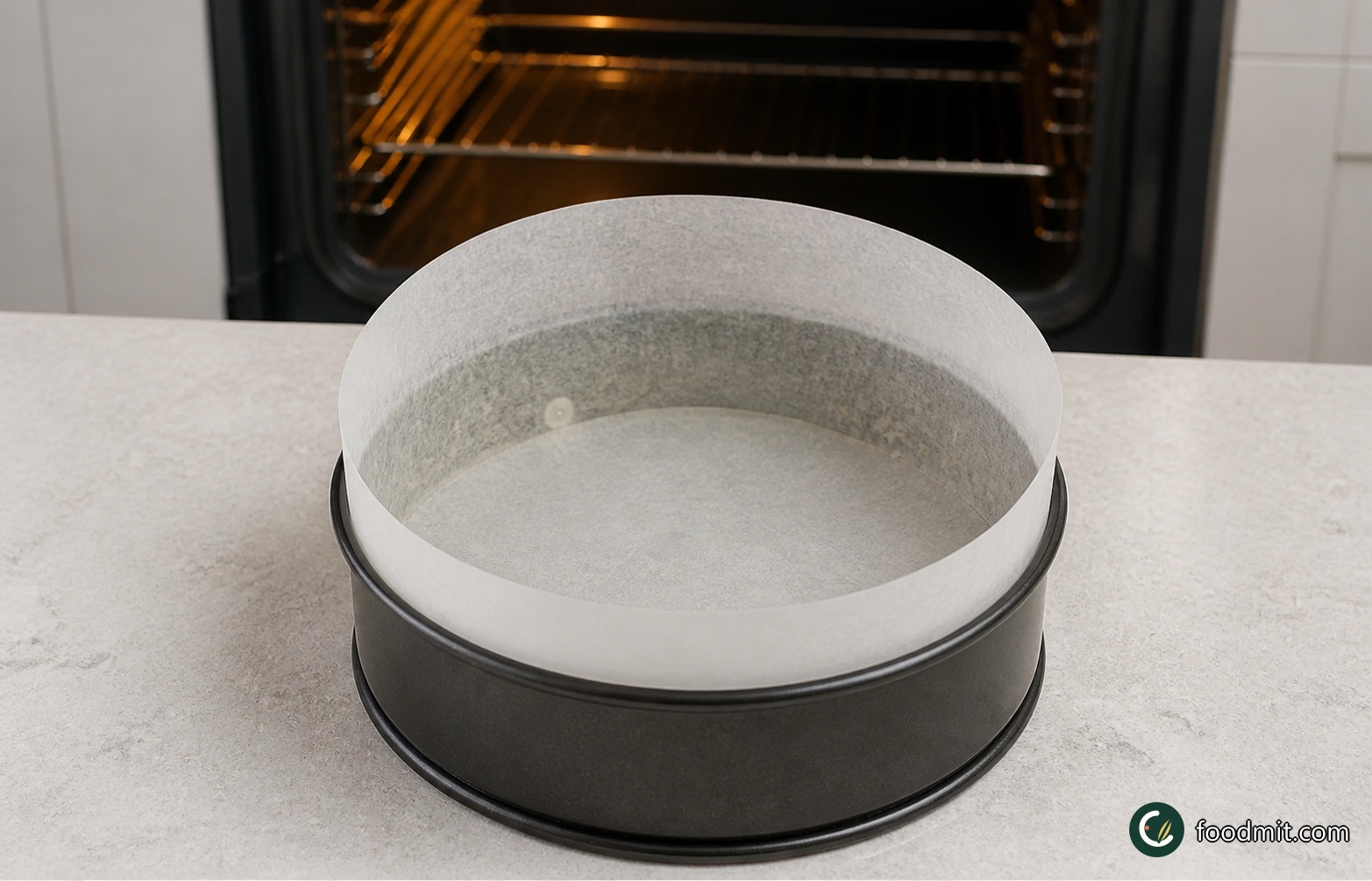
When the fruit has soaked, heat the oven to 170°C/Gas 3. Grease a 20 cm round loose-based cake tin and line both its base and sides with baking parchment, making sure the side liner stands neatly and can support a parchment cover later.
-
Step 3
Sift the dry ingredients
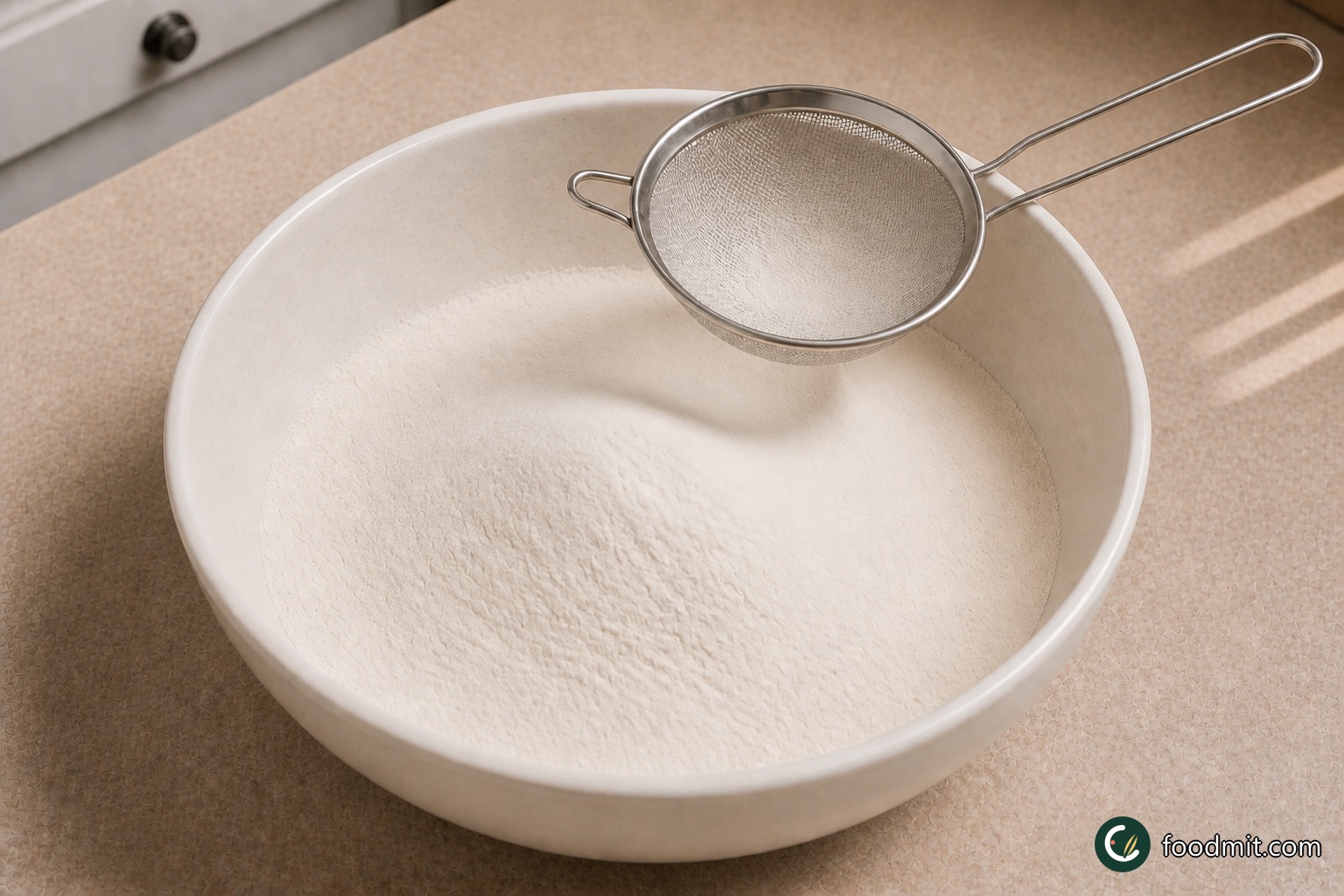
Sift the self-raising flour, baking powder, salt, and mixed spice into a very large mixing bowl. A roomy bowl matters here because the soaked fruit will be folded in gradually without crushing it or knocking too much air from the batter.
-
Step 4
Beat the cake base
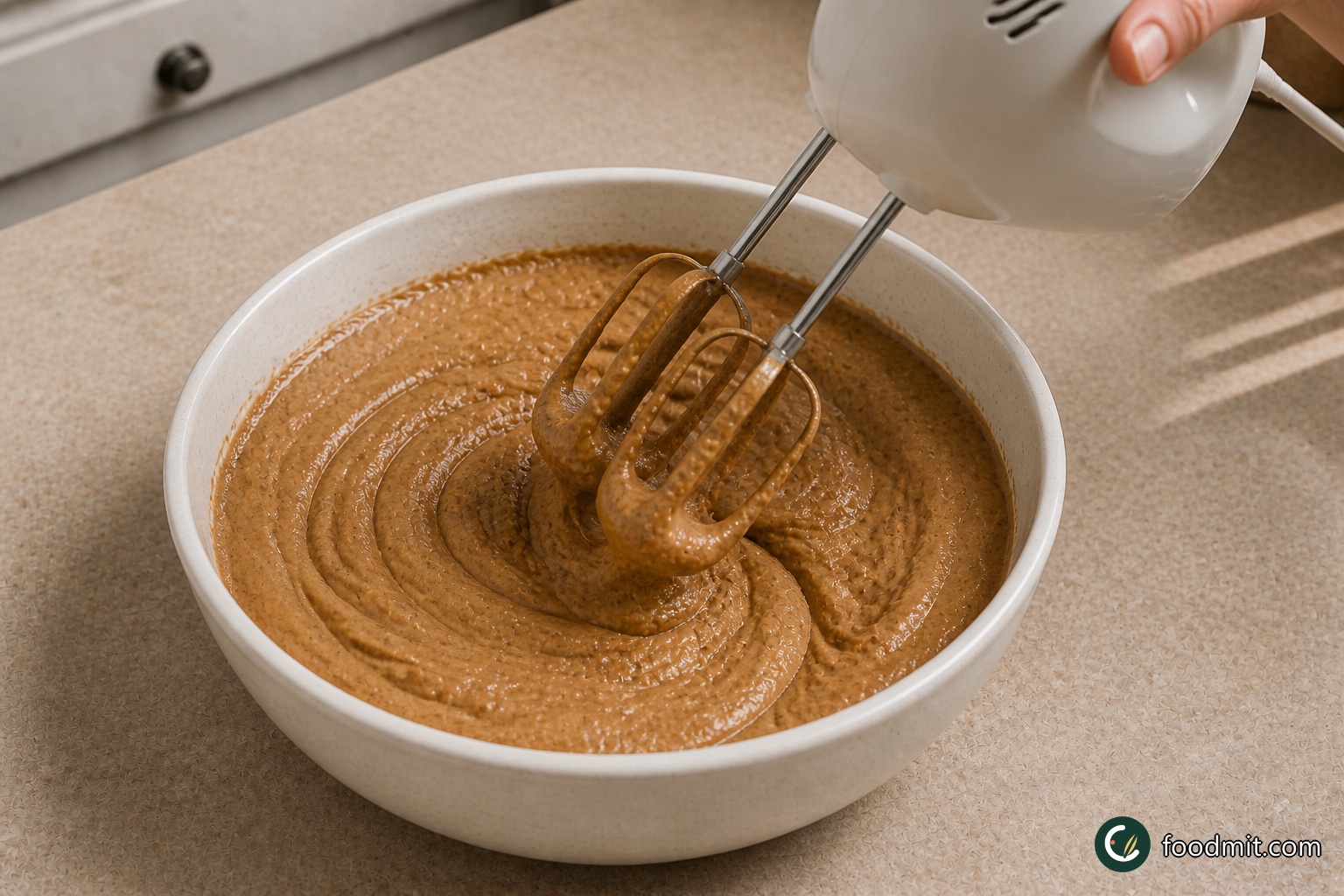
Add the spreadable butter, dark muscovado sugar, and eggs to the sifted ingredients. Beat with an electric hand whisk until the mixture is uniform, light in texture, and free from visible streaks of butter or dry flour.
-
Step 5
Fold in the fruit, nuts, and zest
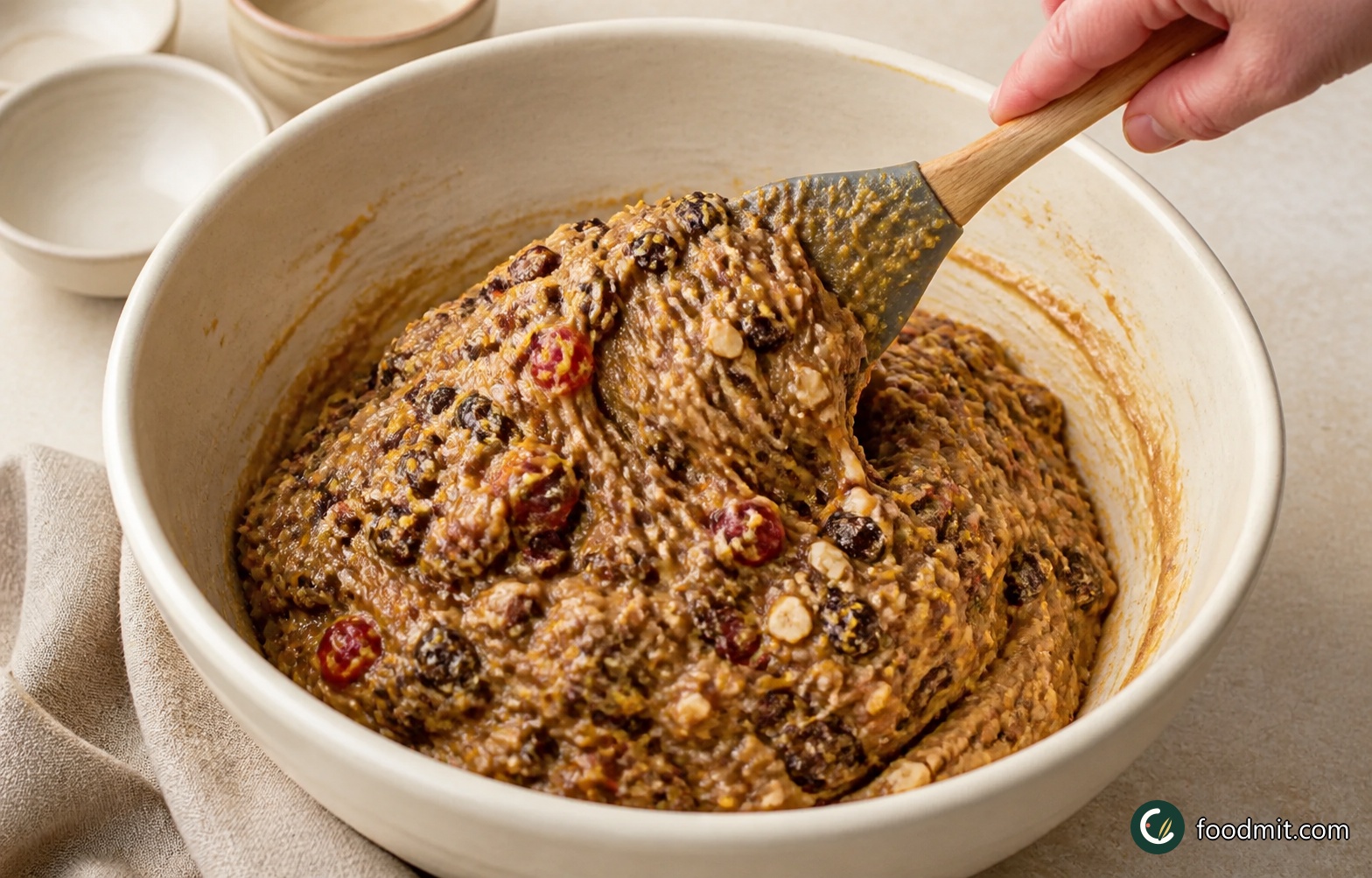
Fold the soaked fruit mixture into the cake base in several additions so it stays evenly suspended. Follow with the roughly chopped Brazil nuts, mixed chopped nuts, orange zest, and lemon zest, folding only until everything is well distributed.
-
Step 6
Fill and decorate the tin
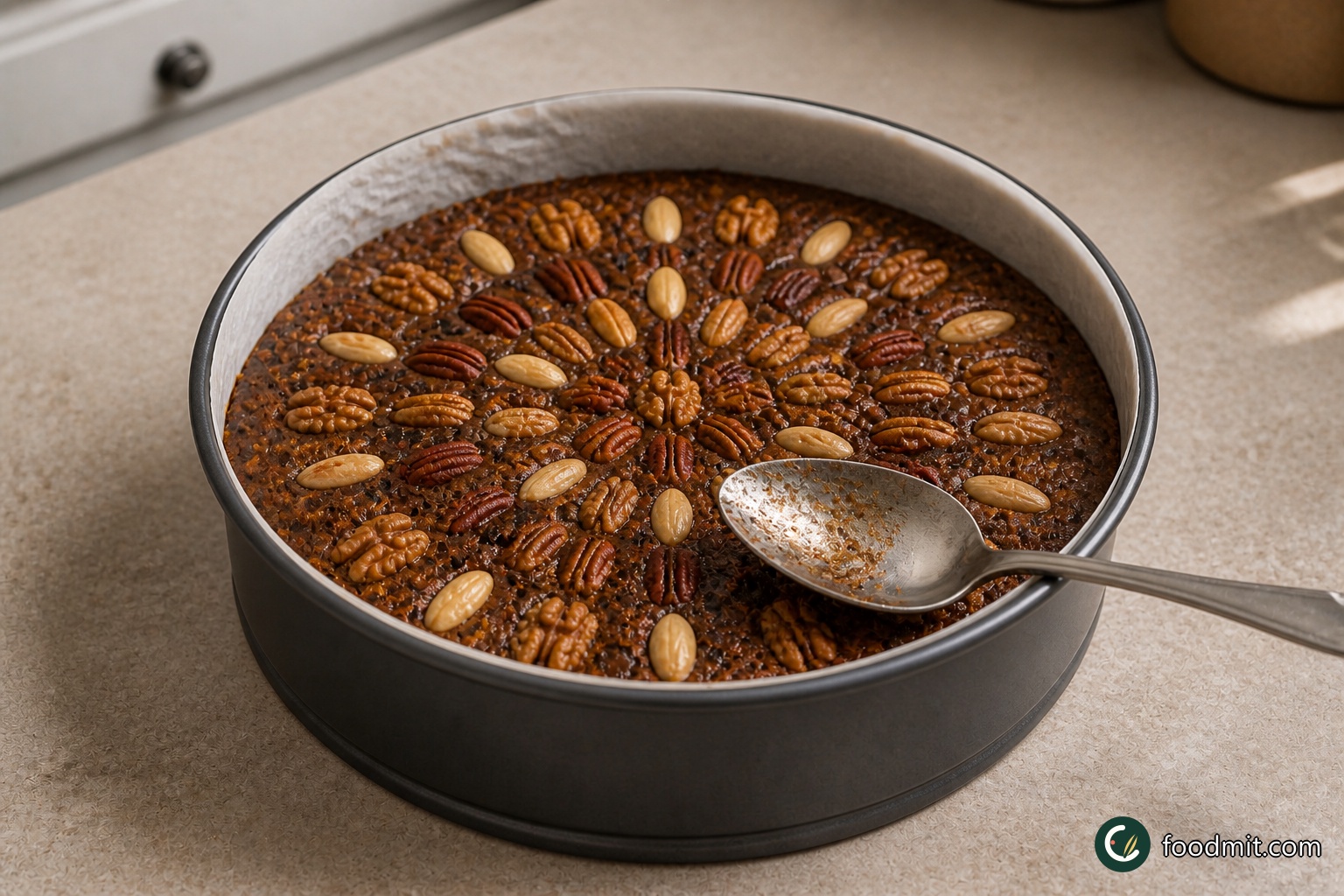
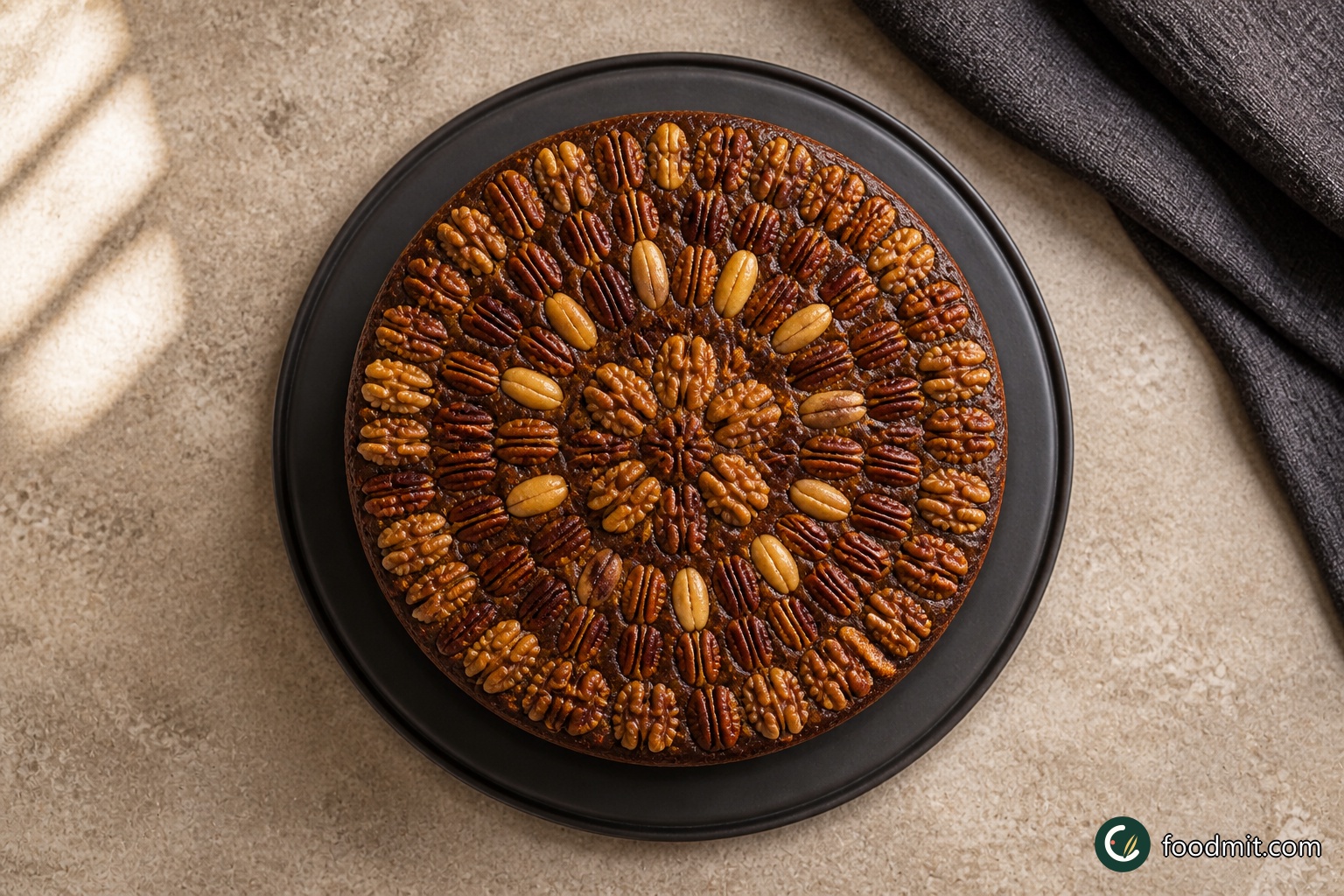
Spoon the batter into the prepared tin and smooth the surface with the back of a large spoon. Arrange the walnut halves, pecan halves, and whole Brazil nuts in circles or tidy rows, using an equivalent mixture of whole nuts if preferred.
-
Step 7
Add the parchment shield
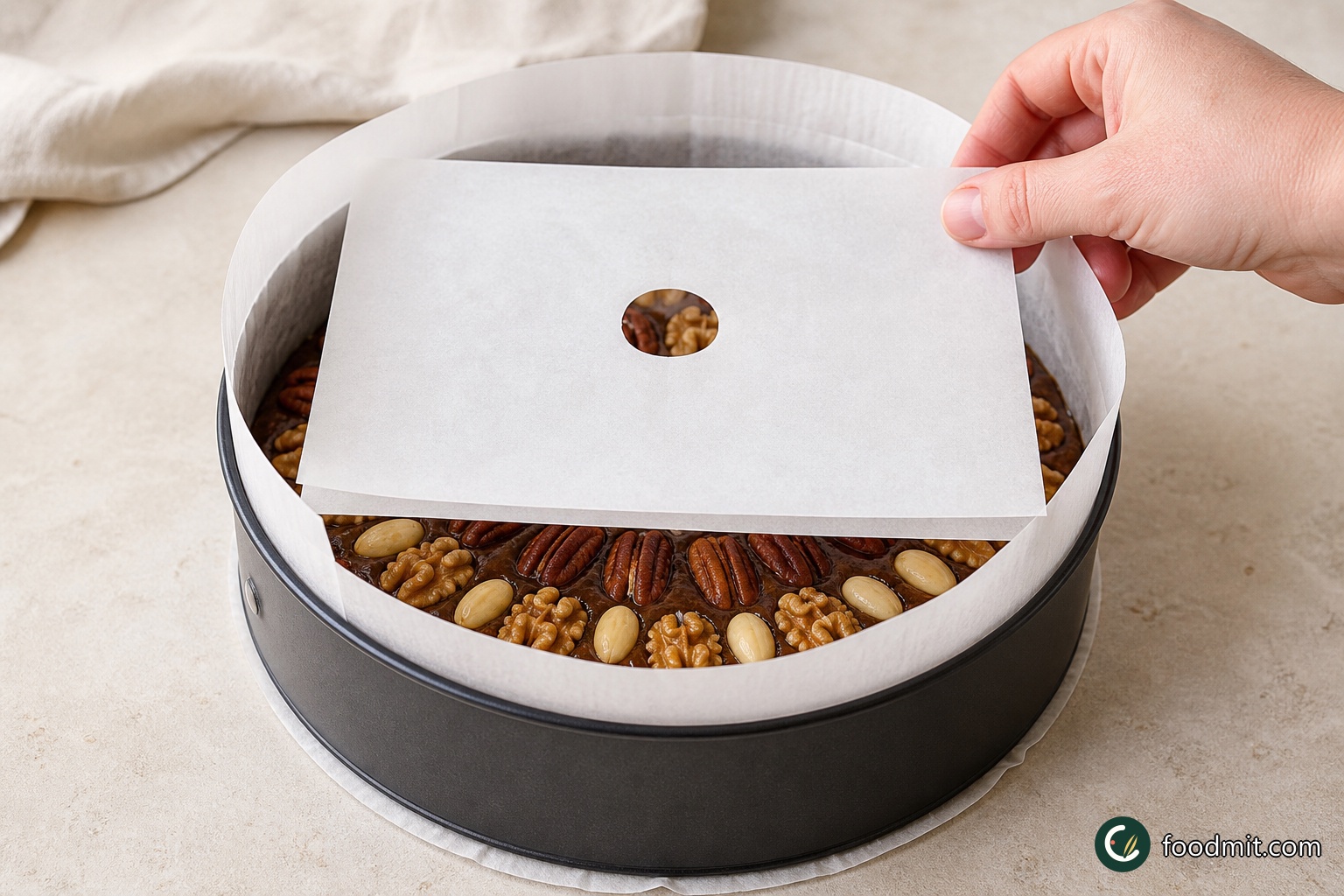
Cut a double-thickness square of baking parchment and make a hole in its centre about the size of a 50-pence coin. Set the shield on the rim of the upright tin liner so it sits above the cake rather than directly on the batter.
-
Step 8
Bake until resilient
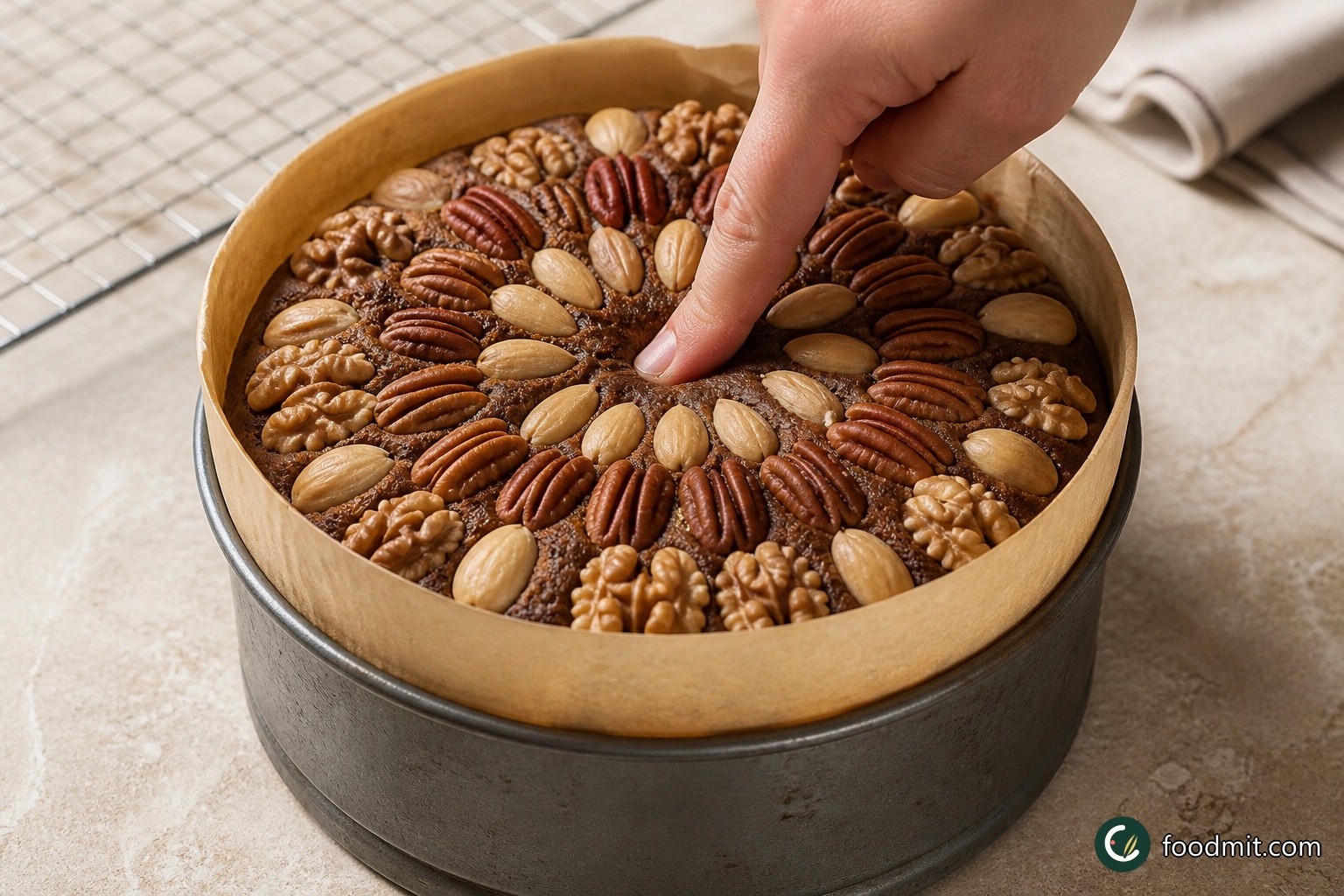
Bake on the centre shelf for 2 hours. At the end, press the centre very lightly; the cake is ready when the shallow indentation promptly rises again. If it does not, continue baking briefly and repeat the same check.
-
Step 9
Cool the cake
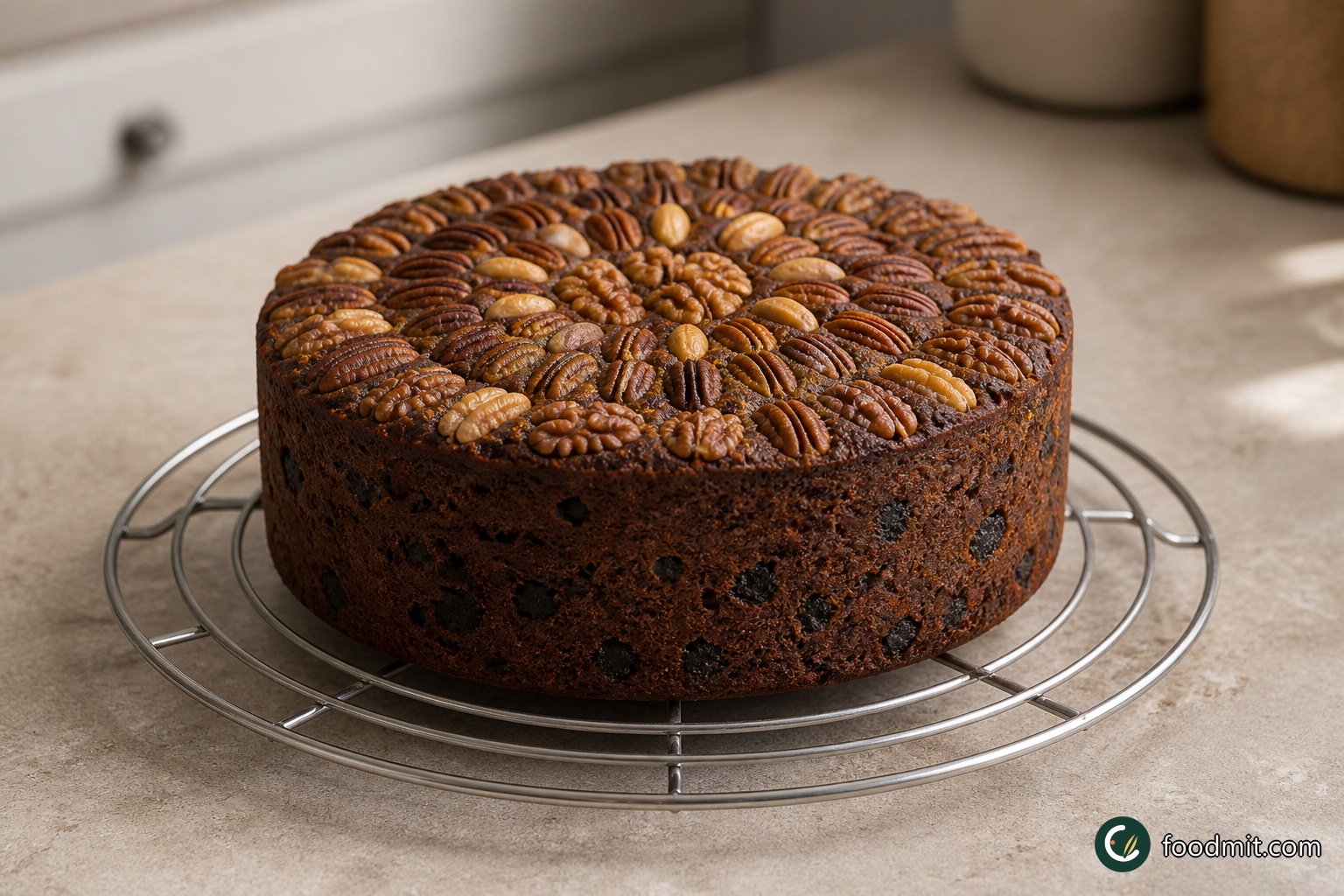
Leave the cake in its tin for 30 minutes so its fruit-heavy crumb can settle. Release it carefully, remove the lining, and transfer it to a wire rack to finish cooling without trapping steam around the sides.
-
Step 10
Glaze and store
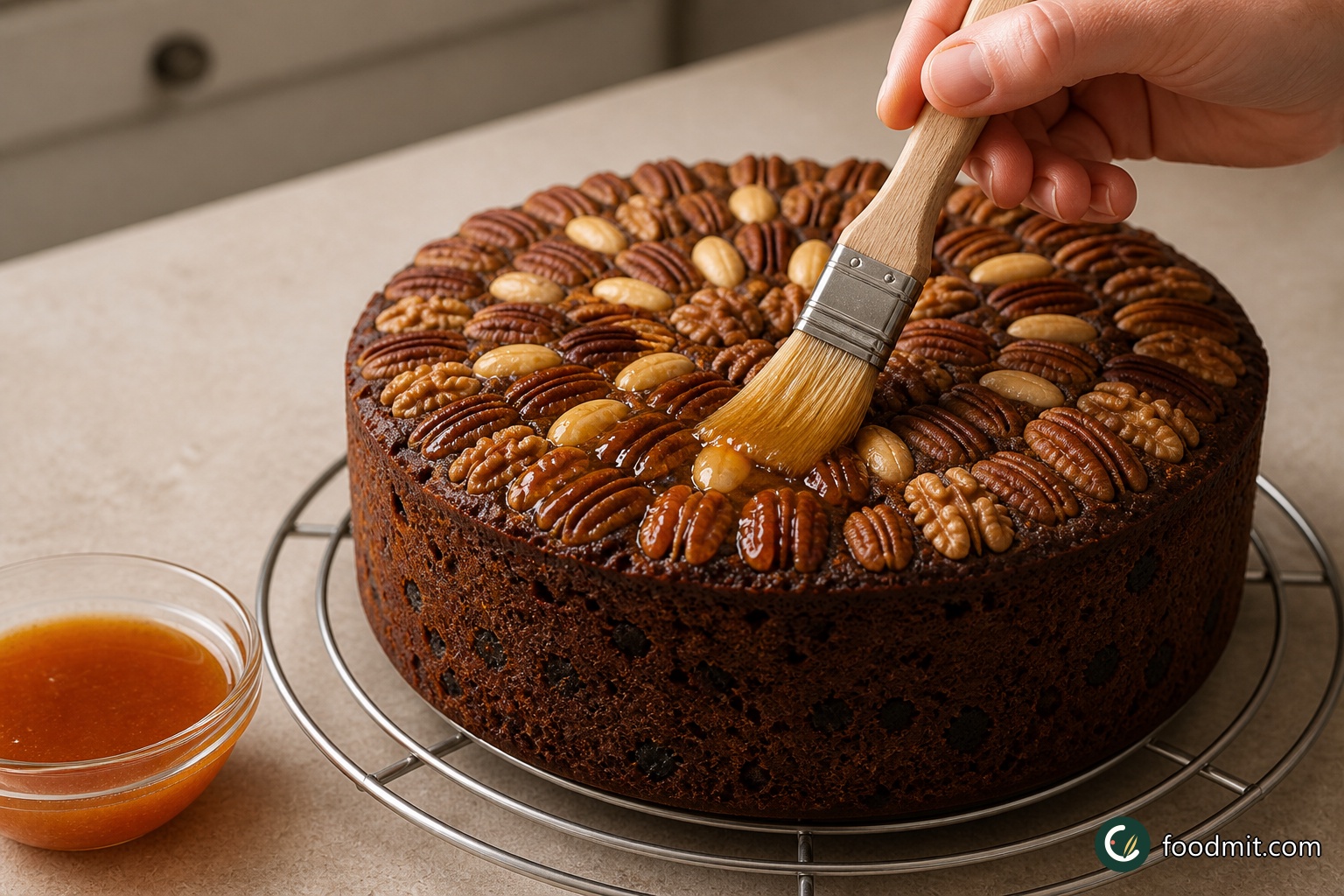
While the cake is cooling, gently heat the sieved apricot jam with the remaining tablespoon of brandy until fluid. Brush it over the exposed nuts for an even shine. Once completely cold, keep the cake in an airtight tin or wrap it first in baking parchment and then in foil.
Keep the double parchment shield supported by the tin liner and clear of the batter; that small air gap protects the nuts while the centre finishes baking.
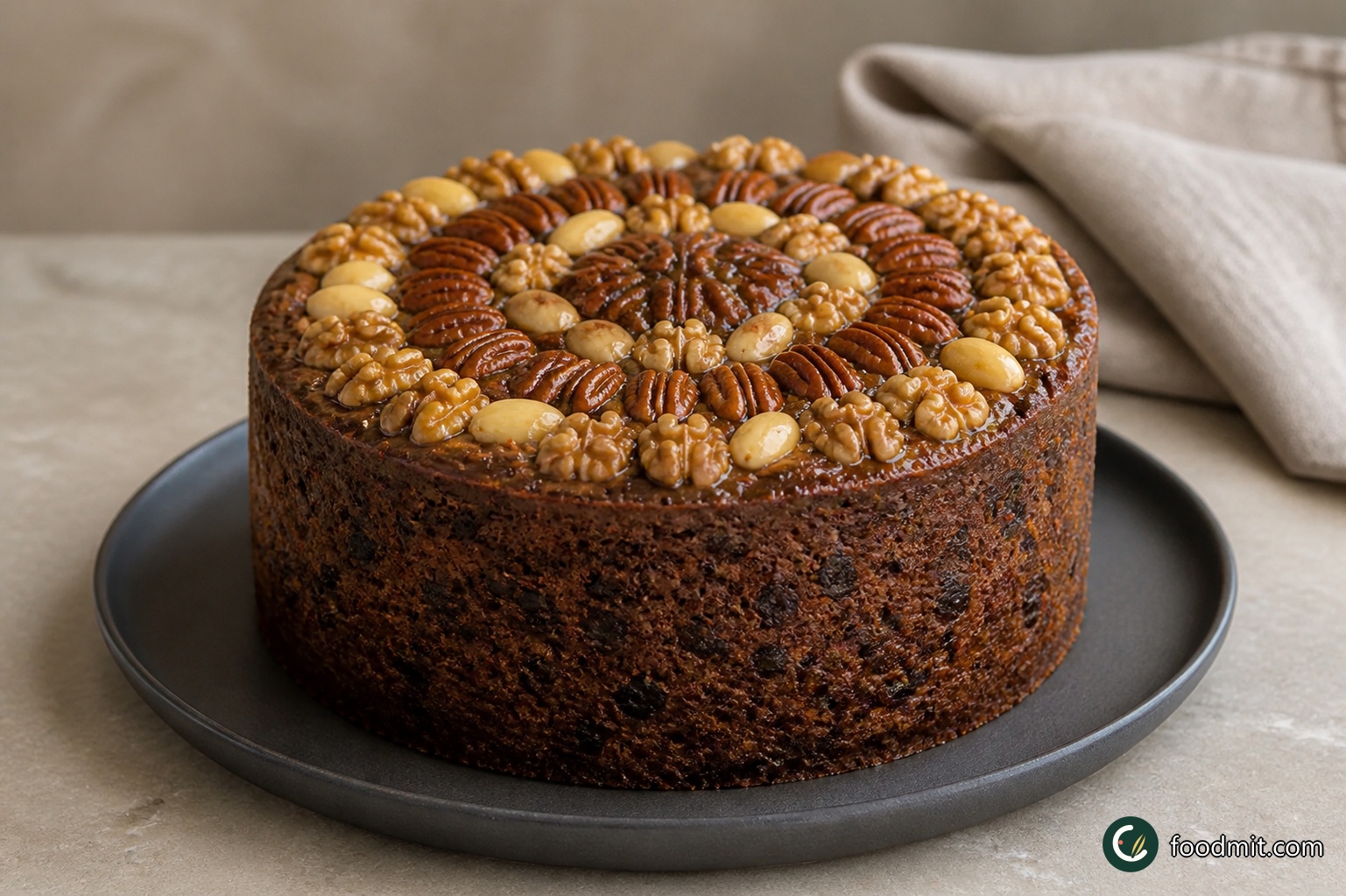
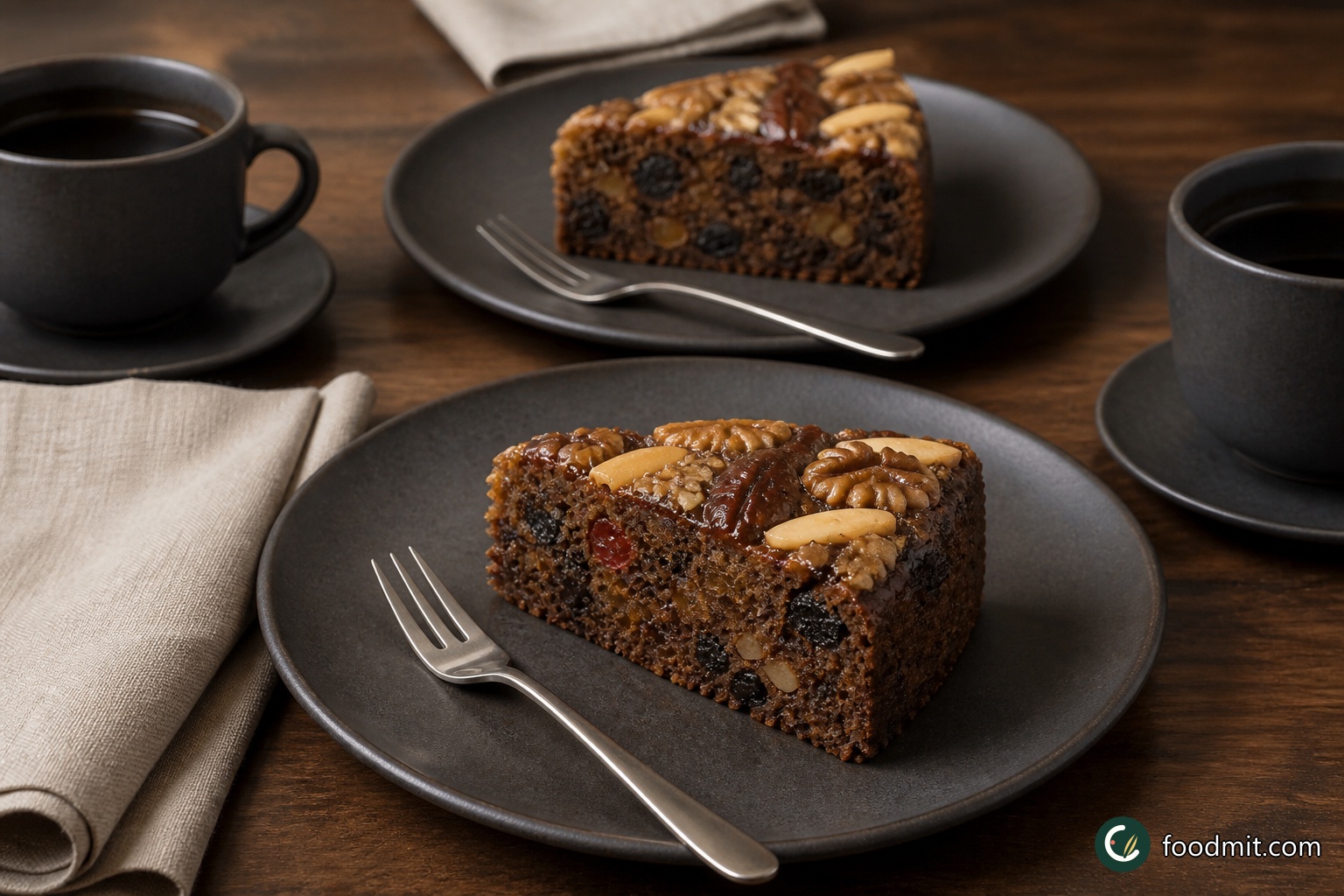
Last-minute Christmas Mincemeat Cake, ready to serve
Serving ideas for Last-minute Christmas Mincemeat Cake
Choose a presentation that fits the occasion, from relaxed sharing to individual plates.
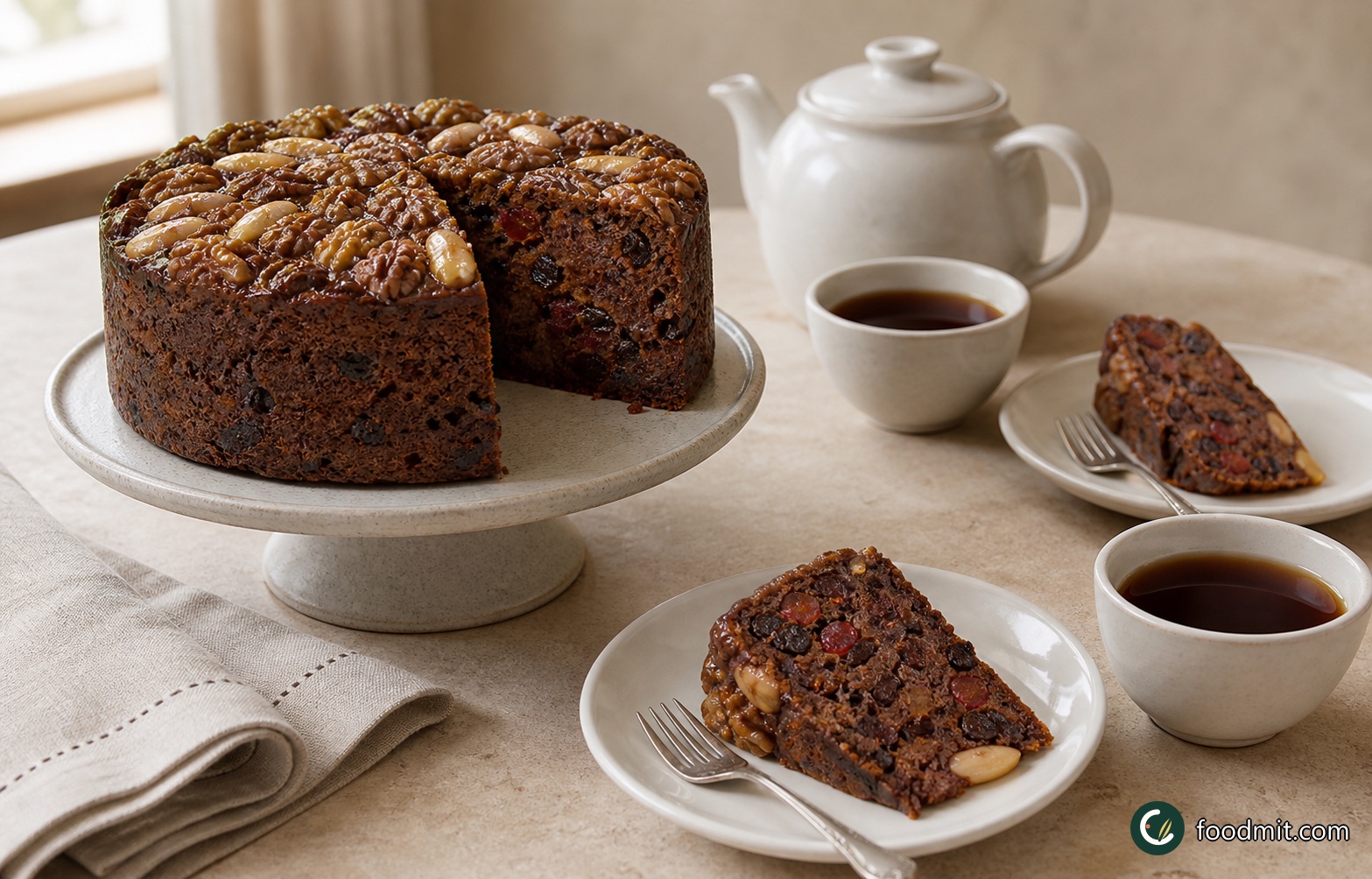
Christmas tea table
Set the whole glazed cake on a simple raised stand so the nut pattern remains the focus, then cut slim wedges with a sharp serrated knife. I like to place each slice on a small white plate with a dessert fork and serve a pot of strong black tea alongside. The plain tableware shows off the dark fruit crumb and amber glaze, while the hot tea balances the cake's sweetness. This is an easy arrangement for an afternoon of wrapping gifts or welcoming family.
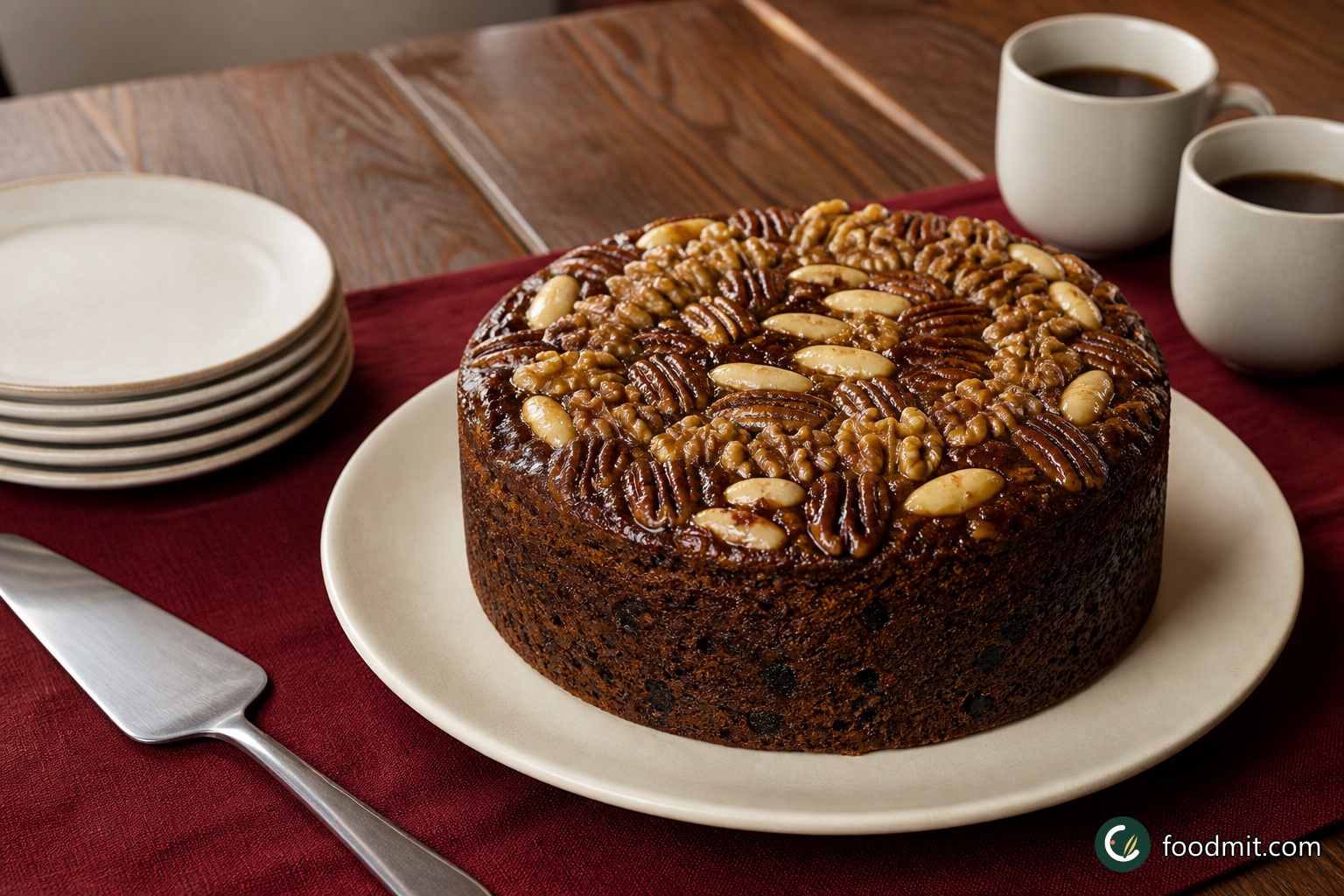
Festive dessert centrepiece
Present the cake whole on a broad ceramic platter at the centre of the dessert table, with the glossy rows of walnuts, pecans, and Brazil nuts fully visible. Put a cake knife and a stack of modest dessert plates beside it so guests can take narrow slices after dinner. Because the fruitcake is rich and already decorated, it needs no icing or extra garnish. Warm coffee or tea makes a useful accompaniment and keeps the service relaxed when several people are sharing the table.
Quiet after-dinner slices
For a smaller gathering, cut the cake in the kitchen and arrange one neat slice per plate, turning the glazed nut edge toward the diner. Use dark or neutral plates, small forks, and folded napkins so the dense fruit and bright pieces of cherry are easy to see. A freshly made cup of coffee alongside is enough; the cake already brings brandy, citrus, spice, and plenty of texture. This restrained presentation suits an unhurried end to dinner without making the rich cake feel overly formal.
Let’s cook Last-minute Christmas Mincemeat Cake together
Check off your ingredients, follow each step, and start the timers when you are ready.
Get everything ready
Step-by-step with timers
Soak the fruit
Put the 150 ml brandy, mincemeat, prunes, glacé cherries, dried mixed fruit, and candied peel in a large bowl. Stir until the fruit is evenly coated, cover the bowl with a clean cloth, and leave it in a cool place for at least 4 hours or, preferably, overnight.
Prepare the oven and tin
When the fruit has soaked, heat the oven to 170°C/Gas 3. Grease a 20 cm round loose-based cake tin and line both its base and sides with baking parchment, making sure the side liner stands neatly and can support a parchment cover later.
Sift the dry ingredients
Sift the self-raising flour, baking powder, salt, and mixed spice into a very large mixing bowl. A roomy bowl matters here because the soaked fruit will be folded in gradually without crushing it or knocking too much air from the batter.
Beat the cake base
Add the spreadable butter, dark muscovado sugar, and eggs to the sifted ingredients. Beat with an electric hand whisk until the mixture is uniform, light in texture, and free from visible streaks of butter or dry flour.
Fold in the fruit, nuts, and zest
Fold the soaked fruit mixture into the cake base in several additions so it stays evenly suspended. Follow with the roughly chopped Brazil nuts, mixed chopped nuts, orange zest, and lemon zest, folding only until everything is well distributed.
Fill and decorate the tin
Spoon the batter into the prepared tin and smooth the surface with the back of a large spoon. Arrange the walnut halves, pecan halves, and whole Brazil nuts in circles or tidy rows, using an equivalent mixture of whole nuts if preferred.
Add the parchment shield
Cut a double-thickness square of baking parchment and make a hole in its centre about the size of a 50-pence coin. Set the shield on the rim of the upright tin liner so it sits above the cake rather than directly on the batter.
Bake until resilient
Bake on the centre shelf for 2 hours. At the end, press the centre very lightly; the cake is ready when the shallow indentation promptly rises again. If it does not, continue baking briefly and repeat the same check.
Cool the cake
Leave the cake in its tin for 30 minutes so its fruit-heavy crumb can settle. Release it carefully, remove the lining, and transfer it to a wire rack to finish cooling without trapping steam around the sides.
Glaze and store
While the cake is cooling, gently heat the sieved apricot jam with the remaining tablespoon of brandy until fluid. Brush it over the exposed nuts for an even shine. Once completely cold, keep the cake in an airtight tin or wrap it first in baking parchment and then in foil.
The story behind Last-minute Christmas Mincemeat Cake
Recipe notes by Emily
The bake that rescued my schedule
I chose this cake because I had left the Christmas baking later than intended, and Delia Smith is the cook I trust when I want a method that feels both sensible and festive. Using a jar of good mincemeat gave the fruit base an immediate depth that would normally take much more planning. Once I had measured everything, the hands-on work felt wonderfully manageable, yet the cake that emerged looked like a carefully planned centrepiece rather than a compromise.
Why the soak was worth waiting for
Although the mixing itself was quick, I did not rush the soaking stage. I combined the mincemeat, prunes, cherries, mixed fruit, candied peel, and brandy the evening before, then left the covered bowl somewhere cool. By morning, there was no loose puddle at the bottom and every piece of fruit looked plump and glossy. That even moisture made the heavy mixture much easier to fold through the batter without repeated stirring, and my baked slices stayed cohesive rather than crumbly.
The cues I would watch again
The unusual little parchment roof proved genuinely helpful. I rested it on the projecting tin liner, kept its central vent open, and found that the decorative nuts browned without becoming scorched during the long bake. At two hours, the middle yielded slightly beneath my fingertip and then recovered, which was a clearer guide than colour on such a dark cake. After the 30-minute rest in the tin, it released cleanly, and the warm jam glaze gave the nut pattern a polished finish.
Keeping the finished cake
Once the glaze had set and the cake was fully cold, I packed it into an airtight tin. The recipe already contains a generous measure of brandy, so I did not add periodic spoonfuls of extra spirit while it waited for Christmas. That made storage refreshingly straightforward: protect it from air, keep it wrapped or tinned, and cut only what is needed. The next slices were still moist and fragrant, with the citrus and spice becoming especially clear beside the sweet dried fruit.