
Light Christmas Cake Recipe Inspired by Delia Smith
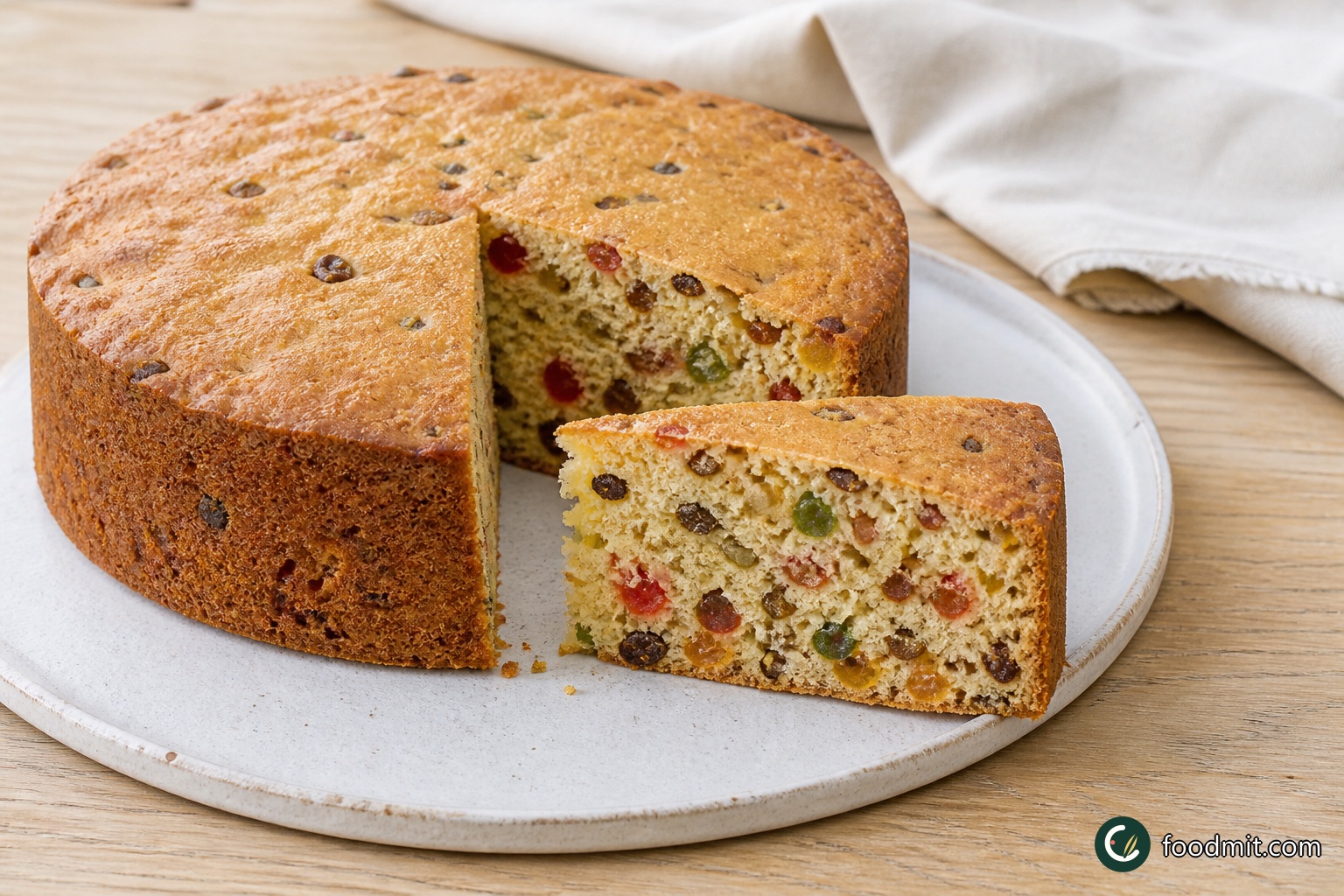
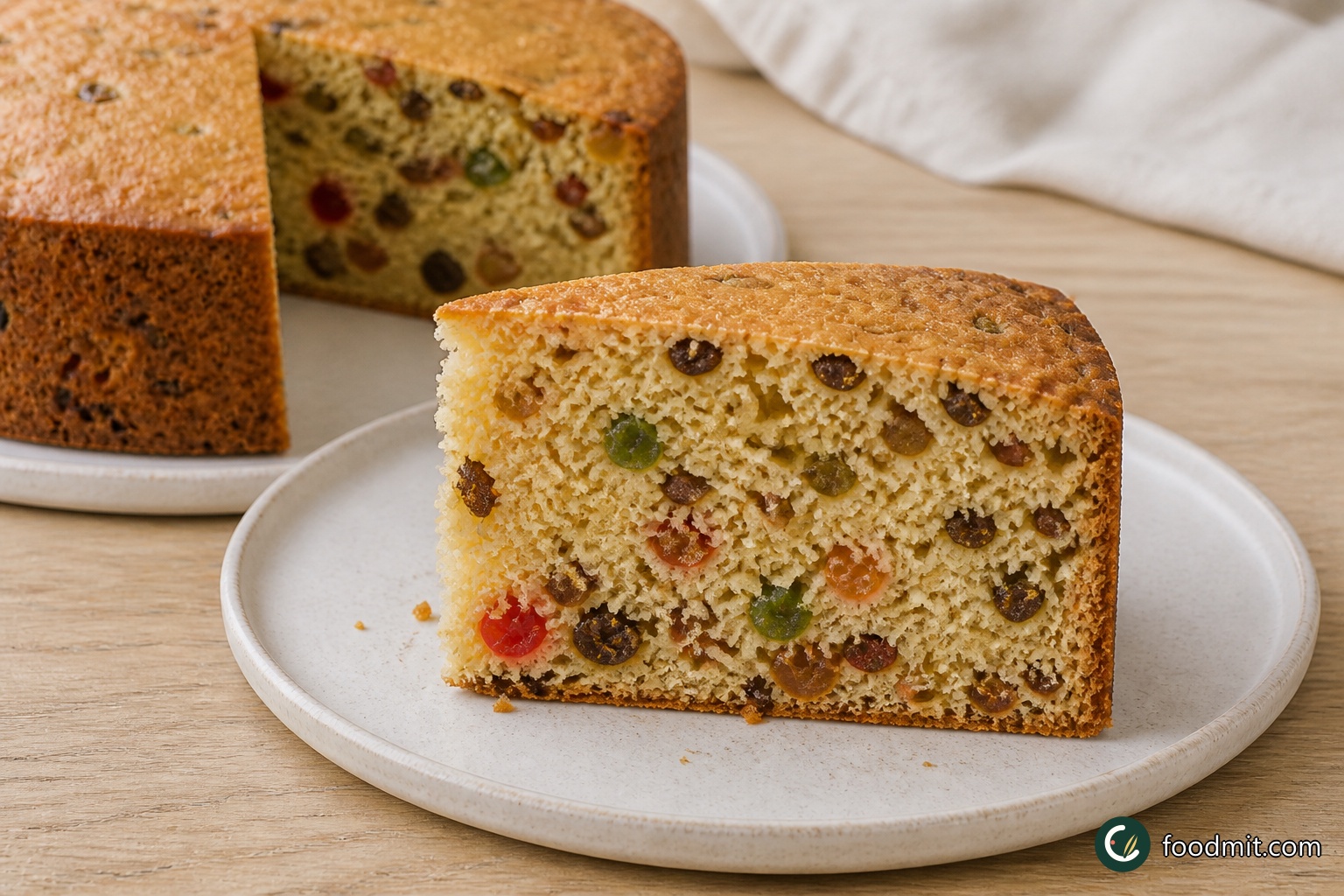
I have always enjoyed Delia Smith’s calm, dependable approach to celebration baking, so I was eager to try her Light Christmas Cake for myself. It feels festive without the deep, heavily spiced character of a traditional dark fruit cake, and the bright pieces of fruit make every cut slice look cheerful. I found it especially appealing when I wanted a Christmas centrepiece that was familiar but not quite the usual rich bake. The crumb is buttery, pale and close-textured, with juicy sultanas and little pockets of pineapple, apricot and glacé cherry throughout. Candied peel, angelica, crystallised ginger and fresh citrus zest keep the sweetness lively, while walnuts and ground almonds bring a gentle nuttiness. Brandy rounds everything out rather than dominating, and the finished cake is substantial enough for neat, slim slices without feeling stodgy. The best lesson I took from making it was to finish every bit of chopping before mixing the batter. Cutting the pineapple, apricots and cherries to roughly sultana size gives a much more even slice, while the peel, angelica and ginger are better a little finer. Once that preparation is done, the batter itself comes together in about a minute; fold the fruit in thoroughly but gently, then level it in the lined tin. The long bake needs protection more than attention. Brown paper around the tin softens the direct heat, and a double parchment cover shields the top after the first hour as the oven temperature drops. I let my cake become completely cold in its tin before unwrapping it. Served at room temperature with tea or coffee, it makes an easy make-ahead offering for Christmas visitors and keeps well when carefully wrapped in an airtight tin.
 Foodmit
recipe
Per 1 slice (1/12 of cake)
Nutrition for Light Christmas Cake
- Saturated fat
- 11.0 g
- Fiber
- 3.9 g
- Sugars
- 66.5 g
- Sodium
- 202 mg
Estimated values. Nutrition values are approximate. More precise calculations will be added in a future update.
How to make Light Christmas Cake
-
Step 1
Prepare the tin and fruit
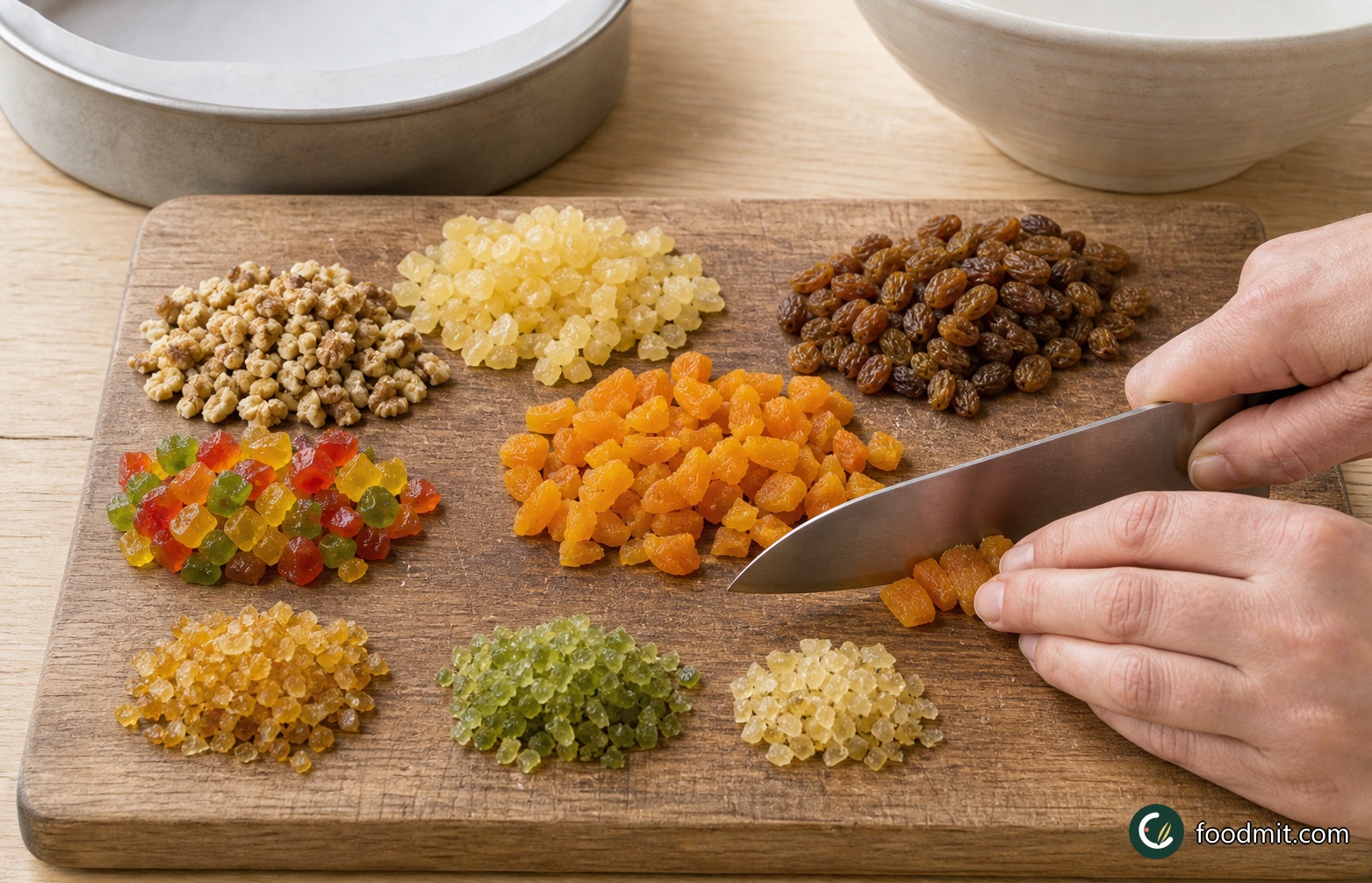
Preheat the oven to 170°C, gas mark 3. Grease a 20 cm loose-based round cake tin and line both its base and sides. Finely chop the walnuts. Cut the glacé pineapple, dried apricots and rinsed, thoroughly dried cherries into pieces about the size of the sultanas, then chop the candied peel, angelica and crystallised ginger more finely. Keep everything ready beside a large mixing bowl.
-
Step 2
Whisk the base mixture
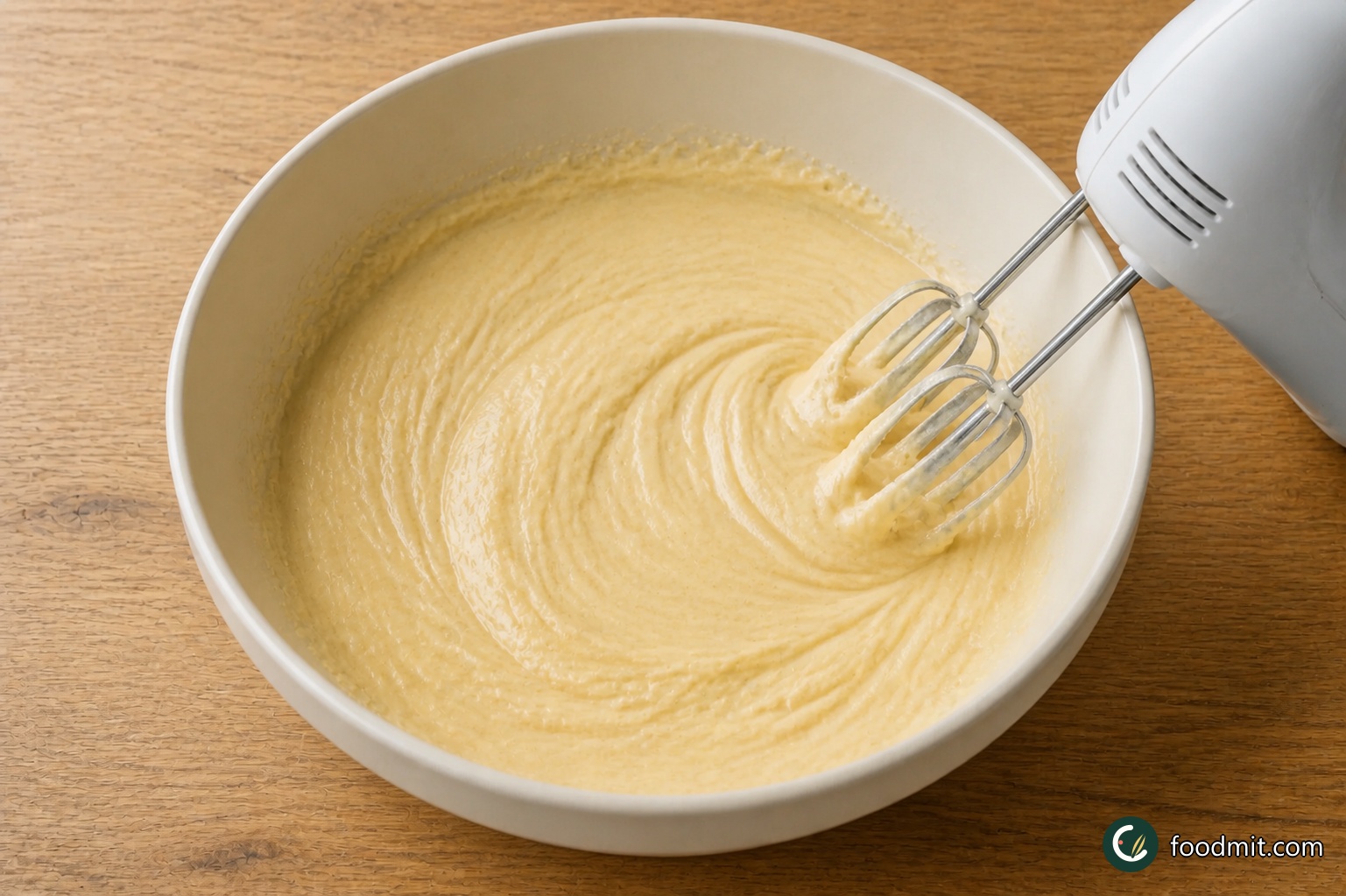
Sift the flour into a large, roomy bowl. Add the golden caster sugar, ground almonds, salt, spreadable butter, eggs and brandy. Beat with an electric hand whisk for about 1 minute, moving around the bowl so no dry flour remains. Stop when the mixture looks evenly blended, smooth and creamy; prolonged beating is unnecessary.
-
Step 3
Fold in the fruit
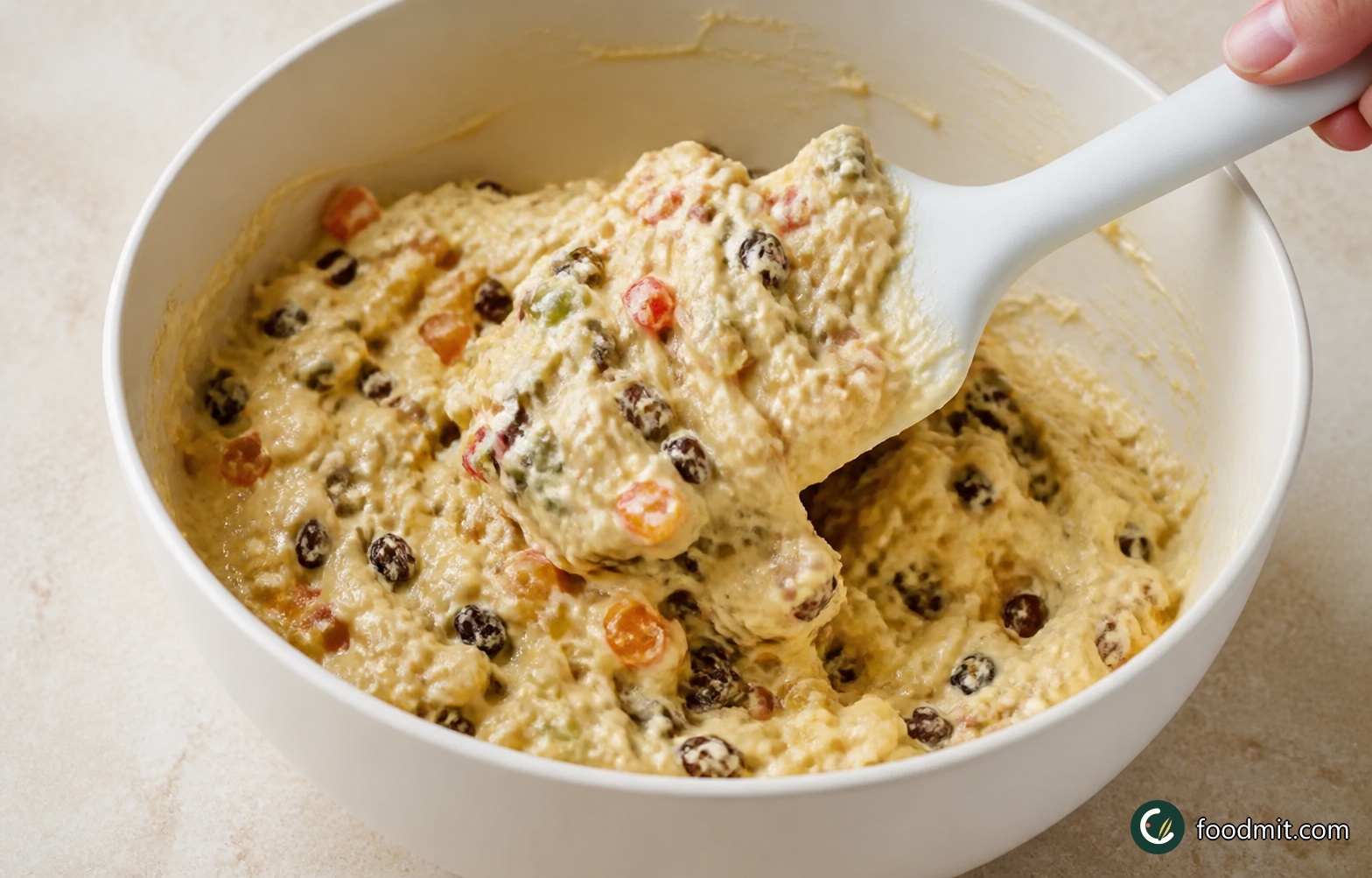
Add the chopped walnuts, pineapple, apricots, cherries, candied peel, angelica and crystallised ginger, followed by the sultanas, orange zest, lemon zest and lemon juice. Use a large spoon or spatula to fold from the bottom of the bowl until the fruit and nuts are evenly dispersed and there are no pockets of plain batter.
-
Step 4
Fill and protect the tin
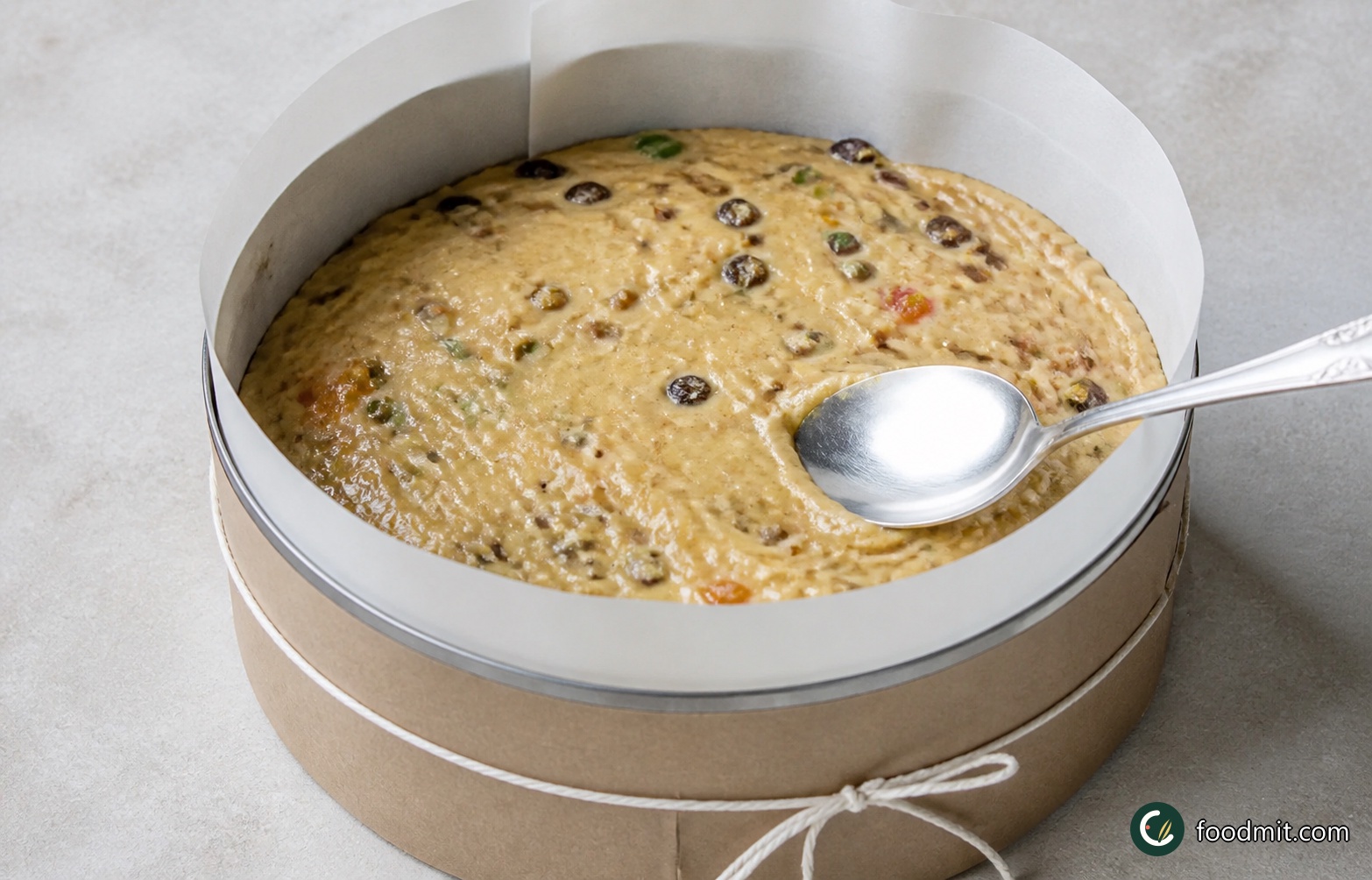
Spoon the heavy mixture into the prepared tin, working it gently into the edges so there are no obvious gaps. Level the surface with the back of the spoon. Tie a secure band of brown paper around the outside of the tin for insulation, then place the tin on an oven shelf positioned so the top of the cake sits approximately in the centre of the oven.
-
Step 5
Start the bake
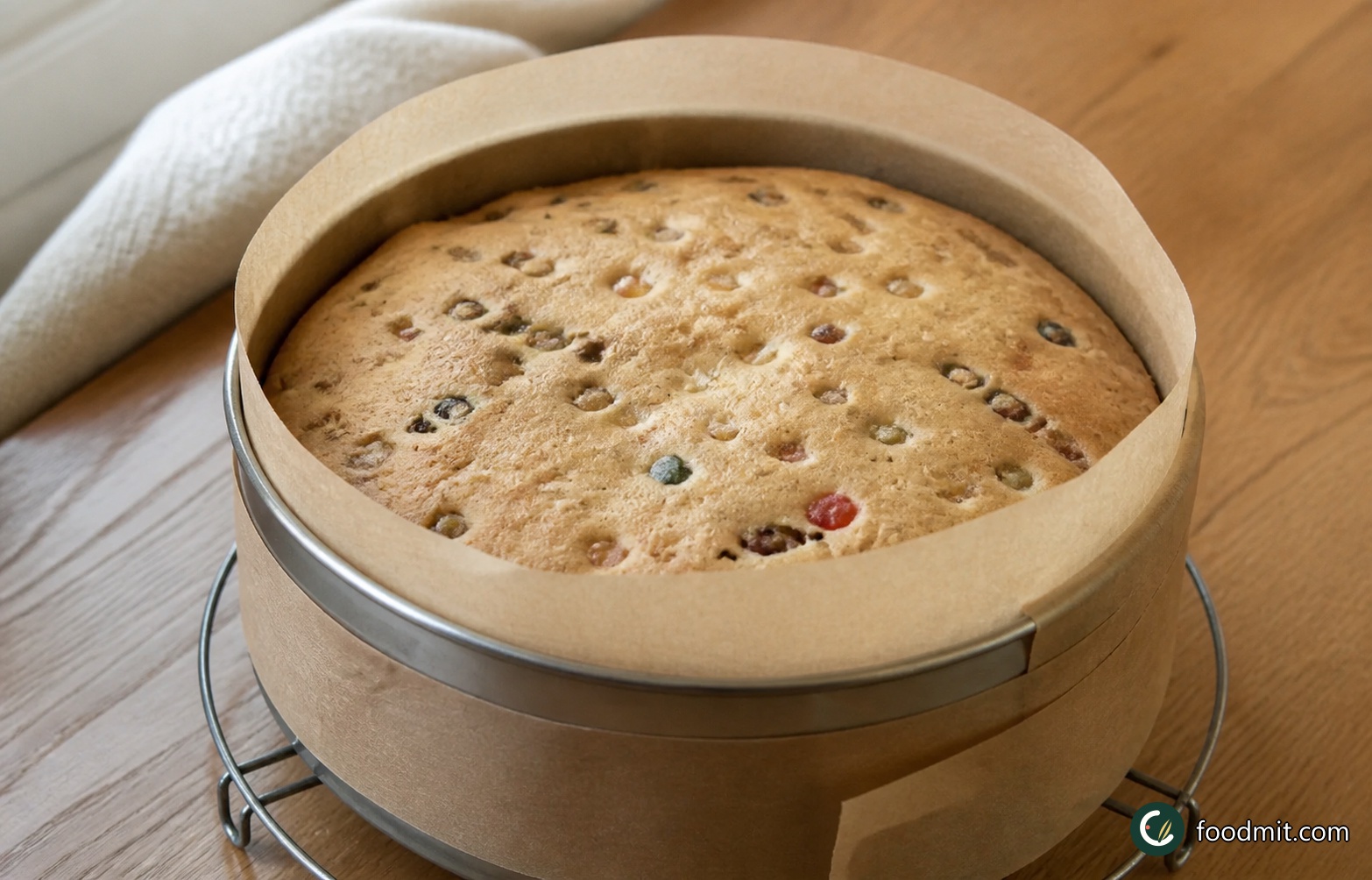
Bake at 170°C, gas mark 3, for 1 hour. Leave the oven closed during this first stage so the cake receives steady heat and begins to set before it is covered. At the end of the hour, work promptly but carefully when opening the oven, as the tin and its paper collar will be hot.
-
Step 6
Cover and finish baking
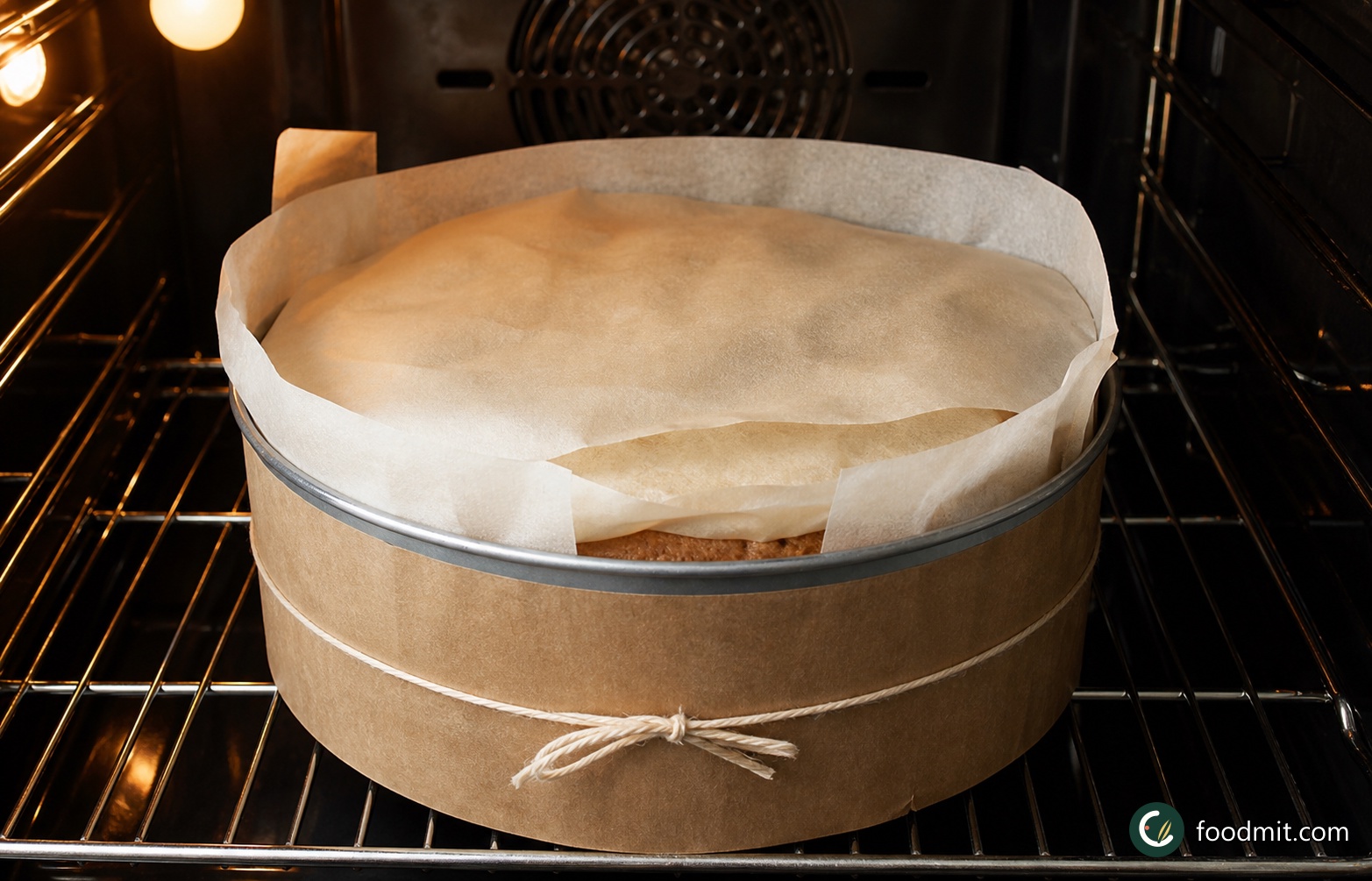
Lay a double sheet of baking parchment over the top, allowing it to rest on the projecting tin liner without pressing it onto the cake. Reduce the oven to 150°C, gas mark 2, and bake for a further 2 hours. The cake is ready when the centre feels set and springs back under a very light press with your little finger.
-
Step 7
Cool and wrap
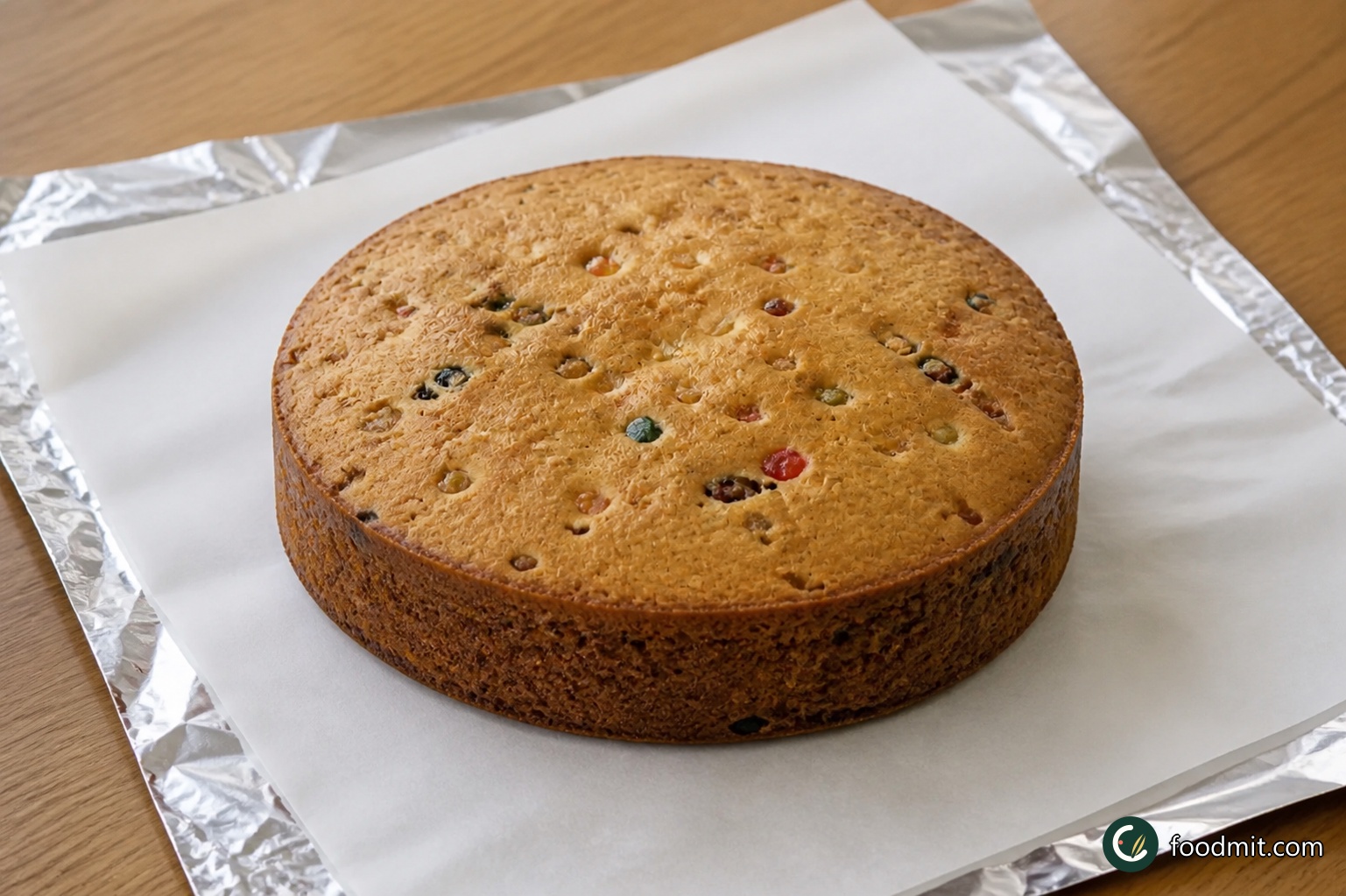
Leave the baked cake in its tin until it is completely cold, including at the centre; the firm tin supports it as it settles. Release it only when no warmth remains, peel away all the lining paper, and wrap the cake in foil lined with fresh baking parchment. Place the wrapped cake in an airtight tin until it is time to slice and serve.
Use one sultana as your size guide while chopping: make the pineapple, apricots and cherries roughly that size, but cut the peel, angelica and ginger finer. Dry the rinsed cherries very well before they enter the bowl, since surface water can loosen the batter around them.
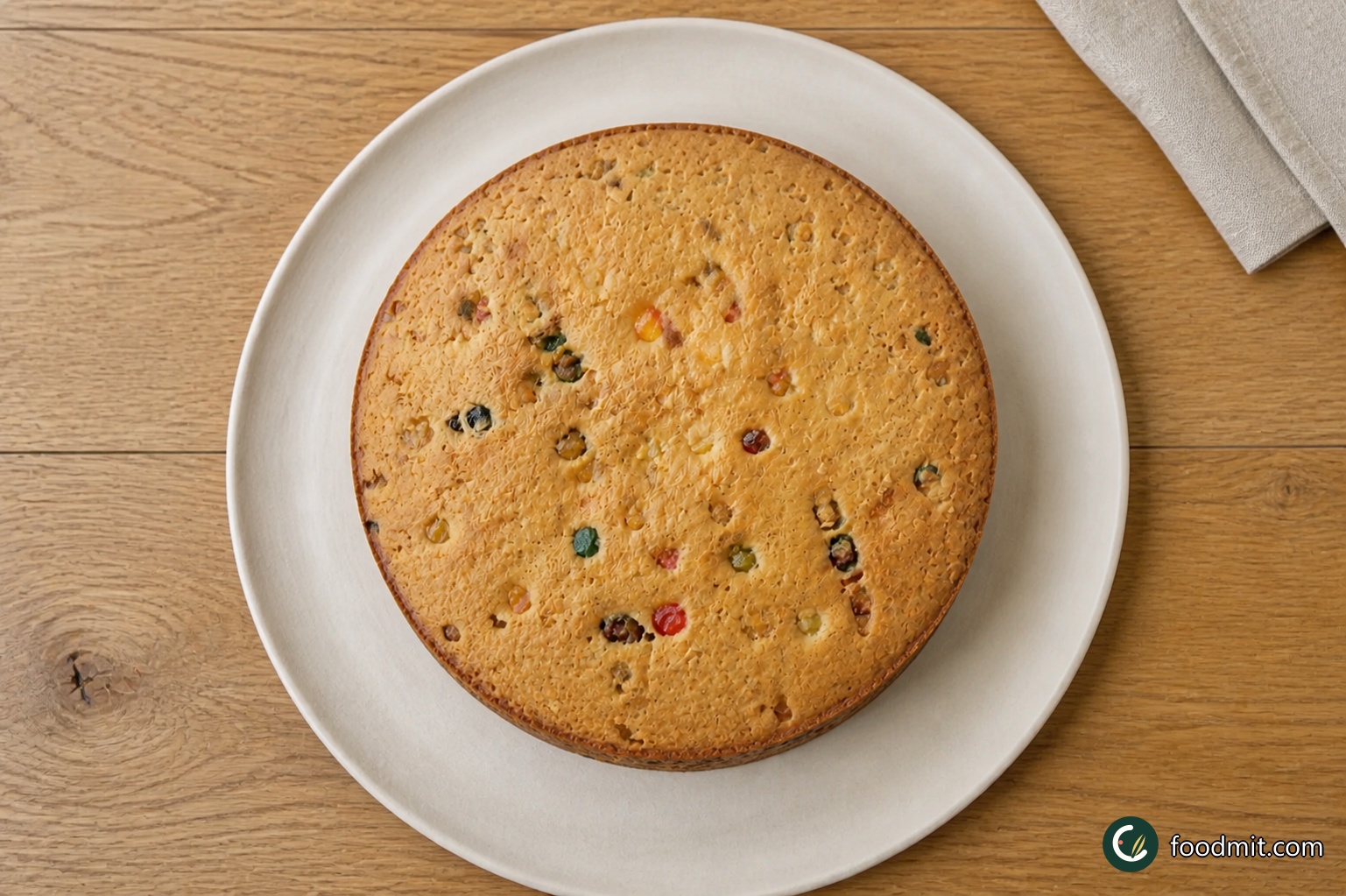
Light Christmas Cake, ready to serve
Serving ideas for Light Christmas Cake
Choose a presentation that fits the occasion, from relaxed sharing to individual plates.
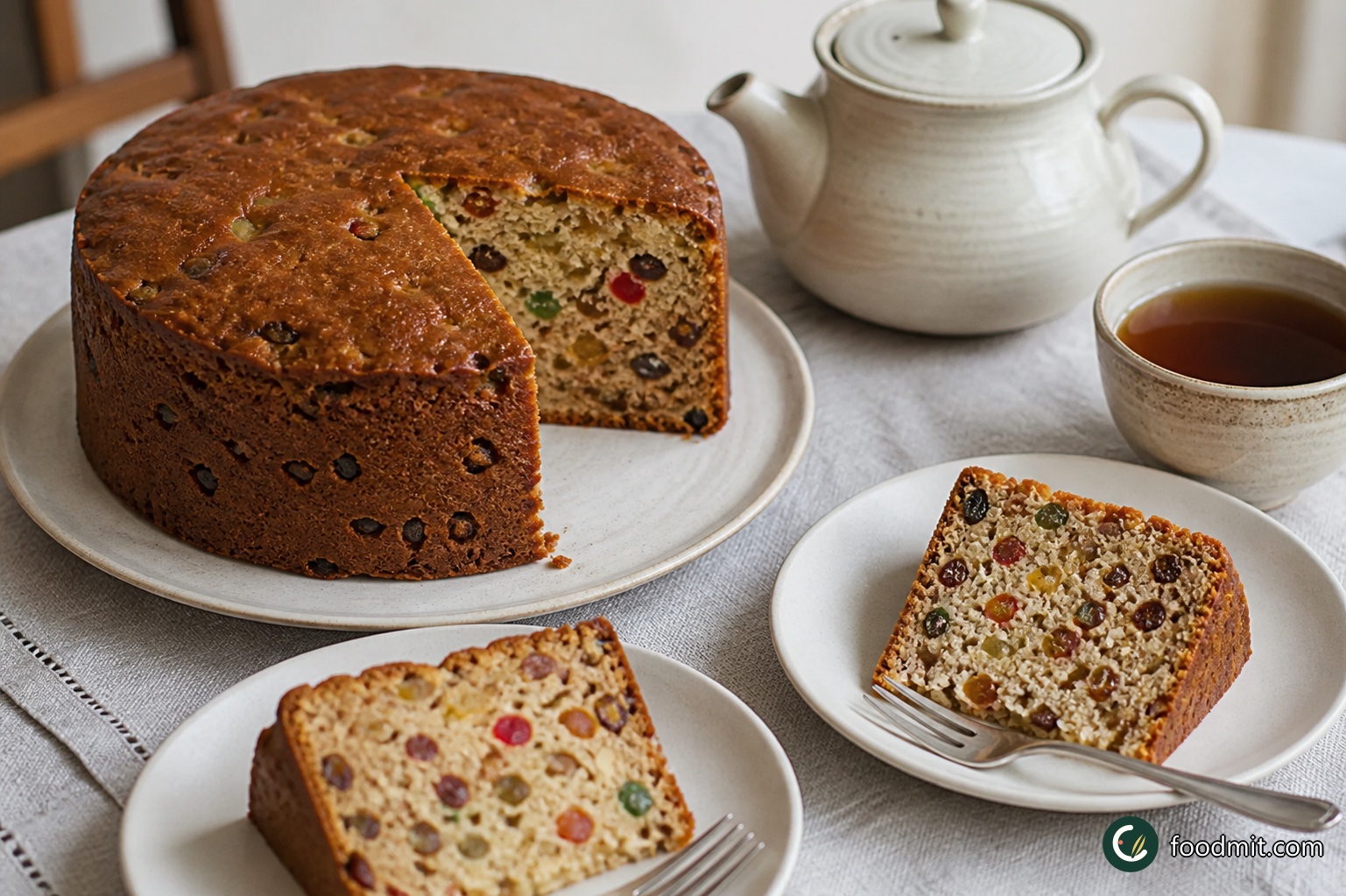
Afternoon Tea Slices
Bring the cake to room temperature and cut slim wedges with a long, sharp knife, wiping the blade between cuts so the pale crumb and coloured fruit remain distinct. Arrange the slices on plain side plates with small forks and serve with a pot of black tea or freshly made coffee. I like this simple setting because it keeps attention on the butter, citrus and fruit, and it suits a relaxed afternoon visit without requiring an added sauce or icing.
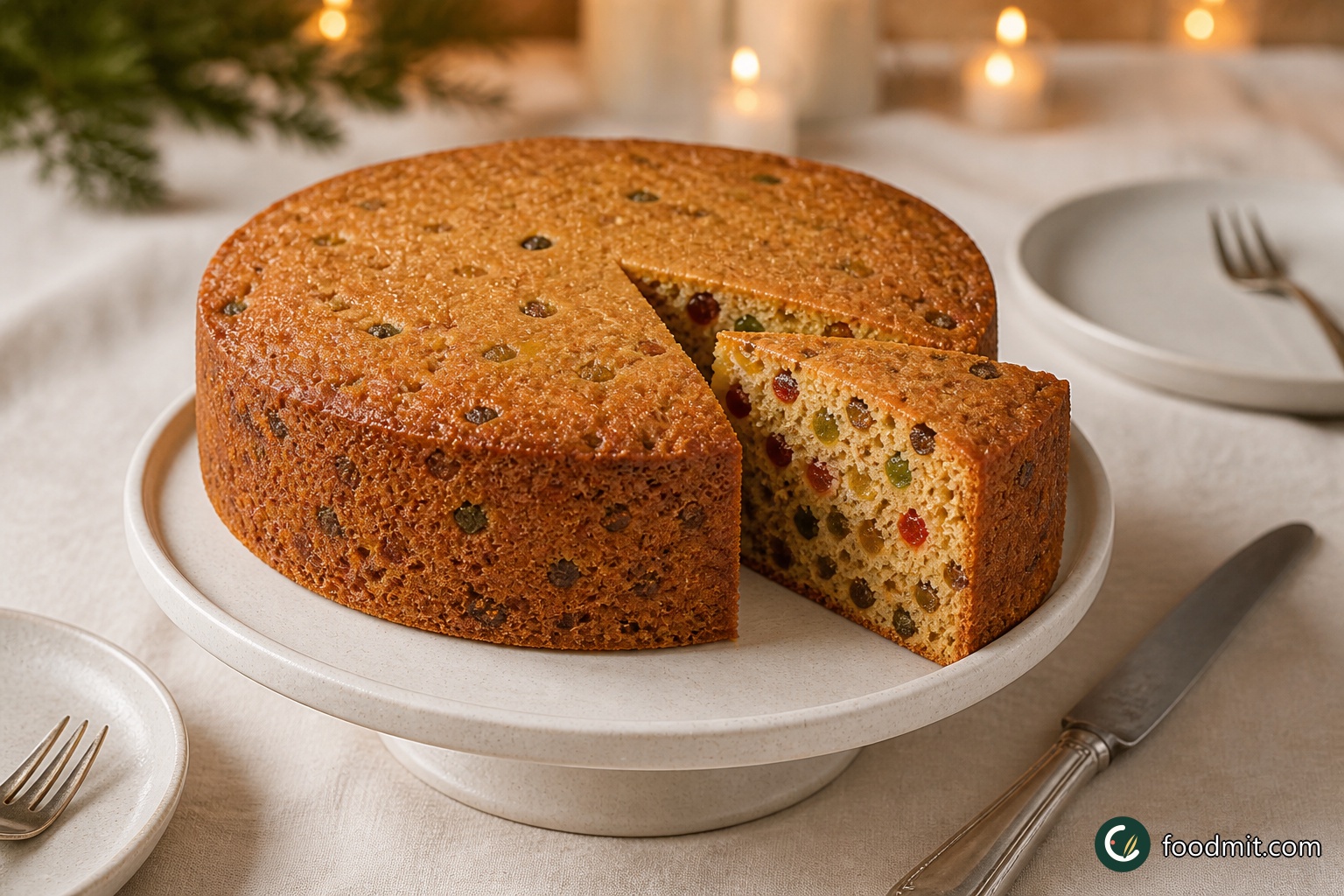
Christmas Table Centrepiece
Set the whole cake on a low stand or broad flat platter, then cut the first wedge at the table so guests can see the bright interior. Use a clean white or softly coloured cloth, dessert plates and a proper cake knife rather than crowding the platter with extra decoration. Small portions work best after a festive meal because the cake is rich with fruit, butter and nuts, while its lighter colour gives the table a welcome contrast to darker seasonal bakes.
Wrapped Cake Gift
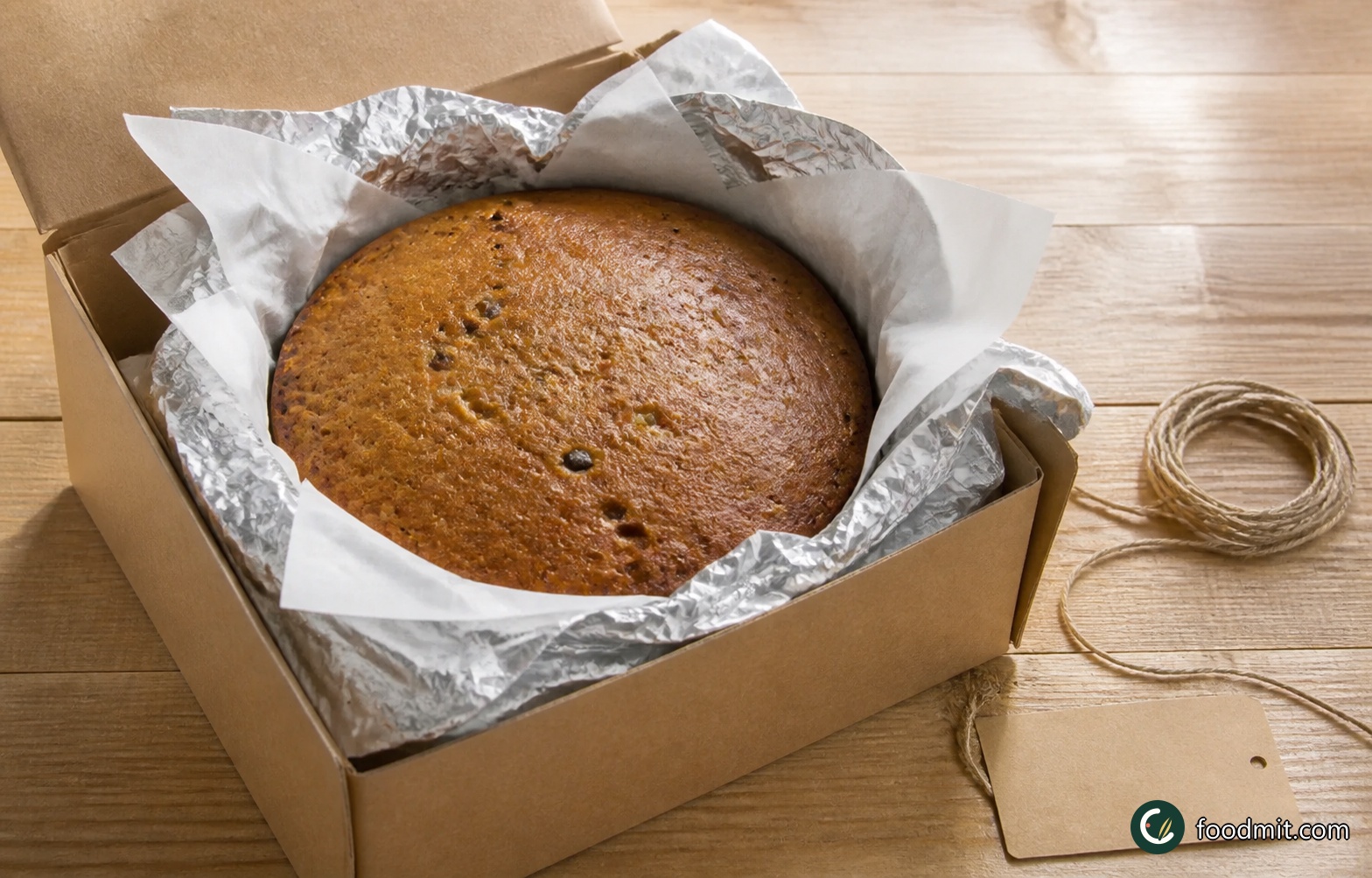
For a host or neighbour gift, cool the cake completely, keep the fresh parchment against its surface and wrap the foil neatly around it before placing it in a snug cake box or reusable tin. Add a note suggesting thin slices at room temperature and include the baking date, especially if the recipient may save it for later in the season. This presentation protects the fruit cake in transit and makes good use of its ability to keep when wrapped and stored airtight.
Let’s cook Light Christmas Cake together
Check off your ingredients, follow each step, and start the timers when you are ready.
Get everything ready
Step-by-step with timers
Prepare the tin and fruit
Preheat the oven to 170°C, gas mark 3. Grease a 20 cm loose-based round cake tin and line both its base and sides. Finely chop the walnuts. Cut the glacé pineapple, dried apricots and rinsed, thoroughly dried cherries into pieces about the size of the sultanas, then chop the candied peel, angelica and crystallised ginger more finely. Keep everything ready beside a large mixing bowl.
Whisk the base mixture
Sift the flour into a large, roomy bowl. Add the golden caster sugar, ground almonds, salt, spreadable butter, eggs and brandy. Beat with an electric hand whisk for about 1 minute, moving around the bowl so no dry flour remains. Stop when the mixture looks evenly blended, smooth and creamy; prolonged beating is unnecessary.
Fold in the fruit
Add the chopped walnuts, pineapple, apricots, cherries, candied peel, angelica and crystallised ginger, followed by the sultanas, orange zest, lemon zest and lemon juice. Use a large spoon or spatula to fold from the bottom of the bowl until the fruit and nuts are evenly dispersed and there are no pockets of plain batter.
Fill and protect the tin
Spoon the heavy mixture into the prepared tin, working it gently into the edges so there are no obvious gaps. Level the surface with the back of the spoon. Tie a secure band of brown paper around the outside of the tin for insulation, then place the tin on an oven shelf positioned so the top of the cake sits approximately in the centre of the oven.
Start the bake
Bake at 170°C, gas mark 3, for 1 hour. Leave the oven closed during this first stage so the cake receives steady heat and begins to set before it is covered. At the end of the hour, work promptly but carefully when opening the oven, as the tin and its paper collar will be hot.
Cover and finish baking
Lay a double sheet of baking parchment over the top, allowing it to rest on the projecting tin liner without pressing it onto the cake. Reduce the oven to 150°C, gas mark 2, and bake for a further 2 hours. The cake is ready when the centre feels set and springs back under a very light press with your little finger.
Cool and wrap
Leave the baked cake in its tin until it is completely cold, including at the centre; the firm tin supports it as it settles. Release it only when no warmth remains, peel away all the lining paper, and wrap the cake in foil lined with fresh baking parchment. Place the wrapped cake in an airtight tin until it is time to slice and serve.
Light Christmas Cake Recipe Inspired by Delia Smith
The story behind Light Christmas Cake
Recipe notes by Emily
Why I Chose the Lighter Cake
I am a genuine admirer of Delia Smith’s recipes because they tend to explain the small practical choices that make home baking feel manageable. I cooked this one when I wanted a festive fruit cake but did not want the dark colour and intense richness of the version I usually associate with December. The list of glacé fruits caught my attention first. Once the cake was cut, the yellow pineapple, orange apricot and mixed cherries showed clearly against the pale crumb, and it looked celebratory before I had done anything elaborate to the presentation.
The Chopping Was Worth It
My longest stretch of hands-on work came before the whisk was switched on. I used the sultanas as a visual guide for the pineapple, apricots and cherries, then cut the peel, angelica and ginger smaller so none of those stronger, sweeter ingredients landed in a large clump. That patience paid off in the finished slices: the fruit stayed well distributed, and each bite had a slightly different balance of citrus, ginger, nuts and soft fruit. I also dried the rinsed cherries carefully, which kept stray moisture away from the batter.
A Quiet, Well-Protected Bake
The method felt reassuringly unhurried once the filled tin reached the oven. I liked that the brown-paper collar was fitted from the beginning, while the parchment lid was added only after the first hour. That gave the batter time to set at the higher temperature before the gentler two-hour stage. I relied on the prescribed spring-back test rather than repeatedly disturbing the cake. After cooling it all the way in the tin, I wrapped it with fresh parchment against the cake and foil outside, then kept it airtight. It remained easy to slice over the following days; the source guidance says to enjoy it within about three weeks or freeze it when making it further ahead.